Hello, I am an expert writer for the Korean financial blog Daily Stock.
Today, after the market close, we bring you an objective perspective on the market's hottest topics.
[Image: /stdaily/uploads/202605/gen_6a1151598c64d2.85081177.png]
Key Summary
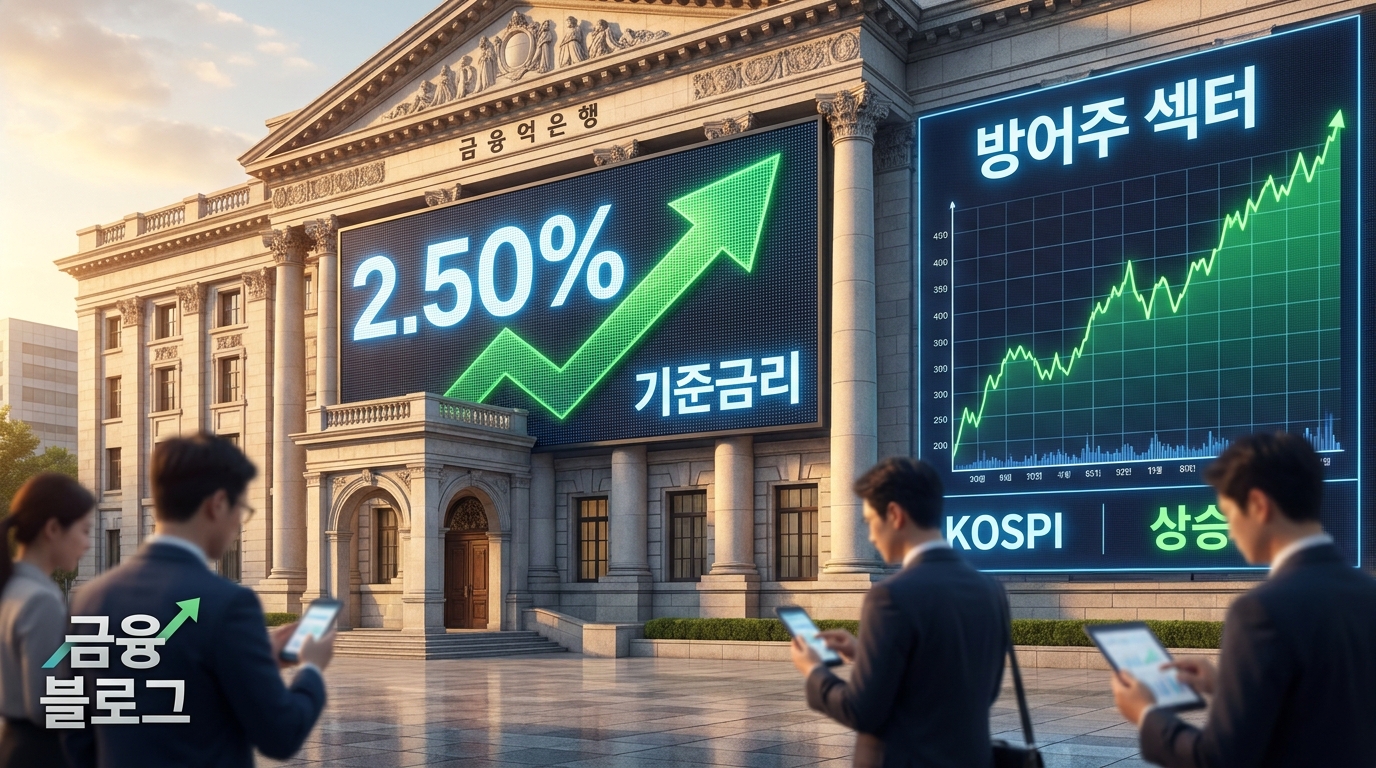
As the Bank of Korea's (BOK) base rate meeting minutes confirmed its intention to prolong the tightening stance to defend against inflation and the exchange rate, a shift in supply and demand toward KOSPI large-cap defensive stocks is drawing attention.
The strong dollar environment, currently reaching 1,519 KRW, combined with the base rate locked at 2.50%, is inducing foreign capital to realize profits on export stocks, relatively highlighting the dividend appeal of the KOSPI 200 telecommunications and utility sectors.
Current Situation Summary
As of the close on May 23, 2026, the KOSPI index recorded 7,847.71, and the KOSDAQ was at 1,161.13.
The USD/KRW exchange rate surged to 1,519.00, having a strong impact on foreign supply and demand volatility, and the NASDAQ index closed at 26,343.97, indicating that the macro sensitivity of the domestic stock market compared to overseas has further increased.
According to the recently released minutes of the BOK's Monetary Policy Board, members support prolonging the base rate freeze at 2.50% annually, citing consumer price upward pressure and exchange rate instability despite concerns over K-shaped polarization.
The Daily Stock Fear & Greed Index for KOSPI is currently at 57.3 (Neutral), cooling down from a month ago (64.8, Greed), and the NASDAQ also recorded 58.6 (Neutral), signaling that overall market sentiment has shifted to a strictly wait-and-see approach.
[Image: /stdaily/uploads/202605/gen_6a11516cbd4a74.40686276.png]
Financial Analysis
Under the scenario of delayed rate cuts and a prolonged high exchange rate, the fundamentals of SK Telecom and Korea Electric Power Corporation (KEPCO)—leading domestic defensive stocks with solid cash flows—are being newly highlighted.
SK Telecom is generating robust free cash flow (FCF) by continuously expanding the proportion of AI data center B2B revenue based on its mobile network operator (MNO) cash cow.
On the other hand, while KEPCO has solidified an operating profit surplus trend through a cycle of rate normalization, there are factors of instability due to the recent surge in the exchange rate.
If energy raw material import prices rise due to the high exchange rate reaching 1,519 KRW, how well the company can defend against the downward pressure on its operating profit margin has emerged as the core challenge for this year's financial performance.
| Company Name | 2025 Revenue (100M KRW) | 2025 Operating Profit (100M KRW) | 2026 Est. Revenue (100M KRW) | 2026 Est. Operating Profit (100M KRW) | Core Fundamental Variables |
|---|---|---|---|---|---|
| SK Telecom | 178,500 | 18,200 | 182,300 | 19,100 | AI B2B Orders & Dividend Payout Ratio |
| KEPCO | 895,000 | 85,000 | 912,000 | 72,000 | Global Oil Prices & USD/KRW Exchange Rate |
(The figures above are the latest market consensus aggregated as of May 23, 2026, and may fluctuate depending on future macro environments.)
Valuation
Currently, SK Telecom maintains a valuation hovering around a price-to-earnings (P/E) ratio of 10x and a dividend yield exceeding 6%, providing excellent stock price defense even among KOSPI 200 large-cap stocks.
The longer the high-interest-rate environment persists, the more maximized the appeal of value stocks promising reliable cash dividends compared to growth stocks becomes.
In KEPCO's case, its price-to-book (P/B) ratio remains at the 0.4x level, sustaining the view that it is in an area of absolute undervaluation.
However, since the risk of foreign exchange losses can increase during a phase of high exchange rates, the extent of its valuation rerating is expected to be determined after confirming whether short-term profit normalization can be sustained.
[Image: /stdaily/uploads/202605/gen_6a115182569773.71035179.png]
Expert & Institutional Analysis
Securities firm institutional reports diagnose that the "focus on suppressing inflation" stance confirmed in the BOK's base rate meeting minutes has turned foreign investors' spot and futures supply and demand direction more conservative.
In particular, due to the burden of the 1,519 KRW exchange rate, institutional investors are taking strategies to realize partial profits from IT hardware, which had been the leading sector in the KOSPI, and shorten their portfolio duration by moving toward economic defensive stocks such as telecommunications and utilities.
A bond and macro expert evaluated, "Exchange rate concerns are effectively blocking expectations for a base rate cut."
He added, "Even in the stock market, it will be a phase where the relative strength of KOSPI 200 large-cap value stocks with high earnings visibility will hold an advantage over small-to-mid cap theme stocks or growth stocks for a while."
Risk Factors
The most critical risk to watch out for is the duration of the strong dollar at 1,519 KRW and the corresponding margin of increase in domestic import prices.
KEPCO faces the possibility of a sharp slowdown in its financial turnaround speed if the high exchange rate is prolonged, owing to the fuel cost burden where USD settlement accounts for a large portion.
Additionally, the intrinsic characteristic of telecommunication stocks being heavily regulated industries must be considered.
If the domestic economic slump deepens, policy pressure to lower household telecommunication expenses may be raised, requiring a conditional approach keeping profitability deterioration risks in mind.
Investment Perspective Summary
The BOK's base rate meeting minutes clearly demonstrated that inflation vigilance and exchange rate defense are the top priorities for current monetary policy.
Ultimately, the unstable macro combination of a 2.50% interest rate and a 1,519 KRW exchange rate may continuously stimulate overall stock market volatility for the time being.
During such a phase, telecommunication stocks like SK Telecom, which possess solid downward rigidity based on dividends, can be a reasonable safe-haven alternative.
However, since the utility sector, including KEPCO, has a double-sided nature where rising exchange rates can damage profits, it seems advisable to prioritize checking for exchange rate peaks and respond with conservative weight adjustments.
Investment Checklist
Q1. What is the core message of the BOK's base rate meeting minutes?
The core is the hawkish stance to maintain the current base rate freeze at 2.50% annually for an extended period to defend against the possibility of prolonged inflation and the high exchange rate reaching 1,519 KRW.
Q2. What is the impact of the strong dollar at 1,519 KRW on KOSPI 200 large-cap stocks?
Foreign spot buying may slow down due to foreign exchange loss concerns, and market supply and demand are highly likely to gradually shift toward high-dividend, defensive stocks with less valuation burden and secure cash flows.
Q3. Why is SK Telecom being highlighted as a defensive stock right now?
Because it pays high dividends with the stable cash flow intrinsic to the telecommunications business, while its B2B profitability is improving through AI infrastructure expansion, showing excellent financial defense even in a high-interest-rate environment.
Q4. Can KEPCO's earnings surplus trend withstand the high exchange rate?
While its fundamentals have recovered to some extent due to rate hikes, if the high exchange rate of 1,519 KRW is prolonged, massive energy import costs will occur, posing an ongoing risk that the operating profit margin could be damaged again in the second half of the year.
Q5. What does the Daily Stock Fear & Greed Index imply?
Currently, the KOSPI index is at 57.3, cooling down from the 'Greed' phase a month ago to 'Neutral'.
This implies that market participants have begun risk management in earnest, waiting to see macro indicators rather than being confident in further index climbs.