Hello, this is DailyStock, providing in-depth analysis of global tech value chains and macroeconomics.
[이미지: /stdaily/uploads/202610/gen_6ac82eebbf3195.37231200.png]
Key Takeaways
Qualcomm (QCOM) is ramping up its push into the PC semiconductor market, spearheaded by its in-house Oryon architecture-based "Snapdragon X Elite" and "Snapdragon X Plus." By leading Microsoft's Copilot+ PC standard, it has begun securing meaningful market share in the premium laptop segment.
While its share of total global PC shipments remains in the nascent stages, it has created a symbolic breakthrough by capturing double-digit market share (around 10%) in the U.S. retail Windows laptop market priced at $800 and above. The central focus is whether Qualcomm can drive a valuation multiple re-rating by diversifying its revenue base—historically concentrated in smartphone modems and mobile application processors (APs)—into PCs and automotive.
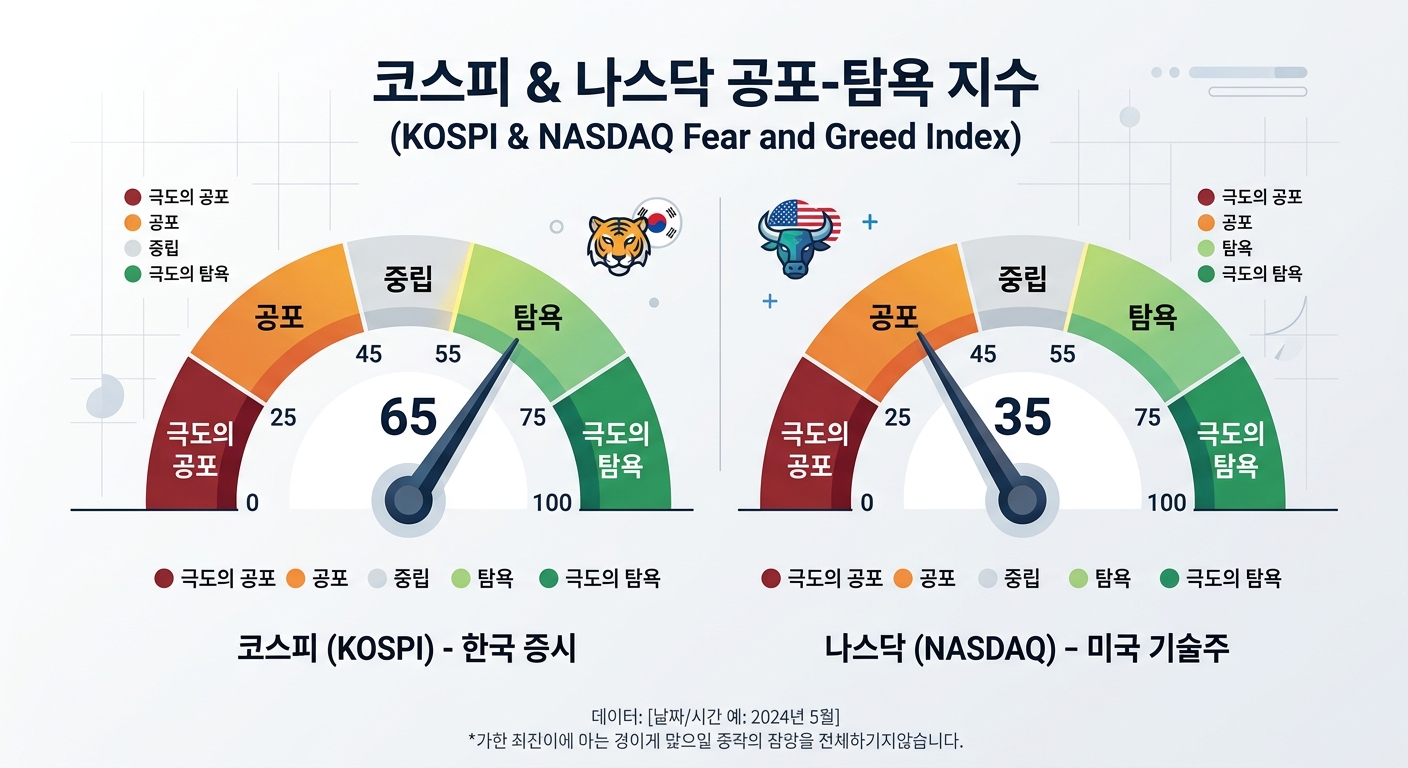
Looking at major market benchmarks as of the close on October 9, 2026, the Nasdaq closed at 27,193.34, KOSPI at 6,625.93, KOSDAQ at 892.27, and the USD/KRW exchange rate was 1,344.50 KRW. Our proprietary Fear & Greed Index registered 38.1 (Fear) for the Nasdaq and 24.4 (Fear) for KOSPI, reflecting prevailing macroeconomic risk-off sentiment across markets.
Current Status Overview
Qualcomm has challenged the x86 computing ecosystem that Intel and AMD have dominated for decades, moving beyond its identity as merely a mobile chipset powerhouse. It gained early market leadership after Microsoft (MSFT) selected Qualcomm as its strategic launch partner for Copilot+ PCs, which mandate an NPU performance of at least 40 TOPS.
According to market research firms Canalys and Circana, while Snapdragon X Series' global PC shipment share stood at around 1% in its initial release window, its footprint in the high-end ultra-slim laptop segment expanded rapidly. Praised particularly for its battery longevity and performance-per-watt metrics, the platform has been adopted across flagship lineups from Dell, Lenovo, Samsung Electronics, and ASUS.
| Product Segment | Core Hardware Specs | Target Market & Penetration Status | Key Adopted Devices |
|---|---|---|---|
| Snapdragon X Elite | 12-core Oryon CPU / 45–75 TOPS NPU | Premium AI laptops ($999+) (~10% share in U.S. $800+ segment) | Surface Laptop 7, Galaxy Book4 Edge, Dell XPS 13 |
| Snapdragon X Plus | 8–10 core Oryon CPU / 45 TOPS NPU | Mainstream & corporate PCs ($700–$900) (Gradual expansion) | Surface Pro 11, ASUS Zenbook A14, HP OmniBook |
| Competing x86 Lineup | Intel Lunar Lake / AMD Strix Point | Counteroffensive leveraging x86 compatibility (Defending legacy enterprise share) | Lenovo ThinkPad, latest Dell Latitude series, etc. |
The x86 camp—Intel and AMD—is responding with Lunar Lake and Strix Point, both sporting upgraded NPU capabilities. As a result, Qualcomm's PC market penetration pace is now determined not just by pure hardware specs, but increasingly by software emulation compatibility and enterprise legacy software support.
Financial Analysis
Qualcomm's operating segments primarily consist of QCT (Qualcomm CDMA Technologies), which handles chipset sales, and QTL (Qualcomm Technology Licensing), which manages wireless technology patent licensing. The company is actively executing a strategy to dilute its handset division—which historically accounted for more than 70% of revenue—by expanding automotive and IoT (including PC) revenue.
[이미지: /stdaily/uploads/202610/gen_6ac82ef79e4c43.21135549.png]
Beginning in late fiscal 2024, the Snapdragon X Series began contributing to IoT/Computing revenue, driving steady sequential top-line contributions in this segment. Processors designed for PCs carry higher average selling prices (ASPs) and margins compared to mobile smartphone APs, serving as a structural buffer to defend QCT's operating margins over the medium to long term.
Annual free cash flow (FCF) remains solid at approximately $10 billion to $11 billion, supporting robust shareholder return programs and persistent R&D investments. However, with the ongoing risk of Apple transitioning to in-house 5G modems, the pivotal factor for sustained performance is whether the PC segment can cement itself as a standalone revenue pillar generating at least $1 billion per quarter.
Valuation
As of October 9, 2026, QCOM's intraday trading quote was unconfirmed on the exchange, but its recent trading range has been approximately $182 to $184. Its trailing 12-month P/E ratio stands at around 20x to 21x, while its forward 12-month P/E sits between 16x and 17x.
This represents an approximate 30% discount relative to the Philadelphia Semiconductor Index (SOX) average multiple of 28x to 32x and valuations of top Nasdaq 100 tech leaders. This discount reflects that the market still prices Qualcomm as a mobile fabless designer tethered to a mature smartphone cycle, rather than as a pure-play AI accelerator provider.
From a macroeconomic standpoint, high volatility in the 10-year U.S. Treasury yield (US10Y) continues to constrain multiple expansion for growth equities. With the Nasdaq 100 taking a breather near record highs, instability in the U.S. Dollar Index (DXY) and the Volatility Index (VIX) sets a near-term ceiling on valuations across semiconductor hardware equities.
Expert & Institutional Commentary
Major Wall Street investment banks view Qualcomm's PC platform push as a combination of technical achievement and commercial hurdles. Morgan Stanley and J.P. Morgan praised the technical maturity achieved by Windows on Arm through Qualcomm's close partnership with Microsoft.
Conversely, Goldman Sachs and research firm Canalys note mixed early responses from retail and enterprise channel partners. They caution that if Copilot+ features—the flagship hook of AI PCs—are not perceived by businesses and consumers as tangible productivity boosters, momentum in the post-second-half 2026 PC refresh cycle could moderate.
Major institutional firms point to Qualcomm's ability to capture the $600–$800 volume tier via second-generation Oryon architecture (Snapdragon X2 Elite) and entry-level SKUs as the core determinant for their price targets.
Risk Factors
- **Lack of Killer Apps in the On-Device AI Ecosystem**: Rollout delays for key Microsoft AI features like Recall—spurred by security and privacy concerns—have temporarily weakened immediate consumer incentives to purchase high-NPU PCs.
- **x86 Power-Efficiency Catch-Up**: With Intel and AMD actively utilizing advanced TSMC nodes to narrow the power-efficiency gap, Qualcomm's comparative battery-life advantage is gradually shrinking.
- **Macroeconomic & Geopolitical Volatility**: In addition to potential delays in the recovery of global consumer PC spending, ongoing legal disputes with Arm Holdings over architectural licensing agreements pose risks regarding legal expenses and licensing frameworks.
Investment Perspective
Qualcomm is at an inflection point, evolving from an undervalued fabless chipmaker tied to the smartphone cycle into an integrated edge-AI computing platform. While its initial landing in the PC market is proven, completely shifting the PC paradigm from x86 to ARM will take additional time and deeper software optimization.
With the Nasdaq Fear & Greed Index in "Fear" territory at 38.1, a defensive stance focusing on valuation floor support is more prudent than aggressive momentum buying. Given the valuation appeal of a low-16x forward P/E and reliable FCF generation, a dollar-cost averaging strategy that tracks quarterly PC revenue contribution expansion offers a balanced risk-reward setup.
A structural re-rating is most likely to unfold once Big Tech capex shifts its primary focus from cloud data center infrastructure down to edge and on-device end-user hardware.
Frequently Asked Questions
Q1. Do existing Windows programs run reliably on Snapdragon X Elite laptops?
A1. Thanks to Microsoft's Prism emulation engine, most standard x86/x64-based office and web applications run seamlessly. However, certain competitive games using kernel-level anti-cheat engines and proprietary enterprise legacy software may require native compatibility verification.
Q2. Does Qualcomm's 10% PC market share apply to the overall PC market?
A2. No. The approximately 10% market share figure is restricted to the U.S. retail (online/offline) Windows laptop category priced at $800 and above. On a total global PC shipment basis, Qualcomm's share remains around 1% to 2%.
Q3. Can Qualcomm maintain its competitiveness following the release of Intel Lunar Lake?
A3. Intel Lunar Lake and AMD's latest processors have significantly improved power efficiency, narrowing the performance gap. However, Qualcomm retains advantages in single-core performance-per-watt, idle power consumption, and integrated modem expertise, while reinforcing its pricing leverage via entry-tier X Plus lineups.
Q4. How much will Qualcomm's earnings be affected if Apple adopts an in-house modem?
A4. The eventual loss of modem revenue from Apple remains an inevitable medium-to-long-term risk. This is precisely why Qualcomm is dedicating significant resources toward expanding its PC computing platform and automotive digital chassis (Snapdragon Digital Cockpit) businesses to offset potential Apple headwinds.
Q5. Is Qualcomm's stock currently in an attractive valuation zone?
A5. Trading at a forward P/E of roughly 16x to 17x, Qualcomm trades at a substantial discount compared to peers like Nvidia, Broadcom, and AMD. While multiple expansion is achievable if PC and automotive revenue growth materializes in earnings, investors must concurrently monitor macro rate dynamics and the trajectory of mobile end-market demand.