Hello, this is Daily Stock.
Today, we will take a detailed look at the recent HBM shipment trends of SK hynix, South Korea's leading semiconductor stock, and its scenarios for expanding into next-generation memory territories.
Key Takeaways
- **Vision Presented at FMS 2026**: At 'FMS 2026' held from August 4 to 6, 2026, SK hynix branded itself as a 'Full Stack AI Memory Creator' and brought its roadmap for next-generation High Bandwidth Flash (HBF) and CXL-based tiered memory to the forefront.
- **HBM4 and Generational Transition in Full Swing**: Entering the second half of 2026, preparations for mass production and shipment of 'HBM4', the next-generation 6th generation HBM, are accelerating from the existing lineup centered on HBM3E.
- **Earnings and Shareholder Return Expectations**: Despite reporting record-high Q2 earnings, the stock price temporarily corrected after slightly missing market consensus. However, on August 12, 2026, it successfully rebounded by surging over 5%, bolstered by potential direct equity investment from Singapore's sovereign wealth fund Temasek and expectations of large-scale shareholder returns.
Market Overview
On August 12, 2026, the KOSPI market closed at 6,579.04 points amid strength in large-cap semiconductor stocks.
On this day, SK hynix (000660) saw strong joint buying from foreign and institutional investors following news that Singapore's sovereign wealth fund, Temasek, is reviewing a direct equity investment in the company.
Consequently, the stock closed at 1,504,000 KRW, up 5.54% from the previous day, demonstrating resilience by recovering the 1.5 million KRW level.
Under the macroeconomic environment where the USD/KRW exchange rate is running high at 1,417.80 KRW, the defensive power of High Bandwidth Memory (HBM) shipment pricing—which has a high proportion of USD settlement—remains strong.
According to our 'Daily Stock Fear and Greed Index', the KOSPI is currently in the "Fear" (34.8) stage, making it premature to conclude that investment sentiment has fully eased.
On the other hand, the Nasdaq is indicating "Greed" (60.7), suggesting that global Big Tech's commitment to expanding AI infrastructure continues to provide support.
Financial Analysis
SK hynix recorded its best-ever performance in its Q2 2026 financial results.
Revenue reached 79.3187 trillion KRW and operating profit stood at 60.5426 trillion KRW, proving unprecedented profitability with an operating profit margin of 76%.
However, because this figure fell short of the consensus average of major brokerages (operating profit consensus of 63.6594 trillion KRW) by about 4.8%, it acted as a catalyst for short-term profit-taking sales.
| Classification | Q1 2026 | Q2 2026 | QoQ Change (%) |
|---|---|---|---|
| **Revenue** | 52.5763tn KRW | 79.3187tn KRW | +50.8% |
| **Operating Profit** | 37.6103tn KRW | 60.5426tn KRW | +60.9% |
| **Operating Margin** | 72% | 76% | +4%p |
| **Net Income** | 40.3459tn KRW | 93.9226tn KRW | +132.8% |
(Source: Based on SK hynix's quarterly disclosures and earnings release data)
With cumulative first-half sales easily surpassing 130 trillion KRW, the company is showing off historic cash generation capabilities.
Annual free cash flow (FCF) for 2026 is estimated to reach up to 180 trillion KRW, structured in a way that smoothly accumulates approximately 40 trillion KRW for large-scale special shareholder returns.
Valuation
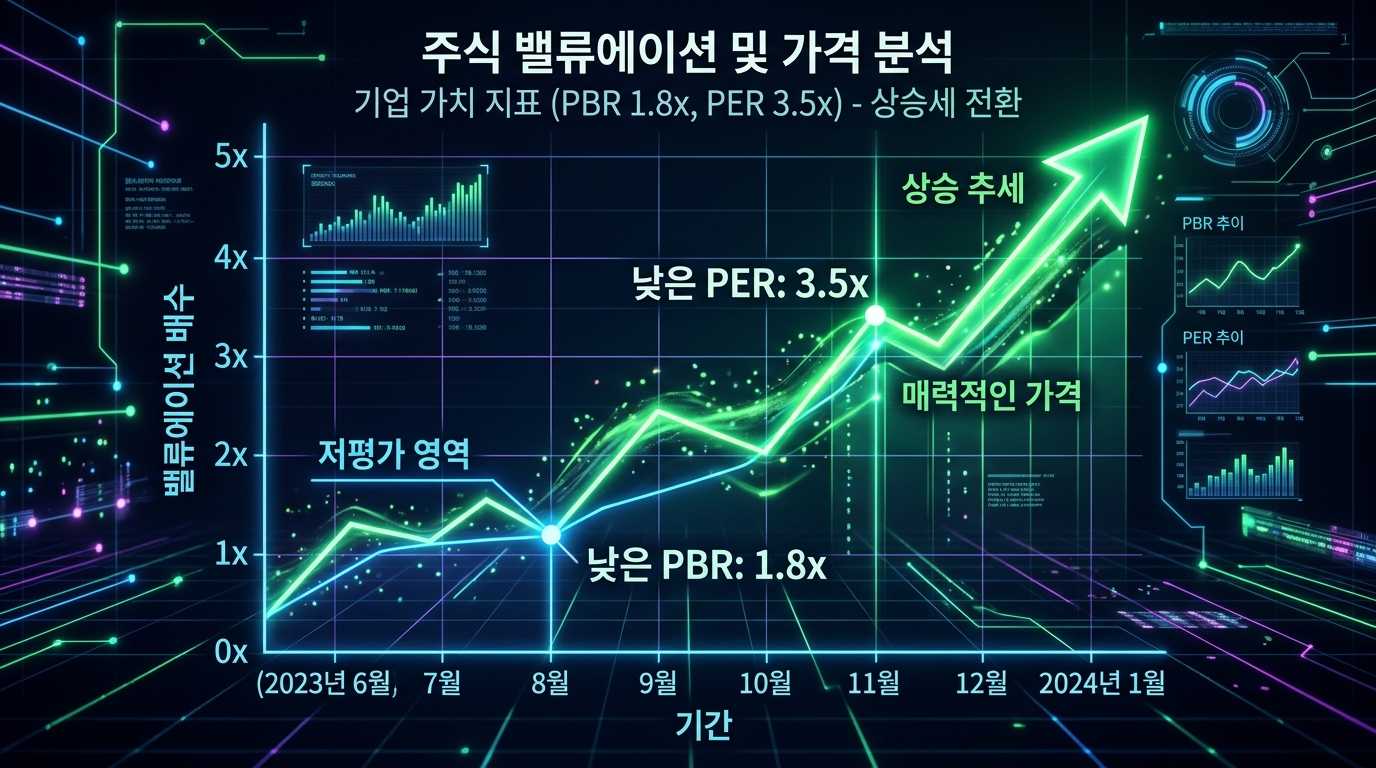
Currently, SK hynix's 12-month forward Price-to-Book Ratio (PBR) has fallen to around 1.8x and its Price-to-Earnings Ratio (PER) to 3.5x, dropping back to levels seen before the AI rally accelerated.
SK hynix ADR (SKHY) listed in the US is also maintaining a certain premium over the underlying stock since its initial listing, proving high interest from local US investors.
Although the stock price recently underwent a correction after the earnings release, its valuation attractiveness is highlighted as the multiple against record earnings has reached historical lows.
[Image: /stdaily/uploads/202608/gen_6a7c1b4b4ab428.32101749.png]
Analyst & Institutional Consensus
Securities firms observe that SK hynix's HBM leadership will not just stop at the 5th generation HBM3E but will naturally transition to the 6th generation HBM4.
Global investment banks are backing scenarios where SK hynix maintains its solid lead in the HBM4 market, which will be loaded onto Nvidia's next-generation 'Rubin' accelerator platform.
Major domestic securities firms maintained their target price for SK hynix at around 2.8 million KRW, evaluating that the recent decline was an excessive correction relative to its intrinsic value.
In particular, analysis suggests that Temasek's review of a direct equity purchase could be a significant trigger to resolve supply-demand uncertainties for Korean large-caps.
Risk Factors
- **Rapid Yield Improvements by Competitors**: With recent trends indicating that Samsung Electronics has rapidly improved its HBM4 production yield to the 80% range, there is a possibility that the monopoly benefit SK hynix enjoyed could restructure into a three-way competition.
- **Potential Price Pressure on HBM3E**: Unlike the tight supply of commodity DRAM, there are concerns that the price of HBM3E, which has seen an increase in supply volume, could undergo fluid adjustments within the upper limits of Long-Term Agreements (LTA).
- **Uncertainties Regarding Subsidiary Solidigm**: While a pre-IPO and US listing of its US NAND subsidiary Solidigm are being discussed, market interpretations may diverge regarding dilution or double-listing issues.
Investment Perspective Summary
SK hynix is moving beyond being a single HBM memory supplier to expanding its 'Full-Stack AI Memory' ecosystem, such as collaborating with SanDisk to establish the first standard specification for HBF (High Bandwidth Flash).
In the short term, it has experienced stock price corrections due to fierce chase from competitors and missing market consensus, but the consensus points to a scenario where the structural growth path is not compromised.
Along with robust cash generation of over 150 trillion KRW, if the large-scale special shareholder return scenario scheduled for the second half of the year materializes, it is projected to strongly support the stock's downside resilience.
[Image: /stdaily/uploads/202608/gen_6a7c1b54d45d33.20950581.png]
Investor Checklist Q&A
Q1. What was the background behind the temporary drop in the stock price despite recording a historic Q2 operating profit of 60 trillion KRW?
A1. Although it achieved record-high earnings, it fell about 4.8% below the market consensus (approx. 63.6 trillion KRW), and concerns over a slowdown in Big Tech's AI investments overlapped to serve as a pretext for profit-taking.
Q2. What is the timeline for the generational transition from HBM3E to HBM4?
A2. The mass production of HBM4 is accelerating starting in the second half of 2026, and a scenario where shipment volume expands explosively in tandem with the introduction cycle of next-generation AI platforms in 2027 is highly likely.
Q3. What kind of technology is the High Bandwidth Flash (HBF) unveiled at 'FMS 2026'?
A3. It is a next-generation NAND-based technology that combines HBM-class speed with SSD-class high capacity. SK hynix is aiming to alleviate computational bottlenecks by partnering with SanDisk to establish the first standard specification.
Q4. How does the news of Temasek's equity investment affect actual market supply and demand?
A4. The fact that a global top-tier sovereign wealth fund like Singapore's Temasek is approaching via a direct investment method rather than an external asset manager acts as a positive supply-demand factor that guarantees the long-term value and reliability of Korea's leading semiconductor stock.
Q5. What is the nature of the shareholder return policy expected in the second half?
A5. The disclosure of detailed return measures within Q3, promised during the Q2 earnings call, is approaching. If a massive treasury stock buyback and retirement plan are presented, it is highly likely to drive up shareholder value per share further.