Hello. This is Daily Stock, delivering daily market updates and deep macroeconomic analysis.
[Image: /stdaily/uploads/202608/gen_6a8c9d4e3434b3.06222037.png]
Key Summary
- **Historical Demise of YCC Policy**: Following the end of negative interest rates, the Bank of Japan (BOJ) has completely dismantled its Yield Curve Control (YCC) policy, entering a path of monetary normalization.
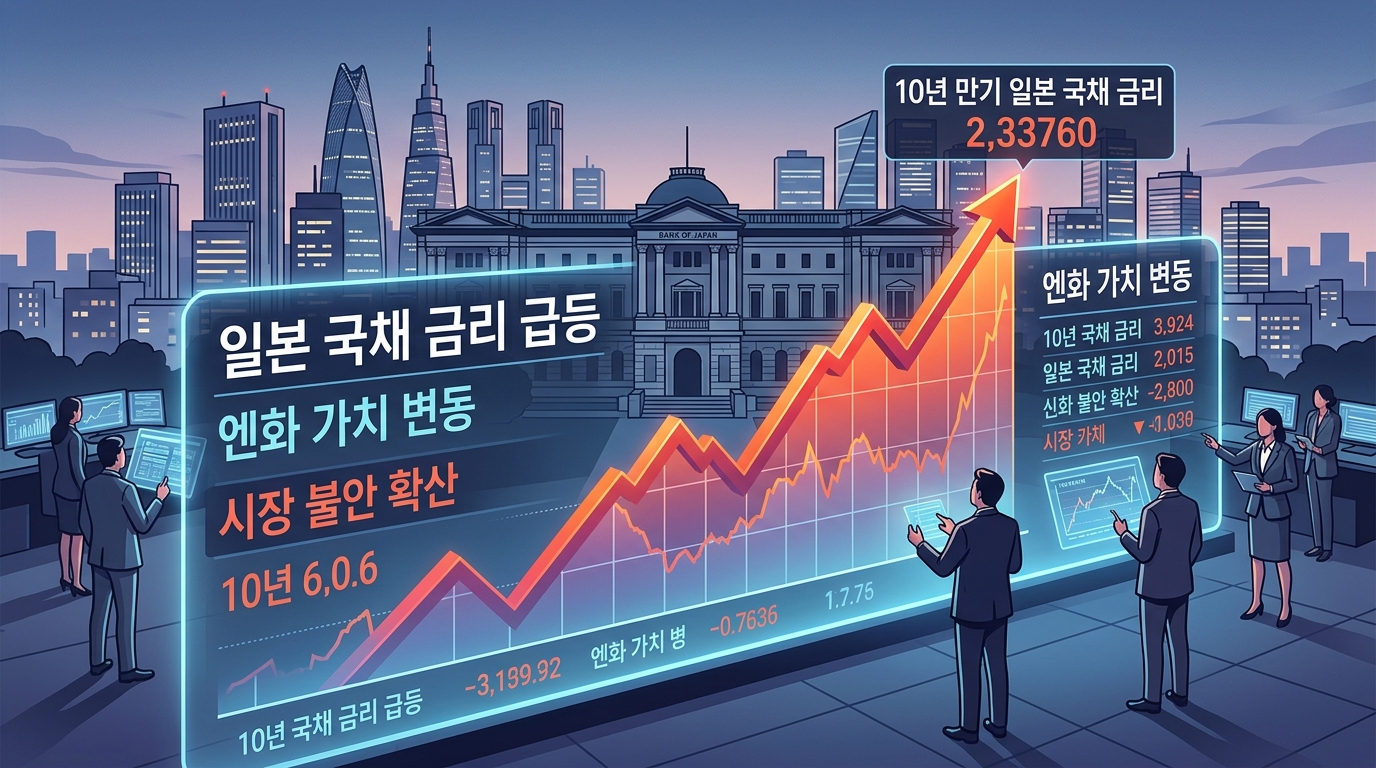
- **JGB Yield Hits 30-Year High**: Driven by reduced BOJ purchases and accelerating monetary tightening, Japan’s 10-year government bond yield intraday surpassed 2.945%, marking its highest level in nearly 30 years.
- **Tri-Polar Decoupling and Asset Repatriation**: Amid diverging monetary policies between the US, Europe, and Asia, the risk of unwinding the "Yen Carry Trade"—where cheap yen was borrowed to invest in high-yield global assets—has emerged as a major talking point in capital markets.
Current Market Overview
The global financial market is displaying a distinct tri-polar decoupling pattern as the US Federal Reserve's policy direction, signs of retightening by the European Central Bank (ECB), and the BOJ's rapid rate normalization collide.
Despite coordinated market interventions by Japanese foreign exchange authorities and the US Treasury, the USD/JPY exchange rate has fluctuated around 159.19 yen, showcasing a tight tug-of-war between depreciation pressure on the yen and tightening anxieties.
Markets have aggressively priced in a 70% to 80% probability that the BOJ will hike its policy rate from the current 1.0% to 1.25% at its upcoming Monetary Policy Meeting on September 17–18.
Under this macroeconomic volatility, South Korean and US stock markets are treading with extreme caution.
As of intraday on August 25, 2026 (provisional), the KOSPI stands at 6,696.96, the KOSDAQ is at 813.33, and the USD/KRW exchange rate is fluctuating around 1,382.80 won.
Meanwhile, the Nasdaq Composite continues to trade around the 26,030.45 level.
According to the proprietary Daily Stock Fear & Greed Index, investor sentiment is currently in a strictly neutral zone.
The KOSPI Fear & Greed Index stands at Neutral (49.3), showing signs of stabilizing compared to last week’s Neutral (54.8), one month ago’s Extreme Fear (13.5), and three months ago’s Neutral (56.2), though participants remain wary of additional tightening.
The Nasdaq Fear & Greed Index is also at Neutral (55.2), maintaining a calm, wait-and-see stance compared to last week's Neutral (58.4), one month ago's Neutral (41.3), and three months ago's Neutral (55.5).
Financial Analysis
With assets totaling approximately 750 trillion yen—roughly 130% of Japan’s GDP—the BOJ holds the most bloated balance sheet among major central banks.
The termination of the YCC policy signals an end to the era where the central bank suppressed yields by purchasing unlimited amounts of government bonds, restoring the market's natural price discovery mechanism.
As the pace of normalization quickened, the benchmark 10-year Japanese Government Bond (JGB) yield surged, briefly spiking past 2.94% in a sharp market reaction.
Furthermore, Japan's Corporate Goods Price Index (CGPI) for July jumped 7.2% year-on-year, and the core Consumer Price Index (CPI), excluding fresh food and energy, rose 1.9%, signaling clear second-round inflationary pressures driven by cost pass-through.
These shifting macroeconomic indicators leave the BOJ with little justification to maintain ultra-low interest rates, bolstering internal arguments to shorten the tightening cycle from six-month intervals to three-to-four-month intervals.
| Key Economic Indicators | Latest Recorded Value (End of August 2026) | Previous Value / Market Expectation | Remarks |
|---|---|---|---|
| **BOJ Short-term Policy Rate** | **1.0%** | 0.75% (Before June 2026) | Highest since 1995 (31-year high) |
| **Japan 10-Year JGB Yield** | **2.945% (Intraday)** | Around 1.85% (Early 2026) | Highest since September 1996 (nearly 30-year high) |
| **July CGPI (YoY)** | **Up 7.2%** | Accelerated raw material cost pass-through | Driven by rising plastic feedstock costs like naphtha |
| **July Core CPI (YoY)** | **Up 1.9%** | 1.6% (Previous month) | Growth accelerated for the first time in 9 months |
| **September Rate Hike Outlook** | **1.25% Hike Likely (70–80%)** | Projected gradual 25bp hike per half-year | Rising possibility of a shortened hike cycle |
[Image: /stdaily/uploads/202608/gen_6a8c9d59088404.76749085.png]
Valuation
After reaching historical peaks, Japan's benchmark Nikkei 225 index has been undergoing multiple adjustments as monetary policy tightens.
A JGB yield environment nearing the 3% threshold increases borrowing costs for Japanese corporations, which dampens the relative valuation appeal of equities.
In particular, large export-driven companies, which previously logged massive operating profits solely due to a weak yen, could see their translation profit momentum weaken significantly.
Conversely, the financial sector (commercial banks and insurance companies) is displaying a diverging trend, drawing attention for its low Price-to-Book Ratio (PBR) appeal as long-term yields rise and bolster Net Interest Margin (NIM) expectations.
From a global valuation perspective, the process of the yen normalizing out of its extremely undervalued zone in terms of real effective exchange rates could provide a re-rating opportunity for high-value-added, niche domestic Japanese enterprises.
Expert & Institutional Analysis
Major local institutions, including Nomura Securities and Sumitomo Mitsui DS Asset Management, expect the BOJ to aggressively advance its monetary policy timeline to guard against the risk of falling "behind the curve."
Departing from its previous relaxed stance of "a 25bp hike every half-year," a highly plausible scenario has emerged where the BOJ implements an additional hike this autumn (September or October), quickly raising the terminal rate to around 1.75% by the first half of next year.
Global credit rating agency Fitch Ratings noted that a sustainable and real recovery of the yen requires actual policy rate hikes by the BOJ, rather than simple verbal interventions or temporary joint intervention efforts.
Krishna Bhimavarapu, senior economist at State Street, also commented that improvement in Japan's employment conditions and the broadening of cost pass-through are solidifying inflation expectations, making rapid rate hikes a logical conclusion.
Risk Factors
The most destructive risk is the potential for a simultaneous shock in overseas bond markets driven by "global asset repatriation" by Japanese investors.
Japanese institutional investors, such as life insurance companies and pension funds, hold approximately $3 trillion in foreign debt. If a stronger yen coincides with rising JGB yields, the incentive to sell US Treasuries and European bonds to repatriate funds back home will surge.
Furthermore, if the pace of the yen carry trade unwinding spins out of control, it could contract global liquidity and trigger rapid deleveraging across high-risk assets, including growth stocks and cryptocurrencies.
Domestically, Japan also faces a critical fiscal dilemma regarding its national debt service costs.
For every 1-percentage-point rise in interest rates, the annual debt service costs that the Japanese government must shoulder swell by trillions of yen, potentially acting as a boomerang that threatens fiscal sustainability.
[Image: /stdaily/uploads/202608/gen_6a8c9d6323d2c0.68804693.png]
Investment Outlook Summary
The BOJ’s complete abandonment of YCC and early rate hikes represent an inflection point that alters global financial market liquidity, extending far beyond the monetary policy of a single nation.
Investors should evaluate potential benefits for South Korean export sectors that compete closely with Japan (such as automotive and shipbuilding) as the yen strengthens, while seriously considering portfolio diversification into yen-denominated assets themselves.
However, because temporary volatility in global stock markets due to yen carry unwinding remains an active scenario, a phased approach to entering the market rather than hasty leveraged investing may be prudent.
In a phase where the tri-polar decoupling between the US, Europe, and Asia deepens, the ability to closely cross-verify fundamental strength and currency valuation shifts across regions is more critical than ever.
FAQ
Q1. What was the decisive reason behind the BOJ's decision to scrap its long-standing YCC policy?
A1. Prolonged import price surges and a weak yen pushed corporate cost burdens to their limits, raising the risk of entrenched cost-push inflation. Additionally, criticism that artificially suppressing interest rates was deepening market distortions also played a major role.
Q2. Why is the 10-year JGB yield rising above 2.94% a warning sign for global markets?
A2. If JGB yields—which have been kept ultra-low for the past 30 years—become more attractive, it could trigger a domino effect where massive Japanese capital parked abroad (estimated at $3 trillion) returns home, prompting sales of US Treasuries and European bonds.
Q3. What mechanism does the "unwinding of the yen carry trade" specifically refer to?
A3. It refers to reversing transactions where investors borrowed cheap yen at near-zero rates to invest in high-yield assets in countries like the US. When Japanese rates rise and the yen strengthens, the cost to repay those loans surges, forcing investors to quickly sell overseas assets and buy yen to pay down debt.
Q4. Is a strengthening yen positive or negative for the Korean stock market?
A4. It is a double-edged sword. While export sectors like Korean autos and shipbuilding that compete head-to-head with Japanese firms globally may benefit from enhanced price competitiveness, fears of capital flight across emerging markets due to shrinking global liquidity could act as a drag.
Q5. What is the expected schedule for future BOJ rate hikes?
A5. Markets view an additional hike in the short-term policy rate to 1.25% at the September 17–18, 2026 meeting as highly probable. Following that, a dominant scenario suggests a rapid push to bring the terminal rate to 1.50% or up to 1.75% by early 2027.
---