Hello, this is Daily Stock.
[Image: /stdaily/uploads/202610/gen_6ac58bbf823974.80965530.png]
Key Takeaways
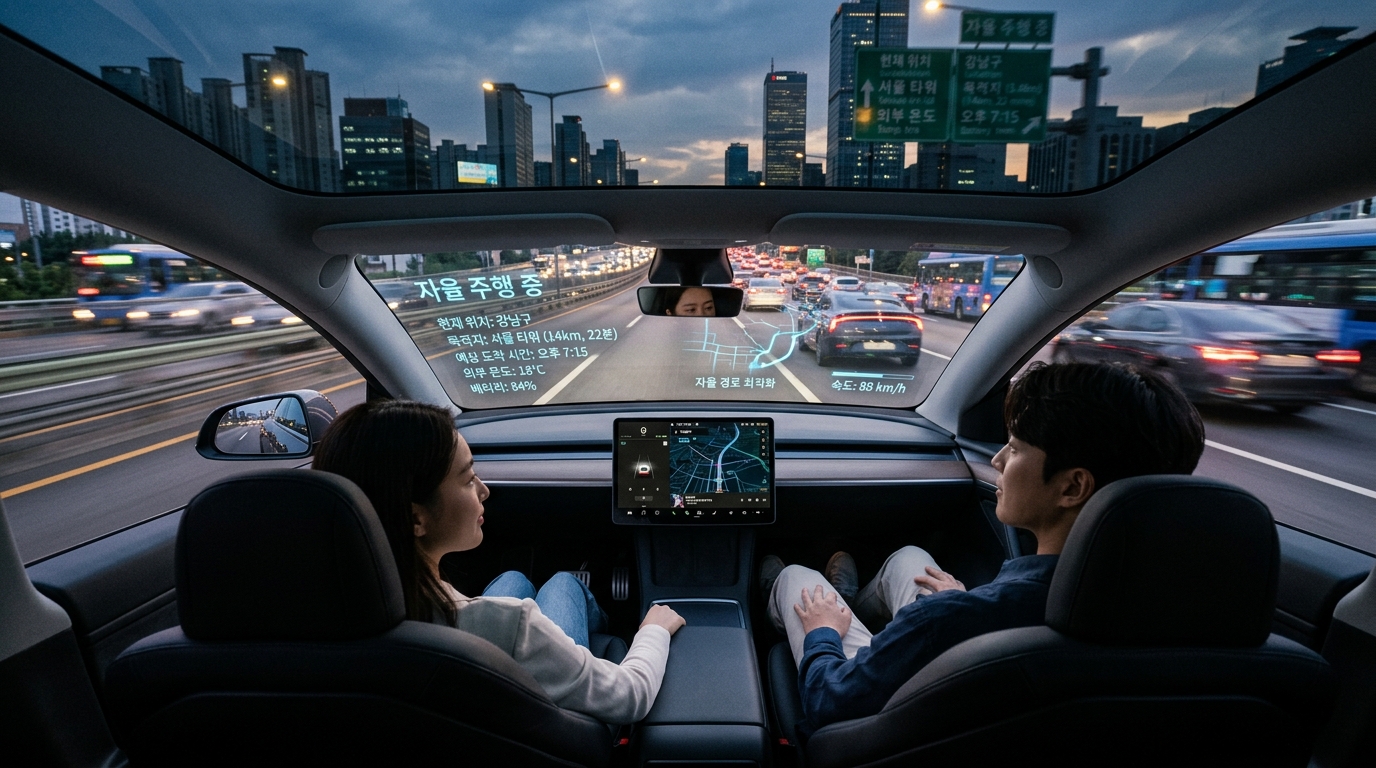
- Tesla is accelerating its transition into a mobility platform, centered on mass production of the Cybercab—a purpose-built autonomous vehicle without a steering wheel or pedals—and driverless Full Self-Driving (FSD) approvals.
- Amid aggressive AI computing and capital expenditure (CapEx) exceeding $25 billion annually, the company faces free cash flow (FCF) volatility and operating margin compression hovering in the low 1% range.
- Whether Tesla can successfully be re-rated from a pure electric vehicle (EV) manufacturer into a "Physical AI and autonomous mobility platform" depends on commercial paid mileage generation and the pace of regulatory clearances.
Current Market Context
As of intraday trading on October 7, 2026 (provisional; latest confirmed price around $370.59), Tesla (TSLA) shares face a tangible test of its autonomous driving commercialization roadmap.
Tesla is conducting Cybercab deployment trials after securing limited driverless operating permits primarily across major cities in Texas (Austin, Dallas, Houston) and Florida.
However, market scrutiny is shifting away from concept demonstrations toward unit economics per mile and the viability of building out its proprietary ride-hailing ecosystem.
With the Nasdaq Composite undergoing tech-led rebalancing around the 27,599.79 level, Tesla's price volatility remains tightly linked to macroeconomic conditions.
The Daily Stock Proprietary Fear & Greed Index for the Nasdaq currently reads Neutral (47.4).
This reflects a rebound from Fear (28.9) one week ago, Neutral (45.2) one month ago, and Neutral (54.0) three months ago, indicating a cautious wait-and-see stance across mega-cap Big Tech.
The KOSPI Fear & Greed Index also stands at Neutral (42.0), showing a gradual recovery compared to Fear (35.5) one week ago, Fear (32.5) one month ago, and Extreme Fear (12.5) three months ago.
| Indicator | Value / Level (As of 2026-10-07 Intraday (Provisional)) | Notes |
|---|---|---|
| Tesla (TSLA) Stock Price | Current session unverified (Latest confirmed ~$370.59) | Pricing in Q3 delivery surprise |
| Nasdaq Composite Index | 27,599.79 | Continued valuation sensitivity in tech |
| KOSPI Index | 6,941.39 | Under global liquidity and FX influence |
| KOSDAQ Index | 919.92 | Correlated with growth stock sentiment |
| USD/KRW Exchange Rate | 1,340.00 KRW | FX volatility monitoring |
| Nasdaq Fear & Greed Index | 47.4 (Neutral) | Improved from 28.9 (Fear) 1 week ago |
| KOSPI Fear & Greed Index | 42.0 (Neutral) | Improved from 35.5 (Fear) 1 week ago |
Financial Analysis
In Q2 2026, Tesla posted revenue of approximately $28.24 billion, up 25.5% year-over-year, sustaining top-line expansion.
However, adjusted EPS fell short of consensus at $0.33, while operating margin compressed sharply to 1.4% due to price reductions and low-interest financing promotions.
The most notable development is the sharp increase in CapEx driven by aggressive investment in Physical AI.
With full-year CapEx guidance exceeding $25 billion, Q2 free cash flow (FCF) flipped into a deficit of approximately -$1.09 billion.
[Image: /stdaily/uploads/202610/gen_6ac58bc9a17108.68491947.png]
Cash outflows are primarily driven by tooling for dedicated Cybercab Gigafactories, Nvidia AI accelerators, and investments into Tesla's in-house Dojo supercomputing clusters.
On the other hand, Q3 vehicle deliveries came in at 486,532 units, beating consensus (approx. 461,900 units) by 5.3%, demonstrating core automotive resilience.
Concurrently, the Energy Storage System (ESS) division deployed 13.7 GWh during the quarter, providing a high-margin buffer.
Valuation
Tesla currently commands a steep premium at the intersection of traditional automakers and Big Tech software firms.
Its 12-month forward P/E exceeds 150x, substantially higher than traditional automakers like General Motors (GM, ~6x) and leading AI semiconductor names like Nvidia (NVDA, ~25x).
This elevated valuation reflects the pricing-in of technological scarcity relative to average S&P 500 large-cap growth multiples.
Tesla's valuation sensitivity is heightened in an environment where the US 10-year Treasury yield (US10Y) and the US Dollar Index (DXY) remain elevated.
Because of its prolonged cash flow duration, every 10 bps shift in benchmark yields meaningfully impacts the present value of distant cash flows via discount rate expansion.
Ultimately, sustaining current valuation levels requires both automotive gross margin stabilization and clear monetization from the Cybercab platform, targeting operating costs below $0.30 per mile.
Analyst & Institutional Perspectives
Wall Street investment banks remain divided between upside potential and structural risks.
Morgan Stanley noted that Tesla's structural enterprise value hinges on autonomous mobility unit economics, emphasizing that the number of approved driverless vehicles and paid trip density must be quantitatively demonstrated.
Goldman Sachs viewed the delivery rebound favorably, but cautioned that $25 billion in annual CapEx and subsequent depreciation will constrain near-term margins.
Conversely, Morningstar cited expanding FSD subscriptions (surpassing 1.48 million) and autonomous data accumulation rates, maintaining a fair value estimate near $450 based on long-term growth.
Broadly, institutional investors are requiring greater visibility into the commercial rollout schedule and pricing models for driverless ride-hailing networks beyond software progress alone.
Risk Factors
The primary downside risk involves regulatory hurdles and safety validations surrounding autonomous driving.
The National Highway Traffic Safety Administration (NHTSA) continues its investigations into FSD performance under low-visibility conditions (fog, sun glare) and Federal Motor Vehicle Safety Standards (FMVSS) compliance for vehicles lacking physical controls.
A single severe safety incident could trigger permit suspensions or delays in regional deployment expansions.
Second is the risk of cash burn from monetization delays on AI infrastructure.
Amid industry-wide CapEx competition, training advanced autonomous models requires massive spending, while commercial ride-hailing revenues may materialize gradually over several years.
Third is macro sensitivity tied to waning rate-cut expectations and spikes in the CBOE Volatility Index (VIX).
If liquidity tightening resurfaces, long-duration growth assets like Tesla—whose cash flow profiles are heavily weighted toward future years—could face targeted multiple contraction.
Investment Outlook
Tesla sits at an inflection point: verifying whether it can transcend auto manufacturing to establish itself as a "Physical AI" platform.
While quarterly vehicle delivery beats provide valuation support, unlocking sustained upside depends on commercial deployment metrics for Cybercab.
Rather than reacting to short-term event-driven volatility, investors may benefit from tracking autonomous paid mileage, regulatory approval breadth across states, and quarterly free cash flow recovery trends.
With market sentiment neutral, a disciplined, milestone-contingent approach remains prudent.
Investor FAQ
Q1. What are the key hardware differentiators of the Cybercab?
It is a purpose-built two-seater platform completely devoid of a steering wheel and pedals. It utilizes a vision-only system without LiDAR and carries a compact battery pack (~48 kWh) to minimize manufacturing costs.
Q2. Why are unit economics critical in autonomous commercialization?
To compete effectively against traditional ride-hailing services like Uber and Lyft, total operating costs—including vehicle depreciation and maintenance—must drop below $0.30 per mile to support a sustainable profit model.
Q3. Where are driverless robotaxi operations currently authorized?
Tesla holds driverless operating permits across six major metropolitan markets in the United States, primarily in Texas (Austin, Dallas, Houston) and Florida (Miami, Orlando, Tampa), where phased pilot testing is underway.
Q4. What drove Tesla's recent transition into negative free cash flow (FCF)?
Intensive CapEx exceeding $25 billion annually, directed toward AI training clusters, supercomputing infrastructure, and dedicated Cybercab assembly line tooling.
Q5. What core risk indicators should investors monitor?
Findings from NHTSA's ongoing FSD safety inquiries, state-level regulatory delays for driverless operations, and potential multiple de-rating driven by prolonged higher interest rates.