Daily Stock is here to help you invest successfully by deeply analyzing the core issues of the global financial markets.
Key Summary
- **$830 Billion Investment Frenzy**: The 2026 capital expenditure (CAPEX) forecast for the world's top 9 cloud service providers (CSPs) has been revised upward to $830 billion, continuing the largest infrastructure build cycle in history.
- **Big Tech Stock Corrections and Profitability Doubts**: Following the announcement of astronomical spending plans—such as Amazon's $200 billion and Microsoft's $190 billion—the Nasdaq Fear & Greed Index fell to 27.2 (Fear), highlighting mounting market concerns over monetization.
- **Deepening Tri-Polar Decoupling**: Unlike the US-centered liquidity expansion monopolizing AI infrastructure investment, divergent fundamental trends are becoming clearer in Europe, which is suffering from a manufacturing slump, and Asia, which is navigating a weak yen and monetary policy shifts.
Current Market Overview
As of July 1, 2026, global financial markets are caught in a massive capital war to build out artificial intelligence (AI) infrastructure. Aggressive investment by US Big Tech shows no signs of slowing down, with the combined capital expenditures (CAPEX) of major CSPs significantly exceeding previous forecasts.
However, the capital market's response is cooling down. The Nasdaq Fear & Greed Index currently stands at 27.2 (Fear), a sharp decline from the Neutral level (59.5) seen a month ago. This shift is driven by widespread caution that despite astronomical spending, the actual pace of AI service monetization is not keeping up with the rate of investment. Indeed, Microsoft (MSFT) recently sliding to around $349.20 to mark a 52-week low clearly reflects this market anxiety.
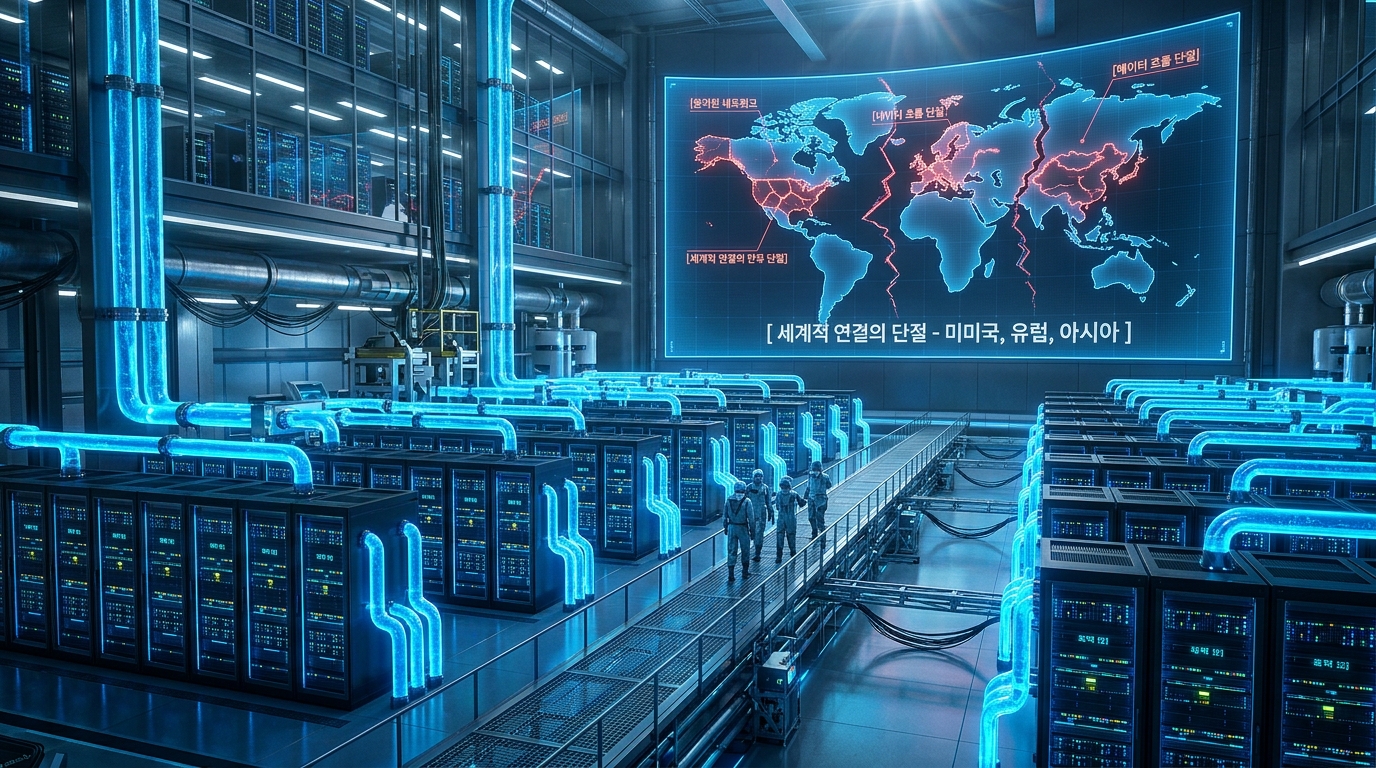
At the same time, global stock markets are exhibiting a US-Europe-Asia tri-polar decoupling pattern. While the US is absorbing massive amounts of liquidity to fund its heavy CAPEX, Europe is focusing on defending against stagflation amid energy shortages and slowing manufacturing. Asia is carving its own path, characterized by carry trades fueled by an ultra-weak Japanese Yen (at the 161 range) and China's liquidity management dilemma.
[Image: /stdaily/uploads/202607/gen_6a4412d7158025.10562579.png]
Financial Analysis
Looking closely at the detailed CAPEX guidance of major corporations for 2026, the scale of spending is staggering. According to major research institutions like TrendForce, the total estimated CAPEX of the top 9 global CSPs for 2026 is approaching nearly $830 billion.
In particular, the individual CAPEX figures for the "Big Four"—Amazon, Microsoft, Google (Alphabet), and Meta—continue to rewrite historical highs:
| Company | Est. 2026 CAPEX (USD) | Key Drivers of YoY Growth | Notable Details |
|---|---|---|---|
| **Amazon (AMZN)** | Approx. $200 Billion (200B) | AWS infrastructure & in-house chip development | Largest single-year CAPEX for any company in history |
| **Microsoft (MSFT)** | Approx. $190 Billion (190B) | Azure AI capacity expansion & adoption of NVIDIA Blackwell/Rubin | Hit a 52-week low recently on massive spending concerns |
| **Google (GOOGL)** | Approx. $180–190 Billion (180-190B) | In-house ASIC (TPU) & next-gen AI data center construction | Upper bound of guidance revised upward |
| **Meta (META)** | Approx. $125–145 Billion (125-145B) | Rising AI memory chip prices & global leased data center expansion | Secured a massive data center lease with India's Reliance |
| **Oracle (ORCL)** | Approx. $50 Billion (50B) | Acceleration of OCI (Oracle Cloud Infrastructure) expansion | Capital intensity reaching historic highs |
This massive influx of capital is driving up demand for raw materials like copper and boosting prices for key components, including High Bandwidth Memory (HBM), placing downward pressure across global supply chains.
Valuation
With the Nasdaq index hitting 25,820.14 points intraday, metrics indicating the capital efficiency of Big Tech are highly volatile. Historically, the capital intensity (CAPEX-to-revenue ratio) of Big Tech companies hovered around 10% to 15%. Currently, it has soared to unprecedented levels of 45% to as high as 57% for some firms.
This high-intensity spending is causing a sharp near-term drop in free cash flow (FCF), which is immediately affecting corporate valuations. As debt-financed CAPEX accumulates without proven asset efficiency, traditional valuation multiples like the price-to-earnings (P/E) ratio have halted multiple expansion and are contracting from their peaks. On the other hand, downstream value chain companies with lesser valuation burdens—such as power grid infrastructure or cooling solution providers (e.g., Vertiv Holdings)—continue to rally, bridging the valuation gap with Big Tech.
Expert and Institutional Analysis
Major global investment banks (IBs) like Goldman Sachs and Morgan Stanley characterize the 2026 AI infrastructure buildout cycle as "not just a simple tech boom, but a massive industrial buildout and a macroeconomic variable."
In a recent report, Goldman Sachs estimated that cumulative global AI CAPEX will reach approximately $7.6 trillion between 2026 and 2031. Given that the depreciation and useful economic life of accelerators (GPUs/ASICs) is only 4 to 6 years, they noted that periodic equipment replacement cycles could drive actual capital expenditure even higher than projected.
However, credit rating agency S&P Global has raised a red flag regarding the pace of debt issuance by Big Tech. They pointed out that "while the fundamental strength and cash-generating power of Big Tech today are much healthier than during the Dot-com or telecom bubble eras, prolonged CAPEX totaling $3 trillion over three years could spread credit risks far and wide."
[Image: /stdaily/uploads/202607/gen_6a4412e2007bc1.32224252.png]
Risk Factors
As the market heads into the second half of 2026, the key risk factors can be summarized into three areas:
First, the 'Monetization Bottleneck' risk. Despite hundreds of billions of dollars in CAPEX, if building meaningful business models and driving consumer demand during the inference phase remains slow, it could spark strong shareholder pushback and a massive sell-off due to deteriorating capital balances.
Second, the 'Power and Infrastructure Bottleneck'. Ultra-large data centers require gigawatt-class (GW) power. However, the slow supply rate of global power grid infrastructure is physically delaying completion times.
Third, 'Geopolitical Risk and Supply Chain Fragmentation'. Persistent tensions in the Middle East and geopolitical conflicts in Asia—where critical hardware manufacturing hubs are concentrated—are accelerating the tri-polar decoupling and sharply expanding component lead times.
Investment Perspective
CAPEX volume has moved beyond a short-term theme to act as a core anchor determining global macro liquidity. In a phase where the Nasdaq Fear & Greed Index has fallen to 27.2 and short-term corrections are playing out, investors should focus on thorough selectivity rather than blindly following tech stocks.
Investors need to closely analyze which segments of the value chain benefit most from the massive flow of Big Tech capital. For instance, rather than high-priced GPUs themselves, market preference may shift strongly toward suppliers generating solid margins in key equipment sectors that solve bottlenecks—such as liquid cooling solutions, power transmission/distribution equipment, and power infrastructure. Additionally, a prudent hedging strategy that monitors exchange rate trends (KRW/USD at 1,549.90) and the direction of monetary policy decoupling among the US, Europe, and Asia in real-time remains highly valid.
Investor Checklist Q&A
- **Q1. Does the massive 2026 CAPEX spending by Big Tech impact stock prices negatively?**
- In the short term, concerns over free cash flow (FCF) erosion and margin pressures due to heavy spending can put downward pressure on stock prices, as evidenced by Microsoft's recent new low. However, in the long term, it is often viewed as an indispensable investment to secure dominance in the AI market.
- **Q2. Which Big Tech company is investing the most capital in 2026?**
- Amazon (AMZN) has declared a capital expenditure of approximately $200 billion, projecting the largest single-firm CAPEX spend in history on a cumulative basis.
- **Q3. Why are infrastructure companies other than semiconductor chipmakers like NVIDIA getting attention?**
- Chips account for only about 25% of the total cost of building an AI data center. The remaining 75% goes toward power generation equipment, cooling systems, power grid construction, land, and network equipment outside of accelerators, driving rapid growth across the infrastructure hardware sector.
- **Q4. What is the current market sentiment indicator for the US Nasdaq?**
- According to Daily Stock's proprietary Fear & Greed Index analysis, sentiment in the Nasdaq market currently stands at 27.2 (Fear), reflecting a significant contraction in confidence compared to the Neutral level (59.5) a month ago.
- **Q5. What are the key risks investors should watch during this infrastructure investment cycle?**
- The most significant risks are construction delays due to power supply limits, disruptions in the Asian semiconductor supply chain from US-China tensions, and monetization risk, which requires companies to prove actual AI business revenue achievements within the year.