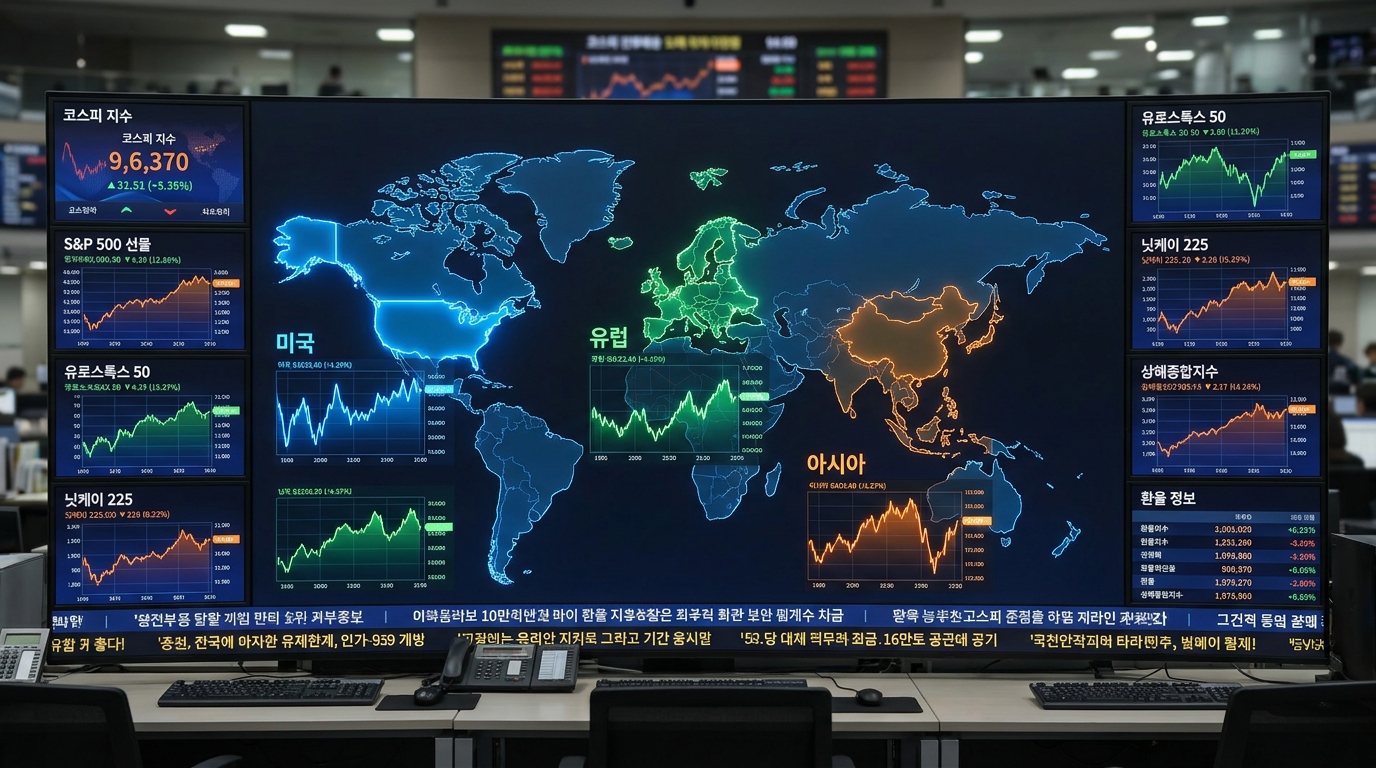
Title: Intraday KOSPI Supply/Demand Report for April 21, 2026: Key Sectors Picked by Foreigners Amid Tri-polar Fundamental Decoupling
Hello, as an expert writer for Daily Stock, I will sharply analyze today's intraday market supply and demand flows along with the global macro environment.
[Image: /stdaily/uploads/202604/gen_69e678220b5ed9.12637097.png]
Key Summary
Currently, the KOSPI is recording 6219.09 intraday, with selective foreign buying inflows despite exchange rate pressures and global geopolitical tensions.
As the tri-polar fundamental decoupling among the U.S., Europe, and Asia becomes clear, supply and demand are concentrating on stocks capable of defending against the ripple effects of rising raw material prices.
Current Situation Summary
As of intraday (provisional) on April 21, 2026, the KOSPI index is fluctuating around 6219.09, and the KOSDAQ index at 1174.85.
While the NASDAQ index shows a solid trend at 24383.48, the USD/KRW exchange rate has soared to 1471.00 won, acting as a key variable heightening the volatility of foreign supply and demand.
According to Daily Stock's proprietary Fear & Greed Index, the KOSPI is currently at a Neutral (59.3) level.
This represents a slight increase from Neutral (53.1) a week ago, but compared to escaping the Fear (31.9) phase a month ago and the Extreme Greed (87.4) period three months ago, it reflects a distinctly cautious market sentiment.
On the other hand, the NASDAQ Fear & Greed Index is currently at Greed (68.1), rebounding quickly from Extreme Fear (15.6) a month ago, indicating a revival of risk-on sentiment.
This psychological divergence suggests that the direction of global liquidity is moving differently depending on regional macro indicators.
Financial Analysis
In today's intraday KOSPI market, the top stocks concentrated with foreign buying are export-driven defensive stocks such as power equipment and automobiles.
Representative related companies are proving their solid profit-generating capacity despite sustained North American infrastructure investments and global supply chain disruptions.
These companies are using the high exchange rate environment of 1471.00 won per dollar as an opportunity to maximize export margins, thereby improving their financial health.
In particular, despite the upward cost pressure from surging raw material prices like copper, their structural strength in defending profit margins through price hikes (P) stands out.
[Image: /stdaily/uploads/202604/gen_69e67836735b27.05527148.png]
Valuation
The global stock market is currently undergoing a rapid valuation reassessment depending on the macro correlation of the U.S., Europe, and Asia regions.
The U.S. stock market justifies its premium valuation based on robust services PMI and employment, while Europe remains in a relatively discounted range due to a prolonged manufacturing slump.
| Region | Key Index (Intraday/Futures) | Core Fundamental Factors | Valuation Attractiveness | Relative Strength Comparison |
|---|---|---|---|---|
| **U.S.** | NASDAQ (24383.48) | Sustained AI investment, solid consumption indicators | Premium maintained amid overvaluation debate | Very Strong (Greed phase) |
| **Europe** | Euro Stoxx 50 (Intraday price unconfirmed) | Slowing manufacturing PMI in major countries like Germany | Undervalued but lacking growth momentum | Weak (Structural recession concerns) |
| **Asia** | KOSPI (6219.09) | Export-driven earnings improvement, high exchange rate benefits | Undervaluation resolved by expectations for value-up policies | Neutral (Supply/demand volatility persists) |
Even within Asian stock markets, the valuation differentiation among South Korea, Japan, and China is deepening due to differences in central bank stances.
The KOSPI is being tested for a transition to an earnings-driven market at the historical level of 6219.09, and qualitative changes in foreign supply and demand are expected to determine the expansion of the Price-to-Earnings Ratio (PER).
Expert and Institutional Analysis
Global investment banks (IBs) interpret the current market situation as a typical scenario of 'tri-polar fundamental decoupling.'
The potential delay in rate cuts by the U.S. Fed, pressure for preemptive cuts by the European Central Bank (ECB), and the People's Bank of China (PBOC)'s liquidity supply policies are intertwining to trigger global capital movements.
In particular, experts are focusing on the ripple effects of key raw material prices, such as oil and copper.
The surge in copper prices signifies demand for AI data center expansion and power grid replacement, which is considered a factor granting a structural premium to South Korea's power equipment and materials sectors.
Institutional investors warn that oil price volatility driven by geopolitical tensions could constrain global liquidity.
Therefore, rather than Pure Play growth stocks highly correlated with macro factors, it is analyzed that a rotation centered on value stocks with excellent cash flow is leading intraday supply and demand.
Risk Factors
The biggest risk factor is the geopolitical crisis originating in the Middle East and the resulting potential for global supply chain disruptions.
Rising ocean freight rates and logistics bottlenecks are potential triggers that could damage the Q2 operating profit margins of top KOSPI stocks, which are highly dependent on imports and exports.
Furthermore, as the USD/KRW exchange rate reaches the critical threshold of 1471.00 won, the growing concern over foreign exchange losses for foreign investors is also a burden.
If global liquidity rapidly flocks to the dollar as a safe asset, the possibility cannot be ruled out that intraday buying flows could instantly flip to a selling advantage.
Investment Perspective Summary
Summarizing the current intraday supply and demand flows, the market is compressing into stocks with clear earnings visibility despite macro uncertainty.
If the fundamental decoupling among the U.S., Europe, and Asia continues, investors need to discover intersection sectors that can simultaneously benefit from the policies of each region.
In conclusion, rather than blind chase buying, a strategy of balancing the portfolio around export defensive stocks with guaranteed valuation attractiveness appears effective.
Continuous monitoring is required to determine whether the intraday inflow of foreign supply and demand is a short-term exchange rate effect or a bet on structural fundamental improvement.
[Image: /stdaily/uploads/202604/gen_69e6784b988db0.62911829.png]
Frequently Asked Questions
1. What is the core of the current global fundamental decoupling?
It refers to the phenomenon where regional economic strengths are diverging: the U.S. continues to grow with robust services and AI investments, while Europe suffers a manufacturing slump, and Asia implements selective stimulus measures.
2. What is the impact of the 1471 won USD/KRW exchange rate on KOSPI supply and demand?
Generally, a high exchange rate can instill fears of FX losses among foreign investors, potentially encouraging selling, but it also improves the earnings of export companies like automakers, sometimes causing supply and demand to concentrate in specific sectors.
3. Why is the KOSPI Fear & Greed Index at Neutral (59.3)?
Although it rebounded from the Fear (31.9) phase a month ago, surging exchange rates and geopolitical risks remain. Thus, unlike the NASDAQ (68.1, Greed), market sentiment has not fully recovered and maintains a tense wait-and-see attitude.
4. To what extent do rising oil and copper prices impact the stock market?
Surging raw material prices have a dual nature: they heighten inflationary pressures, limiting the expansion of global liquidity, but simultaneously provide massive orders and earnings momentum to the energy and power equipment sectors.
5. What should investors be cautious about when interpreting intraday supply and demand data?
Since intraday (provisional) supply and demand can fluctuate significantly before the market closes due to program trading or short-term profit-taking, investors should check its correlation with global macro indicators together rather than relying on a single data point.