[Image: /stdaily/uploads/202603/gen_69bd9a439e67d3.02951876.png]
Hello, I am a specialized writer for Daily Stock, guiding the direction of the domestic stock market amidst global macro trends.
Today, we will conduct an in-depth analysis of which stocks foreigners and institutions are sweeping up during KOSPI trading hours amid extreme decoupling between the US and Asian stock markets.
Core Summary
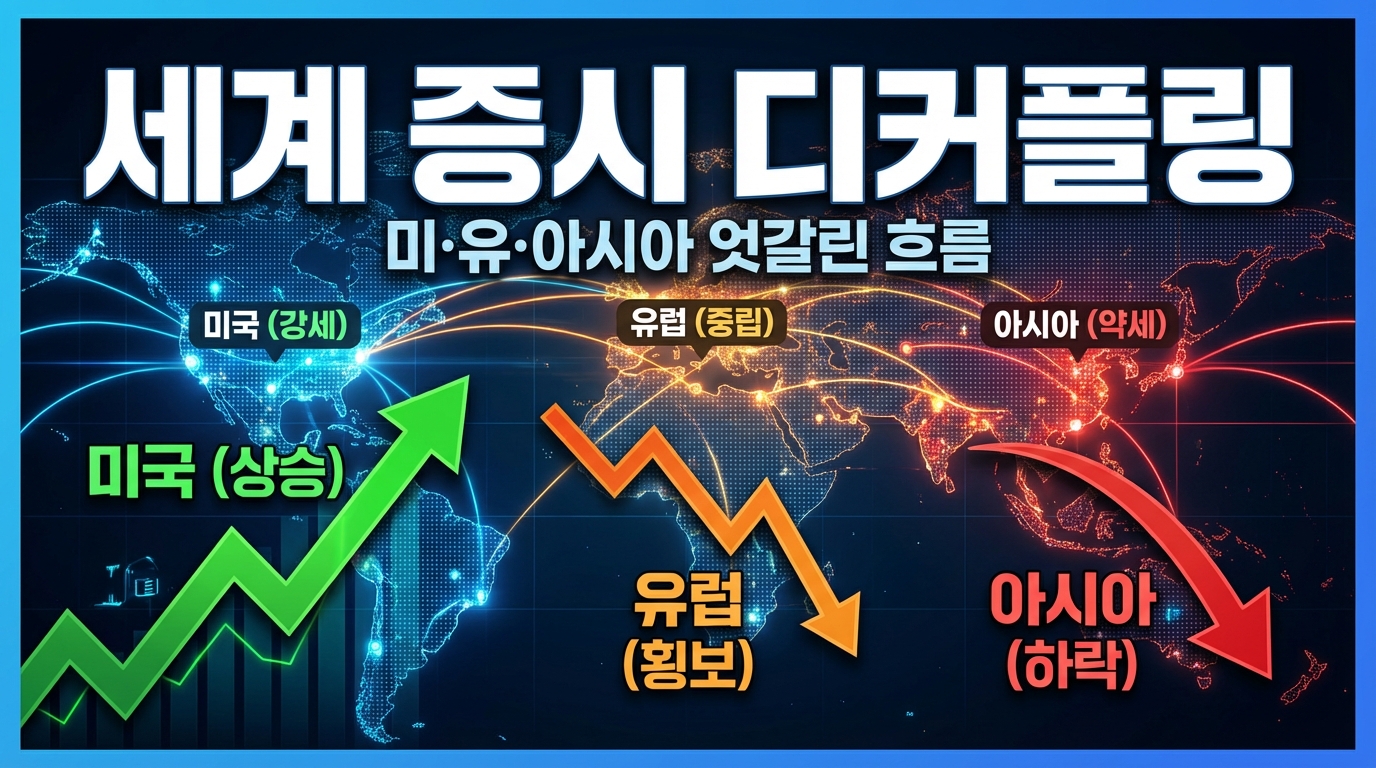
The global stock market is currently showing a distinct decoupling trend, with the US, Europe, and Asian regions exhibiting different fundamentals.
While the Nasdaq has entered a zone of extreme fear, KOSPI supply and demand are shifting away from semiconductors, the former leading stocks, towards defensive value stocks and energy transition-related stocks. [1][4]
This is a phase where global liquidity is being reallocated due to the combination of profit-taking pressure on US Big Tech, economic slowdown in Europe, and monetary policy divergence between Japan and China.
In the raw materials market, demand for essential infrastructure resources like copper remains robust, leading to reflective benefits for power equipment and nuclear energy-related stocks within the KOSPI. [2]
Current Situation Summary
As of intraday trading on March 21, 2026 (provisional), the KOSPI is recording 5781.20, the KOSDAQ is at 1161.52, and the Nasdaq is showing volatility around the 21838.28 level.
The KRW/USD exchange rate remains high at 1504.60, having a complex impact on foreign supply and demand. [4]
According to Daily Stock's proprietary Fear & Greed Index, the Nasdaq is currently in a state of 'Extreme Fear' (16.4), showing a sharp freeze in investor sentiment compared to 'Fear' 1 week ago (22.6), 'Neutral' 1 month ago (44.4), and 'Fear' 3 months ago (21.7).
In contrast, the KOSPI Fear & Greed Index is currently at the 'Fear' (39.1) level, trending from 'Fear' 1 week ago (28.2), 'Neutral' 1 month ago (57.3), and 'Neutral' 3 months ago (46.1), appearing to secure relative downward rigidity.
Looking at the latest supply and demand trends in this environment, foreigners and institutions are net selling massive amounts of large-cap semiconductor stocks like Samsung Electronics and SK Hynix.
Instead, there is an observable trend of concentrating buying pressure on nuclear and energy infrastructure stocks such as Doosan Enerbility, as well as some pharmaceutical, bio, and secondary battery stocks that have strong defensive characteristics. [2][4]
Financial Analysis
[Image: /stdaily/uploads/202603/gen_69bd9a5796dee8.11327662.png]
Stocks that have risen to the top of foreign and institutional net purchases commonly possess order backlogs or solid cash flows that can withstand external macro shocks.
For example, due to the full-scale nuclear power plant construction cycle in the US, power and energy infrastructure companies have seen increased mid-to-long-term revenue visibility. [2]
In the bio sector, relative financial stability compared to tech stocks is being highlighted as expectations grow for expanding overseas market share in high-margin product lines.
While the semiconductor sector is currently shaken by concerns over a global AI peak-out, these alternative sectors have significant capacity to defend against the impairment of capital efficiency (ROE) based on their earnings defensiveness. [1][4]
Valuation
Currently, global stock market valuations are showing stark contrast due to regional fundamental decoupling.
The US stock market has received a high premium thanks to its leadership in the AI industry, but there is deep caution that the overvaluation burden has reached its limit, as suggested by the recent 'Extreme Fear' indicator of the Nasdaq.
On the other hand, Europe has fallen into a structural low-growth dilemma, resulting in low valuation attractiveness, while Japan has seen a stock price re-rating through governance reforms but is recently facing pressure for interest rate normalization.
Therefore, within the KOSPI market, the energy and bio sectors, which have relatively low Price-to-Book Ratios (PBR) and a clear earnings improvement trend, have emerged as alternatives for global funds seeking to catch up. [1][2]
| Country/Region | Core Macro Indicators & Policy Environment | Stock Market Valuation & Supply/Demand Characteristics |
|---|---|---|
| **US** | Nasdaq Fear & Greed 16.4 (Extreme Fear) | Big Tech profit-taking and shrinking investor sentiment due to overvaluation burden |
| **Europe** | Expectations of further ECB rate cuts, sluggish Services PMI | Preference for defensive stocks over cyclical stocks due to structural low-growth concerns |
| **Japan/China** | BOJ hawkish stance / PBOC LPR frozen, sluggish PMI | Caution over yen carry trade unwinding and prolonged manufacturing recession in China |
| **South Korea (KOSPI)** | KRW/USD exchange rate 1504.60 (intraday provisional) | Undervaluation appeal of energy and bio sectors highlighted amid semiconductor peak controversy |
Expert & Institutional Analysis
Policy divergence among major global central banks is fundamentally changing foreign investors' approach to the Korean stock market.
The European Central Bank (ECB) is trying to provide liquidity by showing a dovish easing stance based on sluggish manufacturing and services PMI indicators. [6][10]
Conversely, the Bank of Japan (BOJ) is strengthening a hawkish stance suggesting potential interest rate hikes, increasing concerns about the unwinding of the yen carry trade. [8]
Adding to this, as the People's Bank of China (PBOC) effectively shows limits to economic stimulus by freezing the Loan Prime Rate (LPR) and the manufacturing PMI drops below 49.0, the dominant analysis is that liquidity within Asia is flocking to specific defensive stocks in South Korea. [7][9]
Risk Factors
[Image: /stdaily/uploads/202603/gen_69bd9a6b0c2320.83448319.png]
The biggest risk factor is the concern over supply chain disruptions coupled with geopolitical tensions.
If oil price volatility, such as Brent crude, expands due to the prolonged Middle East crisis, the KRW/USD exchange rate could exceed the mid-1500 won range, causing concerns over forex losses for foreign supply and demand.
Furthermore, the price of copper, a core material for power grid infrastructure expansion, is repeatedly fluctuating sharply, leaving open the possibility of damaging the profit margins of energy equipment-related stocks, which are top supply-and-demand items. [9]
The ongoing US-China trade conflict and the persistent uncertainty over the advanced semiconductor and secondary battery supply chains are also factors limiting the upper bound of the overall index. [6]
Investment Perspective Summary
The current market condition is a 'safe haven market' where funds are fleeing to a few sectors with clear earnings visibility, while extreme Nasdaq fear sentiment weighs down large-cap KOSPI tech stocks.
Therefore, rather than betting on the direction of the index itself, a selective approach focused on sectors that are experiencing combined net buying by foreigners and institutions and are receiving policy benefits is necessary. [2][4]
As the macroeconomic environments of the US, Europe, and Japan are out of sync, chasing short-term momentum should be restrained.
Instead, please keep in mind the possibility of maintaining a conservative divided-buying perspective while confirming whether the exchange rate has passed its peak and identifying signals of global raw material price stabilization.
Investor Checkpoints Q&A
Q1. Why did foreigners sell KOSPI semiconductors and buy pharmaceutical/bio or power equipment stocks?
This is because they are reducing the proportion of tech stocks due to AI peak-out concerns stemming from the 'Extreme Fear' (16.4) of the US Nasdaq, and instead rebalancing their portfolios with defensive and infrastructure-related stocks that show outstanding earnings stability. [4]
Q2. Will the Nasdaq's 'Extreme Fear' state be a long-term negative factor for the KOSPI?
In the short term, it shrinks overall KOSPI investor sentiment and deals a blow to the semiconductor sector, but paradoxically, it can serve as a catalyst for global funds to rotate into value stocks and non-tech stocks within the Korean stock market.
Q3. What specific impact does the fundamental decoupling of the US, Europe, and Japan have?
Europe's weak fundamentals and Japan's interest rate normalization policy are intertwining to increase the volatility of the dollar and yen, which leads to a rise in the KRW/USD exchange rate (intraday provisional 1504.60) and stimulates the risk of foreign passive funds exiting the domestic stock market. [8]
Q4. Is the rise in raw materials such as oil and copper a positive factor for top supply-and-demand stocks?
A rise in oil prices stimulates overall cost inflation and is a burden on the stock market, but an increase in copper prices acts as a justification for price hikes for companies securing power grid replacement cycles and infrastructure orders, which can be a selective positive factor. [9]
Q5. How should future investment strategies be handled?
It is advisable to build a defensive position until macro uncertainties are resolved, while closely tracking the results of the BOJ's monetary policy meeting and whether China's PMI improves, preparing for potential shifts in market-leading stocks. [8]
---