Hello, this is Daily Stock, delivering in-depth daily market context.
[Image: /stdaily/uploads/202609/gen_6ab0d617334a71.73017849.png]
Executive Summary
Ahead of its Q3 2026 preliminary earnings release in early October, Samsung Electronics (005930) is drawing keen market attention regarding the scale of its earnings rebound and the strength of its foundry division's turnaround.
Typically released on the fifth or sixth business day following the end of the quarter (expected in early October 2026), preliminary results will hinge on two primary variables: sustained strength in the memory market and deficit reduction in non-memory operations.
In the foundry segment, utilization rates for advanced nodes under 8nm have recovered to the 80% range, and the potential for a quarterly return to profitability is emerging as major 2nm order wins, such as Tesla's AI5 chip, materialize.
However, the global market share gap with TSMC and foreign investor fund flows amid KRW/USD volatility around 1,378.20 KRW are expected to determine further upside momentum for large-cap KOSPI semiconductor stocks.
Current Situation Overview
As of the close on September 21, 2026, the KOSPI index closed at 7,007.72, the KOSDAQ at 836.27, and the KRW/USD exchange rate stood at 1,378.20 KRW.
While Samsung Electronics' closing price on the day was unconfirmed (based on the latest verified data), intense trading tug-of-wars between foreign investors and domestic market participants are unfolding across large-cap semiconductor stocks.
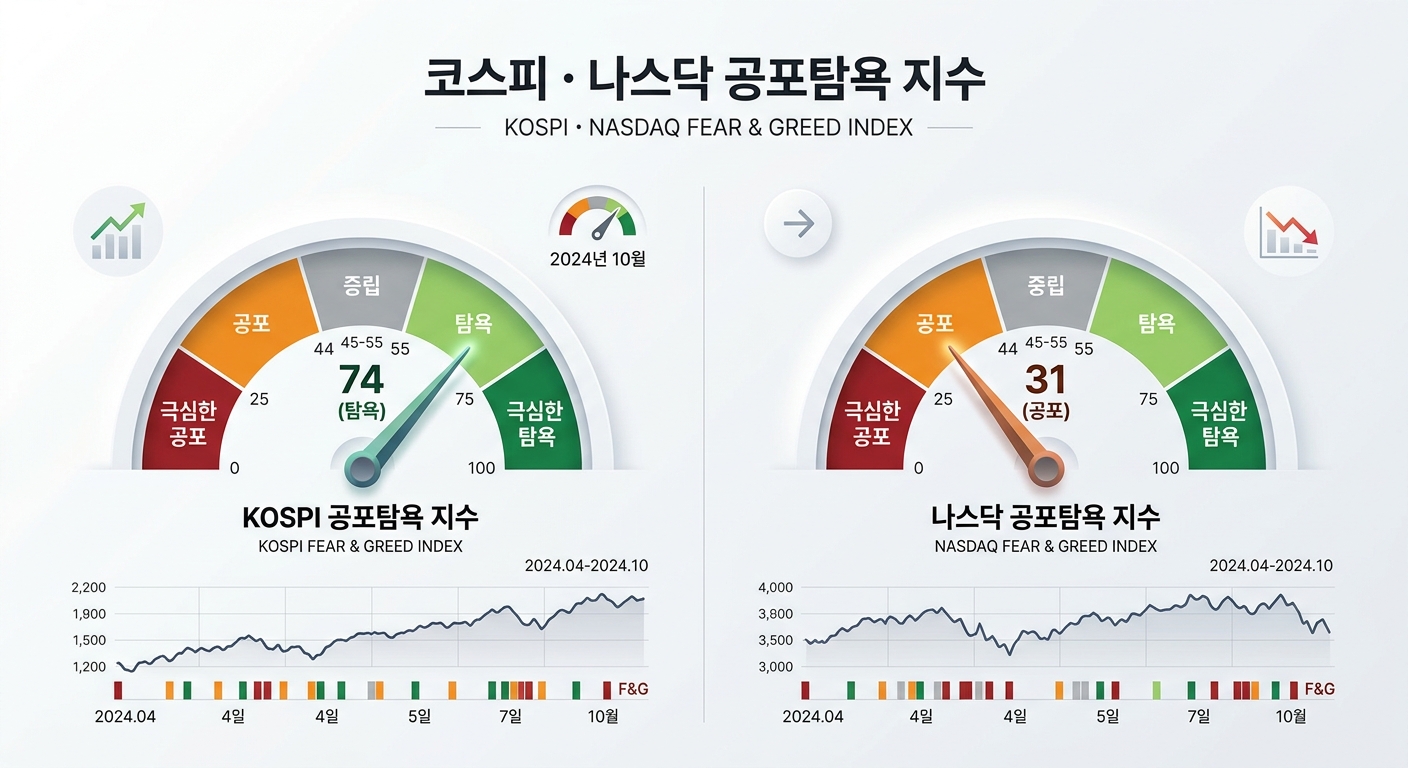
On the Daily Stock Fear & Greed Index, KOSPI sentiment currently sits in Neutral territory at 48.2, rapidly stabilizing from Fear (28.2) a week ago but remaining near levels seen a month ago (49.6).
In contrast, the Nasdaq Fear & Greed Index stands in Fear at 29.1, down from 32.7 a week ago, reflecting continued caution in global tech investment sentiment due to external macroeconomic uncertainties.
[Image: /stdaily/uploads/202609/gen_6ab0d622d98467.60391570.png]
Financial Analysis
Samsung Electronics' Q3 earnings are projected to post solid profit growth, driven by strong sales of high-value-added memory such as High Bandwidth Memory (HBM) and commodity DDR5, coupled with easing fixed-cost burdens in the foundry division.
After advanced node lines under 8nm neared maximum utilization in Q2, Q3 has seen utilization stabilize in the 80% range alongside yield stabilization, substantially narrowing operating losses.
The Foundry and System LSI divisions are emerging from multi-trillion-won deficit structures that persisted since 2022, with scenarios projecting that the business could reach quarterly break-even point (BEP) or record a modest operating profit as early as Q3.
However, calculations for special management performance bonuses, which reflect 10.5% of the Device Solutions (DS) division's profit, and initial setup costs for the Taylor fab in the U.S. could exert some cost pressure on cumulative annual profitability.
| Category | Q3 2024 (Confirmed) | Q3 2025 (Confirmed) | Q3 2026 (Market Consensus) |
|---|---|---|---|
| Consolidated Revenue | 79.09T KRW | 86.10T KRW | Around 87T – 89T KRW |
| Consolidated Operating Profit | 9.18T KRW | 12.20T KRW | Around 12T – 13T KRW |
| Foundry/S.LSI Operating Profit | Several hundred billion to multi-trillion KRW deficit | Deficit narrowed to ~1T KRW | Testing quarterly BEP to modest operating profit |
| 2nm GAA Advanced Process Yield | Development phase | Entered ~50% range | Reaching 60% – 70% range |
Valuation
Samsung Electronics' price-to-book ratio (PBR) remains in the mid-range of its historical band, leaving it significantly undervalued relative to TSMC, the world's leading pure-play foundry.
While TSMC commands a price-to-earnings ratio (PER) exceeding 20x, Samsung Electronics has faced valuation discounts typical of integrated device manufacturers (IDMs), with foundry deficits further weighing on its multiple.
If the Q3 preliminary earnings solidify a foundry turnaround and validate 2nm manufacturing yields, the market may re-rate Samsung's foundry business value under a sum-of-the-parts (SOTP) framework rather than valuing it purely as a memory producer.
Within the KOSPI 200 large-cap universe, its relative valuation appeal compared to automotive and financial shares remains intact, keeping potential foreign and institutional capital inflows viable.
Expert & Institutional Analysis
Securities analysts assess that collaboration on 2nm mass production for Tesla's next-generation autonomous driving chip (AI5) and a long-term partnership with Broadcom demonstrate qualitative progress for Samsung's foundry.
Analysts note that early adoption of Gate-All-Around (GAA) architecture is translating into stabilized 2nm yields of 60% to 70%, expanding the pipeline of global big tech customers.
Foreign investors have shown volatile trading across cash and futures markets, weighing the trajectory of the KRW/USD exchange rate around the 1,378.20 level against expectations of further monetary easing by the Bank of Korea.
Institutional investors anticipate that because Korea's trade data continues to show consistent growth in semiconductor customs clearance exports, early October earnings guidance will serve as the primary directional compass for the entire KOSPI index.
[Image: /stdaily/uploads/202609/gen_6ab0d62e076221.83168593.png]
Risk Factors
The most prominent risk remains the extensive advanced-node market share gap with TSMC (72.5% for TSMC vs. 5.9% for Samsung Electronics as of Q2), which remains over 66 percentage points wide.
With key mobile application processor (AP) clients such as Apple and MediaTek repeatedly selecting TSMC's 2nm (N2P) process, competition to win remaining big tech contracts, including Qualcomm, is intensifying.
Sharp swings in the KRW/USD exchange rate also pose macro risks, amplifying volatility in foreign investor flows and export profitability.
Additionally, market watchers will track the impact on second-half profitability from initial depreciation expenses as the Taylor, Texas fab ramps up, alongside labor-management special performance bonus agreements.
Investment Perspective
Samsung Electronics currently sits at a critical inflection point, harvesting the rewards of the memory upcycle while simultaneously addressing persistent operational losses in its foundry division.
The primary checkpoint will be whether the early October Q3 preliminary results deliver an operating profit beating market consensus alongside clear signals of a return to profitability in non-memory.
A prudent, phased approach while monitoring whether foreign net buying returns to KOSPI large-cap semiconductors within the 1,370–1,380 KRW/USD band appears reasonable.
Amid solid global AI semiconductor demand, official announcements of additional 2nm client wins could provide strong momentum for mid- to long-term valuation re-rating.
Investor Checkpoint Q&A
Q1. When will Samsung Electronics release its preliminary Q3 2026 earnings?
A1. As preliminary figures are typically announced on the fifth or sixth business day following quarter-end, the release will likely take place around October 7–8, 2026.
Q2. Why is the foundry division receiving heightened attention in these Q3 preliminary results?
A2. Because rising advanced node utilization and yield improvements have opened the door for a quarterly turnaround to profitability, overcoming multi-trillion-won operational deficits logged since 2022.
Q3. What is the current status of 2nm orders and key customers?
A3. Production partnerships for Tesla's AI5 autonomous driving chip and Broadcom are materializing, while the company continues aggressive efforts to secure additional volume from global tech giants like Qualcomm.
Q4. Is the market share gap with TSMC narrowing?
A4. As of Q2, the gap remains wide with TSMC at 72.5% and Samsung at 5.9%, but Samsung is seeking a counterattack opportunity at the 2nm node backed by stabilized yields in the 60%–70% range.
Q5. What is the current correlation between the KRW/USD rate and foreign investor flows?
A5. Foreign investors are actively trading across spot and futures around the 1,378.20 KRW level; exchange rate stabilization and earnings verification will be key drivers for sustained foreign net buying.