Hello, this is Daily Stock, delivering in-depth context on global tech and financial markets.
[Image: /stdaily/uploads/202609/gen_6aa9dc2597b6d6.48449160.png]
Key Summary
Apple (AAPL) is facing a litmus test for an unprecedented upgrade supercycle driven by the advancement of on-device AI (Apple Intelligence) in its fall flagship iPhone 17 lineup.
Whether accumulated upgrade demand from more than 800 million older active iPhones worldwide that do not meet AI system requirements can be ignited has emerged as the most critical variable for performance in the second half of fiscal year 2026.
As of 9:00 AM on September 16, 2026 (provisional), the Nasdaq Fear & Greed Index remains in "Fear" territory (28.7) amid persistent macro volatility. Within the Big Tech value chain, Apple's pace of on-device AI monetization and its ability to defend its valuation have become primary focal points for the market.
Current Situation
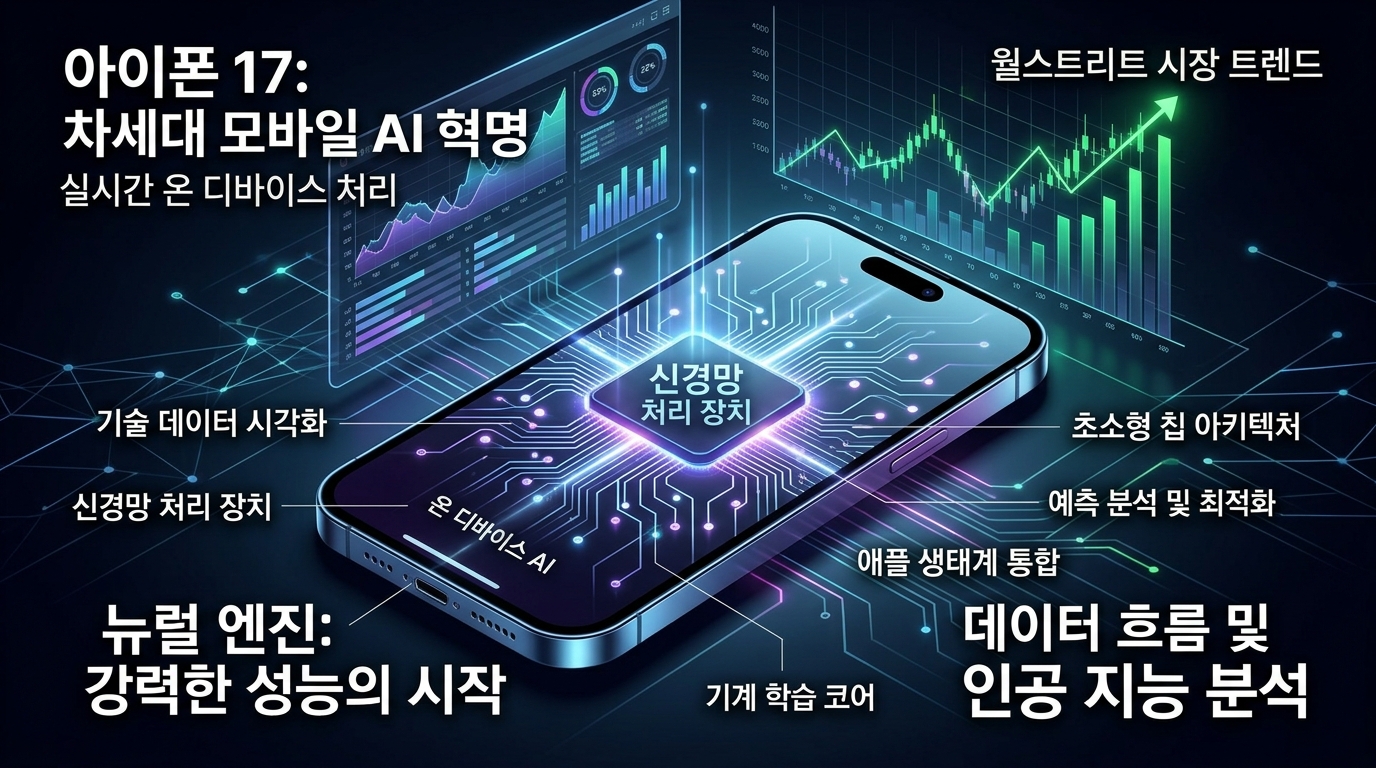
With global smartphone replacement cycles extending from roughly three years in the past to over four years today, Apple's iPhone 17 lineup is targeting massive upgrade demand by significantly enhancing on-device artificial intelligence capabilities.
Market research firms and major Wall Street investment banks estimate that the global installed base of iPhones unreplaced for four or more years exceeds 300 million units, closely watching whether this pent-up demand can drive shipments for this fall's new release.
As of September 16, 2026, Apple's intraday price reflects an "intraday quote unconfirmed (based on latest verified value)" status; however, in recent New York trading, Apple has maintained premium multiples near all-time highs around the $300 level.
Meanwhile, broader domestic and international financial markets are displaying a mixed tone, characterized by a wait-and-see stance alongside a preference for safe-haven assets.
As of September 16, 2026 intraday (provisional), South Korean domestic indices stood at 6,610.71 for the KOSPI, 811.84 for the KOSDAQ, and the USD/KRW exchange rate was 1,364.30. Daily Stock's proprietary Fear & Greed Index measured the KOSPI at Fear (22.9; 50.2 Neutral 1 week ago, 38.3 Fear 1 month ago, 52.4 Neutral 3 months ago) and the Nasdaq at Fear (28.7; 39.1 Fear 1 week ago, 64.3 Greed 1 month ago, 64.5 Greed 3 months ago).
[Image: /stdaily/uploads/202609/gen_6aa9dc2f80fc71.31773042.png]
Financial Analysis
Apple's recent quarterly performance demonstrated resilient fundamental strength, supported by defended hardware average selling prices (ASPs) and record-setting milestones across its Services division.
According to the most recent earnings report, quarterly revenue surpassed $111 billion, while gross margin remained near all-time highs around 49%, successfully absorbing upward price pressures on components like memory.
| Key Financial Indicators & Consensus | Recent Performance / Consensus | YoY Trend | Analysis & Implications |
|---|---|---|---|
| **Total Quarterly Revenue** | Approx. $111.2 billion | +15% to +17% continuous growth | Driven by robust iPhone sales and high-margin Services |
| **iPhone Segment Revenue** | Around $50 billion – $55 billion | Double-digit rebound (+mid-10% range) | Supported by shortened upgrade cycles and higher Pro/high-end mix |
| **Gross Margin** | 48.5% – 49.3% range | Approx. +120 bps improvement | Defended by proprietary APs (new Neural Engine) and vertical integration |
| **Services Revenue Share** | Approx. 24% – 26% of total revenue | Stable low-to-mid-teens growth | Subscription and fee lock-in across a 2-billion-unit active device base |
| **Annual Free Cash Flow (FCF)** | Exceeding $100 billion | Sustained massive cash generation | Funding source for extensive share buybacks and R&D capex execution |
This financial profile reflects Apple's strategic choice to emphasize on-device AI powered by proprietary Apple Silicon, allowing the company to relatively contain cloud server infrastructure capital expenditures (CAPEX) even as peer Big Tech firms face escalating spending burdens.
Valuation
Apple's trailing price-to-earnings (P/E) ratio currently hovers in the mid-30s, and its forward 12-month P/E multiple also commands a premium above its 5-year historical average (roughly 26–28x).
Underpinning this elevated multiple is market expectation that Apple Intelligence will serve as a catalyst far beyond a simple add-on feature, compelling mass hardware upgrades and deepening user lock-in within its high-margin Services ecosystem.
From a macroeconomic perspective, however, the trajectory of the US 10-Year Treasury yield (US10Y) and fluctuations in the US Dollar Index (DXY) remain sensitive catalysts for Apple's growth valuation.
If Treasury yields remain elevated, rising discount rates could exert downward pressure on tech multiples exceeding 30x, raising the prospect of broader valuation recalibrations across growth equities within the Philadelphia Semiconductor Index (SOX) and the Nasdaq 100.
Expert and Institutional Analysis
Around the launch of the iPhone 17, major Wall Street institutions raised their price targets on Apple into the $270 to $315 range, signaling an optimistic stance.
Wedbush analyst Dan Ives cited the potential release of pent-up demand from approximately 315 million users who have postponed upgrades, projecting fiscal year 2026 iPhone shipments could reach 240 million to 250 million units.
Morgan Stanley also highlighted that more than 800 million active units fall short of the minimum specifications required for on-device AI, forecasting a virtuous cycle over the next 1 to 2 years with simultaneous expansion in hardware and Services revenues.
Conversely, cautious voices from firms such as Jefferies and Bernstein warned that the upgrade cycle could unfold more moderately than anticipated if consumer perception of AI innovation proves underwhelming or if regional regulatory approvals face delays.
[Image: /stdaily/uploads/202609/gen_6aa9dc3a2f0d52.63252862.png]
Risk Factors
The fundamental risk lies in the gap between the perceived consumer utility of on-device AI features and their tangible monetization timeline.
If advanced AI assistant features—delivered sequentially via software updates—fail to offer sufficiently compelling exclusivity to induce immediate purchases of premium hardware, shipment momentum may decelerate.
A second consideration involves geopolitical and regulatory headwinds, including compliance and approval obstacles for local AI models in China, alongside sustained pressures under the European Union's Digital Markets Act (DMA) to open closed ecosystems.
A third factor encompasses rising bill-of-materials (BOM) costs driven by surging memory prices, combined with the risk of compressed consumer purchasing power under sustained higher-for-longer global interest rates.
Investment Perspective
At this juncture, evaluating Apple requires focusing on two core pillars: validating real consumer demand behind the on-device AI supercycle, and justifying its multiple against prevailing macroeconomic conditions.
In the near term, investors should track global pre-order lead times and carrier promotional intensity immediately following the fall launch to gauge the velocity of the replacement cycle.
Over the medium to long term, the key criterion will be whether Apple's on-device ecosystem can sustain structural advantages in gross margin preservation and free cash flow generation relative to cloud-centric Big Tech competitors allocating massive capital expenditures.
With the Nasdaq Fear & Greed Index currently situated in the Fear zone at 28.7 and the Volatility Index (VIX) exhibiting choppy movements, a disciplined approach that awaits concrete verification of fall delivery data appears prudent over aggressive positioning.
Q&A with Daily Stock
Q1. What primarily sets the iPhone 17 series' on-device AI apart from prior models?
A1. Through upgraded dedicated Neural Processing Unit (NPU) performance and expanded base memory, it establishes a complete on-device AI environment capable of executing personalized tasks locally in real time without cloud communication. This provides decisive benefits in data privacy and reduced latency.
Q2. Why is the market referring to this upgrade cycle as a 'supercycle'?
A2. Out of more than 2 billion active devices worldwide, over 800 million do not meet the minimum hardware requirements for on-device AI processing, and users holding devices four years or older exceed 300 million. If these cohorts migrate to new hardware in unison, it could generate historic shipment volumes.
Q3. Why is sales recovery in the Chinese market critical to Apple's stock price?
A3. China represents a key market generating roughly 15% to 20% of Apple's total revenue, but faces uncertainties from domestic competitors and local AI software censorship requirements. Pre-order momentum and stable lead times in China are essential to fulfilling the global supercycle thesis.
Q4. How do fluctuations in the US 10-Year Treasury yield and the US Dollar Index (DXY) impact Apple?
A4. Because Apple generates more than half of its revenue internationally, a stronger dollar (rising DXY) reduces translated foreign revenues and raises local purchase prices, potentially dampening end demand. Additionally, higher 10-year Treasury yields increase discount rates applied to future cash flows, putting pressure on valuation multiples for high-P/E growth stocks like Apple.
Q5. What primary metrics should investors monitor first following the fall release?
A5. Key indicators include shifts in online and offline delivery lead times across primary markets during the first 2 to 4 weeks post-launch, as well as revisions to Q4 supply-chain component build plans. Lead times that stretch notably beyond previous generations, alongside an expanding mix of high-end Pro tiers, serve as tangible markers of underlying fundamental strength.