Hello, this is Daily Stock, bringing you sharp analyses of capital market trends.
Key Summary
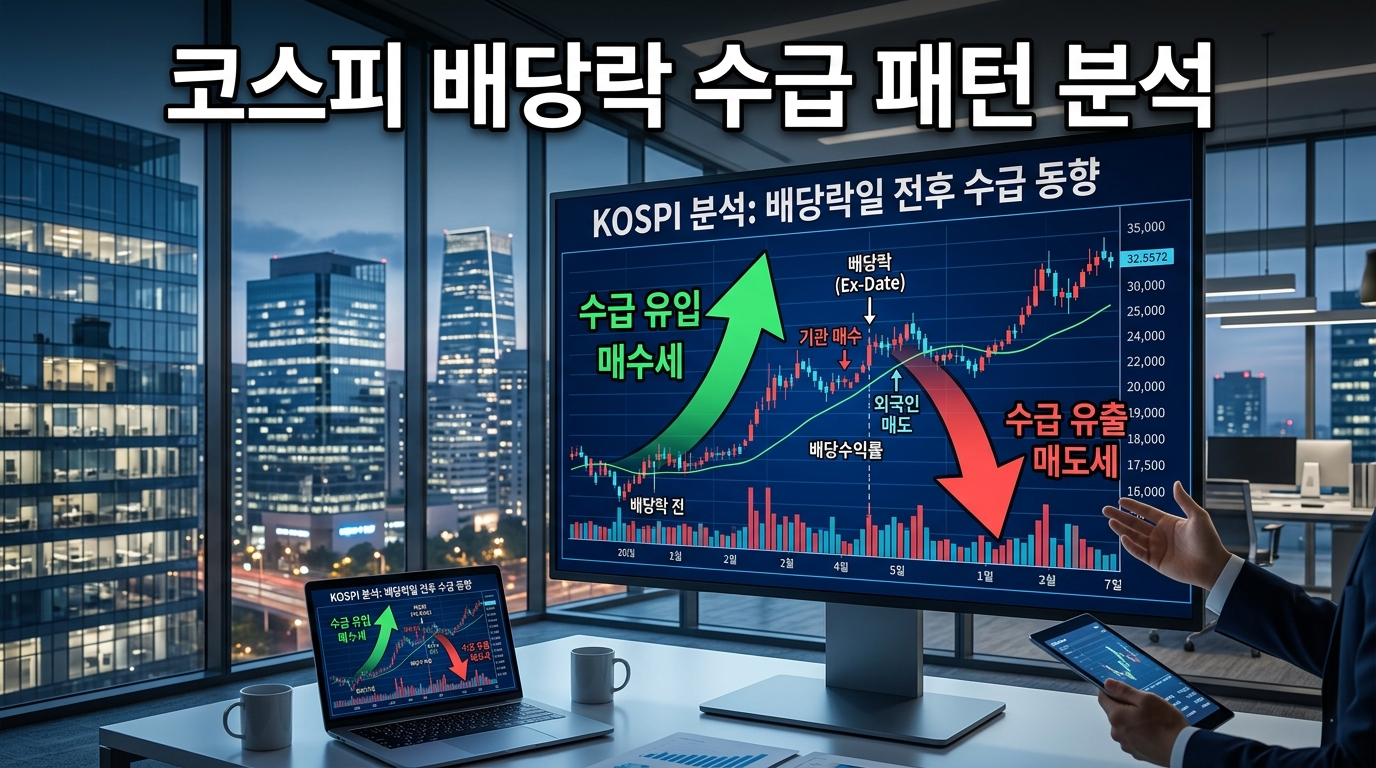
Recent institutional reforms have brought significant changes to the year-end supply and demand concentration around ex-dividend dates, which has traditionally been a chronic source of volatility in the domestic stock market.
In the past, a recurring pattern of a "selling bomb" was observed at the beginning of the year as institutional financial investment players executed large-scale physical spot buying and futures selling arbitrage transactions at the end of the year, only to liquidate them in the new year.
However, with the establishment of the revised dividend system—where dividend amounts are confirmed first and the dividend record date is designated later—along with improvements in quarterly dividend procedures, this temporary concentration of supply and demand has been widely dispersed into the spring season.
Furthermore, the separate taxation benefits on dividend income for high-dividend listed companies, which became fully applicable starting in 2026, have created a noticeable valuation buffer around ex-dividend dates.
[Image: /stdaily/uploads/202607/gen_6a6853de39f570.50345434.png]
Market Overview
As of July 28, 2026, the KOSPI closed down sharply at 6,023.66, driven by concerns over the global semiconductor industry and the liquidation of leveraged positions.
On the same day, the KOSDAQ index recorded 705.85, and the USD/KRW exchange rate closed at 1,460.30 won, keeping tensions high in the foreign exchange market.
According to Daily Stock's proprietary Fear & Greed Index, the KOSPI is currently in the "Extreme Fear (12.5)" stage, nearly identical to the Extreme Fear (12.4) recorded a week ago, signaling that concerns over a long-term economic slowdown have peaked.
On the other hand, the Nasdaq closed at 24,932.08, remaining in the "Neutral (40)" stage, highlighting a stark decoupling from the domestic stock market.
In this environment of severely dampened investor sentiment, understanding the mechanical dividend-related trading patterns of institutional investors—particularly in financial investment—is crucial for predicting the market's downside support.
| Classification | Old System (Blind Dividends) | Revised System (Fully applied 2024–2026) |
|---|---|---|
| **Dividend Record Date Designation** | December 31 (Fixed at year-end) | Autonomously designated after shareholder meetings (typically Feb–Apr) |
| **Dividend Amount Confirmation Timing** | After the record date (confirmed in March of the following year) | Dividend amount officially disclosed before the record date |
| **Supply/Demand Concentration** | Concentrated short-term arbitrage at year-end, followed by selling at year-start | Dispersed throughout the year, including spring ("cherry blossom dividends") and quarterly |
| **Ex-Dividend Stock Price Volatility** | Concentrated drops and selling pressure on the ex-dividend date | Dispersed across individual companies, cushioning the impact on the overall index |
Financial Analysis
Financial institutions' dividend arbitrage is a risk-free investment technique executed by meticulously calculating the gap (basis) between theoretical cash dividends and spot-futures prices.
Traditionally, to secure year-end dividend rights, financial investment institutions concentrated on buying spot shares of large-cap KOSPI 200 stocks while simultaneously shorting overvalued futures.
This trade is structured to lock in profits arising from the difference between the actual market price and the theoretical price of futures, which trade at a discount corresponding to the year-end dividend.
However, now that the system of knowing the dividend amount before investing has taken root, there is no longer a need to aggressively set up large positions at the end of the year by estimating uncertain dividends.
As a result, the multi-trillion won arbitrage buying inflows from financial investment institutions in November and December, as well as the mechanical liquidation selling bombs in January and February, have noticeably diminished.
Instead, arbitrage positions are entered and liquidated throughout the year, aligned with the diversified dividend record dates of individual corporations in a more refined pattern.
[Image: /stdaily/uploads/202607/gen_6a6853e9151da2.60096880.png]
Valuation
The tax reform introducing "separate taxation on dividend income for high-dividend listed companies," which went into full effect this year, has emerged as a key factor supporting the valuation floor of high-dividend stocks.
Under the previous tax law, if financial income exceeded 20 million won per year, a progressive comprehensive tax rate of up to 49.5% was applied, making dividends a high-opportunity-cost choice for high-net-worth individuals.
Under the revised bill, however, shareholders of qualifying high-dividend companies are subject to a flat, separate progressive tax rate of up to 30% to 35% on the portion exceeding 20 million won, significantly boosting real after-tax returns.
As a result, a "valuation buffering effect" has become distinct, with stock price corrections around ex-dividend dates being notably smaller than the actual dividend yields.
In the past, panic selling often occurred on the ex-dividend date due to concerns over reduced corporate value, causing stock prices to drop further than the dividend yield. Recently, however, long-term demand seeking after-tax benefits has supported the downside, allowing stocks to quickly recover from their losses on the ex-dividend date.
Professional & Institutional Analysis
Securities analysts note that the shift in ex-dividend supply-demand patterns is steering the market from a short-term speculative environment toward a long-term income investment environment.
Researchers view positively that the seasonal distortion—where the KOSPI faced mechanical downward pressure early in the year due to financial investment arbitrage liquidations—has been largely resolved.
Additionally, the rapidly growing inflows into dividend exchange-traded funds (ETFs) are pointed out as another major pathway shaping new patterns.
Large flows into dividend ETFs pour into high-dividend financial stocks and consumer staples, distorting the spot-futures spread whenever the index fluctuates sharply, thereby creating short-term arbitrage opportunities throughout the year.
Consequently, institutions are increasingly executing split positions by tracking dividend indicators year-round, rather than just at the end of the year.
Risk Factors
Despite the diversification of ex-dividend flows, supply and demand uncertainty may increase under the current KOSPI environment of "Extreme Fear (12.5)."
If systemic risks arise from macroeconomic recession fears or a surging exchange rate, institutions may be forced to unwind their arbitrage positions before securing dividend rights, which could trigger accelerated panic selling.
Furthermore, because not all listed companies have amended their articles of incorporation to adopt the improved dividend process, a polarization in supply and demand still exists between traditional high-dividend stocks that go ex-dividend at the end of December and companies that disperse their ex-dividend dates in the spring.
If the effectiveness of the high-dividend separate taxation policy is limited to only a few large blue-chip stocks due to low participation rates from other listed companies, small and medium-cap dividend stocks may bear the full brunt of the ex-dividend shock, slowing down their price recovery—a key risk to monitor.
Investment Perspective
Investors should avoid the mistake of panic-selling stocks simply out of fear surrounding the ex-dividend date.
Generally, if a high-dividend stock's price rises sharply ahead of the ex-dividend date due to dividend expectations, delivering a capital gain greater than the expected dividend yield, it may be more advantageous in terms of taxes and time-value to sell and realize profits before the dividend is paid.
Conversely, if market anxiety has already depressed the stock price excessively relative to its dividend yield, it is advisable to secure the dividend rights and hold the stock to target technical rebounds or long-term recovery scenarios after the ex-dividend date.
Amid the highly volatile KOSPI environment, monitoring carefully calculated institutional benefits and diversified supply-demand trends while taking a split approach aligned with individual record dates is a viable strategy.
Investor Checklist Q&A
Q1. If I sell my shares on the ex-dividend date, will I still receive the dividend?
A1. Yes, that is correct.
The shareholder registry registration required to receive the dividend is completed on the dividend record date. Since the ex-dividend date is the day after the dividend rights have already been locked in, you will receive the dividend on the payment date even if you sell your shares on this day.
Q2. What is the biggest advantage for investors under the newly introduced "cherry blossom dividend" system?
A2. The greatest benefit is the elimination of "blind investing."
Previously, investors had to buy shares at the end of the year without knowing how much dividend they would receive. Now, you can check the exact dividend amount confirmed and announced at the shareholder meeting before deciding whether to purchase the shares ahead of the dividend record date, ensuring investment predictability.
Q3. Why has the year-start "selling bomb" from financial investment institutions decreased compared to the past?
A3. It is because dividend record dates have been dispersed from the end of December to the following spring (February–April) or quarterly.
As a result, the mechanical pressure on financial institutions to build massive spot-futures positions ahead of the year-end ex-dividend date and liquidate them all at once at the start of the year has been distributed and mitigated throughout the year.
Q4. Who benefits most from the separate taxation on dividend income for high-dividend listed companies?
A4. It is highly beneficial for high-net-worth individuals whose combined annual financial income (dividends and interest) exceeds 20 million won, which previously subjected them to progressive comprehensive financial income tax rates of up to 49.5%.
With a flat, separate progressive tax rate (maximum 30% to 35%) applied instead, their tax burden is significantly reduced, encouraging major capital inflows into high-dividend stocks.
Q5. How do I decide whether it is better to sell before the ex-dividend date or hold through it to receive the dividend?
A5. If the capital gains from the stock price rise before the ex-dividend date exceed the expected dividend yield, it is generally better to sell before the ex-dividend date to lock in profits.
However, if the stock price gains are lower than the dividend yield, or if the stock price has actually fallen, a more effective scenario is to receive the dividend and hold the stock mid-to-long term until the price recovers.