Hello, this is Daily Stock, where we point out the core issues of the market based on global macroeconomic flows and objective data.
Core Summary
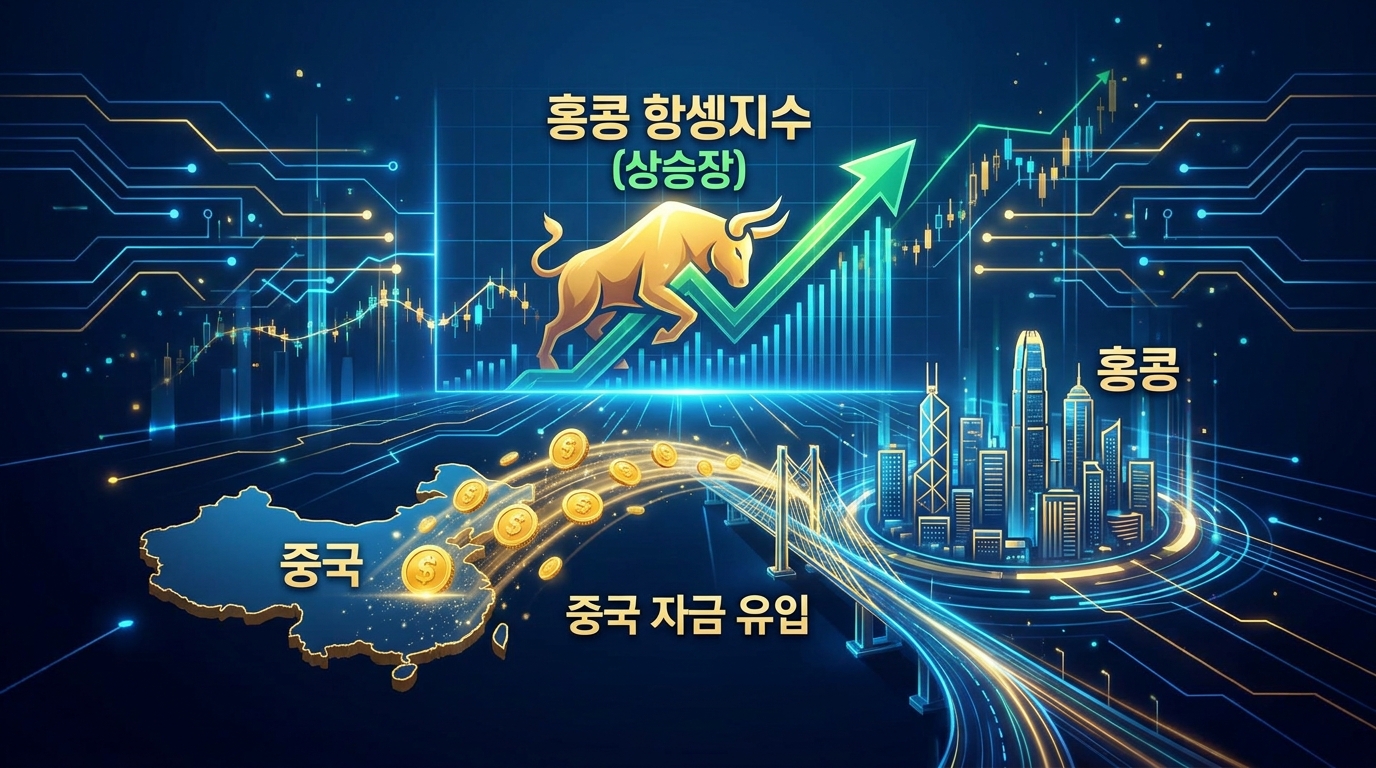
Recently, the Hong Kong Hang Seng Index has been showing a distinct rebound, driven by the strong influx of mainland Chinese funds known as 'Southbound' funds.
Amid rapidly changing global liquidity environments, the fundamental decoupling among the U.S., European, and Asian stock markets is intensifying, calling for a realignment of investors' portfolios.
[Image: /stdaily/uploads/202605/gen_6a0cb39a62ddf3.16246641.png]
Current Situation Summary
As of intraday on May 20, 2026 (provisional), major global indices and exchange rates are showing mixed trends, reflecting complex macro variables.
The KOSPI is recording 7271.66, and the KOSDAQ is at 1084.36, while the NASDAQ, which closed overnight, stands at 25806.55, and the USD/KRW exchange rate is at the 1508.10 level.
A distinct fundamental decoupling trend among the three regions of the U.S., Europe, and Asia is currently being observed in the global market.
The U.S. Federal Reserve's (Fed) monetary policy, the European Central Bank's (ECB) preemptive response, and the differentiation in monetary policies of the Bank of Japan (BOJ) and the People's Bank of China (PBOC) are causing divergent supply and demand in the stock markets of each country.
According to Daily Stock's proprietary Fear & Greed Index, the KOSPI is currently at a Neutral (52.4) level, somewhat calmed compared to Greed (64.7) a week ago and Greed (61.5) a month ago, while it recorded Neutral (57.3) three months ago.
On the other hand, the NASDAQ Fear & Greed Index is currently in a state of Greed (62.2), steadily continuing the greed trend from 1 week ago (65.1), 1 month ago (68.6), and 3 months ago (69.7).
Financial Analysis
Southbound funds flowing from mainland China to Hong Kong surpassed HKD 220 billion in the first quarter of 2026 alone, accounting for around 40% of the total trading volume of the Hang Seng Index.
According to recent data, billions of Hong Kong dollars are intensely flowing into large IT platforms and energy value stocks, such as Alibaba and CNOOC.
Mainland investors are shifting their supply and demand toward high-dividend energy stocks sensitive to oil price trends and technology hardware sectors with increased valuation appeal.
In particular, the gradual rebound of global manufacturing PMIs, coupled with the momentum in key commodity prices such as copper and Brent crude, is acting as a factor heightening expectations for earnings improvement among companies within the Asian region.
[Image: /stdaily/uploads/202605/gen_6a0cb3ae67e997.37504798.png]
Valuation
The valuation gap among the three regions—the U.S., Europe, and Asia—is currently one of the most important clues explaining global capital movements.
In the U.S. stock market, growth stocks related to artificial intelligence (AI) capital expenditures (CAPEX) still maintain relatively high price-to-earnings (P/E) ratios, whereas Europe is forming less burdensome multiples centered on high-dividend defensive stocks.
On the other hand, the Hong Kong Hang Seng Index has cultivated distinct valuation appeal compared to developed markets after undergoing a long period of undervaluation below its historical average.
The massive influx of mainland funds is likely part of a re-rating process that partially resolves this relative discount phenomenon of high-quality Asian assets.
| Category | Key Features (As of May 2026) | Valuation and Relative Strength Appeal | Core Policy Momentum |
|---|---|---|---|
| **U.S. Market** | Continued momentum centered on innovative tech like AI | High valuation, peak-out wariness | Fed's interest rate direction |
| **European Market** | Strength in traditional value stocks and high-dividend sectors | Stable valuation at historical average levels | ECB's differentiated liquidity adjustment |
| **Asia (Hong Kong/China)** | Strong supply-demand influx led by Southbound funds | Undervalued compared to developed nations, expectations for re-rating | PBOC stimulus and activation of Stock Connect |
Expert and Institutional Analysis
Major global financial institutions are cautiously putting forward positive scenarios regarding the direction of the Hong Kong stock market in 2026.
HSBC Private Bank and others suggest the possibility of the Hang Seng Index reaching the 31,000 level by the end of 2026, citing the development of innovative technology industries and the structural influx of mainland funds as key driving forces.
Additionally, the KRX-HSIL Korea-Hong Kong Semiconductor Index recently co-launched by the Korea Exchange (KRX) and Hang Seng Indexes Company Limited (HSIL) is expected to further enhance the cross-accessibility of global investors.
This indicates that major Asian markets such as Hong Kong and South Korea can emerge as alternative investment destinations for passive funds amidst the global decoupling phase.
Risk Factors
However, the concentration of funds into Asian stock markets does not mean a perfect recovery of fundamentals, and concerns over geopolitical risks and supply chain disruptions must be checked.
Geopolitical instability in the Middle East or the un-narrowing trade friction between the U.S. and China can disrupt global supply chains and freeze investment sentiment at any time.
In particular, unexpected sharp fluctuations in the prices of Brent crude and copper raise concerns about increasing import prices for Asian emerging countries, hindering domestic demand recovery, and adding to inflationary pressures.
Such macroeconomic uncertainty is a core risk factor that could re-amplify the short-term volatility of the Hong Kong stock market, which is strongly linked to mainland liquidity.
Investment Perspective Summary
The influx of mainland funds driving the Hong Kong stock market could be a meaningful signal beyond a simple short-term rally, offering a glimpse into changes in the regional allocation of global funds.
Diversifying portfolios away from the concentration in some U.S. tech stocks, which are sparking overvaluation debates, toward high-dividend defensive stocks in Europe and undervalued quality assets in Asia is mentioned as a reasonable alternative strategy.
Rather than blindly following one-dimensional index increases, investors should closely track the policy differentiation of each country's central banks and trends in global capital movements.
As macroeconomic risks still remain latent, it is necessary to concurrently take a conservative approach focusing on sectors backed by solid earnings and cash flow.
Investor Checkpoint Q&A
Q1. What exactly do 'Southbound' funds mean?
It refers to investment funds through which mainland Chinese investors purchase shares listed directly on the Hong Kong stock market via the Stock Connect (Shanghai-Hong Kong Stock Connect, Shenzhen-Hong Kong Stock Connect, etc.) systems.
Q2. What is the biggest reason for the recent rebound of the Hong Kong Hang Seng Index?
It is the result of the significantly lowered valuation appeal compared to developed markets like the U.S., combined with the explosive influx of mainland Chinese liquidity and expectations for an earnings turnaround in major tech and consumer goods sectors.
Q3. How does global decoupling affect Asian stock markets?
As the monetary stimulus stances and fundamental recovery speeds of the U.S., Europe, and major Asian countries diverge, it can provide an opportunity for funds to rotate into Asian markets with lower valuation burdens.
Q4. How does the rise in commodity prices like copper and oil act as a variable in the market?
While positive for the earnings improvement of energy and materials companies, it can act as a double-edged sword by raising production costs across the manufacturing sector and stimulating inflation.
Q5. What is the risk to be most wary of when investing in the Hong Kong stock market?
You should most carefully monitor the possibility of foreign capital outflows due to the reignition of geopolitical disputes, and scenarios of fundamental damage caused by global supply chain disruptions.