Hello, this is Daily Stock.
[Image: /stdaily/uploads/202610/gen_6ac49caf1d2af0.96171119.png]
Key Summary
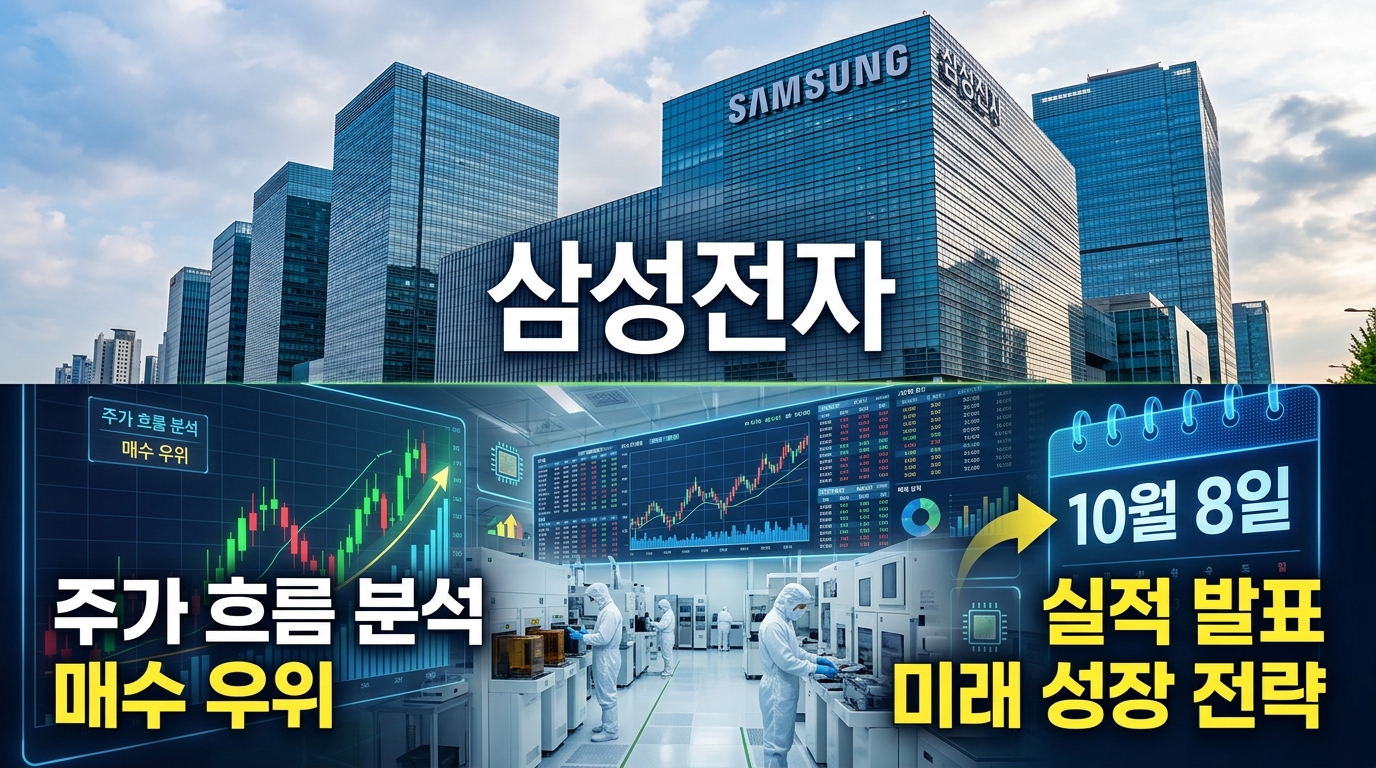
With Samsung Electronics scheduled to announce its preliminary earnings for the third quarter of 2026 on October 8, whether its quarterly operating profit will surpass the KRW 100 trillion mark for the first time in history has emerged as a crucial watershed for the KOSPI market.
Due to the recent steep decline in the USD/KRW exchange rate and cost pressures in the finished product Device eXperience (DX) division, securities firms have revised down their operating profit forecasts from the previous KRW 110–120 trillion range to around KRW 105–108 trillion, sparking both short-term profit decline and peak-out concerns.
However, as the full-scale shipment of 6th-generation HBM4 and firm price increases for server DRAM and enterprise solid-state drives (eSSD) firmly support the Device Solutions (DS) division's performance, the actual figures and guidance unveiled on October 8 are expected to serve as a directional compass for overall institutional and foreign flows in KOSPI large-cap stocks.
Current Market Situation
On October 6, 2026, the KOSPI index closed at 6,941.39 amid wait-and-see sentiment from foreign investors, while the KOSDAQ closed at 919.92.
Looking at the global macro environment, with the Nasdaq index hovering around the 27,477.31 level, the USD/KRW exchange rate showed stabilizing trends compared to the previous day, closing at 1,343.00 KRW.
On that day, Daily Stock's proprietary Fear & Greed Index stood at 37.2 (Fear) for the KOSPI and 43.0 (Neutral) for the Nasdaq.
Although the KOSPI reading slipped into Fear territory from Neutral (40.5) a week ago, it has established downside rigidity compared to the Fear zone (28.7) a month ago and the Extreme Fear zone (15.1) three months ago.
The Nasdaq Fear & Greed Index also rebounded from Fear (28.9) a week ago to Neutral (43.0), pointing to a gradual recovery in investor sentiment toward global tech equities.
As the core of the Korean large-cap market, Samsung Electronics carries an overwhelming share of total market capitalization, directly linking its movement to foreign spot and futures trading flows and driving the overall direction of the KOSPI.
While foreign exchange loss risks have diminished as the exchange rate stabilized down to the 1,343.00 KRW level from its high near Q2, the double-edged sword of reduced KRW-converted gains on export revenues is being reflected in earnings estimates.
[Image: /stdaily/uploads/202610/gen_6ac49cb95f93a4.99109345.png]
Financial Analysis
Consensus estimates for Samsung Electronics' Q3 2026 earnings forecast a new all-time quarterly record, but significant divergences persist across individual business divisions.
According to WiseReport and FnGuide compilations, the Q3 revenue consensus stands at approximately KRW 201.7276 trillion, while the operating profit consensus is formed at around KRW 108.1312 trillion.
| Indicator | Q3 2025 | Q2 2026 | Q3 2026 Consensus | YoY Change |
|---|---|---|---|---|
| **Consolidated Revenue** | Approx. KRW 86.0600T | KRW 171.5000T | KRW 201.7276T | +134.40% |
| **Consolidated Operating Profit** | Approx. KRW 12.1661T | KRW 89.5000T | KRW 108.1312T | +788.79% |
| **Memory (DS) Operating Profit** | Approx. KRW ~7T | Approx. KRW ~80T | Est. KRW 100T–110T | Surging sharply |
| **USD/KRW Rate (End of Quarter)** | Approx. 1,310.00 KRW | Approx. 1,500.00 KRW | 1,343.00 KRW (As of day) | Heightened volatility |
The core driver of this performance is unquestionably the semiconductor (DS) division; driven by full-scale mass production of HBM4 for AI data centers and supply shortages in high-capacity server memory, the memory business alone is projected to log over KRW 100 trillion in operating profit.
Conversely, the Device eXperience (DX) division, covering smartphones and consumer electronics, faces mounting core component costs and fierce global marketing competition, raising the possibility of a quarterly operating deficit that could partially offset memory gains.
The Foundry and System LSI divisions are narrowing their losses thanks to 4nm yield improvements and next-generation chip mass production, but a turnaround to profitability still requires further recovery in fab utilization rates.
Valuation
Currently, Samsung Electronics is undergoing a relatively modest share price re-rating compared to the pace of its profit growth, even among KOSPI large-cap stocks.
While the KOSPI 200 large-cap index maintains a firmer trajectory than small- and mid-cap stocks, Samsung Electronics continues to trade within lower Price-to-Book (PBR) and Price-to-Earnings (PER) bands compared to global big tech and overseas semiconductor foundry peers.
Despite a boom cycle where operating margins for DRAM and NAND are surging to the 70–80% range, the valuation discount persists due to slowdowns in the set divisions and delays in stabilizing foundry profitability.
Therefore, once quarterly operating profit firmly establishes itself above KRW 100 trillion and enhanced shareholder returns, such as treasury share buybacks and cancellations, become visible, the valuation gap with global peers could narrow.
Expert & Institutional Analysis
Securities analysts agree that in the preliminary earnings announcement on October 8, whether Samsung Electronics can 'beat the lowered bar of market expectations' is far more critical than merely the absolute size of its profit.
Major research centers, including Hana Securities and Samsung Securities, have preemptively adjusted their Q3 operating profit forecasts to the KRW 105–108 trillion range to reflect the recent decline in the USD/KRW exchange rate and cost pressures on finished goods.
Experts note that because Micron delivered solid results and forward guidance, the likelihood of a structural breakdown in the AI server memory cycle remains low.
However, dominant market commentary advises caution regarding heightened volatility on earnings day, as foreign capital flows are tilted toward arbitrage trades via futures position adjustments rather than direct cash equity buying.
Risk Factors
The primary risk to monitor is sharp volatility in the USD/KRW exchange rate.
Since semiconductor exports rely predominantly on US dollar settlements, an additional sharp drop in the exchange rate below 1,343.00 KRW could shrink KRW-converted revenues and profit margins.
The Bank of Korea's forthcoming base rate decisions and the potential for a broader domestic and global economic slowdown also weigh on consumer sentiment for finished electronic goods.
If replacement cycles for general-purpose PC and mobile devices continue to be delayed, relying solely on AI memory dominance may encounter structural limits in defending overall corporate earnings.
Furthermore, delays in the turnaround of the foundry division and the pace of converting global orders remain key variables for medium- to long-term performance.
Investment Perspective Summary
Samsung Electronics' Q3 preliminary earnings announcement represents a critical litmus test that will dictate the direction of the entire KOSPI market.
Although securities firms have trimmed their expectations in the short term, this dynamic actually provides room to cushion the market against potential earnings shocks on the day of the release.
Investors should focus not only on whether the company achieves KRW 100 trillion in operating profit, but also on divisional guidance and the pace of HBM4 supply expansion.
A prudent strategy would involve closely monitoring the USD/KRW exchange rate and foreign futures rollover trends while maintaining a phased, dollar-cost-averaging approach.
FAQ
Q1. When will Samsung Electronics officially release its preliminary Q3 2026 earnings?
According to market and industry sources, the preliminary consolidated Q3 earnings results are scheduled to be announced on the morning of October 8.
Q2. What is the consensus operating profit estimate for Q3?
The average consensus across securities firms stands around KRW 108 trillion, with recent estimates ranging between KRW 101 trillion and KRW 108 trillion to reflect exchange rate drops.
Q3. What is the primary reason behind semiconductor profit reduction and earnings downgrade concerns?
The primary factors are decreased converted export revenues due to the steep drop in the USD/KRW exchange rate, as well as rising component costs and operational deficits in the DX (smartphones and consumer electronics) division.
Q4. How is the performance trajectory in the memory semiconductor (DS) division?
Driven by mass shipments of HBM4 amidst AI infrastructure expansion, coupled with tight supplies of server DRAM and enterprise eSSDs, the memory division is expected to record high operating margins near 80%.
Q5. How will the preliminary earnings release impact KOSPI supply-and-demand dynamics?
Following the confirmation of Samsung Electronics' results, whether foreign investors resume net buying of semiconductor spot and futures contracts will likely determine whether the KOSPI can reclaim and hold the 7,000-point level.