Hello, this is Daily Stock, delivering in-depth analysis of blue-chip core values amidst daily stock market trends.
[이미지: /stdaily/uploads/202609/gen_6aae3316d29e32.21444378.png]
Key Summary
Backed by unmatched technological competitiveness in the High Bandwidth Memory (HBM) market, SK hynix has entered full-scale mass production of 6th-generation HBM (HBM4) in the second half of 2026.
By forming a "One Team" alliance that adopts TSMC's advanced logic foundry process for the base die, the company is solidifying its footprint in the next-generation AI accelerator market.
According to securities consensus, Q3 2026 operating profit is projected at approximately KRW 78.8035 trillion, representing robust quarter-on-quarter profit growth of around 30%.
However, the recent fluctuation of the USD/KRW exchange rate around the 1,389.00 level and the potential division of market share due to competitors entering HBM4 have emerged as key variables for valuation assessment.
Current Market Snapshot
Currently, the domestic KOSPI index stands at 6,894.23, the KOSDAQ index at 827.12, and the USD/KRW exchange rate closed at 1,389.00.
Due to heightened volatility in the FX market, foreign investor supply and demand in spot and futures markets show a neutral pattern, characterized by profit-taking alternating with repurchasing centered on flagship semiconductor stocks.
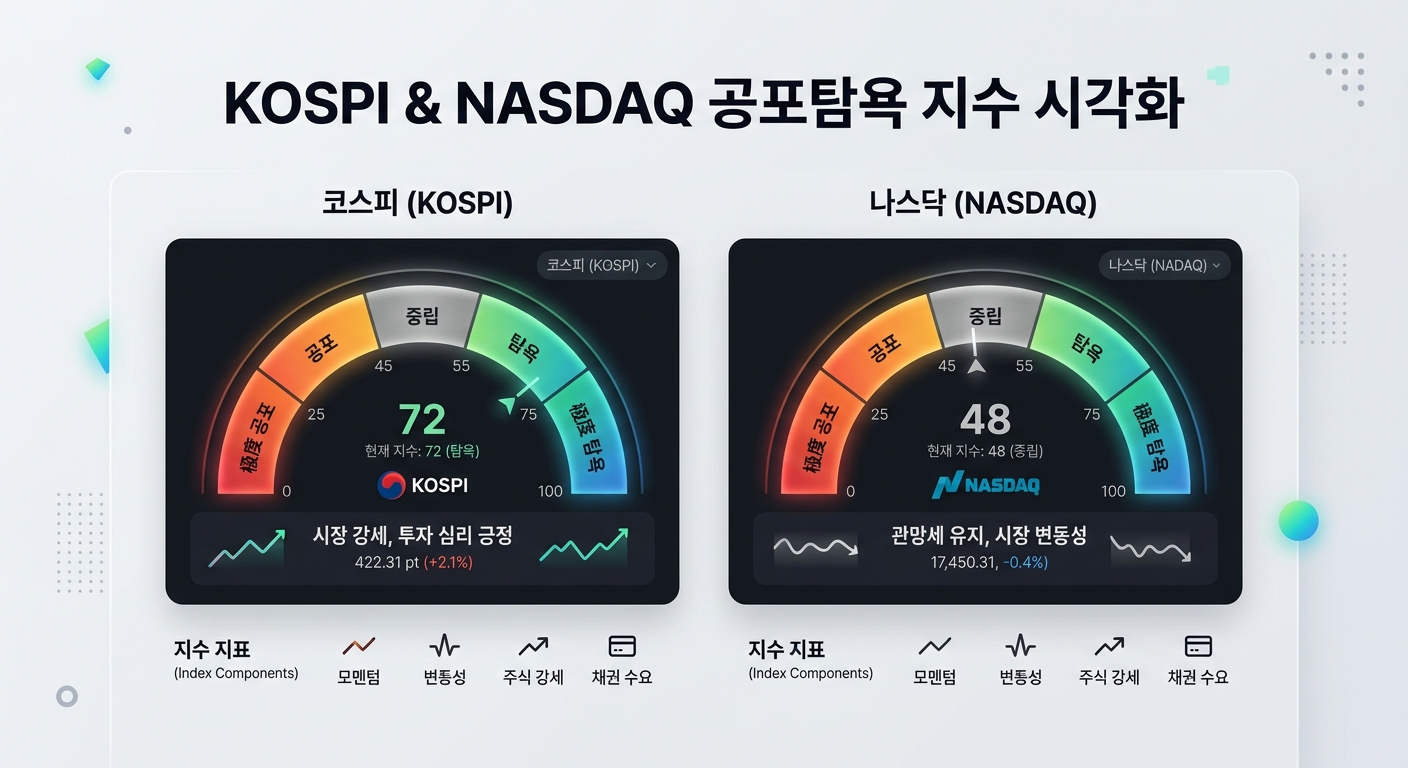
According to Daily Stock's proprietary Fear & Greed Index, the KOSPI is currently in "Neutral (40.9)", showing a gradual recovery from "Fear (28.2)" a week ago.
In contrast, the NASDAQ index stands at 26,522.55, remaining in the "Fear (29.1)" zone, with global tech stock volatility having a mixed impact on domestic large-cap technology stocks.
Due to the weekend market closure, SK hynix's daily price is recorded as "unconfirmed today (based on the latest verified value)".
The market is focusing on the continuous supply of HBM3E as well as the stabilization of mass-production yields for 1b DRAM-based 12-layer and 16-layer HBM4, which gained full momentum after February 2026.
[이미지: /stdaily/uploads/202609/gen_6aae3322160ce5.24658537.png]
Financial Analysis
In Q2 2026, SK hynix posted all-time high revenue of KRW 79.3187 trillion and operating profit of KRW 60.5426 trillion, demonstrating unparalleled profitability.
In the third quarter, with premium HBM volumes and tight supply-demand conditions for high-capacity server DDR5 continuing, operating profit is expected to potentially surpass KRW 78 trillion.
| Metric (Unit: 100M KRW) | Q4 2025 | Q1 2026 | Q2 2026 | Q3 2026 (Estimate) |
|---|---|---|---|---|
| **Revenue** | 328,000 | 624,500 | 793,187 | Approx. 915,000 |
| **Operating Profit** | 192,000 | 451,200 | 605,426 | 788,035 |
| **Operating Margin (%)** | 58.5% | 72.2% | 76.3% | Approx. 86.1% |
| **Net Profit** | 152,000 | 362,000 | 489,100 | Approx. 612,000 |
As the broader memory industry focuses production capacity on HBM and server-specialized products, the average selling price (ASP) for conventional DRAM and NAND flash is also sustaining an upward trend.
Accordingly, the operating margin is highly likely to sustain high-margin levels nearing the 80% range.
Valuation
Within the current KOSPI 200 LargeCap index, the semiconductor sector is trading near the upper end of historical valuation ranges; however, due to the explosive surge in earnings, the price-to-earnings ratio (PER) remains relatively low.
Compared to global big tech and US NASDAQ tech companies trading at forward PERs exceeding 30x, SK hynix stands at the 6–8x level, preserving its relative undervaluation appeal.
However, compared to small- and mid-cap semiconductor materials, parts, and equipment stocks, large-cap price momentum diverges depending on foreign spot/futures trading flows and exchange rate direction.
Whether SK hynix can maintain its dominant position in HBM4 through the second half and the pace of the transition to Custom HBM will likely serve as keys to future multiple re-rating.
Expert & Institutional Analysis
Major domestic and international brokerages maintain a consistently positive outlook for SK hynix's Q3 performance.
The dominant view is that the market has moved past the early stages of a memory supercycle and is firmly entrenched in a supplier-driven market.
However, some global investment banks warn of a potential "compression of supplier premiums" due to intensifying competition, such as the stabilization of Samsung Electronics' HBM4 mass production yield and Micron's supply expansion.
Consequently, analysts suggest that maintaining market leadership requires executing without delay on accelerated HBM4E mass-production timelines leveraging alliances with TSMC and NVIDIA.
[이미지: /stdaily/uploads/202609/gen_6aae332df23415.94001656.png]
Risk Factors
The most notable risk to monitor is sharp volatility in the USD/KRW exchange rate.
Given that most revenue is settled in US dollars, if the exchange rate drops sharply below the 1,340 KRW level, the company may face downward pressure that reduces KRW-converted operating profit by several trillion won.
In addition, concerns over a global macroeconomic slowdown and uncertainty regarding Bank of Korea base interest rate policy remain variables that could delay the recovery in demand for IT set products (smartphones and PCs).
Furthermore, capacity bottlenecks in TSMC's advanced foundry nodes—which manufacture the HBM4 base die—or back-end packaging yield volatility are cited as potential supply risks.
Investment Perspective
SK hynix is driving unprecedented strong earnings via dominant HBM technology and preemptive capacity expansion.
While short-term earnings momentum is exceptionally robust, this is a juncture that requires balancing macro factors such as HBM4 market entry by competitors like Samsung Electronics and FX volatility.
Therefore, rather than aggressive momentum chasing, a split-buying strategy that monitors yield metrics at the time of confirmed Q3 earnings releases and the sustainability of major Big Tech 2027 CAPEX plans may be more prudent.
With the KOSPI Fear & Greed Index sitting in "Neutral" territory, investors should also factor in the potential dispersion of market liquidity.
Investor Checkpoint Q&A
Q1. What is the most significant change in SK hynix's HBM4 compared to previous generations?
A1. Starting with HBM4, the "base die" located at the very bottom of the chip stack is manufactured using TSMC's advanced logic foundry process rather than SK hynix's in-house process.
This maximizes processing speed and power efficiency, enabling tailored implementation of custom features requested by major Big Tech customers.
Q2. What is the primary reason Q3 2026 earnings estimates continue to be revised upward?
A2. It is driven by the expanding shipment share of high-margin HBM3E and HBM4 products, alongside sustained price increases for high-capacity server DDR5 memory.
Additionally, the broader shortage of standard memory resulting from surging AI infrastructure investment is boosting profits.
Q3. What impact does the recent drop in the USD/KRW exchange rate have on earnings?
A3. Because the vast majority of semiconductor export revenue is settled in US dollars, a decline in the USD/KRW rate directly reduces revenue and operating profit when translated into Korean won.
According to company sensitivity estimates, a 10% decrease in the exchange rate results in a reduction in pre-tax profit of more than KRW 4 trillion.
Q4. How will the HBM4 pursuit by competitor Samsung Electronics affect market share?
A4. As Samsung Electronics rapidly improves its mass-production yield for 1c DRAM-based HBM4, SK hynix's historical monopoly premium may gradually normalize.
However, because the overall AI semiconductor total addressable market (TAM) is expanding concurrently, this is more likely to materialize as diversified pricing negotiation leverage rather than an immediate contraction in shipment volumes.
Q5. What is the status of the mass-production roadmap for the next-generation HBM4E standard?
A5. SK hynix is preparing to pull forward the mass-production timing of HBM4E featuring 10nm-class 6th-generation (1c) DRAM within 2026 to align with customer demand.
As layer stacks increase from 16 to up to 20 layers, the company is advancing its Advanced MR-MUF process while continuously reviewing the feasibility of adopting next-generation hybrid bonding technology.