Hello, this is Daily Stock.
[이미지: /stdaily/uploads/202609/gen_6aa5e7b2e53e91.01435859.png]
Executive Summary
Intuitive Surgical's (ISRG) next-generation surgical robot, the 'da Vinci 5,' is expanding its distribution footprint beyond the U.S. market into Europe and Asia, leading a generational shift in the robotic surgery ecosystem.
The expansion of global procedure growth following new system placements is further solidifying its unmatched recurring revenue model driven by instruments, accessories, and service.
However, amidst macroeconomic uncertainty and heightened volatility in the U.S. 10-Year Treasury Yield (US10Y), recalibrating expectations for high-multiple growth stocks and intensifying local competition in the Chinese market pose short-term valuation pressures.
Current Status Overview
Following U.S. Food and Drug Administration (FDA) clearance in March 2024, Intuitive Surgical accelerated its global push by securing European CE Mark approval and Japanese regulatory clearances in 2025.
As of Q2 2026, the da Vinci 5 model accounted for 246 out of 468 newly shipped da Vinci systems in the quarter, representing more than half of all new shipments.
The global cumulative installed base has surpassed 11,000 units, demonstrating an entrenched economic moat.
Global procedure volume maintains a steady year-over-year growth rate of 15%–16%, driven by the rising penetration of general surgery in the U.S. and diversification of indications beyond urology.
| Metric | Q2 2025 | Q1 2026 | Q2 2026 |
|---|---|---|---|
| Total Quarterly Revenue | $2.44B | $2.77B | $2.89B |
| New da Vinci Systems Placed | 395 units | 431 units | 468 units |
| (Of which: da Vinci 5) | 180 units | 232 units | 246 units |
| Global Procedure Growth (YoY) | ~17% | ~16% | ~15% |
| Instruments & Accessories Revenue | ~$1.45B | ~$1.64B | $1.73B |
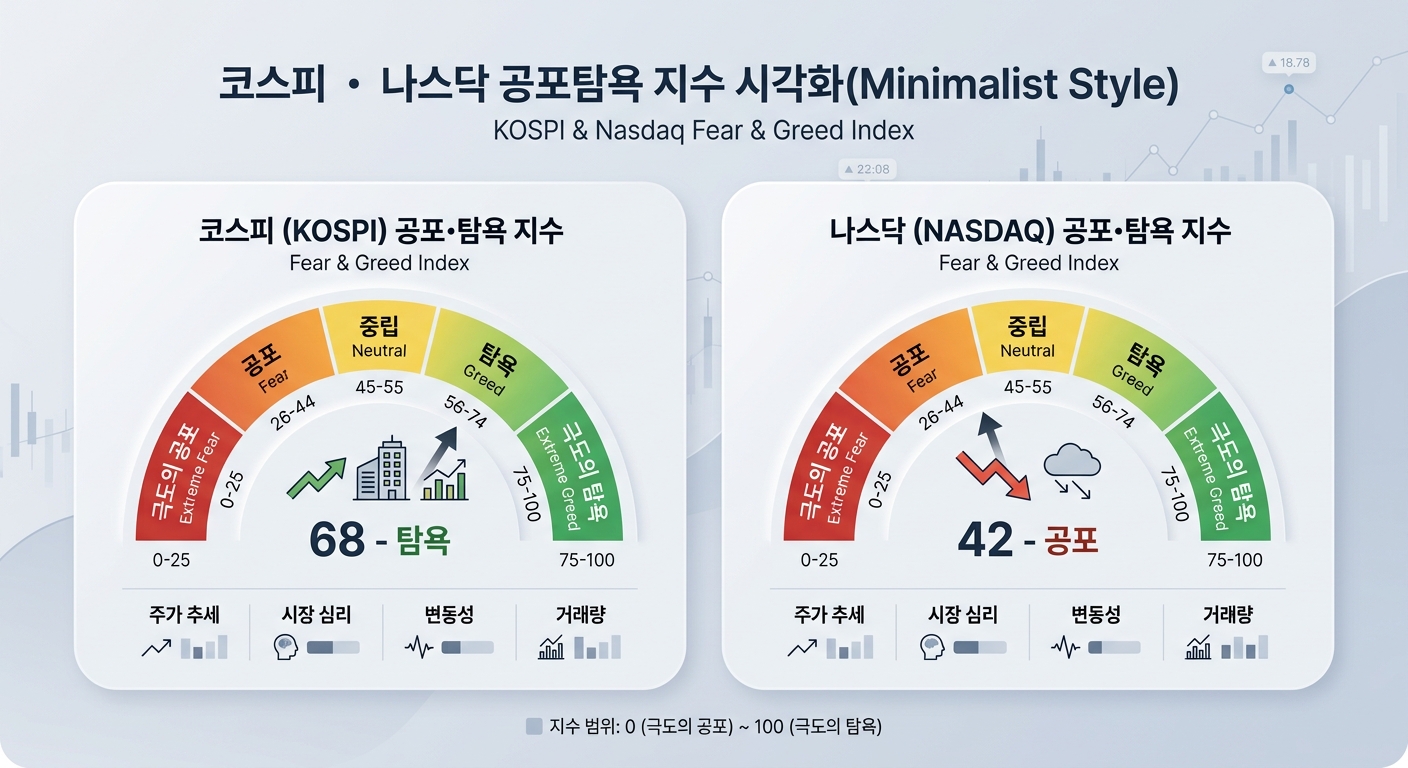
Regarding market sentiment, the Daily Stock Fear & Greed Index currently sits at Neutral (42.1) for KOSPI and Fear (33.3) for Nasdaq.
With the Nasdaq Fear & Greed Index cooling sharply from Greed (60.1) one month ago and Neutral (45.2) one week ago into Fear territory, a broad risk-off tone has taken hold across tech equities.
As of September 13, 2026, the domestic markets closed with KOSPI at 6,909.91 and KOSDAQ at 820.64, while the USD/KRW exchange rate closed at 1,343.80 won. Intraday Nasdaq indices and quotes remain unverified for the day (based on the latest confirmed values).
Financial Analysis
Intuitive Surgical's most formidable asset is the consumables ecosystem that generates sustained revenue well after initial hardware installations.
Of the $2.89 billion in revenue generated in Q2 2026, recurring revenue from Instruments & Accessories and Services accounted for roughly 85%.
Once a new system is installed in a hospital, maintenance contracts and single-use robotic instrument replacements on a per-procedure basis flow in like a toll-booth business model.
The da Vinci 5 features more than 10,000 times greater computing power and force-feedback tactile sensing, lifting both the average selling price (ASP) per unit and overall procedure efficiency.
Supported by the migration to this high-value platform, adjusted gross margins remain solid in the 68%–69% range.
Non-GAAP operating margin also maintains a high level around 40%, proving consistent free cash flow (FCF) generation capabilities.
[이미지: /stdaily/uploads/202609/gen_6aa5e7b2e53e91.01435859.png]
Valuation
Intuitive Surgical's share price recently underwent an adjustment following full-year procedure growth guidance (13.5%–15.5%), colliding with elevated market expectations.
The 12-month forward price-to-earnings (Forward P/E) multiple has pulled back toward the mid-to-high 40s from the upper bound of its historical 5-year average near 60x.
It still commands a valuation premium more than double that of the broader healthcare and medtech sector peers (20–25x).
This premium reflects Intuitive's role not merely as a hardware manufacturer, but as an owner of proprietary lock-in advantages and a developing data platform with AI-driven "Case Insights."
Nevertheless, in an environment of elevated sensitivity to benchmark yields, the multiple awarded for identical growth rates can compress rapidly.
Institutional & Expert Analysis
Major Wall Street investment banks maintain that the long-term da Vinci 5 supercycle remains intact.
Even as capital expenditure (CAPEX) sentiment at major U.S. hospital networks remains cautious, backlog demand for da Vinci 5 continues to show resilience.
The ramp-up in European shipments following CE Mark certification and the ongoing indication expansion across Japan and Asia serve as positive catalysts.
Conversely, cautious voices point out that if full-year procedure growth converges toward the midpoint around 14%, a multiple derating would be inevitable.
Analysts emphasize that if global economic moderation coincides with delayed hospital budget approvals, the pace of hardware replacements could fall short of consensus.
Risk Factors
First, slowing performance in China and price competition from domestic Chinese players.
Due to the Chinese government's localization policies for medical devices and the centralized volume-based procurement system, local da Vinci installations and procedure growth have noticeably slowed compared to historical levels.
Second, shifts in U.S. healthcare policy and the payer environment.
Uncertainty regarding the extension of ACA (Affordable Care Act) subsidies and ongoing cost-cutting pressures on hospital operators could directly or indirectly weigh on adoption of high-ticket robotic surgery systems and elective surgical volumes.
Third, macro variables including the U.S. 10-Year Treasury Yield (US10Y) and the U.S. Dollar Index (DXY).
A strong dollar dampens translated financial results given the substantial share of overseas revenue, while upward pressure on benchmark yields directly caps multiples for growth stocks.
Investment Perspective
Intuitive Surgical represents a cash-flow-generative anchor within "physical AI healthcare," standing apart from software-centric Nasdaq mega-cap tech AI trades.
The correlation between da Vinci 5 deployment velocity and total procedure growth will be the primary indicator supporting the company's earnings baseline over the next 2 to 3 years.
However, with the Nasdaq Fear & Greed Index lingering in the Fear zone (33.3), investors must account for multiple compression risks triggered by macro volatility.
Rather than aggressive dip-buying, a phased approach appears prudent, validating quarterly rebound metrics in global procedure volume and the market adoption of the da Vinci 5 across Europe and Asia.
Investor Checkpoint Q&A
Q1. What are the most significant changes in da Vinci 5 compared to the previous generation (Xi)?
da Vinci 5 incorporates force-feedback technology that allows surgeons to feel the push-and-pull resistance exerted on tissue. It also features 10,000 times greater computing power and an integrated data-collection architecture that connects to the future AI procedure guidance tool, Case Insights.
Q2. Does the widespread adoption of GLP-1 weight-loss medications negatively impact robotic surgery volumes?
While bariatric surgery volumes have experienced stagnation or partial declines, Intuitive's overall procedure portfolio is balanced across general surgery categories including hernia repair, cholecystectomy, colorectal, urologic, and gynecologic procedures, offsetting the drag.
Q3. What is the current regulatory status of da Vinci 5 in Europe and globally?
After securing U.S. FDA 510(k) clearance in March 2024, Intuitive obtained the European CE Mark in July 2025, enabling rollout to primary hospital hubs. Regulatory clearances were also secured across key Asian markets such as South Korea and Japan, where installations are proceeding sequentially.
Q4. Why is the revenue share of instruments and accessories so critical for Intuitive Surgical?
Hardware sales are one-off events, but precision graspers, shears, and staplers used during surgery have predefined usage limits. As procedure counts rise, instrument and accessory revenues increase automatically, providing a powerful defensive buffer during economic downturns.
Q5. What are the primary monitoring metrics for investors?
Key variables to track include the trajectory of quarterly global procedure growth, the proportion of da Vinci 5 units within new system placements, and growth-stock valuation discount dynamics driven by fluctuations in the U.S. 10-Year Treasury yield.