Hello, this is Daily Stock.
[이미지: /stdaily/uploads/202609/gen_6aa0a1a82d0675.40738902.png]
Executive Summary
The adoption race among global semiconductor manufacturers for next-generation High-NA EUV (0.55 NA) lithography systems has entered full swing.
Despite the hefty price tag of $380 million to $400 million (approximately 500 billion KRW) per unit, TSMC and Samsung Electronics have officially confirmed adoption plans, joining early mover Intel.
During intraday trading (provisional), the Nasdaq Composite recorded 26,421.41, reacting sensitively to big tech capital expenditure (CAPEX) expansion.
As of intraday on September 9, 2026 (provisional), the KOSPI stands at 6,965.25, the KOSDAQ at 812.50, and the USD/KRW exchange rate at 1,340.00 KRW.
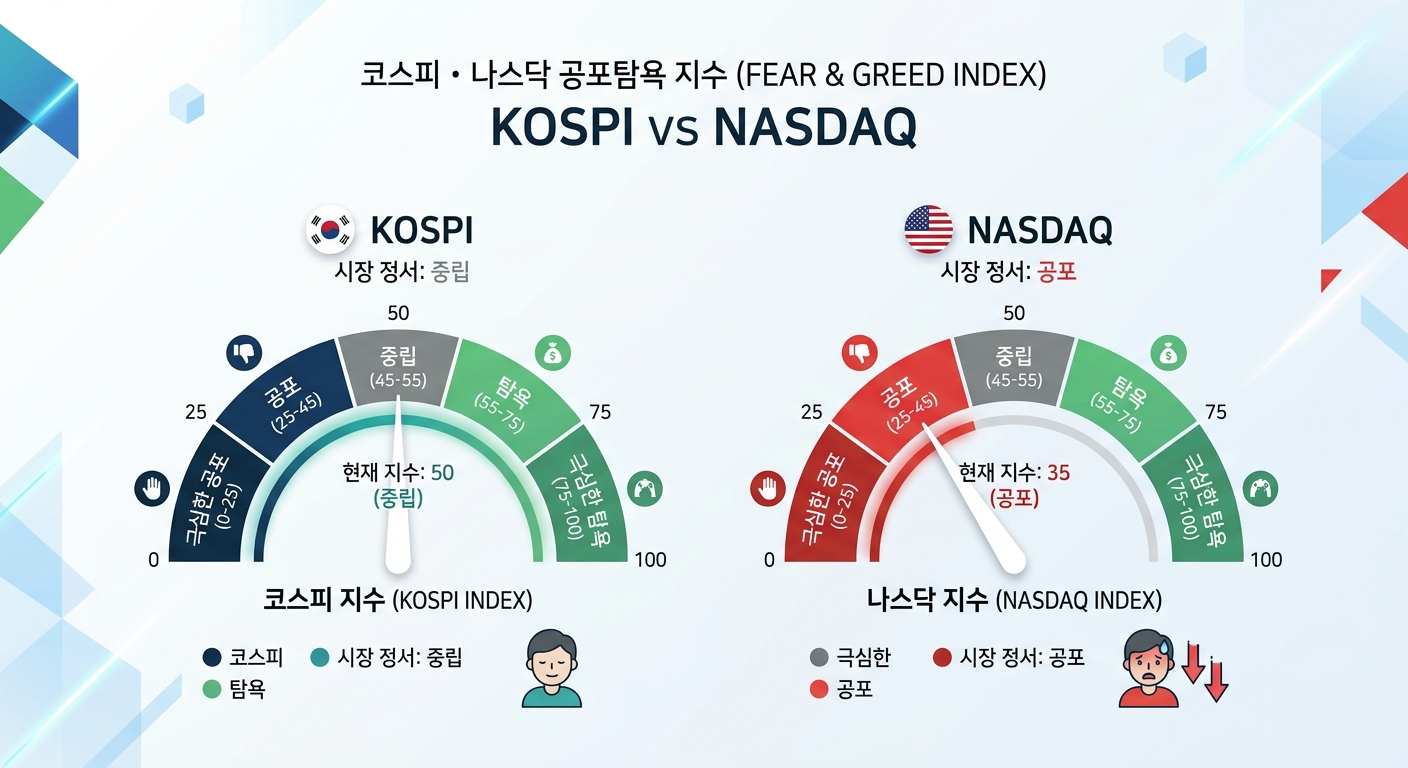
According to the Daily Stock proprietary Fear & Greed Index, the Nasdaq Fear & Greed Index currently sits at Neutral (40.8), rebounding from Fear (30.9) a week ago but cooling down from Greed (64.4) a month ago.
The KOSPI Fear & Greed Index also stands at Neutral (45.3), escaping the prior week's Fear territory (30.5) to form a wait-and-see stance.
Current Status Overview
ASML's High-NA EUV (TWINSCAN EXE series) represents critical next-generation infrastructure capable of resolving transistor critical dimensions down to 8 nanometers, driving a 2.9-fold increase in chip density.
Intel, the first to take delivery of the tool, has already completed exposure tests on over 1 million wafers for its 18A and upcoming 14A nodes.
Official commitments from Samsung Electronics and TSMC have largely dispelled market concerns regarding equipment pricing resistance and monopoly reliance.
Samsung Electronics has finalized plans to deploy High-NA into its next-generation high-performance DRAM mass-production lines in 2028.
TSMC announced adoption for advanced logic processes by 2030 and agreed on joint cooperation to transition to a 12-inch photomask standard.
Currently, more than 10 High-NA systems are operational across fabs of four major global clients, with an additional 3 units undergoing shipment and installation.
The commercial high-volume manufacturing (HVM) model, EXE:5200B, has demonstrated throughput of 135 to 175 wafers per hour (WPH), aiming for 90% availability within the year.
[이미지: /stdaily/uploads/202609/gen_6aa0a1b263f826.75406732.png]
Financial Analysis
Robust High-NA order intake alongside High Bandwidth Memory (HBM) expansion demand serves as a powerful catalyst revising ASML's earnings estimates upward.
Management raised its 2026 annual revenue guidance from the previous range of €36 billion–€40 billion to €43 billion–€45 billion.
Gross margin guidance remains solid at 54%–56%, underscoring the company's monopolistic pricing power.
Total order backlog hovers around €40 billion, while lithography sales to memory manufacturers have expanded to roughly half of quarterly total system revenue.
| Category | FY2024 Actual | FY2025 Actual | FY2026 Company Guidance |
|---|---|---|---|
| **Annual Revenue** | ~€28.0B | ~€32.5B | €43.0B – €45.0B |
| **Gross Margin (GPM)** | 51.3% | 52.8% | 54.0% – 56.0% |
| **Order Backlog** | ~€39.0B | ~€38.8B | Around €40.0B |
| **EUV Shipments & Mix** | Centered on 0.33 NA | EXE:5000 delivered for R&D | Full-scale HVM shipments of EXE:5200B |
| **High-NA Customers** | Intel (R&D adoption) | Intel (initial receipt) | Orders secured from Intel, Samsung, TSMC |
A clear structure has emerged where big tech AI infrastructure CAPEX flows directly into leading-edge hardware nodes.
The rising number of EUV layers adopted by HBM makers and intense sub-nanometer foundry competition fully offset the higher equipment ASP.
Valuation
Within the Nasdaq 100 and the Philadelphia Semiconductor Index (SOX), ASML has consistently commanded a high premium based on its insurmountable economic moat.
As ASML's Nasdaq-listed intraday share price cannot be confirmed on September 9, 2026, it is classified as unconfirmed for the day (based on the latest verified values).
While semiconductor equipment peers (Applied Materials, Lam Research, etc.) trade at 12-month forward P/E multiples of 22x to 28x, ASML is valued at 35x to 40x.
The irreplaceable nature of holding a 100% market share in standard EUV and High-NA lithography tools serves as the primary justification for this valuation multiple.
Fluctuations in the US 10-Year Treasury yield (US10Y) directly affect the discount rate across growth equities.
If the US Dollar Index (DXY) and the Volatility Index (VIX) surge, profit-taking pressure on high-multiple equipment stocks may intensify.
Institutional and Analyst Views
Wall Street investment banks and global semiconductor research institutions view TSMC and Samsung Electronics' confirmed High-NA roadmaps as a critical turning point.
TSMC shifting from its previous stance of delaying adoption due to cost-efficiency concerns to offering a concrete timeline demonstrates the inevitability of the technology transition.
Leading analysts highlight the joint commitment to developing 12-inch oversized photomasks.
By structurally resolving productivity losses caused by reduced exposure field sizes, this transition can enhance High-NA tool throughput per hour by over 40%.
Conversely, a neutral perspective persists regarding whether Intel's aggressive early transition will translate into meaningful foundry market share gains.
Analysts note that heavy depreciation expenses during the post-installation ramp-up phase could pressure customer operating margins in the near term.
[이미지: /stdaily/uploads/202609/gen_6aa0a1bb3882e3.70639293.png]
Risk Factors
The most fundamental risk stems from potential CAPEX pacing adjustments should customer 'AI monetization' face delays.
If hyperscaler investments in frontier AI models fail to generate adequate free cash flow, foundry equipment order timing could be deferred.
Geopolitical trade restrictions remain a recurring uncertainty.
Should US and Dutch export controls on semiconductor equipment expand deeper into DUV platforms and maintenance services for advanced tools, revenue headwinds could emerge.
On the macroeconomic front, receding Federal Reserve rate-cut expectations could dampen risk appetite.
A rebound in the US 10-Year yield would inevitably exert downward multiple pressure on high-growth Nasdaq tech stocks.
Investment Perspective
ASML stands as an indispensable infrastructure provider capturing structural upside at the forefront of the global node-shrink race.
The broadening of the High-NA customer base from an Intel-only dynamic to all Big 3 global chipmakers enhances long-term earnings visibility.
However, with the Nasdaq trading at 26,421.41 intraday (provisional) and the Fear & Greed Index at Neutral (40.8), a portfolio rebalancing approach is preferable to aggressive chasing.
Formulating phased accumulation strategies while monitoring foreign exchange volatility (1,340.00 KRW) and US Treasury yield trends remains a prudent course of action.
Investor Checkpoint Q&A
Q1. What is the biggest technological difference between High-NA EUV and conventional EUV?
The system's numerical aperture (NA) increases from 0.33 to 0.55, maximizing light-gathering power.
This allows single-exposure patterning down to 8-nanometer critical dimensions, drastically reducing process complexity and mask counts.
Q2. How do the shipment and deployment timelines differ across Intel, Samsung Electronics, and TSMC?
Intel has already taken delivery of high-volume manufacturing units (EXE:5200B) for its 18A and upcoming 14A development.
Samsung Electronics targets adoption in high-performance DRAM lines by 2028, while TSMC plans integration for advanced logic nodes starting in 2030.
Q3. Doesn't the $400M price tag per unit pose a burden on customers?
While upfront capital costs are astronomical, eliminating complex multi-patterning steps required on 0.33 NA systems lowers per-wafer manufacturing costs over the long run.
Furthermore, the recent partnership on 12-inch mask standards is expected to markedly improve wafer throughput efficiency.
Q4. How much do semiconductor export controls against China affect ASML's performance?
Shipments of High-NA systems, as well as advanced standard EUV tools, to China are already completely restricted.
The main impact is confined to older DUV immersion equipment volumes, which is substantially offset by strong demand from Western foundries and AI memory expansions.
Q5. What macro indicators should be monitored when tracking the Nasdaq and ASML in the current market environment?
Priority should be given to the US 10-Year Treasury yield (US10Y), the USD/KRW exchange rate (intraday 1,340.00 KRW), and quarterly CAPEX execution rates among big tech hyperscalers.
Given heightened valuation sensitivity among growth equities, monitoring the trajectory of the Volatility Index (VIX) is also essential.