Hello, this is Daily Stock, bringing you selected core information from the global financial markets.
[Image: /stdaily/uploads/202609/gen_6a98728c0296c3.59055572.png]
Key Takeaways
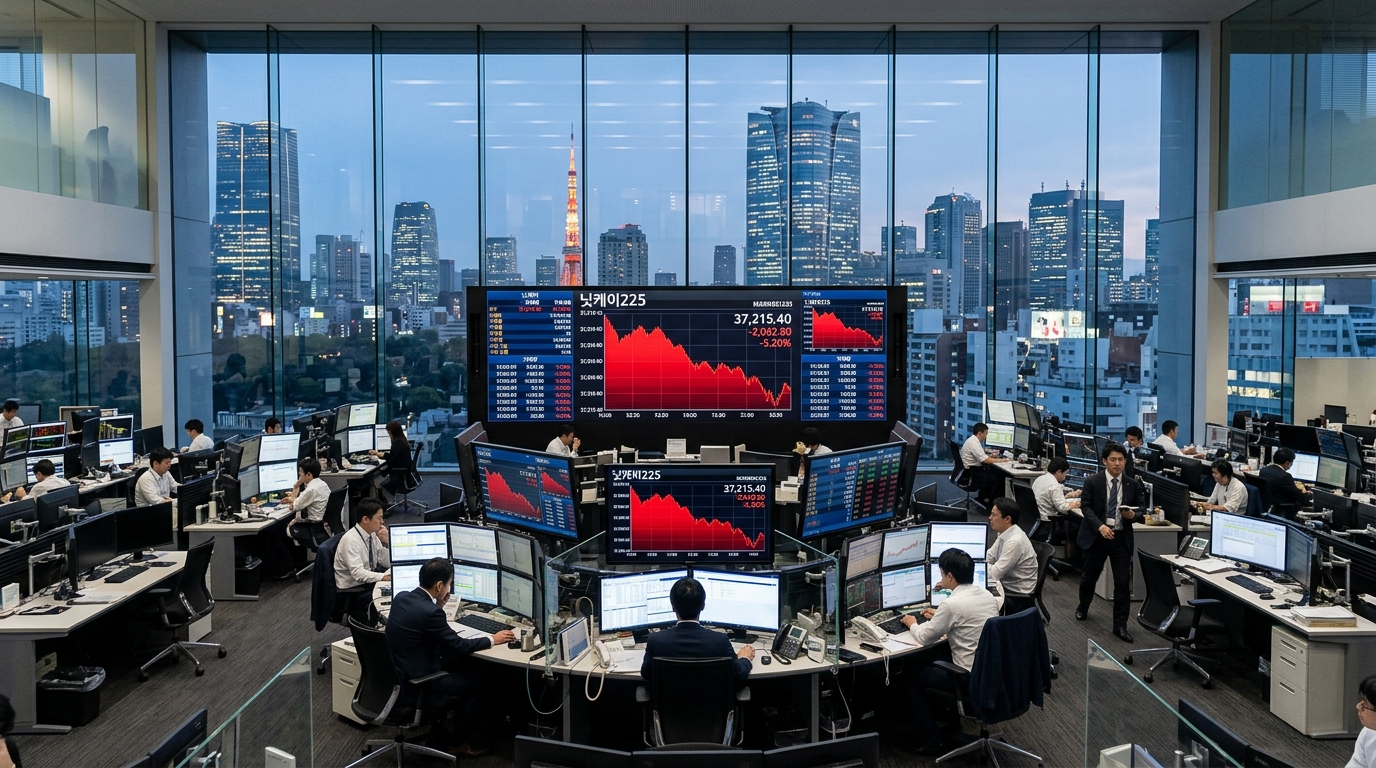
The Nikkei 225 index has recently retreated to the 64,300 level due to rising global government bond yields and increased yen volatility, entering a full-scale correction phase.
As the possibility of a September rate hike by the Bank of Japan (BOJ) rises, the yen/dollar exchange rate continues its unstable trend, fluctuating sharply between the 158 and 160 yen marks.
Under the global tri-polar decoupling framework, the earnings resilience of major Japanese exporters exposed to yen volatility and the potential transition to a stronger yen are emerging as key variables for the future direction of the stock market.
Market Overview
The global macroeconomic environment is undergoing an accelerating fundamental decoupling across three major regions: the US, Europe, and Asia.
As of intraday trading on September 3, 2026 (provisional), the Nikkei 225 index in the Asian market is in an "unconfirmed daily price" state (latest confirmed value: September 2 closing price of 64,325.64 points).
The yen/dollar exchange rate also continues to experience tight trading in an "unconfirmed daily price" state (latest confirmed value: 158.71 to 159.70 yen), triggering caution over potential intervention by foreign exchange authorities.
Meanwhile, at the same hour, Korea's domestic KOSPI index stands at 6,562.72 points, and the KOSDAQ index is at 803.98 points.
The won/dollar exchange rate is hovering around 1,359.30 won, while the Nasdaq, the representative US technology index, is trading around the 26,214.10 level.
[Image: /stdaily/uploads/202609/gen_6a987297ae7608.54125507.png]
Looking at the Daily Stock Fear & Greed Index, investor sentiment has clearly cooled down.
The KOSPI Fear & Greed Index is currently in the "Fear" stage at 28.2, a significant slowdown in buying sentiment compared to "Neutral" (55.6) one week ago, "Fear" (26.4) one month ago, and "Neutral" (48.3) three months ago.
The Nasdaq Fear & Greed Index also remains in the "Fear" stage at 31.3, showing heightened caution compared to "Neutral" (53.9) one week ago, "Neutral" (45.2) one month ago, and "Greed" (62.5) three months ago.
Financial Analysis
The prolonged weakness of the yen has historically played a pivotal role in bolstering the book profits of export-oriented manufacturing companies, such as automakers and semiconductor firms.
However, due to the recent rise in imported raw material costs, increasing labor costs in Japan, and the possibility of a sudden rebound in the yen, earnings forecasts for these corporations are undergoing a re-evaluation.
The table below analyzes the exchange rate sensitivity and recent market performance of key exporting companies and brands leading the Japanese stock market.
| Company Name | Key Industry | Recent Business Performance & Features | Yen Sensitivity & Volatility Impact |
|---|---|---|---|
| **Toyota** | Finished Automobile Manufacturing | Achieved record-high operating profit due to the favorable exchange rate, but faces concerns over slower earnings if the yen rebounds | Very High (Operating profit fluctuates by tens of billions of yen per 1 yen change) |
| **Tokyo Electron** | Semiconductor Front-end Equipment | Fundamentals remain solid thanks to global AI demand, but recently corrected 3.4% during trading due to surging bond yields | Moderate (Largely driven by global macroeconomic and capital expenditure cycles) |
| **Advantest** | Semiconductor Testing Equipment | Solid demand for testing high-performance chips, but experienced a 2.5% intraday decline due to liquidity concerns | Moderate (Relatively defensive due to a high share of USD-denominated payments) |
| **Seiko** | Precision Machinery / Watches | Earnings estimates were raised sharply due to high-end strategies and Shohei Ohtani limited-edition marketing, driving stock prices up | High (Profitability maximized during the weak yen period via diversified overseas revenue) |
[Image: /stdaily/uploads/202609/gen_6a9872a672e346.92622508.png]
Valuation
After peaking at an all-time high of 73,007.00 points in June 2026, the Nikkei 225 index has gradually lowered its ceilings.
As the index recently slid to the 64,300 level, the forward P/E (price-to-earnings ratio) valuation attractiveness of key exporting stocks has relatively improved.
However, compared to the US Federal Reserve's prolonged tightening stance (Nasdaq at 26,214.10), Japan's financial market is facing a policy divergence as it attempts a sudden shift toward tightening, which is capping additional re-rating.
If the yen bottom out and recover, translation gains will shrink; therefore, rather than chasing stocks based solely on perceived undervaluation, it is essential to monitor whether support holds at the lower bound of valuation.
Analyst & Institutional View
Major global investment banks (IBs) estimate that the probability of the Bank of Japan (BOJ) raising short-term interest rates at the upcoming September monetary policy meeting ranges from 80% to as high as 97%.
BOJ Governor Kazuo Ueda has repeatedly hinted at the continuation of the rate hike cycle, prioritizing the management of inflation risks.
Accordingly, firms such as Bank of America (BofA) and UBS project a rangebound horizontal movement for the Nikkei index through the end of the year, warning that a fading weak-yen momentum could trigger short-term profit-taking.
On the other hand, from a long-term perspective, some suggest that downside pressure will not be severe, supported by corporate governance reforms and expanded shareholder return programs.
Risk Factors
First is an stronger-than-expected yen appreciation (strong yen shock).
If the yen appreciates sharply due to repeated hawkish statements from the BOJ, there is a risk that the won- and dollar-translated earnings of major exporters could drop significantly.
Second is the upward volatility of global commodity prices, including crude oil.
With Brent crude recently nearing the $100 per barrel mark, resource-poor Japan faces mounting pressure of a deteriorating trade balance due to rising import costs.
Third is risk aversion triggered by a surge in domestic government bond yields.
As the yield on the 10-year Japanese government bond (JGB) topped 3% for the first time since 1996, households and institutional investors may pivot away from the equity market in favor of safer JGBs.
Investment Perspective Summary
Global markets are situated in a tri-polar decoupling phase characterized by high US interest rates, a recovery in the Eurozone's manufacturing and services PMI, and the looming tightening of Japan's monetary policy.
Under this regime, the traditional strategy of simply buying export stocks relying on a weak yen may no longer be effective.
An alternative scenario is to focus on a select group of advanced semiconductor materials and equipment firms or high-value intellectual property (IP) holders that can maintain global market share and pricing power even amid exchange rate volatility.
Investor Checklist Q&A
Q1. What is the primary cause of the recent sharp correction in the Nikkei 225 index?
A1. Technology stocks faced heavy selling pressure due to concerns over an additional BOJ rate hike in September, combined with the 10-year JGB yield hitting the 3% level and surging global crude oil prices.
Q2. How is the impact of the weak yen on exporters' financial statements changing?
A2. In the short term, there is an illusion of inflated profits when translating export sales into yen, but real cost burdens are intensifying due to soaring energy import costs.
Q3. Is the probability of an interest rate hike at the upcoming BOJ meeting indeed high?
A3. Based on foreign media and capital market data, expectations for a 25bp rate hike at the September meeting are very high, estimated between 80% and 97%.
Q4. If a strong yen trend gains traction, which stock groups could be relatively favored?
A4. Domestically focused companies or utility sectors with high ratios of raw material and component imports may benefit, while high-quality precision equipment stocks with strong technological edges might experience less volatility.
Q5. What is the key point for Korean investors to consider amid Korean won strength and Japanese yen volatility?
A5. Sharp fluctuations in the cross-rate between the won/dollar and won/yen can directly lead to currency exchange losses. Therefore, investors must carefully diversify their entry timing and consider currency hedging.