Hello, this is Daily Stock.
In a complex phase where global macro interest rates and individual Big Tech growth engines diverge, we would like to closely diagnose the current status of the energy storage system (ESS) business, another pillar of Tesla.
[Image: /stdaily/uploads/202608/gen_6a922176b11e57.07938087.png]
Executive Summary
Tesla's (TSLA) energy division (Tesla Energy) is considered the most reliable diversification engine to hedge against growth slowdown pressures in its core electric vehicle (EV) business.
In the second quarter of 2026, Tesla proved robust top-line growth by installing 13.5 GWh of energy storage products, its second-highest quarterly volume.
However, due to legacy vendor cell defects, one-time warranty provisions and cost burdens temporarily squeezed margins, revealing the limitations of its manufacturing supply chain structure.
Current Status Overview
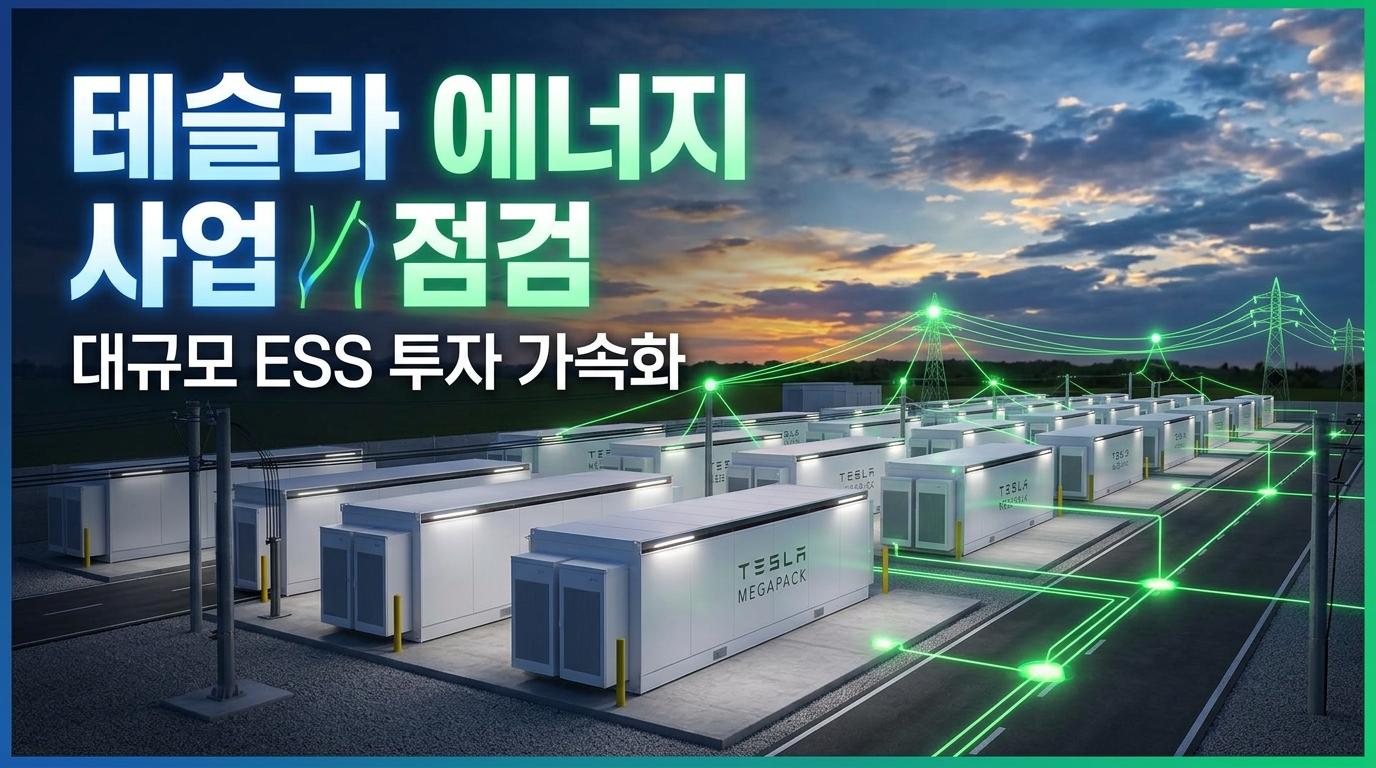
Tesla's energy business centers around 'Megapack' for utility and grid stability, and 'Powerwall,' a high-capacity residential battery.
Following the maximization of utilization rates at the Lathrop Megafactory in California, the opening of the Shanghai factory and the start of production at the Brookshire Megafactory in Houston, Texas, have sequentially placed production on a mass-manufacturing trajectory.
In particular, large-scale power stabilization demand from global data centers driven by AI infrastructure expansion continues to fill Tesla's ESS order backlog.
Large-scale captive demand, such as 'Colossus'—the gigawatt-scale data center of xAI, an AI startup led by Elon Musk—also acts as a solid backup.
| Key Metrics | Full Year 2025 | Q1 2026 | Q2 2026 |
|---|---|---|---|
| **Energy Storage Installed** | 46.7 GWh | 8.8 GWh | 13.5 GWh |
| **Energy Segment Revenue** | Approx. $12.7 billion | - | $3.14 billion |
| **Energy Segment Gross Margin** | - | 39.5% | 20.4% |
Financial Analysis
In Q2 2026, Tesla's energy segment generated robust revenue of $3.14 billion based on 13.5 GWh of deliveries.
However, the energy gross margin, which reached 39.5% in the first quarter, fell sharply to 20.4% in the second quarter, triggering investor caution.
According to CFO Vaibhav Taneja, this was due to a one-time warranty provision of approximately $240 million set aside for battery cell quality defects from an external vendor used in legacy installations.
Additionally, the loss of tariff benefits compared to Q1 and price cuts due to global competition partially contributed to the margin decline.
[Image: /stdaily/uploads/202608/gen_6a922182e61be4.05131597.png]
Valuation
On the New York stock market at the close of regular trading on August 28, 2026, Tesla (TSLA) shares recovered slightly from the previous day to close at $354.81.
The company's market capitalization stands at approximately $1.38 trillion, maintaining a level that vastly exceeds the multiples of traditional automakers in terms of Forward Price-to-Earnings (P/E).
The market interprets that Tesla is valued not merely as an EV manufacturer but as a comprehensive platform dominating Full Self-Driving (FSD) software, the Robotaxi (Cybercab) network, and power grid infrastructure.
Therefore, Megapack production capacity, which is accelerating to dozens of GWh per quarter, serves as a core line of support for earnings that justifies the stock's high valuation multiple.
Expert & Institutional Analysis
Wall Street and institutional experts view Tesla's energy business as a 'buffer zone' that compensates for stagnating automotive performance.
In particular, amid the trend of securing power grids essential for running generative AI, the valuation of Megapack and energy software is being revised upward.
Experts believe that cost burdens could be dramatically reduced after mid-2027, when major partners such as LG Energy Solution fully operate their domestic LFP battery production plants in the US.
Until then, margin volatility due to reliance on external battery cells must be factored in, and cost control capability is expected to be a key evaluation metric in the short term.
[Image: /stdaily/uploads/202608/gen_6a92218e6d6441.14567671.png]
Risk Factors
The most fundamental threat is changes in the macro environment due to prolonged monetary tightening and intensifying competition.
At the Jackson Hole meeting held recently on August 28, 2026, Fed Chairman Kevin Warsh expressed concerns about inflation, lowering expectations for near-term interest rate cuts and once again delaying the timing for lower financing costs in financial markets.
If high interest rates persist, utility customers may face hurdles in securing funding for large-scale projects, presenting a scenario of major Megapack order delays that cannot be ignored.
Furthermore, intensifying low-price competition with major Chinese ESS manufacturers like BYD and Sungrow, primarily in non-North American regions, remains a persistent long-term risk.
Investment Outlook Summary
Despite temporary margin fluctuations, Tesla's energy business is showing firm growth backed by long-term electrification demand and infrastructure expansion.
In the short term, it is highly likely to serve as a reliable stronghold offsetting the earnings pressure of the EV segment, which is exposed to concerns over prolonged high interest rates.
Finally, according to our market sentiment data, as of today, August 29, 2026, the KOSPI index stands at 6788.88 points and the KOSDAQ index at 838.41 points.
The USD/KRW exchange rate has settled at 1380.50 won, reflecting macro shifts.
The domestic KOSPI Fear & Greed Index is currently Neutral (46.6, compared to 49.6 a week ago), and the US NASDAQ index stands at 26402.42 points with the NASDAQ Fear & Greed Index showing Neutral (54.4, compared to 54.5 a week ago), reflecting neutral market sentiment.
Key Terms at a Glance
- **Megapack**: A large-scale battery system for industrial and utility use supplied by Tesla, which enhances grid stability.
- **Lathrop**: Tesla's key Megapack production facility in California, targeting an annual capacity of 40 GWh.
- **One-time Warranty Cost**: A major financial variable that lowered energy margins in Q2 2026, consisting of funds spent on warranties for defective external vendor battery cells.
- **Kevin Warsh**: The Fed Chairman who prioritized conquering inflation at the Jackson Hole meeting, dashing market expectations for early monetary easing.
- **Fear & Greed Index Neutral (54.4)**: Indicates a cautious state among US stock market participants, where fear and greed levels are not polarized to extremes.