Hello. This is Daily Stock, delivering swift and accurate updates on financial market trends.
[Image: /stdaily/uploads/202607/gen_6a69a548c39205.06151373.png]
Summary
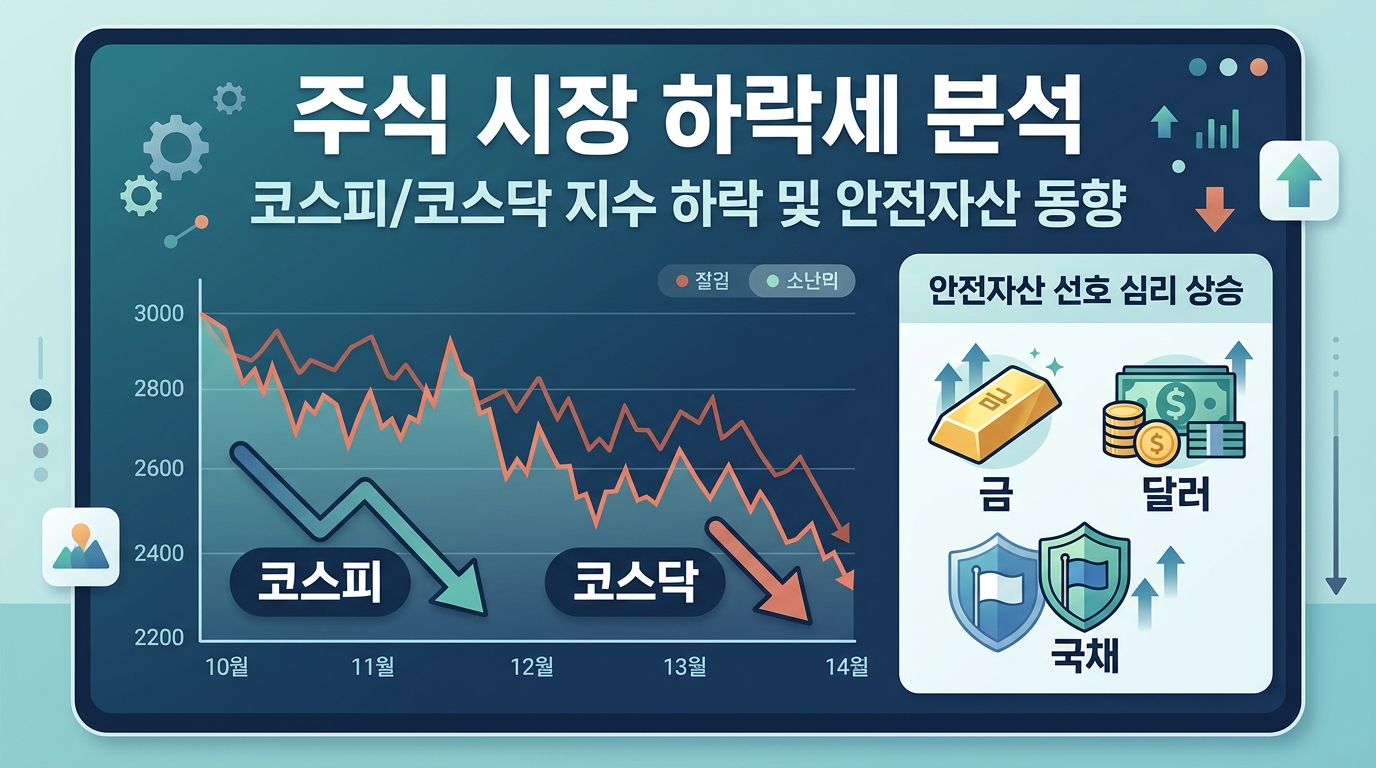
With the recent surge in domestic market volatility, the net assets of the exchange-traded fund (ETF) market—which once exceeded 500 trillion won—shrank by nearly 100 trillion won in just over a month.
This decline is largely attributed to the devaluation of underlying assets alongside capital migration into safer havens.
While "KODEX 200," the flagship ETF tracking the KOSPI 200 index, saw its net assets plunge by over 9 trillion won over the past month, it paradoxically attracted about 1.6 trillion won in new buying, demonstrating strong dip-buying support.
Conversely, large capital outflows were recorded in bond and inverse ETFs, while some investors quickly pivoted to covered call ETFs centered on high-dividend stocks for shelter.
Market Overview
On July 29, 2026, the KOSPI closed at 5,663.24, reflecting the sharp decline over the past month.
On the same day, the KOSDAQ index recorded 662.68, the US Nasdaq composite finished at 24,876.91, and the USD/KRW exchange rate closed at 1,448.20 won, showing a sustained high exchange rate regime.
According to the proprietary Daily Stock Fear & Greed Index, the KOSPI is currently in the Extreme Fear (12.6) territory, signaling deeper psychological contraction compared to the Extreme Fear (13.3) level of a week ago.
On the other hand, the Nasdaq Fear & Greed Index is at the Fear (38.6) level, entering from Neutral (43.3) a week ago, indicating rigid investment sentiment globally.
According to Korea Exchange (KRX) data, the total net assets of the domestic ETF market, which surpassed 533 trillion won on the 22nd of last month, shrank to approximately 418.99 trillion won as of yesterday.
This decline is primarily a mechanical reduction in passive funds driven by falling stock prices.
Financial Analysis
Examining the setup values and capital inflows of key ETFs over the past month reveals a clear shift in investor positioning.
Despite its valuation drop, the market-representative KODEX 200 saw a net inflow of 1.6427 trillion won over the past month, highlighting robust dip-buying sentiment near the index's lower bounds.
In contrast, massive outflows occurred in bond-type products, traditionally considered safe havens, due to uncertainties over interest rate directions.
The KODEX Active Aggregate Bond (AA- or higher) ETF registered the largest net outflow over the past month, losing 425.6 billion won.
| ETF Name | Past 1-Month Capital Flow | Main Features and Drivers |
|---|---|---|
| KODEX 200 | ~1.6427 trillion won Net Inflow | Inflow of fractional buying due to oversold levels on the benchmark KOSPI |
| KODEX Active Aggregate Bond (AA- or higher) | ~425.6 billion won Net Outflow | Outflow due to widening interest rate volatility and directional uncertainty |
| KODEX 200 Futures Inverse 2X | ~389.8 billion won Net Outflow | Profit-taking and redemptions by retail investors during the market downturn |
| KODEX SK Hynix Single Stock Leverage | ~2.1110 trillion won Net Inflow | Extreme retail capital concentration seeking high-risk short-term technical rebounds |
| RISE 200 High Dividend Covered Call, etc. | Continued Net Inflow expansion | Income-seeking migration aimed at volatility hedging and stable dividend yield |
[Image: /stdaily/uploads/202607/gen_6a69a553317e03.72057490.png]
Valuation
Following the rapid index correction, the relative valuation appeal of KOSPI 200 large-cap stocks has sunk to historic lows.
Despite expectations for the government’s corporate Value-up policy and the solid mid-to-long-term earnings fundamentals of major Korean conglomerates, analysts note that mechanical selling by passive funds has driven these shares into excessively undervalued territory.
With the USD/KRW exchange rate soaring to the 1,448.20 won level, the KOSPI 200 index denominated in USD may appear highly attractive and cheap to global investors.
However, should the high exchange rate persist, mounting import price pressures and the subsequent economic slowdown could squeeze corporate profit margins, potentially delaying the recovery of valuation multiples for large-cap stocks.
While the global Nasdaq index exhibits volatility around the 24,876.91 level, KOSPI 200 large caps are highly likely to have their downside resilience tested in terms of Price-to-Earnings (PER) and Price-to-Book (PBR) ratios.
Expert & Institutional Analysis
Financial investment industry experts analyze the "100 trillion won wipeout" in ETF net assets as a paper loss from market declines rather than a structural crisis of the funds themselves.
The majority of long-term retirement pension and asset allocation funds are reportedly holding their positions instead of redeeming their shares.
However, watchdogs are warning against retail investors' heavy concentration in high-risk single-stock leverage and derivative products.
As financial authorities have raised the basic deposit requirement for leverage ETFs to 30 million won to stabilize the market, speculative retail demand is expected to cool down.
Some domestic brokerages advise keeping a close eye on the correlation between the USD/KRW exchange rate and foreign capital flows.
They forecast that meaningful inflows of foreign passive capital into KOSPI 200 ETFs, which heavily feature large-cap stocks, will only resume once the current Extreme Fear (12.6) sentiment is resolved and exchange rate volatility subsides.
Risk Factors
The most direct risk is the potential dual onset of a high exchange rate and an economic slowdown.
If the USD/KRW exchange rate remains stuck around 1,448.20 won, rising import costs and pressure to keep interest rates high could dent the earnings recovery of major KOSPI exporters.
Secondly, there is a risk of a "liquidation chain" triggered by retail investors' high leverage positions.
Despite the falling index, trillions of won poured into high-risk products like the KODEX SK Hynix Single Stock Leverage, meaning further drops could trigger margin calls and forced selling, adding downward pressure on the broader index.
Thirdly, external macro headwinds, including rising global geopolitical tensions and changes in tariff policies, are acting as obstacles to an early rebound of the Korean stock market.
Investment Perspective
With the KOSPI market currently in the Extreme Fear (12.6) zone, a cautious approach is warranted.
Nonetheless, some argue against excessive panic, as the sharp drop in KOSPI 200 ETF assets reflects asset devaluation under market corrections rather than actual physical outflows.
The steady capital inflows into benchmark index-tracking ETFs indicate that mid-to-long-term DCA (dollar-cost averaging) strategies are actively at play.
Therefore, rather than aggressively expanding high-risk leverage products, constructing a defensive portfolio that mixes high-dividend and covered call ETFs for yield stability seems to be a more practical way to navigate this volatile period.
FAQ
Q1. What is the primary cause of the recent ~100 trillion won drop in domestic ETF net assets?
A1. The primary cause is the decline in the value of the underlying assets held by ETFs due to the drop in the KOSPI index, compounded by capital outflows in some asset classes such as bond funds.
Q2. Why is capital flowing into the KODEX 200 ETF even as the market slides?
A2. This is due to strong dip-buying by investors who perceive the index to be near its bottom and are purchasing benchmark ETFs in installments, expecting a long-term recovery.
Q3. What impact will the higher deposit requirements on leverage ETFs have?
A3. Raising the basic deposit requirement to 30 million won is expected to curb speculative retail flows into high-risk products, helping to prevent heavy individual losses and slightly mitigating market volatility.
Q4. What is the scenario for foreign passive capital inflows under high exchange rates?
A4. While a USD/KRW rate near 1,448.20 won makes Korean stocks look cheaper in USD terms, foreign passive money is projected to enter in earnest only when concerns about further currency depreciation ease and the exchange rate stabilizes.
Q5. What alternative products are retail investors focusing on in this volatile market?
A5. Stable income flows are shifting toward high-dividend covered call ETFs and high-dividend active fund groups, which offer downside protection and steady cash payouts.