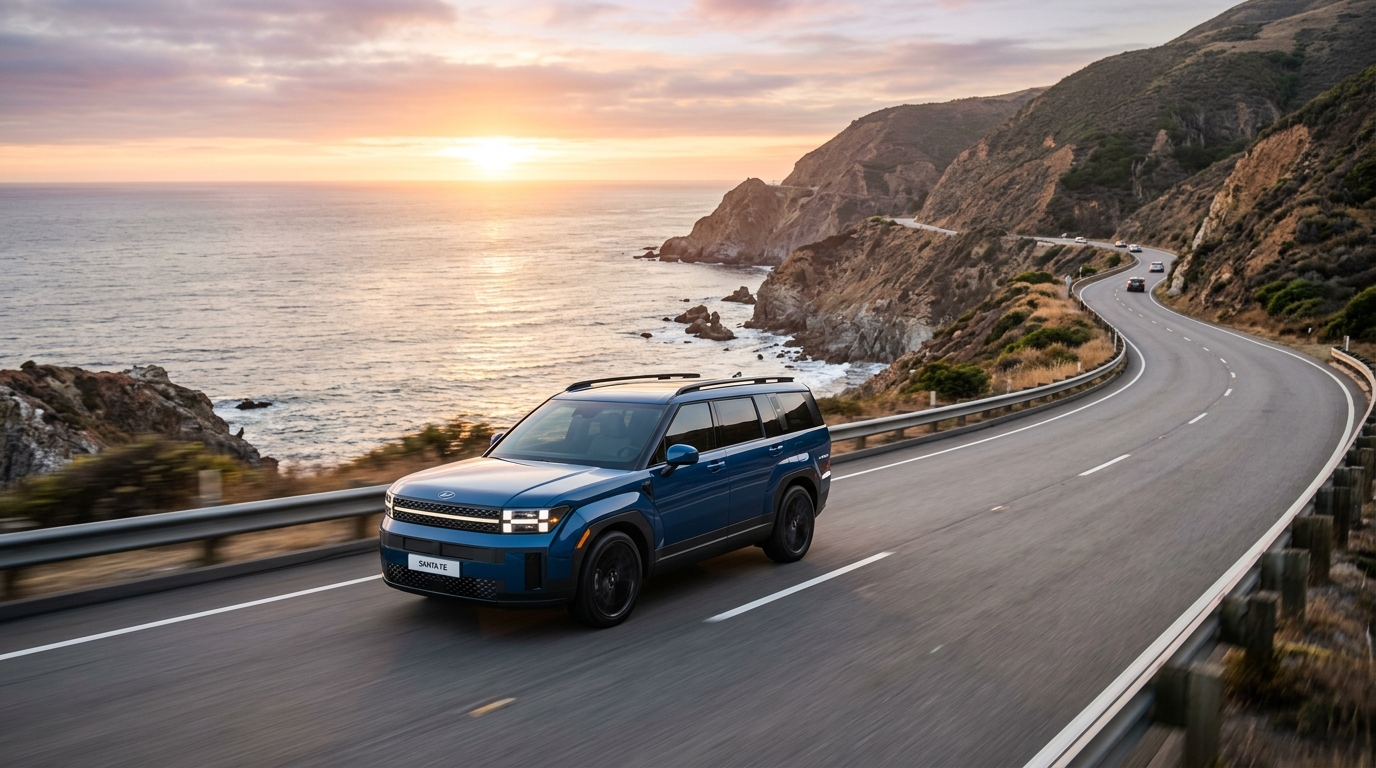
Hello, this is Daily Stock. Today, with the KOSPI closing at 8,303.41 and the Nasdaq at 26,213.72, we take a close look at Hyundai Motor's sales performance in the US under the high exchange rate environment where the KRW/USD rate reached 1,556.40.
[Image: /stdaily/uploads/202607/gen_6a44bb4ba438b5.97680580.png]
Key Takeaways
- In Q1 2026, Hyundai's US sales reached an all-time high of 223,705 units, bringing its local market share close to 12%.
- Despite concerns over slowing EV demand, hybrid (HEV) sales surged 53.2% year-over-year, serving as a critical bridge for defending earnings.
- Localization milestones are becoming tangible, with the expansion of local production at the Hyundai Motor Group Metaplant America (HMGMA) and five vehicle models making it into the '2026 American-Made Index (AMI)'.
Current Situation Summary
In the first half of 2026, the US automotive market continues to face unfavorable conditions such as high interest rates, rising vehicle prices, and the abolition of EV subsidies.
Despite this, Hyundai Motor has maintained record-high US sales momentum through flexible portfolio diversification focused on hybrids (HEVs) and recreational vehicles (RVs).
In Q1 of this year, Hyundai's US sales (including Genesis) stood at 223,705 units, up 1.2% year-over-year, marking its highest-ever Q1 performance.
During the same period, Kia also recorded a record high of 207,015 units (+4.1%), bringing the combined US sales of both companies to 430,720 units, an increase of 2.6%.
Notably, on a cumulative basis from January to April, the combined US market share of Hyundai and Kia reached 11.8%, closely trailing third-place Ford (12.2%) by a mere 0.4 percentage points.
This is an exceptional performance compared to major Japanese rival brands such as Toyota (-0.1%) and Honda (-4.2%), which recorded negative growth during the same period.
| Brand/Indicator | Q1 2026 US Sales (Units) | YoY Growth Rate (%) | Major Popular Models in the US |
|---|---|---|---|
| **Hyundai (inc. Genesis)** | 223,705 | +1.2% | Tucson, Santa Fe, GV80 |
| **Kia** | 207,015 | +4.1% | Sportage, Telluride |
| **Toyota** | 569,420 | -0.1% | RAV4, Highlander |
| **Honda** | 336,830 | -4.2% | CR-V, Accord |
Financial Analysis
[Image: /stdaily/uploads/202607/gen_6a44bb561d6646.65107125.png]
Hyundai Motor's consolidated revenue for Q1 2026 recorded 45.9389 trillion KRW, with an operating profit of 2.5147 trillion KRW.
Although there was a slight adjustment in the operating profit margin due to prolonged global interest rate hikes and raw material cost pressures, a solid improvement in the product sales mix in the US prevented a sharp decline in profitability.
The biggest supporter of profitability is undoubtedly the favorable foreign exchange rate.
As of today's close (2026-07-01), the KRW/USD exchange rate is 1,556.40 KRW. The maximization of export earnings converted into KRW due to the prolonged high exchange rate is successfully offsetting the increase in Hyundai's incentive costs in the US.
In addition, five Hyundai models, including the Tucson, were recently selected in the '2026 American-Made Index (AMI)' published by Cars.com, a US automotive media outlet.
This officially recognizes the company's local parts sourcing ratio and employment contribution, building a solid line of defense to bypass US Inflation Reduction Act (IRA) regulatory barriers and protect operating profit margins.
Valuation
Currently, the overall multiple for the Korean large-cap market remains conservative, with Hyundai's Forward P/E staying in the high 5x range.
At the same time, an excellent shareholder return dividend yield ranging from the high 4% to low 6% range acts as a strong downside support for the stock price.
Experts expect that the P/E multiple could be adjusted upward to a maximum of 7x as operations at the new Georgia plant (HMGMA) ramp up and the hybrid lineup is fully deployed.
Furthermore, if the next-generation SDV (Software Defined Vehicle) pace car, scheduled for release in the second half of 2026, receives positive feedback, additional valuation re-rating scenarios are also on the table.
In particular, with the KRW/USD exchange rate exceeding 1,550 KRW, although Hyundai's current stock price is marked as 'undetermined for today' (based on the latest confirmed value), its status as a leading large-cap export stock directly benefiting from the high exchange rate remains unshakable.
Professional & Institutional Analysis
[Image: /stdaily/uploads/202607/gen_6a44bb5f99c1a5.42349561.png]
Securities firms and global credit rating agencies highly appreciate Hyundai's agility in putting hybrids forward as its main earnings defense card faster than competitors.
Indeed, in the US hybrid market, Hyundai and Kia have solidified their position as the second largest sellers after Toyota.
Hana Securities predicted Hyundai and Kia's global sales growth rate to be around 4% in 2026, expecting US sales to smoothly maintain an upward trend of about 5%.
As the production of the Kia Sportage Hybrid recently began in earnest at the HMGMA plant, the strategy of expanding local eco-friendly production lineups in line with high oil prices is highlighted as a core growth engine.
However, the psychological contraction of the global macroeconomy is a short-term supply and demand burden, as shown by the KOSPI Fear & Greed Index at 34.3 (Fear stage) and the Nasdaq Fear & Greed Index at 31.3 (Fear stage).
Institutional investors recommend an optimized portfolio strategy focusing on large-cap stocks with proven fundamental strength and high exchange rate defensive power, like Hyundai Motor, amid oversold index conditions.
Risk Factors
The first factor to guard against is the increasing burden of auto financing installment plans due to the prolonged high-interest rate environment in the US.
As consumer purchasing power deteriorates overall, there is a possibility that promotional competition (incentive provision) among finished car manufacturers will intensify again.
Additionally, rapid volatility in US trade tariff policies that could occur under a Trump administration is another potential cost burden.
Even though the local production ratio has significantly increased compared to the past, if tariff barriers on export volumes from South Korea to the US tighten further, it could increase the volatility of consolidated earnings.
Lastly, the stagnation of sales in the domestic Korean market due to global economic slowdown concerns is also cited as a risk factor that unnecessarily increases dependence on the US market within the global portfolio.
Investment Perspective Summary
Hyundai Motor is one of the companies that has proven the most flexible and solid sales structure during the paradigm shift in the US automotive market.
It is encouraging that it immediately compensated for the rapid EV chasm (temporary pause in demand) with its full hybrid lineup, pushing its market share to 11.8%.
The strong dollar trend, with the KRW/USD exchange rate at 1,556.40, is expected to continue acting as a powerful profit buffer for Hyundai's export earnings in the second half of the year.
As the overall market sentiment remains in the fear stage, caution regarding short-term volatility is advised, but weighing long-term portfolio weightings based on solid global market share growth and shareholder return commitment could be a wise scenario.
Investor Checklist Q&A
Q1. What was the fundamental reason for Hyundai's strong US sales performance in Q1 2026?
A1. It is because they focused on timely supplies of hybrid (HEV) models for various vehicles such as the Santa Fe, Elantra, and Sonata in response to the abolition of US EV subsidies and slowing demand, achieving growth that surpassed the decline in EV sales.
Q2. What is Hyundai's current market share in the US?
A2. As of January to April 2026, the combined US market share of Hyundai and Kia is around 11.8%, recording an all-time high and closely chasing third-place Ford (12.2%).
Q3. What is the specific impact of the high exchange rate on Hyundai's earnings?
A3. The prolonged high exchange rate hovering above the 1,550 KRW level significantly increases revenue and operating profit when converting overseas sales proceeds into KRW, easing the cost burden of rising US promotional incentives.
Q4. What is the financial significance of being selected for the '2026 American-Made Index (AMI)'?
A4. Beyond being a simple exporter, it officially recognizes high local parts sourcing and employment continuity through plants such as the Alabama plant, providing an excellent defensive shield to bypass IRA regulatory barriers and protect stable profit margins.
Q5. What is the key trigger for future valuation re-rating?
A5. Along with a continuous increase in dividend payouts for shareholder returns, key triggers include the successful market landing of the next-generation SDV (Software Defined Vehicle) pace car scheduled for launch in the second half of 2026, and the full operation of the global local production base (HMGMA).