Hello, this is Daily Stock, bringing you key insights from global financial markets.
[Image: /stdaily/uploads/202606/gen_6a39868f162ba8.83965550.png]
Key Summary
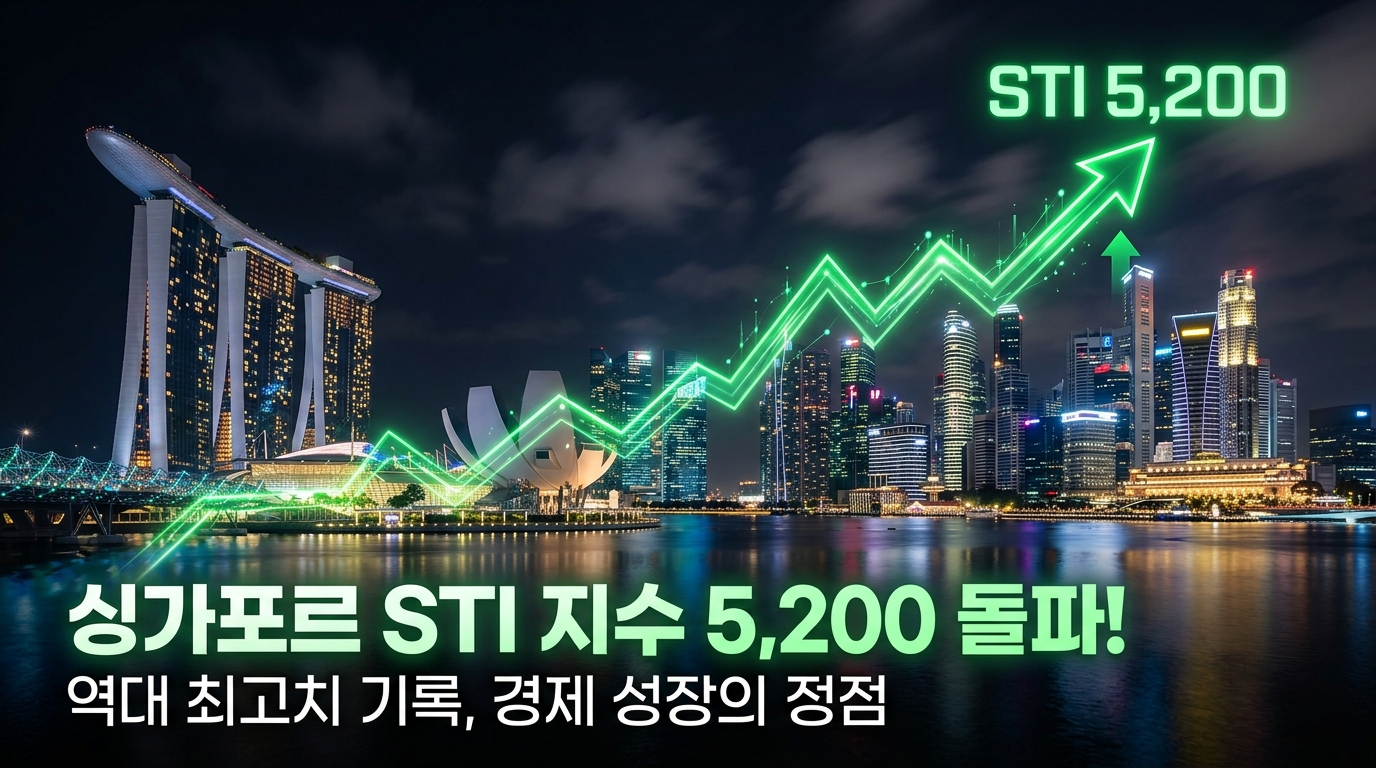
- Singapore's flagship Straits Times Index (STI) has successfully settled above the 5,200 mark, maintaining a strong bullish technical trend after breaking the 5,000 level for the first time in early 2026.
- The rally is viewed as a structural transformation driven by the Singaporean financial authorities' proactive capital market reform initiative (EQDP) and a growing preference for high-yield dividend assets.
- Amid fundamental decoupling among the US, European, and Asian markets, Singapore equities are serving as a global safe haven, supported by attractive valuations and solid dividend yields.
Market Overview
- As of intraday (tentative) on June 23, 2026, the Singapore STI was unquoted for the day (most recently confirmed at 5,204.01 points during intraday on June 22) but is showing robust support near its historic peak of 5,212.84 points reached on June 18.
- In the global macroeconomic scene, commodity price volatility in oil and copper, alongside Middle East geopolitical risks, persist. However, Singapore’s manufacturing PMI printed at 50.7, marking its eighth consecutive month of expansion.
- Meanwhile, South Korea's KOSPI stands at 9,114.55 points and the KOSDAQ at 968.40 points, with the USD/KRW exchange rate fluctuating around 1,537.40 won.
- According to Daily Stock's proprietary Fear & Greed Index, the KOSPI Fear & Greed Index currently stands at Neutral (52.2), compared to Neutral (53.7) a week ago, Neutral (58.6) a month ago, and Fear (33.5) three months ago.
- Conversely, the Nasdaq Fear & Greed Index has cooled down to Fear (37.3), compared to Neutral (41.6) a week ago, Neutral (59) a month ago, and Neutral (54.5) three months ago.
Financial Analysis
- The main engine driving the STI's uptrend is Singapore’s three major banks (DBS, OCBC, and UOB), which account for nearly half of the index's weight.
- DBS shares have settled near the $57–$58 range, hovering around record highs, while OCBC continues to show earnings resilience, trading above $20 per share.
- These mega-banks have successfully defended their Net Interest Margins (NIM) in a prolonged high-interest-rate environment, while recording explosive fee income growth from their Wealth Management divisions.
- In defensive plays, Singapore Telecommunications (Singtel) has strengthened its financial health, generating 4.6 billion SGD in annual operating cash flow through digital infrastructure diversification, including its data center unit (Nxera).
| Indicator | Value (As of June 23, 2026) | Remarks / Features |
|---|---|---|
| **Singapore STI** | Unquoted (Latest: 5,204.01) | Consolidating above 5,200 after breaking 5,000 for the first time |
| **KOSPI** | 9,114.55 | South Korea market intraday (tentative) |
| **NASDAQ** | 26,241.12 | US market intraday (tentative) |
| **USD/KRW** | 1,537.40 won | Persistent upward pressure on the US dollar |
| **Singapore Mfg PMI** | 50.7 | 8 consecutive months of expansion |
Valuations
- As valuation pressures build in global stock markets, the price-to-earnings (P/E) ratio of the Singapore STI remains notably undervalued compared to major international peers.
- The primary catalyst for this valuation rerating is the 5 billion SGD "Equity Market Development Programme" (EQDP) introduced by the Monetary Authority of Singapore (MAS) to revitalize local capital markets.
- To date, approximately 3.95 billion SGD has been distributed to major asset managers, triggering a liquidity trickle-down effect into small and mid-cap (SMID) equities.
- From a dividend perspective, blue-chip financial stocks in the STI offer reliable yields of over 4%, while premier REITs yield above 5%, drawing strong investor interest.
[Image: /stdaily/uploads/202606/gen_6a398697690970.74656746.png]
Professional & Institutional Analysis
- Global investment banks (IBs) are expressing optimism regarding the structural transformation of Singapore's equity market.
- JPMorgan has anticipated Singapore's market upgrade since the second half of last year, presenting a bullish roadmap that outlines long-term upside targets of up to 6,000–6,500 for the index.
- HSBC has also upgraded its rating on Singapore equities to "Overweight," pointing to attractive dividend yields and resilient macroeconomic fundamentals.
- Experts forecast that Singapore will continue to benefit from global capital rotation as it cements its status as an Asian regional safe haven, supported by a relatively strong Singapore Dollar (SGD).
Risk Factors
- The most immediate threat lies in geopolitical tensions in the Middle East and subsequent supply chain disruptions around the Strait of Hormuz.
- Due to the Singapore economy's high dependence on energy imports, any spike in crude oil or liquefied natural gas (LNG) prices could fuel import inflation, forcing prolonged monetary tightening.
- Indeed, to curb imported inflation, the MAS has maintained its tight policy stance, micro-adjusting the appreciation rate of the Singapore Dollar Nominal Effective Exchange Rate (S$NEER) policy band.
- Furthermore, if geopolitical negotiations or cease-fire discussions break down entirely, a worst-case scenario could pull the STI below its 200-day moving average.
Investment Outlook
- The STI's move past 5,200 is not a temporary spike, but a structural outcome driven by government market initiatives (EQDP) and stellar performances from leading financial institutions.
- Amid rising fear in US big tech and stagnation in European manufacturing, Singapore equities serve as an excellent alternative under the "three-pole decoupling" paradigm.
- However, investors should remain mindful of volatility arising from commodity supply chains and geopolitical risks, adopting a selective approach focused on large-cap blue chips with proven dividend sustainability and solid fundamentals.
Investor Checklist Q&A
Q1. What is the primary driver behind Singapore's STI breaking the historic 5,200 mark?
- It is the convergence of record earnings from Singapore's top three banks (DBS, OCBC, UOB) and the robust liquidity injection from the MAS's 5 billion SGD Equity Market Development Programme (EQDP).
Q2. What distinguishes the Singapore market amid global three-pole decoupling?
- While the US market experiences tech concentration and Europe faces manufacturing slowdowns, Singapore offers a strong currency (SGD) and stable 4–5% dividend yields, functioning as a reliable safe haven.
Q3. Is the impact of the Equity Market Development Programme (EQDP) sustainable?
- Yes, capital allocated to major asset managers is creating a healthy cycle of liquidity flowing from large caps to small-and-mid caps, leading a market-wide valuation rerating that is highly likely to persist.
Q4. What are the key risk factors to watch when investing in the Singapore STI?
- Escalating Middle East geopolitical tensions pushing up energy (LNG, crude oil) prices, subsequent import inflation, and whether the MAS will maintain a restrictive monetary stance in response.
Q5. Which sectors or stocks should investors prioritize in their portfolios?
- Large-cap financial stocks with resilient net interest margins, dominant domestic blue chips with diversified digital revenues, and major REITs yielding over 5% annually should be the primary targets.
Was this report helpful?
More in this category