Hello, this is the financial content writer for Daily Stock.
Today, we provide an in-depth analysis of the latest KOSPI market trends along with the recent order news and long-term momentum of LS, a global leader in power infrastructure.
[Image: /stdaily/uploads/202606/gen_6a34ea1f9c2201.70210386.png]
Executive Summary
- LS Cable & System has solidified its No. 1 global market share by securing an ultra-high voltage power grid supply project worth approximately 140 billion KRW from Singapore's SP PowerGrid.
- LS Cable & System's global order backlog is currently estimated to exceed 7 trillion KRW, continuing to hit record highs.
- With the global expansion of AI data centers and the replacement of power distribution systems, a long-term power infrastructure super cycle of over 15 years is beginning in earnest.
- The closing price of the holding company LS (006260) on the day finished at 439,500 KRW, up 5.27% from the previous trading day.
Market Overview
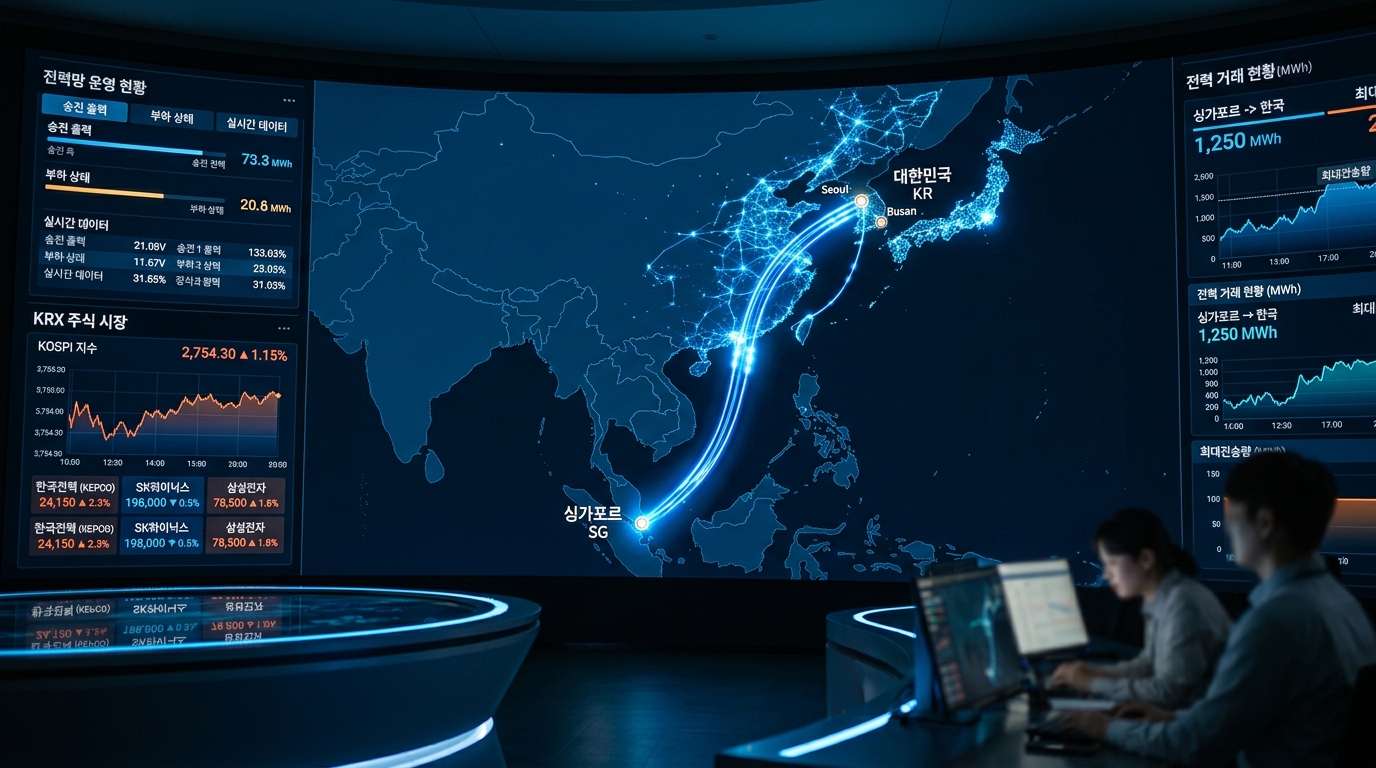
The 140 billion KRW ultra-high voltage cable supply project from Singapore's SP PowerGrid is part of building power highways to keep pace with Singapore's local AI and cloud infrastructure expansion.
LS Cable & System, in collaboration with its key affiliate LS Eco Energy, has consistently maintained the No. 1 position in Singapore's national ultra-high voltage power grid sector since 2010.
Although the power equipment sector overall recently underwent a correction of about 30% over the past month, this is evaluated as a temporary profit-taking period following a steep rise.
In detailed trade data, the global export unit price of ultra-large transformers and high-value-added power transmission cables maintains a steady upward curve, indicating solid fundamentals.
Meanwhile, as of June 19, 2026, the KOSPI closed at 9,052.42 and the KOSDAQ at 966.59, continuing a stable trend.
The USD/KRW exchange rate remained strong at 1,526.00 KRW, and according to our Fear & Greed Index, the KOSPI pointed to 'Neutral (53.4)' and the Nasdaq to 'Fear (37.3)'.
[Image: /stdaily/uploads/202606/gen_6a34ea2b9846c1.27747895.png]
Financial Analysis
According to data from Daishin Securities Research Center, LS's consolidated revenue for 2026 is projected to reach 37.151 trillion KRW, with an operating profit of 1.491 trillion KRW.
This represents a massive surge of over 41% compared to the previous year's operating profit of 1.053 trillion KRW, clearly showing that the company has entered a phase of an earnings quantum jump.
| Year | Revenue (Billion KRW) | Operating Profit (Billion KRW) | Controlling Interest Net Income (Billion KRW) | EPS (KRW) | ROE (%) | PBR (x) |
|---|---|---|---|---|---|---|
| 2024A | 27,545 | 1,073 | 237 | 7,371 | 5.1 | 0.7 |
| 2025A | 31,870 | 1,053 | 271 | 8,458 | 5.6 | 1.3 |
| 2026F | 37,151 | 1,491 | 500 | 15,977 | 9.8 | 2.0 |
| 2027F | 40,432 | 1,872 | 670 | 21,487 | 12.1 | 1.8 |
| 2028F | 44,332 | 2,331 | 890 | 28,520 | 14.3 | 1.6 |
Source: LS public disclosures and Daishin Securities Research Center estimates
In particular, the high growth of highly profitable underground/submarine cable sales and the long-term supply agreement for busducts—a power distribution solution inside AI data centers—are strongly supporting the improvement of profit margins.
Controlling interest net income is also expected to reach 500 billion KRW in 2026, completing the financial foundation to support corporate value expansion.
Valuation
Based on the current stock price of 439,500 KRW, the estimated 2026 price-to-book ratio (PBR) is around 2.0x, and the earnings per share (EPS) is expected to settle at 15,977 KRW.
Reflecting the future value of LS Cable & System, an unlisted core subsidiary, and the qualitative improvement of its order backlog, the holding company's undervalued state relative to its intrinsic value is considered an attractive option.
There is a possibility that the double-listing discount historically carried by conglomerate holding companies will be significantly resolved due to the government's strengthening stance against duplicate listings.
Supported by shareholder return policies such as treasury stock cancellation, the market observes that it will converge closer to its fair net asset value over the mid-to-long term.
[Image: /stdaily/uploads/202606/gen_6a34ea378fb0b0.83249246.png]
Expert & Institutional Analysis
NH Investment & Securities recently analyzed that the correction phase across the wire and power equipment sector is an optimal buy timing to increase exposure, focusing on the performance improvement of unlisted subsidiaries.
This is because the capacity expansion of LS Cable & System's Donghae Plant 4 and 5 is expected to sequentially contribute to a performance level-up in the submarine cable division starting from the fourth quarter of this year.
Daishin Securities also interprets the recovery of optical cable demand due to the full-scale launch of the US BEAD program and the expansion of the US local transformer market as major triggers.
Since the order backlog supporting real business growth has already exceeded 7 trillion KRW, they advise that minor issues like simple administrative correction disclosures do not undermine fundamentals.
Risk Factors
Uncertainty in global copper raw material prices can sensitively affect wire cost ratios and margin lagging effects, widening margin volatility.
Due to the nature of large-scale infrastructure projects, short-term performance may be delayed if the capital expenditure (CAPEX) roadmaps of global utility clients and private tech companies are postponed.
While a high exchange rate trend is beneficial for the translation of overseas revenue, cost burdens such as labor costs and factory expansion equipment costs of local overseas subsidiaries cannot be ruled out.
In addition, uncertainties in macro policy stances, such as the direction of monetary policy in developed countries and the potential reduction of subsidies, remain critical checkpoints.
Investment Outlook
As the USD/KRW exchange rate maintains a strong dollar phase around the 1,526.00 KRW level, valuations are becoming robust for large-cap stocks that have proven their order competitiveness globally.
Driven by the earnings stability of South Korean large caps and their solid global market dominance, the long-term upward trend of large-cap stocks stands out.
In particular, the replacement of aging power grids in developed countries and the construction of global AI data centers are long-term mega-trends that transcend the short-term fluctuations of cyclical sectors.
Therefore, the current period—where concerns over short-term overheating have subsided through supply-demand corrections—increases the reliability of a split-buy scenario based on solid order capacity.
Investor Checklist Q&A
Q1. What is the key signal that LS Cable & System's Singapore ultra-high voltage power grid order gives to the market?
A1. It is an example of solidifying the competitive edge of Korean cable technology in key Asian hubs where power demand has reached a threshold due to global artificial intelligence (AI) and cloud trends.
Q2. What is the core evidence that the power grid super cycle will continue for more than 15 years?
A2. This is because the increasing demand for submarine cables supporting carbon neutrality and renewable energy transitions, the arrival of replacement cycles for existing aging infrastructure, and the infrastructure expansion cycles of big tech companies are overlapping.
Q3. Is there a practical reason to expect a reduction in the discount rate for the valuation of holding company LS?
A3. Yes, due to the promotion of duplicate listing restraints among affiliates, the potential cancellation of treasury stocks, and the growing trend of fully reflecting the value of core unlisted subsidiaries that rival operational companies.
Q4. Is the recent concern about slowing monthly export indicators in the power equipment sector merely a false alarm?
A4. Yes, although overall volumes including small devices may have temporarily stalled, the core export products of top-tier companies—namely ultra-large ultra-high voltage equipment and specialized power grids—show a clear upward trend in both export value and unit prices.
Q5. What is the most important risk factor to manage from a long-term investor's perspective?
A5. Regular monitoring of manufacturing cost volatility through non-ferrous metal prices such as copper, and the potential delay of power investment budget execution by major governments is essential.