Hello. This is Daily Stock, sharply analyzing core market supply/demand and macroeconomic variables every day.
[Image: /stdaily/uploads/202607/gen_6a5730549bb7c2.59768947.png]
Key Summary
- **Successful Turnaround to Profit in Q2 (Preliminary)**: LG Energy Solution recorded a preliminary operating profit of 113.3 billion KRW in Q2 2026, recovering from Q1 losses and successfully turning profitable.
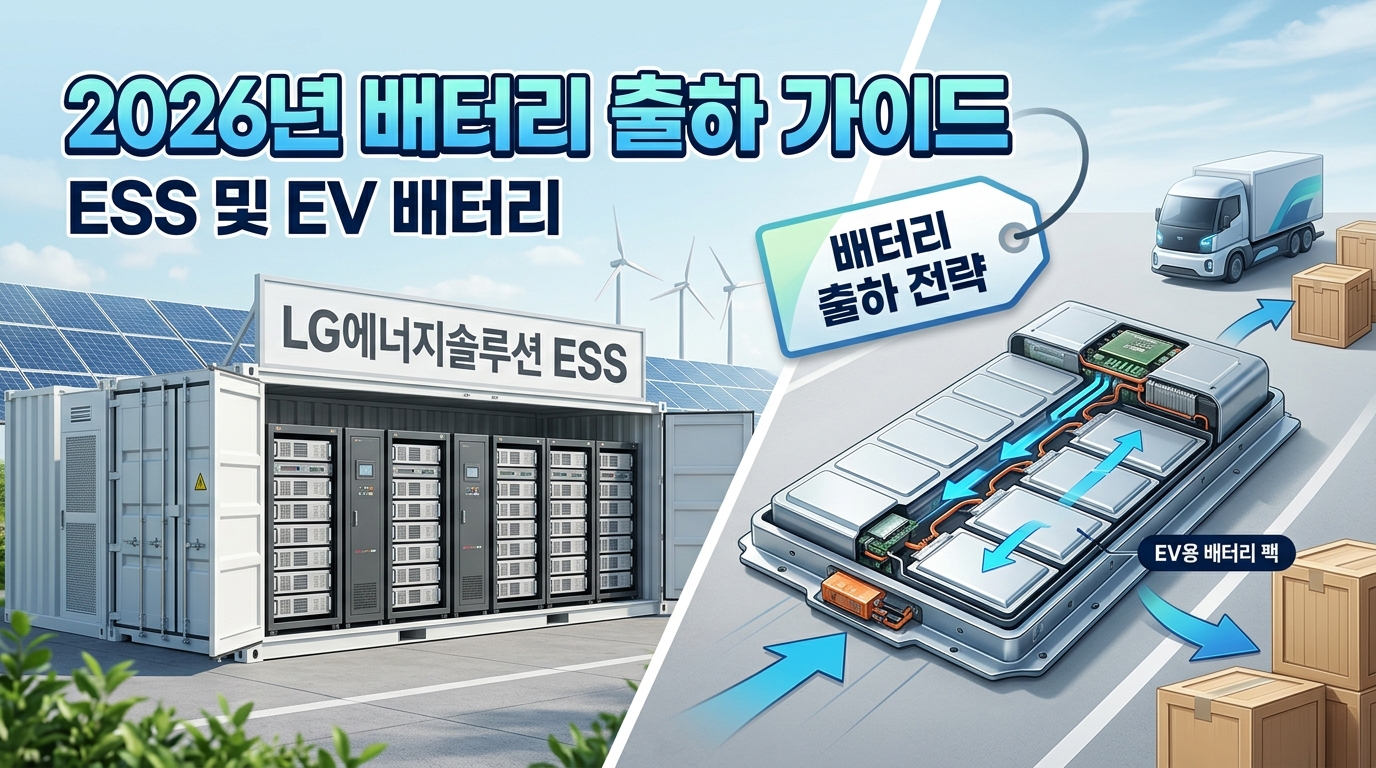
- **ESS and Cylindrical Battery Shipments Lead Growth**: Despite the slowdown in the North American electric vehicle (EV) market, ESS shipments surged and deliveries of cylindrical 46-series batteries expanded, driving overall earnings recovery.
- **Securing Mega-Orders from Big Tech Like Google**: Announced on July 15, 2026, the supply of batteries for Google's largest-ever solar-plus-storage (ESS) project significantly bolsters the likelihood of achieving second-half shipment guidance.
- **FX Tailwinds & Large-Cap Bargain Hunting**: With the USD/KRW exchange rate remaining elevated at 1,488.60, the macro environment boosts dollar-denominated earnings in KRW terms for the North American Advanced Manufacturing Production Credit (AMPC) beneficiary.
Current Status Summary
According to the preliminary Q2 2026 earnings announced by LG Energy Solution, consolidated revenue stood at 7.5602 trillion KRW and operating profit at 113.3 billion KRW.
While revenue increased by 24.8% year-over-year (YoY), operating profit declined by 77.0%.
However, turning to profit compared to the operating loss of 207.8 billion KRW in Q1 2026 signals that the company is passing the bottom of the industry cycle.
The AMPC benefit under the US Inflation Reduction Act (IRA) was recorded at 241.0 billion KRW for the quarter.
Excluding this, the underlying operating loss was 127.7 billion KRW, but the fact that quarterly revenue excluding AMPC surpassed 7 trillion KRW (7.3193 trillion KRW) for the first time in 10 quarters is interpreted as a positive sign of top-line growth.
Notably, on July 15, 2026, market attention was drawn to the company's agreement to supply its North American LFP-based ESS solution, 'JF2 DC Link,' worth hundreds of billions of KRW to Google's largest-ever solar-plus-storage power infrastructure project in Arkansas.
On that day, the KOSPI index rallied sharply, closing at 7,284.41 points.
LG Energy Solution's stock price also closed 4.66% higher than the previous day at 337,000 KRW, driven by strong buying from both foreign and institutional investors.
Financial Analysis
In the first half of this year, temporary shutdowns of joint venture (JV) plants in North America and fixed cost burdens dragged down profitability.
Nevertheless, rapidly growing shipments driven by the expansion of its dominance in the global ESS market helped drastically narrow losses.
According to SNE Research, the company shipped 5.3 GWh in the global lithium-ion ESS market in Q1 this year, representing a 253% YoY increase and pushing its market share up to 2.7%.
The company maintained its annual revenue growth guidance of 15-20% presented at the beginning of the year, while capital expenditures (CAPEX) are being reduced by over 40% YoY to maximize capital efficiency.
The following table compares LG Energy Solution's recent quarterly preliminary earnings:
| Item | Q2 2025 | Q1 2026 | Q2 2026 (Prel.) | QoQ Change | YoY Change |
|---|---|---|---|---|---|
| **Revenue (Trillion KRW)** | 6.16 | 6.56 | 7.56 | +15.3% | +22.7% |
| **Operating Profit (Billion KRW)** | 195.3 | -207.8 (Loss) | 113.3 | Turn to Profit | -42.0% |
| **AMPC Benefit (Billion KRW)** | - | 189.8 | 241.0 | +27.0% | - |
| **OP Ex-AMPC (Billion KRW)** | - | -397.5 (Loss) | -127.7 (Loss) | Narrowed Loss | - |
(Source: LG Energy Solution disclosures and preliminary earnings presentation)
Valuation
Based on the closing price on July 15, 2026, the company's market capitalization stands at approximately 78.858 trillion KRW.
Due to the temporary "chasm" (slowdown in demand) in the EV market, the stock price corrected to near its 52-week low, but downside support is strengthening alongside signs of earnings recovery.
Currently, the average 12-month target price offered by major domestic brokerages is approximately 507,333 KRW.
Daishin Securities lowered its target price to 550,000 KRW to reflect short-term earnings deferrals but maintained its 'BUY' rating, highlighting high upside potential.
If shipments of the high-margin small cylindrical 46-series batteries for Tesla begin in earnest and yields at standalone North American plants stabilize early, a rapid re-rating scenario remains highly viable.
[Image: /stdaily/uploads/202607/gen_6a57305fe75938.66859218.png]
Analyst & Institutional View
According to an analyst at Daishin Securities, while Q2 earnings slightly missed market expectations, this is merely a timing issue due to ESS shipment bottlenecks and the deferral of EV customer compensations.
The analyst offered a positive outlook, stating that the long-term earnings trajectory remains on track despite these short-term discrepancies.
DB Financial Investment emphasized that the company's North American market dominance is expanding based on the rapid line conversion of underutilized US plants (from EV to ESS) and its unrivaled grid-scale LFP battery competitiveness.
In particular, discussions regarding power solution partnerships with NVIDIA data centers and the momentum of grid-infrastructure-related orders from Big Tech companies act as additional premium factors.
Hana Securities also projected that the secure booking of ESS orders driven by skyrocketing AI-related power demand from Big Tech companies like Google will serve as a strong pillar for earnings recovery in the second half of the year.
Risk Factors
- **Concerns Over a Prolonged EV Chasm**: If the global economic slowdown and the Bank of Korea's delay in interest rate cuts persist, high-interest rate pressures could prolong production adjustments by automakers.
- **High Volatility in Macro FX Rates**: The current high exchange rate environment of 1,488.60 USD/KRW is favorable for converting dollar earnings into KRW, but it also increases the cost burden of importing essential battery raw materials.
- **North American Policy and Guideline Changes**: Coupled with the US presidential election, risks remain that core profit guidance could be adjusted if uncertainties over IRA AMPC caps or subsidy guidelines persist.
Investment Perspective Summary
According to Daily Stock's proprietary Fear & Greed Index, the KOSPI Fear & Greed Index is currently in the "Extreme Fear (12.1)" stage.
The Nasdaq Fear & Greed Index is at a "Neutral (43.3)" level, reacting sensitively to global monetary tightening concerns and economic indicators.
In such macro fear environments, the attractiveness of large-cap KOSPI stocks with visible earnings and secure mid-to-long-term order backlogs tends to stand out.
For LG Energy Solution, a structural improvement scenario is underway, where short-term growth slowdowns in EV batteries are being offset by securing orders in the high-growth North American grid-scale ESS market.
If the delivery of 46-series cylindrical batteries in the second half coincides with a reduction in fixed costs via the production ramp-up of North American ESS lines, the currently corrected stock price could become an attractive entry point from a mid-to-long-term perspective.
Investor Checklist Q&A
Q1. What is the primary reason for LG Energy Solution's Q2 2026 earnings turning profitable quarter-on-quarter?
A1. Despite the slowdown in North American EV demand, shipments of grid-scale ESS increased significantly. Additionally, the expansion of cylindrical battery supplies to Tesla and the recognition of 241.0 billion KRW in US IRA AMPC subsidies drove the recovery.
Q2. Is the annual revenue growth guidance presented for this year achievable?
A2. The company initially targeted 15-20% annual revenue growth. Although the first half was sluggish, the gradual recovery scenario remains intact as mid-nickel/LFP mid-to-low-end product rollouts in Europe and 46-series shipments to Tesla pick up in the second half.
Q3. What are the specific details of the battery order for the Google project in Arkansas?
A3. This is a mega energy infrastructure project to supply the LFP-based ESS solution 'JF2 DC Link'—with cells and systems manufactured locally in North America—to Google's largest solar-plus-storage project, the 'Steel River Energy Center', with a volume of approximately 2 GWh to 2.9 GWh.
Q4. With the USD/KRW rate near 1,488.60, is the high FX rate positive for earnings?
A4. There is a positive book effect where dollar-denominated AMPC benefits and North American revenues expand when converted into KRW. However, it also poses a risk by raising the KRW-denominated import costs of key battery materials like lithium and nickel.
Q5. When will mass production and shipment of the 46-series cylindrical batteries begin in earnest?
A5. Mass production and supply have already begun at the domestic Ochang plant, gradually increasing shipment volumes. Large-scale mass supply and material earnings contributions are expected to accelerate after the dedicated US Arizona plant starts operations late this year.