Hello. This is Daily Stock, providing daily financial news and in-depth market analysis.
[Image: /stdaily/uploads/202606/gen_6a33436f3c6603.45718086.png]
Summary
The U.S. manufacturing sector expanded for the fifth consecutive month, proving a stronger-than-expected recovery.
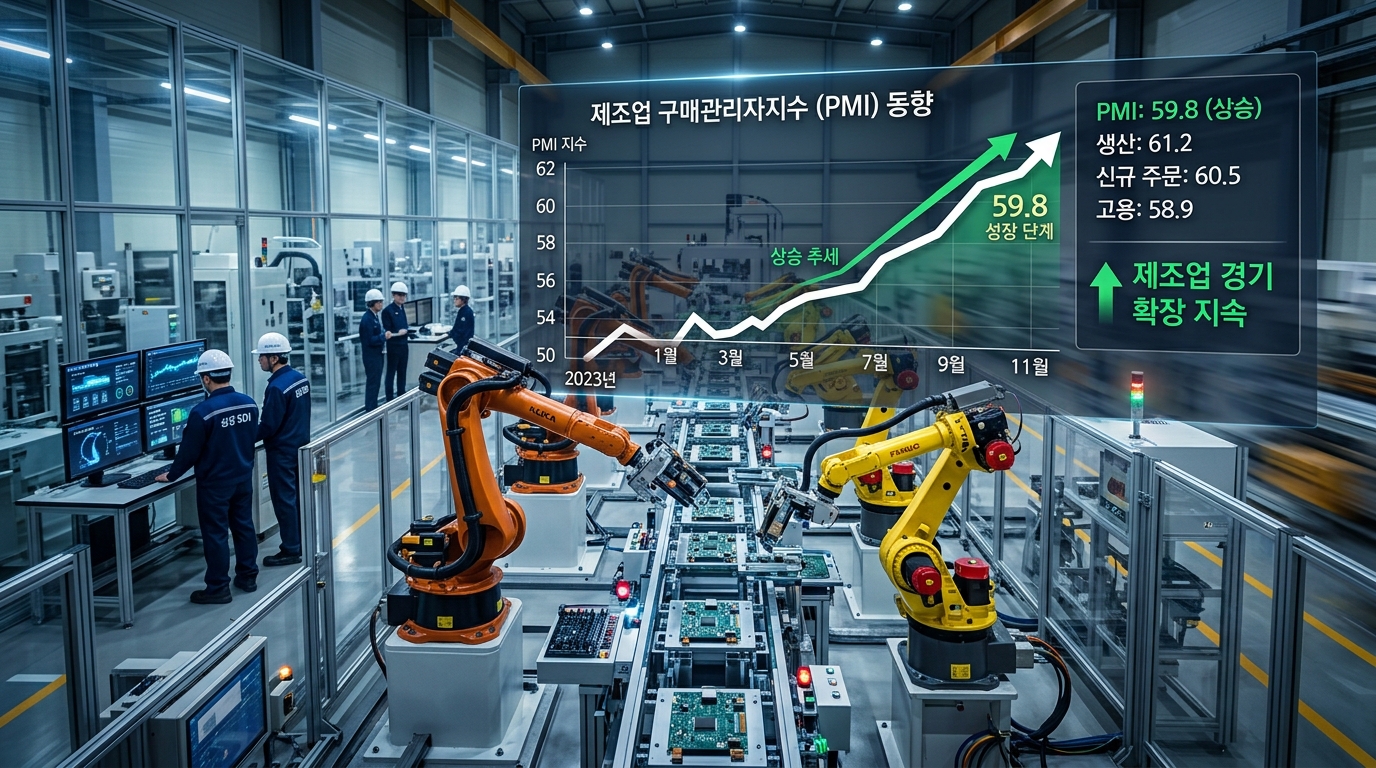
The recently announced May ISM Manufacturing Purchasing Managers' Index (PMI) came in at 54.0%, reaching its highest level in about four years.
However, the robust manufacturing revival and sticky price index pressures are acting as variables that completely weaken the market's rate-cut expectations.
As a result, the Federal Reserve's hawkish stance is tightening further, leaving major indices, including the S&P 500, facing valuation pressures.
Market Overview
As of June 18, 2026, at 10:00 AM during intraday trading (tentative), the New York stock market is experiencing capital outflows in the aftermath of new Fed Chair Kevin Warsh's hawkish debut press conference.
With 9 out of 18 Fed officials leaving the door open for additional rate hikes within the year, the dark clouds of higher-for-longer interest rates have gathered once again.
At the same time, the Atlanta Fed's GDPNow raised its Q2 real GDP growth forecast to 3.04%, supporting the resilience of the U.S. economy.
The strong surprise in the manufacturing PMI and solid GDP estimates have completely dismissed recession fears, but they have also reactivated the high-interest-rate dynamic where "good news is bad news" for the stock market.
Currently, as of intraday trading (tentative), the Nasdaq composite is at 26,021.66, and in the foreign exchange market, the USD/KRW exchange rate is showing high volatility around the 1,524.50 won level.
The domestic KOSPI index is trading at 8,928.43, and the KOSDAQ index is at 1,007.70.
According to Daily Stock's proprietary Fear & Greed Index, the Nasdaq currently stands at 32.7, pointing to the "Fear" stage.
While this is a slight rebound compared to a week ago (26.9, Fear), it shows that investment sentiment has frozen rapidly compared to the "Greed" stage (63) from a month ago.
On the other hand, the KOSPI Fear & Greed Index is at 53.9, maintaining a relatively calm "Neutral" level.
Financial Analysis
An analysis of the sub-indices of the May ISM Manufacturing PMI reveals that the supply chain of U.S. manufacturing is recovering more agilely than expected.
The most notable part is that the New Orders Index rose by 2.7 percentage points from the previous month (54.1%) to 56.8%, proving a clear recovery in demand.
In addition, the Production Index also recorded 54.3%, indicating that factory operating rates are being maintained smoothly.
On the other hand, the Employment Index continued its contraction phase at 48.6%, suggesting that manufacturers remain conservative regarding large-scale new hiring.
| ISM Manufacturing PMI Sub-Indices | May 2026 Value | April 2026 Value | Change (%p) | Directional Assessment |
|---|---|---|---|---|
| **Manufacturing PMI Composite** | 54.0% | 52.7% | +1.3% | Expansion accelerating for 5 straight months |
| **New Orders** | 56.8% | 54.1% | +2.7% | Demand expansion accelerating |
| **Production** | 54.3% | 53.4% | +0.9% | Manufacturing activity accelerating |
| **Employment** | 48.6% | 46.4% | +2.2% | Contraction continuing but easing |
| **Prices** | 82.1% | 84.6% | -2.5% | Price increases slightly easing (still high) |
| **Customers' Inventories** | 42.7% | 39.1% | +3.6% | Extremely low (factor to boost future production) |
The Prices Index, which represents cost pressures for companies, recorded 82.1%, down slightly from the previous month (84.6%), but it remains at a dangerous level far above the 50% baseline.
This is a warning indicator that raw material costs and geopolitical supply bottlenecks could continue to squeeze manufacturing margins.
[Image: /stdaily/uploads/202606/gen_6a3343791b5779.36622695.png]
Valuation
This actual turnaround in manufacturing acts as a factor firmly supporting the 2026 annual earnings-per-share (EPS) estimates for S&P 500 companies.
Major global financial institutions estimate the 2026 annual EPS for the S&P 500 to be around $340, a rapid growth of about 24% compared to the previous year.
However, despite the increase in earnings, the S&P 500's Forward P/E ratio remains between 21.2x and 22.2x, keeping it in the midst of historical overvaluation controversies.
If high interest rates persist, the potential for further expansion of the P/E multiple is highly likely to be limited.
Consequently, the divergence between the value stock camp and the Russell 2000 small-cap index is becoming more entrenched.
Small-cap value stocks are extremely vulnerable to upward interest rate pressures due to their high ratio of refinancing debt, whereas large-cap blue-chip cyclicals are responding differently due to their relatively solid financial health.
Expert and Institutional Analysis
Wall Street institutional investors offered a positive assessment of the ISM manufacturing data, calling it a signal that recession fears have ended.
However, the Fed's sudden change in communication style is pointed out as a new factor adding uncertainty to the market.
At his first meeting after taking office, Fed Chair Kevin Warsh declared that the central bank would officially end "forward guidance"—the practice of providing advance guidance on future interest rates.
Regarding this, Morgan Stanley warned, "Since the market will have to price assets based solely on macro data outcomes without hints from the Fed going forward, short-term volatility could be maximized."
Capital Economics analyzed, "The full-scale revival of manufacturing is thanks to artificial intelligence (AI) infrastructure investment and capital expenditure, but it will also complicate the inflation trajectory, forcing the Fed to maintain its tightening stance."
Risk Factors
The biggest wildcard threatening the strong expansion of manufacturing is structural supply chain risks.
Indeed, 42% of procurement managers participating in the ISM survey pointed to geopolitical conflicts in the Middle East (the aftermath of the Iran war) as a major negative factor.
Additionally, up to 18% of the panelists complained about trade tariff pressures, proving that global uncertainties are triggering a vicious cycle that continues to push up production costs.
While the very low customer inventory level of 42.7% is positive as it necessitates an immediate increase in production, it could directly lead to a margin shock for companies if raw material prices surge again.
If these high-interest-rate pressures intensify, marginal enterprise risks—such as rising default rates among small and medium-sized manufacturers with high economic sensitivity—cannot be ruled out.
Investment Perspective Summary
Overall, the vitality of U.S. manufacturing is serving as a solid guarantee of the strong fundamental strength of S&P 500 companies.
The shareholder return capacity and earnings resilience of cyclical stocks and industrial sectors with high manufacturing weightings remain within a positive scenario.
However, from a multiple valuation perspective, the barrier of high interest rates is the strongest resistance pressing down on stock price ceilings.
Rather than focusing solely on the improvement in manufacturing indices, investors should take this time to review concentrated portfolios centered on large-cap cyclical stocks that possess high interest coverage ratios and outstanding self-cash generation capabilities to weather the wave of high interest rates on their own.
[Image: /stdaily/uploads/202606/gen_6a334484c719b3.24012917.png]
FAQ
Q1. What is the key signal that the May ISM Manufacturing PMI of 54.0% sends to the market?
A PMI above 50% indicates expansion in the manufacturing sector. Reaching 54.0% suggests that U.S. manufacturing is moving beyond a simple recovery and entering a full-fledged boom cycle.
Q2. Why are major indices falling during intraday trading despite the strong economic data?
Because the strong economy has heightened inflation pressures, and the increasingly hawkish stance of Fed officials has caused expectations for rate cuts to recede significantly.
Q3. Is the S&P 500's Forward P/E of 21.2x to 22.2x at a dangerous level?
It is certainly a high valuation range compared to historical averages. However, the reliability of stock price support will depend on whether robust earnings growth realistically backs it up.
Q4. What is the biggest concern for industry professionals according to the manufacturing survey?
Respondents are wary of price volatility, pointing to geopolitical instability in the Middle East (42%) and supply chain tariff issues (18%) as major obstacles.
Q5. Which economic indicators should retail investors pay the closest attention to going forward?
Following Fed Chair Kevin Warsh's declaration to end forward guidance, investors should focus more on the actual volatility of the Consumer Price Index (CPI) and Personal Consumption Expenditures (PCE) price index released in the middle of each month.