Hello, this is Daily Stock, professionally analyzing key trends in the Nasdaq market and the performance of promising companies.
Key Summary
- Tesla's energy business recorded a total installation volume of 46.7 GWh in 2025, achieving annual growth of nearly 49%. However, Q1 2026 installation volume plummeted 38% quarter-on-quarter to 8.8 GWh.
- Despite this, the energy division's gross margin is close to 30%, significantly exceeding the profitability of the existing automotive sector.
- The full-scale operation of the Shanghai Megafactory and the introduction of the next-generation Megapack 3 are expected to act as key variables driving Tesla's valuation rerating in the future.
Current Situation Summary
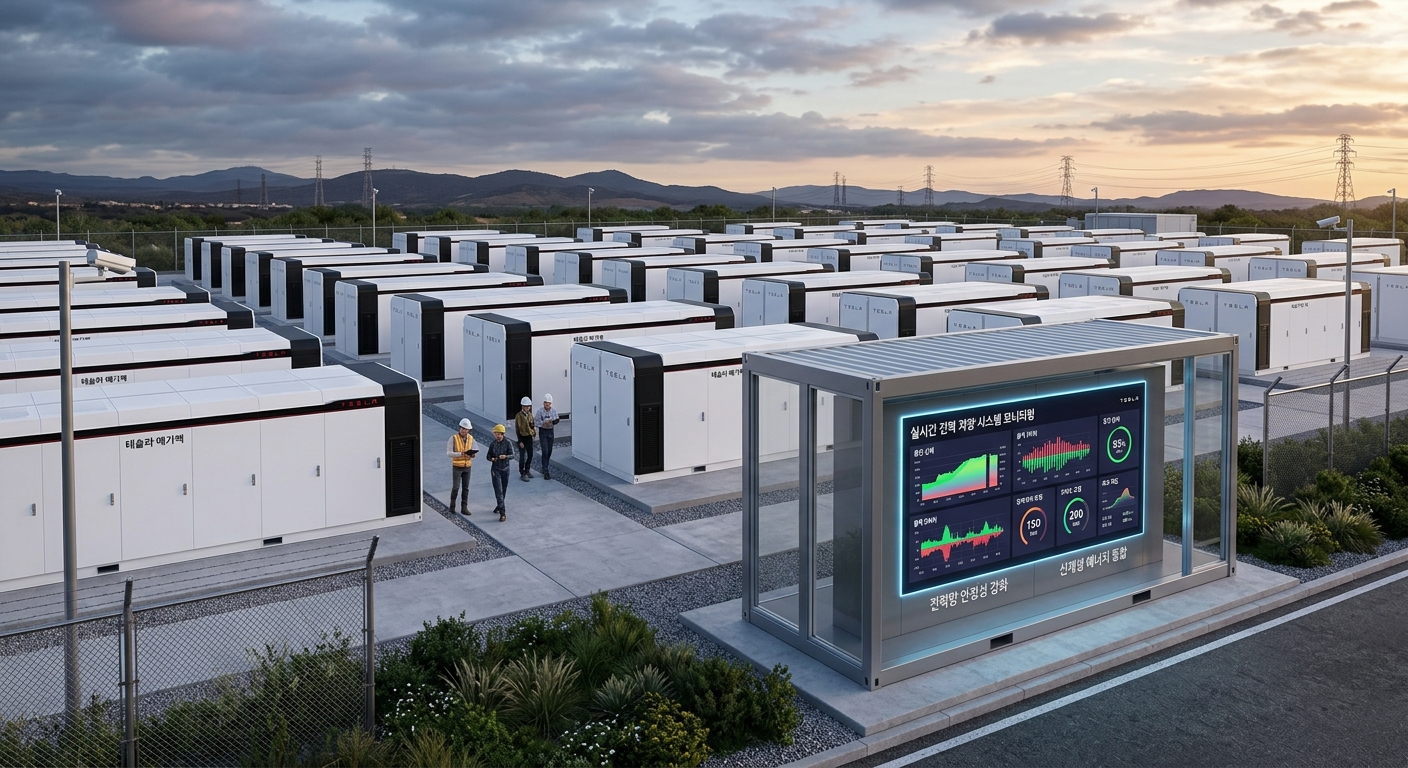
Tesla's recently announced energy storage system (ESS) installation volume for Q1 2026 recorded 8.8 GWh.
This is a 38% drop compared to the record high of Q4 2025 (14.2 GWh) and a 15% decrease compared to the same period last year.
As a result, Q1 division revenue also stayed at $2.408 billion, down 12% year-on-year, raising concerns about short-term growth.
However, management emphasized that due to the nature of quarterly installations, performance volatility can appear large depending on project completion timing.
[Image: /stdaily/uploads/202606/gen_6a2f40f32e2501.20153594.png]
Financial Analysis
The share of the energy sector (generation and storage) in Tesla's total revenue has shown a gradual expansion.
In 2025, annual energy revenue reached $12.8 billion, a 26.6% increase year-on-year, achieving robust top-line growth.
In particular, after reaching a 12% share of revenue, its gross margin recorded high profitability ranging from 28.7% to a maximum of 29.8%.
Compared to the existing automotive manufacturing margin of around 16%, it is fully qualified to be evaluated as a new springboard for Tesla in terms of profitability.
| Category | FY 2025 Annual Performance | Q1 2026 Performance (Preliminary) | YoY Change |
|---|---|---|---|
| **Energy Installations (GWh)** | 46.7 GWh | 8.8 GWh | -15.0% |
| **Energy Division Revenue** | $12.8B | $2.408B | -12.0% |
| **Division Gross Margin** | ~29.8% | Possible temporary pressure | Guidance check required |
Valuation
Currently, Tesla's valuation multiple is being evaluated beyond simple manufacturing standards as a complex of AI and a sustainable energy ecosystem.
As Tesla is adjusting its capital expenditure (CAPEX) scale up to $25 billion for 2026, the strong cash-generating power of the energy division is a factor supporting the floor of its valuation.
As of today (2026-06-15 intraday, preliminary), the domestic market records Kospi at 8,518.91 and Kosdaq at 1,048.08.
The Nasdaq index is fluctuating around 25,888.84, and the USD/KRW exchange rate is continuing its dollar strength at 1,512.00 KRW.
According to Daily Stock's proprietary Fear and Greed Index, the Nasdaq is currently going through the Fear (34) stage, while the Kospi is in the Neutral (43.9) stage.
Amid the preference for safe-haven assets, the US 10-year Treasury yield (US10Y) is hovering around 4.49%, exerting upward pressure on the valuation multiples of growth stocks.
Expert and Institutional Analysis
Despite short-term indicator slowdowns, Wall Street and global analysis firms are focusing on the medium- to long-term expansion of data centers.
The power infrastructure crisis that has recently emerged and the acceleration of AI data centers (AIDC) guarantee the explosive potential demand for large-scale Megapacks.
In fact, Tesla showcased its internal ecosystem synergy last year by signing a Megapack supply contract worth approximately $430 million with xAI, an artificial intelligence (AI) company.
As the deployment of renewable energy grids accelerates, its position as an eco-friendly power storage device is expected to become increasingly solid.
[Image: /stdaily/uploads/202606/gen_6a2f40ff067d93.91702087.png]
Risk Factors
However, in the short term, factors such as intensifying competition and policy variables like tariffs could press down margin rates, which is something to watch out for.
Tesla's management also indicated the possibility of a profitability slowdown in 2026 due to offensives from low-priced products and supply chain disruption risks.
In addition, due to the prolonged high-interest-rate environment, the initial financing costs of utility-scale large projects are rising.
As competitors such as BYD and Sungrow push into the market share with aggressive low pricing, there are also concerns that Tesla's monopoly status might be shaken.
Investment Perspective Summary
It is reasonable to interpret the delivery performance in Q1 2026, which stayed at 8.8 GWh, as a temporary slowdown due to the timing of long-term contract execution.
The real turning point will be the second half of the year, when the ramp-up of the 40 GWh annual capacity Shanghai Megafactory and shipments of the new 'Megapack 3' system begin.
Therefore, it is necessary to maintain a medium- to long-term perspective on the cash-generating power of Tesla's energy division, which serves as a reliable cash cow defending against the stagnation of EV sales and a stepping stone for future AI investment.
Investor Checkpoint Q&A
Q1. What is the main business model of Tesla's energy division?
A1. It generates revenue by manufacturing and selling 'Megapack' for large commercial and utility grids, and 'Powerwall,' a home backup battery system.
Q2. What are the direct factors behind the sharp drop in Q1 performance this year?
A2. Q1 installations recorded 8.8 GWh, a 38% decrease quarter-on-quarter, which is a temporary variance due to construction schedule adjustments of large grids and seasonal factors.
Q3. Is the margin competitiveness of the energy division higher compared to the electric vehicle sector?
A3. Yes, that is correct. While the gross margin of the EV sector remains in the mid-to-high 10% range, the energy sector has a high-margin structure reaching up to over 29%.
Q4. Is there a possibility that the demand for AI data centers will contribute to Megapack sales?
A4. Yes. In fact, the backup power market for AI computing complexes is opening up significantly, as demonstrated by signing a supply contract worth about $430 million with Elon Musk's xAI last year.
Q5. What are the key checkpoints to focus on in Tesla's energy business in the second half of the year?
A5. Attention should be paid to the yield improvement of the Shanghai Megafactory, designed with an annual capacity of 40 GWh, and the full-scale shipment performance of the next-generation 'Megapack 3' system.