Welcome to Daily Stock's Nasdaq Story.
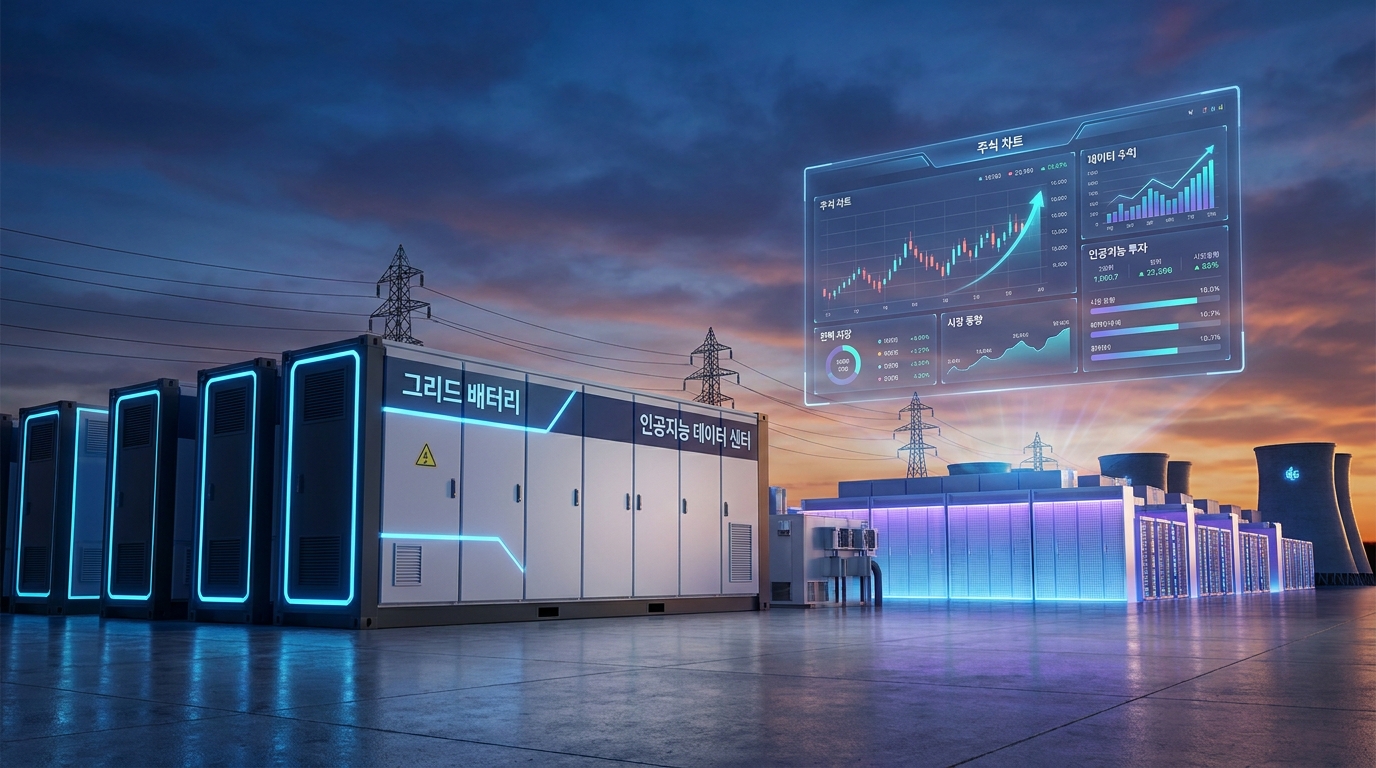
Amid rising power infrastructure demand from AI data centers, we will review the current status of Tesla (TSLA)'s energy division, which is considered a key growth engine.
Key Summary
Tesla's energy division showed mixed results in Q1 2026.
Energy Storage System (ESS) deployments were 8.8 GWh, down 15% year-over-year, leaving the market disappointed.
On the other hand, although one-off factors were included, the energy division's gross margin reached a record profitability of 39.5%.
Furthermore, news of large-scale Megapack deliveries to affiliated companies such as SpaceX and xAI has surfaced, raising new possibilities for Tesla as an AI value chain infrastructure stock.
Current Situation Summary
Following the Q1 earnings release this year, market analysis is fiercely divided on the growth potential of Tesla's energy business (Megapack, Powerwall).
As the overall Nasdaq surpasses the 26,000 mark (currently 26,343.97) and Big Tech's AI CAPEX becomes a daily hot topic, energy infrastructure companies that will support this are being re-evaluated.
In particular, as details of Tesla supplying hundreds of millions of dollars worth of Megapacks to AI companies under Elon Musk were disclosed, its role as a solution provider to resolve power shortages has been highlighted.
However, due to the macro environment with lingering concerns over prolonged high interest rates (US10Y), there is also caution that orders for utility projects requiring massive initial capital could be delayed.
Financial Analysis
Tesla's total revenue for Q1 2026 was $22.387 billion, up approximately 16% year-over-year.
However, revenue from the energy division stagnated at $2.408 billion, recording negative growth of 12% compared to the previous year.
Quarterly ESS deployments also stood at just 8.8 GWh, showing a sluggish trend with a sharp 38% decline from the previous quarter (14.2 GWh).
Nevertheless, as about $250 million in one-off benefits such as tariff refunds were reflected, the gross margin for the energy division soared to an exceptional figure of 39.5%.
Even excluding one-off factors, the division is defending a margin significantly higher than the traditional automotive segment (around 19.2%).
However, the intensifying offensive from Chinese battery manufacturers holding cost competitiveness could become a margin pressure factor in the future.
[Image: /stdaily/uploads/202605/gen_6a123fd6d465f7.15168867.png]
Valuation
Currently, Tesla's valuation is a complex mix of not only simple EV sales performance but also cash generation expectations from full self-driving (FSD), Robotaxi, and the energy division.
Compared to Nasdaq 100 growth stocks or leading stocks in the SOX (Philadelphia Semiconductor Index), it occupies a unique position receiving both hardware manufacturing and software multiples simultaneously.
The company plans to significantly expand its CAPEX (capital expenditure) to over $25 billion this year for future Robotaxi, Optimus, AI computing, and Megapack production infrastructure.
This massive investment has room to be interpreted as a positive signal for future cash flows.
However, under a macro environment such as a strong dollar (DXY) trend and rising US 10-year Treasury yields (US10Y), the multiples of these highly-valued companies could shrink rapidly.
Given the highly interest-rate-sensitive nature of energy infrastructure, an increase in financing costs acts as short-term downward pressure on multiples.
| Key Indicator | Q1 2025 | Q1 2026 | Change Trend |
|---|---|---|---|
| Total Revenue (GAAP) | $19.33B | $22.38B | +16% |
| Energy Division Revenue | $2.73B | $2.41B | -12% |
| Quarterly ESS Deployments | 10.4 GWh | 8.8 GWh | -15% |
| Total CAPEX | $1.49B | $2.49B | +67% |
Source: Based on data from Tesla's Q1 earnings report.
Expert and Institutional Analysis
Wall Street experts are divided on whether the sluggishness of Tesla's energy division in Q1 is due to a structural slowdown in demand or simply seasonal fluctuations.
Some positively assess that Megapack deals with Musk-affiliated companies like xAI and SpaceX (totaling about $700 million combined for 2024-2025) served as a solid 'captive market' to defend profitability.
Tesla's management emphasized that the full operation of the Shanghai Megafactory in China and its annual production capacity of 40 GWh will be key to resolving supply shortages in the global market.
Conversely, some analysts point out that geopolitical risks, including policy uncertainty in the U.S. and reliance on Chinese battery cells, could still hinder order guidance.
Risk Factors
The most notable risk is whether intensified low-price competition in the energy storage market and policy uncertainty materialize.
Potential changes to subsidy policies such as the Section 45X Advanced Manufacturing Production Credit (IRA) in the U.S. or hikes in tariff barriers against China could lead directly to increased component procurement costs.
Additionally, despite the positive narrative of power demand for AI data centers, the risk that downstream companies face delayed monetization or reduced capital investments cannot be ruled out.
Macroeconomically, if expectations for a benchmark interest rate cut retreat due to sticky inflation, investment sentiment across the Nasdaq could freeze along with a spike in the VIX (Volatility Index).
[Image: /stdaily/uploads/202605/gen_6a123fe9f10e49.84519630.png]
Investment Perspective Summary
In a phase where growth in its core EV market is stagnating, Tesla is attempting diversification and defending profit margins through its energy division.
Rather than being swayed by short-term quarterly deployment volatility, investors should closely track whether mid- to long-term margins are maintained through the normalization of utilization rates at the Shanghai and Lathrop plants and the introduction of the Megapack 3 lineup.
According to Daily Stock's own Fear & Greed Index, the Nasdaq market is currently (as of May 24) at a Neutral (58.6) level.
Compared to Greed (63.2) a week ago, Greed (68.5) a month ago, and Greed (66.8) three months ago, overheated sentiment has somewhat cooled, turning into a wait-and-see approach.
Going forward, a flexible perspective viewing Tesla not merely as an EV company but as an 'energy-AI complex infrastructure' enterprise should be accompanied by conservative macroeconomic risk management.
Q&A with Daily Stock
- **Q: What was the main reason for the decrease in Tesla's energy deployments in Q1 2026?**
A: Due to the nature of utility ESS delivered mainly for large-scale projects, seasonal factors played a significant role, and a combination of supply chain imbalances and delivery delays from some clients had a mixed impact.
- **Q: Why was the quarterly margin rate for the energy division measured exceptionally high?**
A: This is because over $250 million in one-off gains, such as tariff refunds, were reflected. Management also acknowledged that the margin rate could gradually shrink in the future due to intensifying market competition.
- **Q: What are the benefits to the company of supplying Megapacks to affiliated companies like xAI?**
A: By absorbing large demand for AI data centers within its own ecosystem, it secures a stable revenue source that can defend against external macroeconomic uncertainty.
- **Q: What is the current operational status and target of the Shanghai Megafactory?**
A: Since starting operations in Q1 2025, it has been gradually ramping up production, with plans to ultimately produce 40 GWh of Megapacks annually for export to regions such as Asia-Pacific and Europe.
- **Q: What impact does the current interest rate level (US10Y) have on Tesla's energy orders?**
A: Building large ESS infrastructure requires massive initial capital and loans, so a high Treasury yield environment increases financing costs, creating a risk of delaying final order decisions by potential customers.