Hello. This is Daily Stock, delivering sharp and deep insights into global financial market trends.
[Image: /stdaily/uploads/202607/gen_6a4aaa443d94f6.71573734.png]
Key Summary
US jobs data for June recorded a "jobs shock," falling significantly short of market expectations and raising a mix of concerns over a global economic slowdown and anticipation of monetary policy easing.
Amid these macroeconomic shifts, copper prices—a key barometer of the real economy—have staged a powerful rally, breaking past $6.22 per pound.
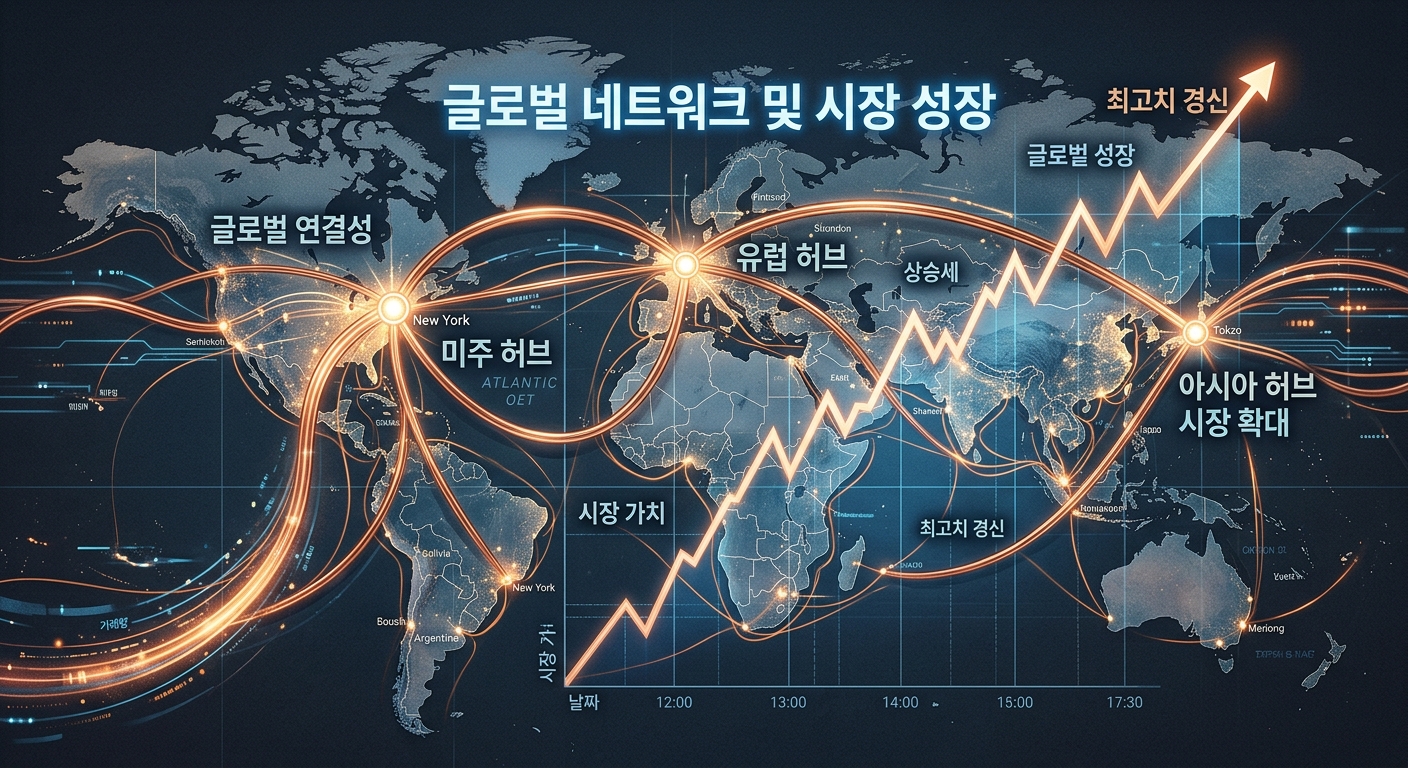
Global markets have entered a phase where fundamental decoupling between the US, Europe, and Asia is deepening further.
In particular, the supply-demand squeeze in the non-ferrous metals market is becoming highly pronounced due to the confluence of surging power infrastructure demand from AI data centers and supply disruptions at major global mines.
Current Situation Summary
Non-farm payrolls in June, released by the US Department of Labor, grew by only 57,000, significantly missing the market forecast of 113,000.
In addition, employment figures for April and May were revised down by a combined 74,000, indicating that the labor market is cooling faster than expected.
As this employment shock began dragging down the US Dollar Index, copper prices in the commodities market gathered upward momentum.
As of July 3, 2026 (local time), COMEX high-grade copper futures closed at a soaring $6.22 per pound.
[Image: /stdaily/uploads/202607/gen_6a4aaa4e93a7f8.60924857.png]
Financial Analysis
Copper inventories on the London Metal Exchange (LME) are declining sharply, showing that physical supply is nearing its limits.
LME copper inventories, which stood at 329,225 tons on June 30, 2026, plummeted by more than 10,000 tons in just three days to 318,900 tons as of July 3.
Key financial indicators and liquidity conditions across the US, European, and Asian regions also exhibit a distinct decoupling trend.
The US is experiencing heightened asset market volatility due to the employment shock, while Europe is seeking a path toward manufacturing PMI stabilization following the ECB's unexpected rate hike (2.25%) in June.
Meanwhile, Asian markets are focusing on defending their fundamentals amid the People's Bank of China's reserve requirement ratio (RRR) dilemma and downward pressure on the Korean Won.
| Category | Index / Exchange Rate / Figure | Fear & Greed Index (Current) | 1 Week Ago | 1 Month Ago |
|---|---|---|---|---|
| KOSPI | 8,088.34 | Fear (21.2) | Fear (35.7) | Fear (21.6) |
| KOSDAQ | 868.41 | - | - | - |
| Nasdaq | 25,832.67 | Fear (31.9) | Fear (25.1) | Neutral (53.0) |
| USD/KRW | 1,530.00 KRW | - | - | - |
*Note: Intraday data as of July 6, 2026 (provisional). Both Korean markets remain in the "Fear" phase according to our proprietary Fear & Greed Index.
Valuation
Currently, copper prices are up 8.13% year-to-date (YTD), putting them at the center of the commodity valuation re-rating.
While copper traditionally moves in tandem with the manufacturing cycle, the current rally is heavily driven by an additional "power infrastructure premium" associated with the global expansion of AI data centers.
Comparing the relative strength of different stock markets reveals the depth of this tri-polar decoupling.
The Nasdaq Index fell to the 25,832.67 level, undergoing a correction led by big tech companies, pushing its Fear & Greed Index down to 31.9.
On the other hand, the domestic Korean stock market, where the USD/KRW rate soared to the 1,530.00 KRW level, is testing its support line at the KOSPI 8,088.34 level due to foreign capital outflows, highlighting its relative weakness.
| Date | COMEX Copper Price (per lb) | LME Copper Cash Price (per ton) | LME Copper Inventory (tons) |
|---|---|---|---|
| July 3, 2026 | $6.22 | $13,298.50 | 318,900 |
| July 2, 2026 | $6.17 | $13,202.00 | 322,350 |
| June 30, 2026 | $5.90 (Est.) | $13,341.00 | 329,225 |
Expert & Institutional Analysis
Major global investment banks (IBs) show somewhat conflicting views on the long-term trajectory of copper prices.
Goldman Sachs maintains an ultra-bullish outlook, projecting prices could reach $13,000 to $15,000 per ton, citing structural production bottlenecks at mines in Chile and Indonesia, alongside investments in green power grids.
Conversely, JPMorgan and Citigroup maintain a more cautious, neutral stance.
They point to fatigue from prolonged high interest rates in the US and the delayed recovery of the Chinese economy, suggesting a potential period of consolidation in the $10,500 to $11,000 per ton range.
[Image: /stdaily/uploads/202607/gen_6a4aaa585994c1.01322463.png]
Risk Factors
The most direct macroeconomic risk is the uncertainty surrounding the Federal Reserve's monetary policy path.
Newly appointed Fed Chair Kevin Warsh recently emphasized at the ECB Forum in Sintra, Portugal, that price stability remains the top priority, maintaining a cautious stance on interest rate cuts.
Geopolitical conflicts and tariff barriers arising from supply chain diversification are also distorting the flow of commodities.
As the US strengthens tariffs on imported refined copper, inventory sweeping in regions outside the US is picking up, boosting short-term volatility.
Investment Perspective Summary
In a phase where macroeconomic indicators are slowing while commodity prices are rising, a strictly phased approach is essential.
Since copper is an essential material for long-term mega-trends such as AI infrastructure advancement and the clean energy transition, its long-term value remains valid.
However, as the KOSPI Fear & Greed Index remains in a highly depressed state at 21.2, risk management should take priority over aggressive momentum chasing.
With monetary policy mismatches persisting among the US, Europe, and Asia, investors need to closely monitor US dollar trends and global PMI indices.
Investor Checklist Q&A
Q1. Why did the US jobs shock lead to a rise in copper prices?
A1. The weak employment data dragged down the US dollar, making copper—a physical commodity traded in dollars—more attractive and affordable for international buyers.
Q2. How much does the expansion of the AI industry actually impact copper demand?
A2. Large-scale AI data centers consume far more power than conventional systems, requiring massive amounts of copper for high-voltage transmission lines and high-efficiency cooling systems.
Q3. What is the basis for the differing copper price forecasts among global investment banks?
A3. Goldman Sachs focuses on "supply constraints" like mine production disruptions, while JPMorgan places more weight on the "economic slowdown risk" triggered by prolonged high interest rates.
Q4. The KOSPI Fear & Greed Index is currently very low at 21.2. How should this be interpreted?
A4. Based on volatility metrics and momentum, market sentiment is heavily depressed. Therefore, a conservative, phased buying strategy is more appropriate than aggressive investing.
Q5. Which indicators should be monitored closely regarding supply chains?
A5. Investors should monitor whether LME copper inventories continue to decline, whether operations at South American mines return to normal, and changes in US tariff policies.