Hello, this is Daily Stock, analyzing the deep undercurrents of the asset markets.
[Image: /stdaily/uploads/202607/gen_6a45aaab17ed90.82921132.png]
Key Summary
Nvidia (NVDA) once again proved market confidence by posting a record-breaking revenue of $81.6 billion in its first quarter of fiscal year 2027 (Q1 FY27) results announced in May 2026.
Notably, the data center division, the key growth engine, continued its steep growth trajectory by surpassing $75.2 billion.
The most eye-catching part was the revenue guidance of '$91 billion' presented for the next quarter, Q2 FY27.
This figure was calculated under the assumption that data center computing revenue from China is practically 'zero' due to the aftermath of U.S. export controls, illustrating how overwhelming the infrastructure demand from global Big Tech is.
Recently, SemiAnalysis, an independent semiconductor research firm, released an encouraging observation that Nvidia's H2 data center computing revenue could exceed Wall Street consensus by approximately 20% as key bottlenecks in the supply of HBM4 memory are resolved.
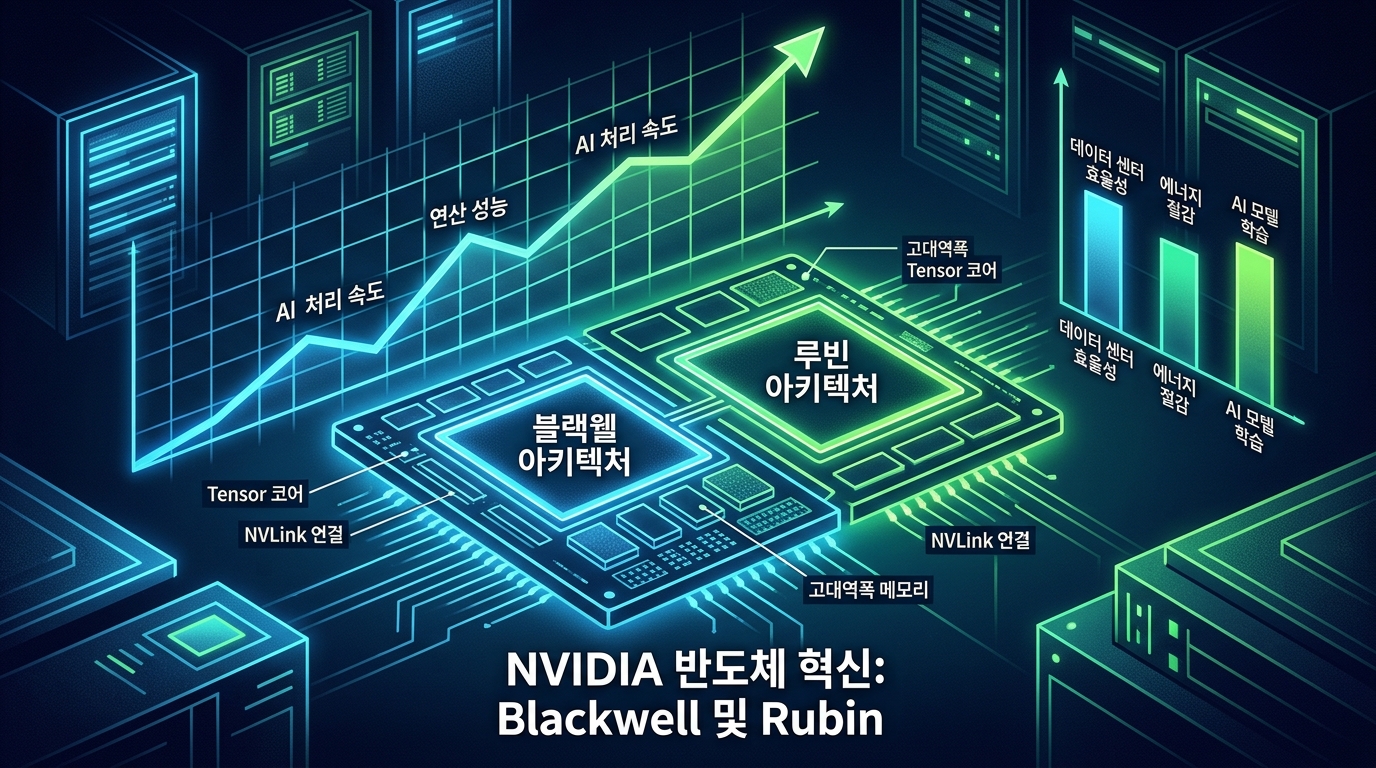
If the mass production ramp-up of the next-generation 'Vera Rubin' platform gets on track, an additional leap forward that dispels market concerns will be possible.
Current Status Summary
As of the intraday trading on July 2, 2026, at 09:01 (KST) (tentative), the Nasdaq index is at 26,040.03, and the USD/KRW exchange rate is at 1,552.50 won.
Reflecting concerns over high interest rates and sticky inflation in the macroeconomic sector, the current Fear & Greed Index of the Nasdaq market remains in the 'Fear (31.9)' territory.
Although it rebounded slightly from the Fear (26) level a week ago, investor sentiment is significantly contracted compared to Neutral (56.5) a month ago and Greed (67.5) three months ago.
The domestic KOSPI index is also recording 7,860.77, with its Fear & Greed Index staying in 'Fear (33.2)', indicating a conservative trend across global asset markets in general.
Despite this cold draft, Nvidia's stock price maintains downward rigidity, staying in the mid-to-high $190 range.
Investors seem to be focusing entirely on the actual recovery of semiconductor supply and the achievement of earnings guidance in the second half of the year, moving past simple macroeconomic risks.
[Image: /stdaily/uploads/202607/gen_6a45aab46436d5.93160612.png]
Financial Analysis
Nvidia's Q1 FY27 results visually demonstrate the scale of its infrastructure expansion.
In particular, the Free Cash Flow (FCF) generated during the first quarter of fiscal year 2027 reached $48.5 billion, showing that the company's underlying earnings power has reached an unprecedented level.
| Indicator | Q1 FY27 Performance (Announced May 2026) | Quarter-on-Quarter (QoQ) | Year-on-Year (YoY) |
|---|---|---|---|
| **Total Revenue** | $81.615 billion (81.6B) | +20% | +85% |
| **Data Center Revenue** | $75.246 billion (75.2B) | +21% | +92% |
| **Edge Computing Revenue** | $6.369 billion (6.4B) | +10% | +29% |
| **GAAP Gross Margin** | 74.9% | -0.1%p | +14.4%p |
| **Non-GAAP EPS** | $1.87 | +18% | +140% |
| **Q2 FY27 Revenue Guide** | $91.000 billion (91.0B) | - | (Excluding China Revenue) |
Confident in its strong cash generation capability, Nvidia's board approved an additional $80.0 billion share buyback program.
In addition, they demonstrated a strong commitment to shareholder returns by raising the quarterly dividend by 25 times from the previous $0.01 per share to $0.25 per share.
Valuation
Following a recent minor correction, Nvidia's market capitalization is fluctuating around $4.66 trillion, slightly below the $5 trillion milestone it once touched.
The current stock price level is a multiple that largely pre-reflects a scenario where second-half supply chain reorganization and large-scale new product supplies proceed smoothly.
The high level of the 10-year US Treasury yield (US10Y) is a major channel that increases the valuation burden on growth stocks overall.
However, Nvidia's guidance is recognized for its relatively strong defensive power against high interest rate pressures compared to other growth stocks, thanks to its margin rate (approximately 75%) based on its monopolistic position.
In particular, if the 20% excess growth in the second half according to SemiAnalysis's prediction model becomes reality, the current valuation has the potential to be re-evaluated as an attractive range based on the Forward PER.
Conversely, if this assumption misses, the possibility of temporary multiple de-rating should also be left open.
Expert & Institutional Analysis
SemiAnalysis, an independent research firm, captured a highly optimistic inflection point through a precise audit of the memory supply chain.
The HBM4 supply bottleneck, which previously acted as an obstacle to mass production, is in the process of being resolved as major suppliers pass quality tests.
On top of this, with front-end wafer inventory pre-accumulated, they predicted that the mass production transition of the Vera Rubin platform in the second half of the year would accelerate more smoothly and faster than market expectations.
Digitimes also observed, based on trends in the Taiwanese supply chain, that the generational transition from Blackwell to Rubin would wind down during this second quarter, and full-scale volume supply would deploy starting in the third quarter.
Furthermore, the rapid spread of Agentic AI is breathing life into the market for Nvidia's newly introduced 'Vera CPU'.
Experts evaluate that this has enabled Nvidia to pioneer an independent $200 billion CPU market (TAM) that it could not enter in the past, adding another engine for growth.
Risk Factors
The heaviest risk is the 'geopolitical disconnection' that has begun to be reflected as a constant in the guidance.
Nvidia did not reflect China data center computing revenue at all in calculating its Q2 guidance, which is a structural limitation caused by U.S. export controls on China and the Chinese government's recommendation to use local chips.
If investments centered on Big Tech in Western countries temporarily stagnate, it will be difficult to find a buffer zone when the massive alternative market of China is blocked.
In addition, while infrastructure CAPEX investments by global automotive, healthcare, and cloud companies have soared astronomically to $70 billion to $100 billion annually, the actual recovery speed of AI business models at the service level is slow, which is another risk factor.
Ultimately, if the cash flow burden on Big Tech clients accumulates, there remains a possibility that a bottleneck phenomenon of pre-emptively adjusting the investment pace after the second half of 2026 will flare up again.
Summary of Investment Perspective
The AI infrastructure expansion led by Nvidia is unfolding at an unprecedented pace in human history.
In the short term, macro uncertainties and high interest rates are placing constraints on growth stock multiples, keeping the Nasdaq Fear & Greed Index in the fear territory of 31.9.
However, the second-half production acceleration scenario indicated by supply chain data supports that Nvidia's earnings growth potential is still open.
The stamina to set a quarterly guidance of $91.0 billion even while excluding China risks is an unrivaled competitive edge.
As investors, an approach of increasing response density by closely cross-verifying HBM4 supply trends and Vera Rubin platform shipment metrics in the upcoming second half is recommended.
Investor Checklist Q&A
Q1. Is the $91.0 billion revenue presented as Q2 FY27 guidance achievable?
A1. Since the demand for Blackwell architecture adoption from hyperscalers and front-end model builders worldwide is currently very strong, it is analyzed as a figure well within reach as long as component supply is smooth. However, the packaging yield of supply partners remains a variable.
Q2. Why was China revenue completely excluded from the guidance?
A2. Along with the US government's export control measures to China, this is a conservative guideline to pre-emptively block uncertainty as the Chinese government recommended its domestic companies to limit purchasing alternative chips like Nvidia's H20.
Q3. Why is resolving the HBM4 supply chain bottleneck important?
A3. Because a stable supply of HBM4 is essential for the timely mass production and cost reduction of the next-generation platform, Vera Rubin. Only when this is resolved can the surprise growth in the second half be realized.
Q4. Can Nvidia's 25-fold dividend increase and share buyback be seen as positive news?
A4. The new $80.0 billion share buyback and dividend expansion are interpreted as signals showing the company's strong cash flow and confidence, but long-term corporate value is determined by the sustainability of AI hardware demand rather than shareholder return policies.
Q5. What will the stock price volatility look like under the current macro situation (Nasdaq Fear at 31.9)?
A5. As long as retreating macro interest rate cut expectations and macro anxieties continue, the stock may be exposed to index-linked selling pressure. However, if unique robust earnings outlooks are sustained, a conditional scenario of maintaining relative defensive strength holds true.