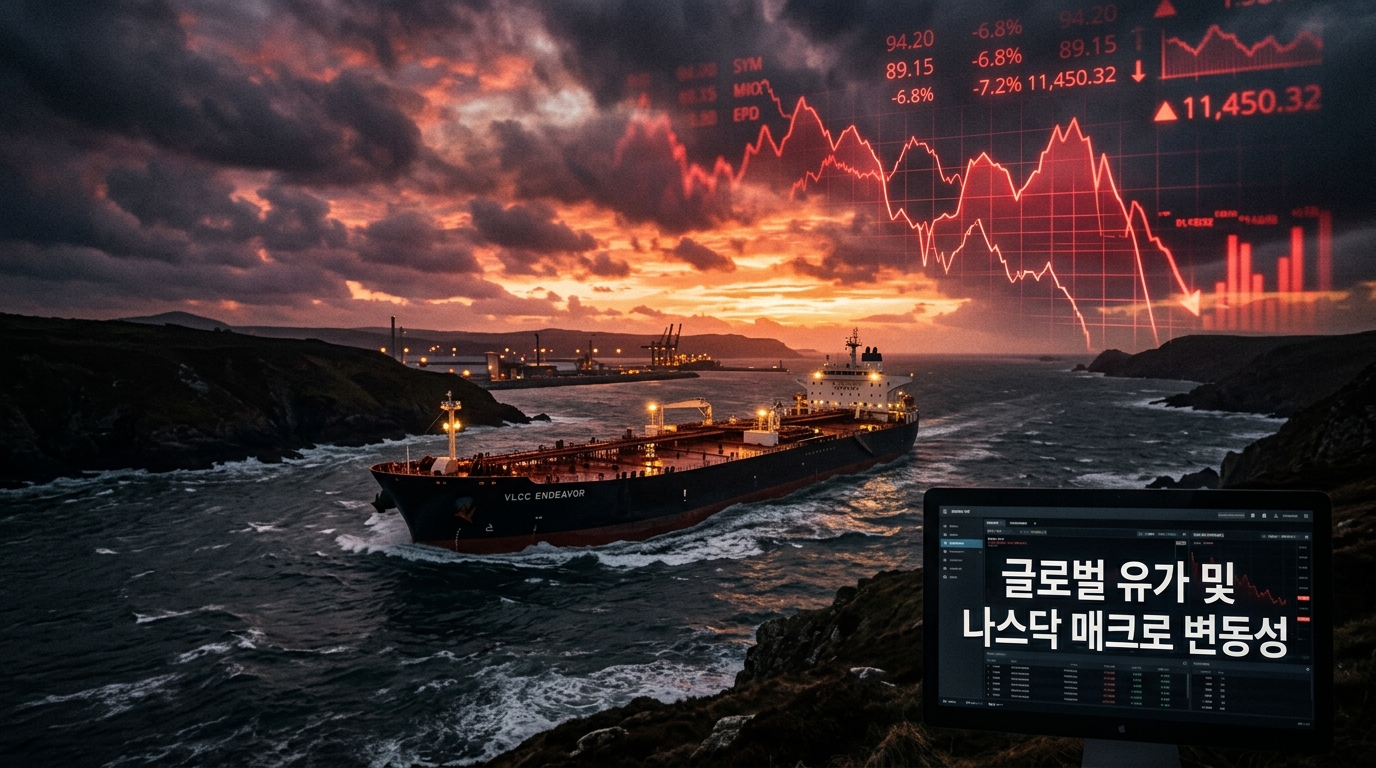
While the U.S.-Iran ceasefire agreement initially showed dramatic progress, geopolitical tensions flared up again over the weekend, leading the Nasdaq market into a period of deep consolidation.
[Image: /stdaily/uploads/202606/gen_6a387b76666e58.83693532.png]
Executive Summary
International crude oil prices, which had been falling due to a temporary easing of geopolitical conflicts, rebounded over the weekend as Israel launched airstrikes on Lebanon and Iran threatened to re-blockade the Strait of Hormuz.
The peace talks between the U.S. and Iran, which opened in Bürgenstock, Switzerland, faced disruption on the first day after the Iranian delegation reacted strongly to military threat remarks made by U.S. President Donald Trump.
Rising oil prices are a key catalyst that could stoke the U.S. Consumer Price Index (CPI) and Producer Price Index (PPI), potentially prolonging the Federal Reserve's hawkish stance.
With the U.S. 10-year Treasury yield (US10Y) holding firmly around the 4.45% level, downward pressure on the valuation multiples of Nasdaq growth stocks persists.
During the 60-day temporary ceasefire negotiation window, investors should monitor both the recovery of physical traffic through the Strait of Hormuz and localized military clashes in the Middle East.
Currently, according to Daily Stock's proprietary Fear & Greed Index, the Nasdaq market is in the 'Fear' stage at 37.3.
Current Situation Overview
Last week, the U.S. and Iran signed a 14-point Memorandum of Understanding (MoU) featuring a 60-day temporary ceasefire and the reopening of the Strait of Hormuz.
Following this news, Brent crude oil, which had been hovering around $100 per barrel, plunged to the high $70s, driving a relief rally in the market.
However, over the weekend, as Israel struck Hezbollah strongholds in Lebanon, the Islamic Revolutionary Guard Corps (IRGC) declared it would retake control of the Strait of Hormuz.
U.S. President Donald Trump also warned on social media, "If Iranian-backed proxy forces do not stop their provocations, we will strike back much harder."
As a result, the Iranian delegation that arrived at the Swiss negotiation venue temporarily walked out of the talks, raising red flags over the sustainability of the peace agreement.
As of intraday on Monday, June 22, 2026 (tentative), West Texas Intermediate (WTI) crude futures rebounded from the previous day to trade around $77.33 per barrel, while Brent crude also broke above $81.51.
[Image: /stdaily/uploads/202606/gen_6a387b81e9ade7.97866306.png]
Financial Analysis
The trajectory of energy prices driven by geopolitical risks is having a cumulative impact on financial metrics in the tech-heavy Nasdaq market.
Volatility in oil prices not only drives up logistics and infrastructure costs but also exerts upward pressure on the electricity costs required to power big tech companies' AI data centers.
| Classification | Intraday June 22, 2026 (Tentative) | Change from Previous Low | Macroeconomic Impact |
|---|---|---|---|
| **WTI Crude (USD/Bbl)** | $77.33 | +1.23% vs. right before the weekend | Rising concerns over fueling energy inflation |
| **U.S. 10-Year Treasury Yield (US10Y)** | 4.451% | Maintained slight upward bias vs. last week | Higher growth stock discount rate caps valuation multiples |
| **Nasdaq Composite** | 26,517.93 | Down approx. 0.4% in futures market | Profit-taking due to geopolitical uncertainty |
| **USD/KRW Exchange Rate** | 1,533.00 | Interlocked with strong Dollar Index (DXY) | Weakening domestic IT supply/demand due to rising import prices |
In particular, as last month's U.S. CPI exceeded 4.25% and PPI topped 6%, worries about prolonged high interest rates deepened.
If high oil prices persist, the defense threshold for companies' operating profit margins (OPM) will lower, which could lead to widespread downward revisions of earnings guidance.
Valuation
The average price-to-earnings (P/E) ratio of Nasdaq 100 constituents shows a high inverse correlation with the trend of the U.S. 10-year Treasury yield (US10Y).
When the risk-free rate, represented by the Treasury yield, remains in the high 4.4% range, the rate used to discount future cash flows to present value rises, putting pressure on tech stock multiples.
Currently, S&P 500 growth stocks and Nasdaq growth stocks are trading at a premium based on earnings guidance across the AI value chain.
However, if the 'macro tax' from rising energy costs erodes corporate free cash flow (FCF), the high multiples enjoyed by tech stocks will become difficult to justify.
For megacap tech stocks with massive capital expenditure (CAPEX) programs, they could face twin headwinds of rising capital costs and slowing margins.
Consequently, market liquidity appears to be rapidly rotating out of small-and-mid-cap growth stocks, which lack buffers against price volatility, and into mega-cap cash-generating enterprises with superior liquidity.
Expert & Institutional Analysis
Jerome Doertmans, Co-Head of Global Oil Trading at Goldman Sachs, assessed that while the U.S.-Iran agreement improved the oil supply outlook, it is not a complete resolution.
He analyzed that even if the oil supply chain gradually recovers, geopolitical uncertainties will remain, ensuring solid downside support for oil prices.
Alan Good, Equity Research Director at Morningstar, pointed out that full normalization of the Strait of Hormuz would require several months of transition and substantial replenishment of reserves.
His view is that unless blockade concerns are completely cleared, insurance premiums and shipping costs for shippers will remain high, raising the floor for oil prices.
Matt Gertken, Chief Geopolitical Strategist at BCA Research, defined the agreement as "a temporary ceasefire, not a permanent peace treaty."
He factored in a 60% probability that conflict could resume after the U.S. midterm elections this November as negotiation terms on both sides change, keeping the market on alert.
Risk Factors
The most immediate risk is the escalation of conflict between Israel and Hezbollah into a full-scale war, and a subsequent physical blockade of the Strait of Hormuz by Iran.
While the U.S. Central Command (CENTCOM) has pledged to ensure safe passage for civilian vessels, there is a probability that oil prices could break above $90 again if actual maritime clashes occur.
Another factor is the stickiness of inflation metrics in the U.S. and potential scenarios of further Fed rate hikes.
If raw material price strength driven by supply chain bottlenecks spins out of control, the risk of a breakdown in the Nasdaq's technical support levels will become pronounced.
Lastly, political rifts within the U.S. and Iranian delegations participating in the Swiss peace talks are also a potential landmine.
If Iranian hardliners attempt to nullify the negotiations with the U.S., or if the Trump administration plays additional military provocation cards, the agreement could collapse in an instant.
Investment Perspective Summary
Given the development of Middle East risks, Nasdaq investors may find it more advantageous to focus on volatility management rather than aggressive position-building.
In an optimistic scenario where the oil supply chain slowly normalizes, inflationary pressures in the second half of the year will ease, allowing for a gradual recovery of Nasdaq multiples.
Conversely, if military tensions and verbal clashes like those over the weekend continue, the combination of rising Treasury yields and an unstable USD/KRW exchange rate will weaken market liquidity.
Investors should maintain their tech holdings but formulate diversification strategies to hedge a portion of their portfolios with commodity ETFs or defensive value stocks.
With the Nasdaq Fear & Greed Index currently in the 'Fear' zone at 37.3, it is evident that conservative sentiment dominates the market.
Rather than rushing to buy on dips, it is advisable to build a precise response framework after confirming the fine-tuning of negotiation terms coming out of Bürgenstock, Switzerland, and the trends in physical cargo volumes.
Investor Checklist Q&A
Q1. What are the key points of the temporary Memorandum of Understanding (MoU) signed between the U.S. and Iran?
A1. The two countries agreed to a 60-day suspension of military operations (including the Lebanese front) and to guarantee free passage through the Strait of Hormuz without transit fees. Additionally, the U.S. temporarily eased sanctions on Iranian crude, paving the way for Iran to restore its oil supply capacity.
Q2. Why did oil prices, which had plummeted right after the agreement, rebound on Monday at the market open?
A2. This was because Israel launched airstrikes on Lebanon over the weekend resulting in multiple casualties, prompting Iran to declare it would re-blockade the Strait of Hormuz. On top of that, U.S. President Donald Trump posted strong warning messages suggesting potential military retaliation, escalating anxiety over the negotiations.
Q3. Why do geopolitical risks and rising oil prices depress the valuations of Nasdaq growth stocks?
A3. High oil prices stoke inflation, which keeps U.S. Treasury yields (US10Y) elevated. When interest rates remain high, the discount rate applied to evaluate the present value of tech stocks—which are valued on future growth—increases, compressing valuation multiples (such as P/E ratios).
Q4. What is the current psychological state and flow of capital among Nasdaq market participants?
A4. According to Daily Stock's proprietary calculation, the Nasdaq Fear & Greed Index is currently at 37.3, remaining in the 'Fear' stage. Investors are adopting a wait-and-see approach, holding off on expanding tech portfolios until they can trust the stability of the negotiations.
Q5. What are the priority physical indicators that investors should monitor during the next 60 days of negotiations?
A5. The daily vessel traffic passing through the Strait of Hormuz and the changes in global crude inventories reported by the International Energy Agency (IEA). Only when these indicators fully recover to pre-war levels can we conclude that the specter of inflation has been completely dispelled.