This is Daily Stock Nasdaq Stories, bringing you the core context of the global tech market.
Key Takeaways
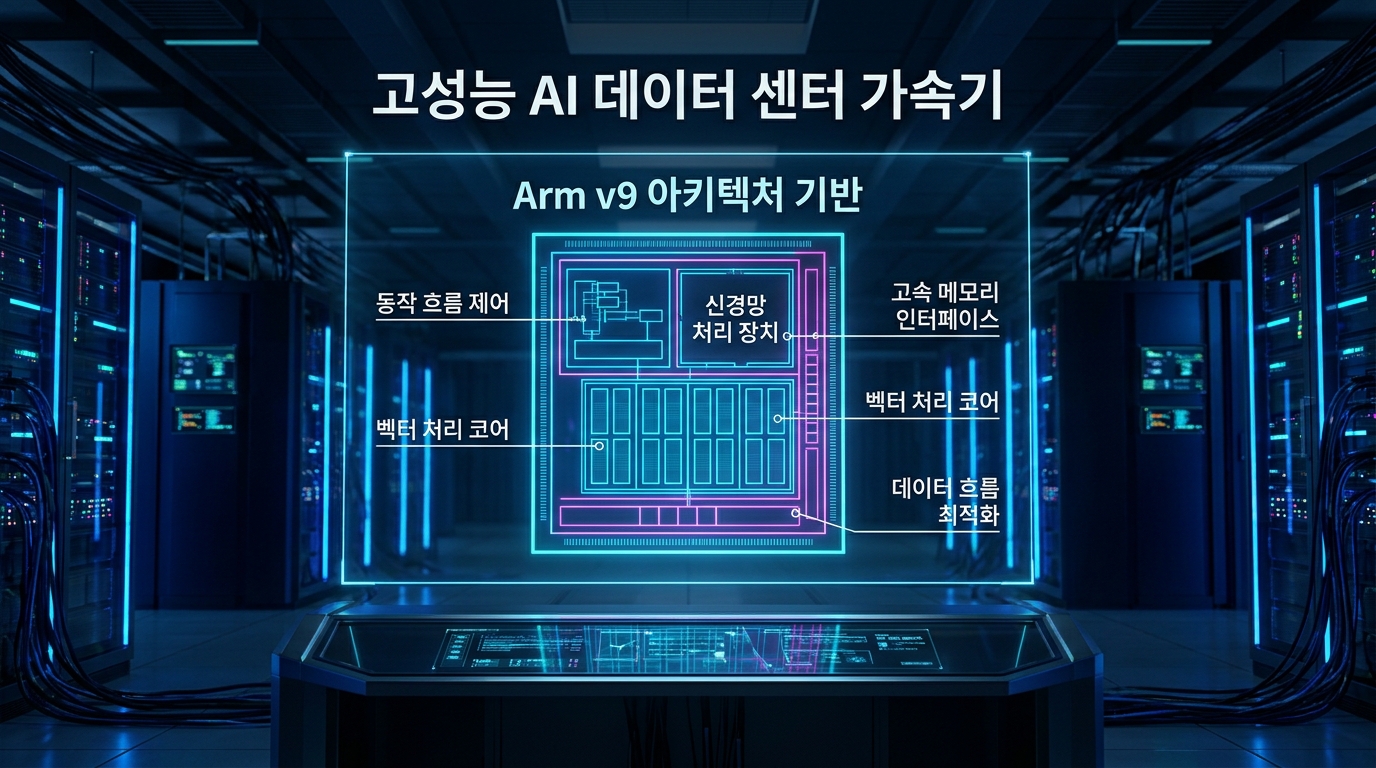
Arm Holdings (ARM) is pivoting away from its mobile-centric, lower-margin structure within the semiconductor intellectual property (IP) market, expanding aggressively into the lucrative data center ecosystem powered by its next-generation v9 architecture and Neoverse platform.
The v9 architecture commands roughly double the royalty rate per chip compared to the legacy v8, driving structural increases in average selling prices (ASP) even amid stagnating overall unit volumes.
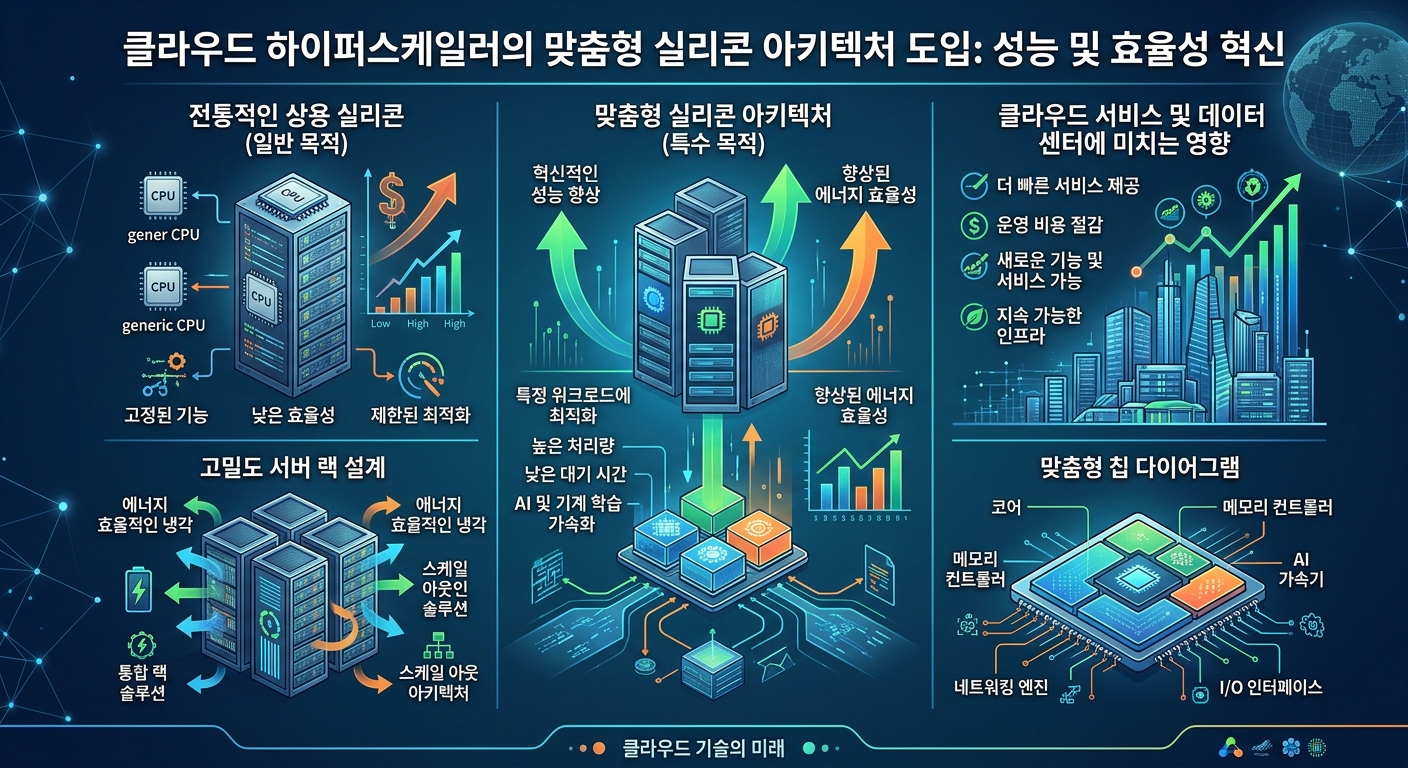
In particular, accelerating custom silicon adoption by major tech giants—such as Amazon's Graviton, Google's Axion, and NVIDIA's Grace—is fueling a steep climb in server infrastructure penetration.
However, Arm's elevated valuation multiple remains inherently sensitive to movements in the 10-year US Treasury yield (US10Y) and the sustainability of AI infrastructure capital expenditures (CAPEX).
Current Market Context
As of 09:00 KST intraday on November 3, 2026 (preliminary), global financial markets display mixed performance while monitoring inflation prints and the path of monetary policy.
In the South Korean domestic market, the KOSPI trades at 5,714.68 and the KOSDAQ stands at 723.86, with the USD/KRW exchange rate fluctuating around 1,345.50 KRW.
The tech-heavy Nasdaq Composite stands at 25,164.36 points, digesting supply near recent highs.
According to Daily Stock's proprietary Fear & Greed Index, the Nasdaq Fear & Greed reading sits in "Fear" territory at 22.7, compared to Fear (29.8) one week ago, Fear (38.2) one month ago, and Fear (34.5) three months ago, indicating that investor sentiment remains suppressed.
The KOSPI Fear & Greed Index is also logged in "Fear" (31.9); although it rebounded from "Extreme Fear" (9.5) a week ago, cautious sentiment remains pervasive.
Across the Philadelphia Semiconductor Index (SOX) and the Nasdaq 100, growth equities show divergence based on individual earnings guidance against the backdrop of a moderately firm US Dollar Index (DXY) and localized volatility spikes in the VIX.
Trading for Arm Holdings on November 3, 2026, is unconfirmed intraday (based on latest available quotes), with market attention heavily focused on data center royalty growth rates alongside Big Tech earnings season.
Financial Analysis
Arm Holdings' recent quarterly performance demonstrates that its dual-engine model of IP license signings and running royalties is generating meaningful operating leverage.
For Q1 of fiscal year 2027, total revenue reached $1.29 billion, up 22% year-over-year, while royalty revenue hit $715 million, marking an all-time high for a first fiscal quarter.
Most notably, data center royalty revenue more than doubled year-over-year, as cumulative Neoverse core shipments surpassed 1.5 billion units.
Given the fabless IP licensing business model with no manufacturing facilities, Non-GAAP gross margin exceeded 95%, underscoring exceptional cost defensibility.
| Category | Key Metrics & Values | Detailed Trends & Impact Analysis |
|---|---|---|
| **Q1 FY27 Total Revenue** | $1.29 billion (+22% YoY) | Solid top-line growth driven by data center and v9 adoption |
| **Royalty Revenue** | $715 million (+22% YoY) | Boosted by higher-value v9 chip shipments and hyperscaler custom silicon |
| **License & Other Revenue** | $574 million (+23% YoY) | Strong momentum in Total Access and CSS (Compute Subsystems) long-term contracts |
| **v9 Architecture Share** | Exceeded 25% of total royalties | Royalty rate ~2x higher than v8, driving price (P) expansion |
| **Neoverse Shipments** | Cumulative 1.5B+ cores | Added 500M cores over the past 9 months, accelerating server penetration |
| **Non-GAAP Operating Margin** | Approximately 41% | Improved by 200 bps supported by high-margin IP revenue structure |
Despite sluggish smartphone end-market unit volume, the rollout of the v9 architecture and Compute Subsystems (CSS) has driven higher IP dollar content per device, keeping mobile royalties resilient.
Valuation
Unlike conventional chipmakers, Arm Holdings maintains software-like gross margins exceeding 90%, historically earning it premium price-to-sales (P/S) and forward P/E multiples.
However, valuations hovering between 80x and 90x forward earnings leave the stock vulnerable to interest rate fluctuations.
Any sustained rebound in the US 10-year Treasury yield raises discount rates, amplifying the risk of multiple compression across high-multiple growth equities.
Current price levels appear to price in optimistic assumptions that data center penetration will exceed 20% by 2027 and that the v9 architecture will comprise 50% of total royalties.
Consequently, should quarterly royalty growth rates fall short of consensus even modestly, valuation de-rating pressure could mount.

Expert & Institutional Analysis
Wall Street investment banks broadly view hyperscalers' urgent need for power efficiency as Arm's most formidable economic moat.
Faced with power delivery constraints per server rack, major tech companies are increasingly adopting power-efficient ARM-based custom silicon over traditional x86 architecture as their standard.
According to IDC research reports, ARM-based architectures are claiming a rapidly rising share of accelerated server platform spending, challenging the x86 camp.
Furthermore, accumulating CSS licensing deals—which bundle pre-integrated modular subsystems—offer institutions improved multi-year visibility on incoming royalty streams over the next two to three years.
Conversely, some market watchers highlight clients building in-house design capabilities and open-source RISC-V advancements as long-term structural considerations.
Risk Factors
The central risk factor is a potential pacing adjustment in Big Tech's AI infrastructure capital expenditures (CAPEX).
If the monetization timeline for generative AI models lags expectations, hyperscalers could moderate data center buildout timelines.
In addition, if open-source RISC-V architecture expands beyond edge devices into data center accelerator control planes, Arm's long-term licensing pricing power could face pressure.
Prolonged smartphone replacement cycles also present an ongoing headwind to overall mobile royalty volume growth.
From a macroeconomic perspective, sticky 10-year US Treasury yields and a measured Federal Reserve easing path continue to stoke volatility across high-multiple tech names.
Investment Perspective
Arm Holdings maintains unique IP market dominance, capturing price expansion across the global semiconductor value chain without shouldering hardware manufacturing and capital-intensity risks.
Medium-term earnings momentum will likely be dictated by v9 architecture mix expansion and server market share gains rather than sheer volume expansion.
Under a bull scenario, sustained high double-digit data center royalty growth could justify its elevated forward multiples.
Under a bear scenario, a deceleration in AI CAPEX coupled with yield headwinds could extend multiple compression, suggesting investors closely monitor quarterly v9 adoption rates and licensing backlog trajectories.
Q&A with Daily Stock
Q1. Why does migration to the v9 architecture directly drive royalty revenue growth?
Arm's business model collects royalties as a fixed percentage of partner chip ASPs. Because the v9 architecture incorporates enhanced AI compute and security features, its applied royalty rate is roughly double that of the prior v8 generation, generating substantially higher revenue on equivalent unit sales.
Q2. Which major tech giants utilize ARM-based data center chips?
Amazon AWS uses ARM IP for its in-house Graviton server chip line, Google Cloud deployed Axion, and Microsoft launched Cobalt. Additionally, NVIDIA's next-generation Grace AI CPU is architected on ARM Neoverse.
Q3. Why are data centers favoring ARM architecture over x86?
Power delivery and thermal management represent the foremost bottlenecks in modern data centers. ARM architecture delivers superior core density and power efficiency per watt, significantly lowering total cost of ownership (TCO) for large-scale facilities.
Q4. Does RISC-V pose an imminent threat to ARM's market position?
While RISC-V attracts interest due to its royalty-free open-source model, ARM retains a multi-year lead in data center-grade software ecosystems, developer tools, and validated compiler optimizations. However, RISC-V could gradually gain share over the long term starting in microcontrollers and specialized accelerator control.
Q5. What are the key metrics investors should track most closely?
The quarterly percentage of v9 architecture within total royalty revenues, alongside Compute Subsystems (CSS) license adoption. Additionally, annual CAPEX guidance from the top four hyperscalers and trends in US Treasury yields serve as vital macro indicators.