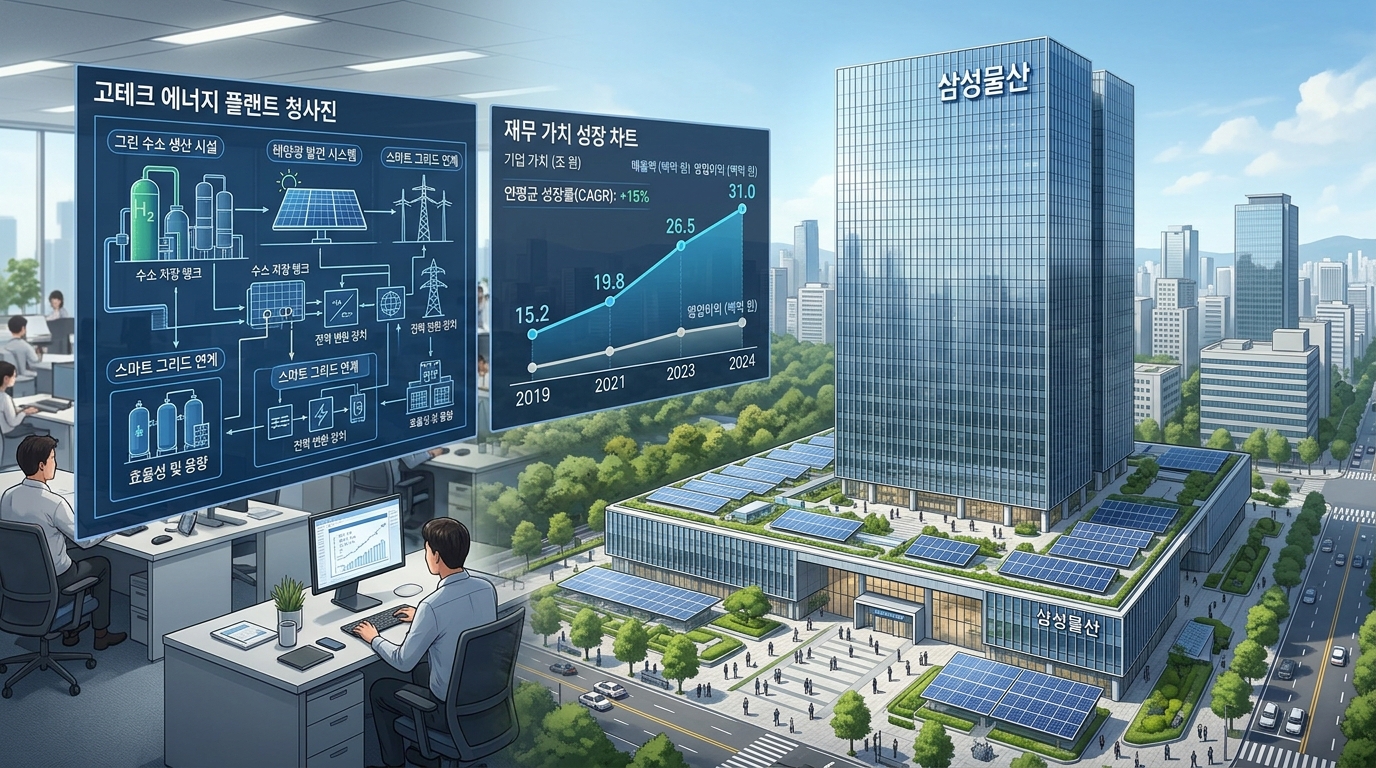
Hello, this is Daily Stock, analyzing market trends and corporate value.
Executive Summary
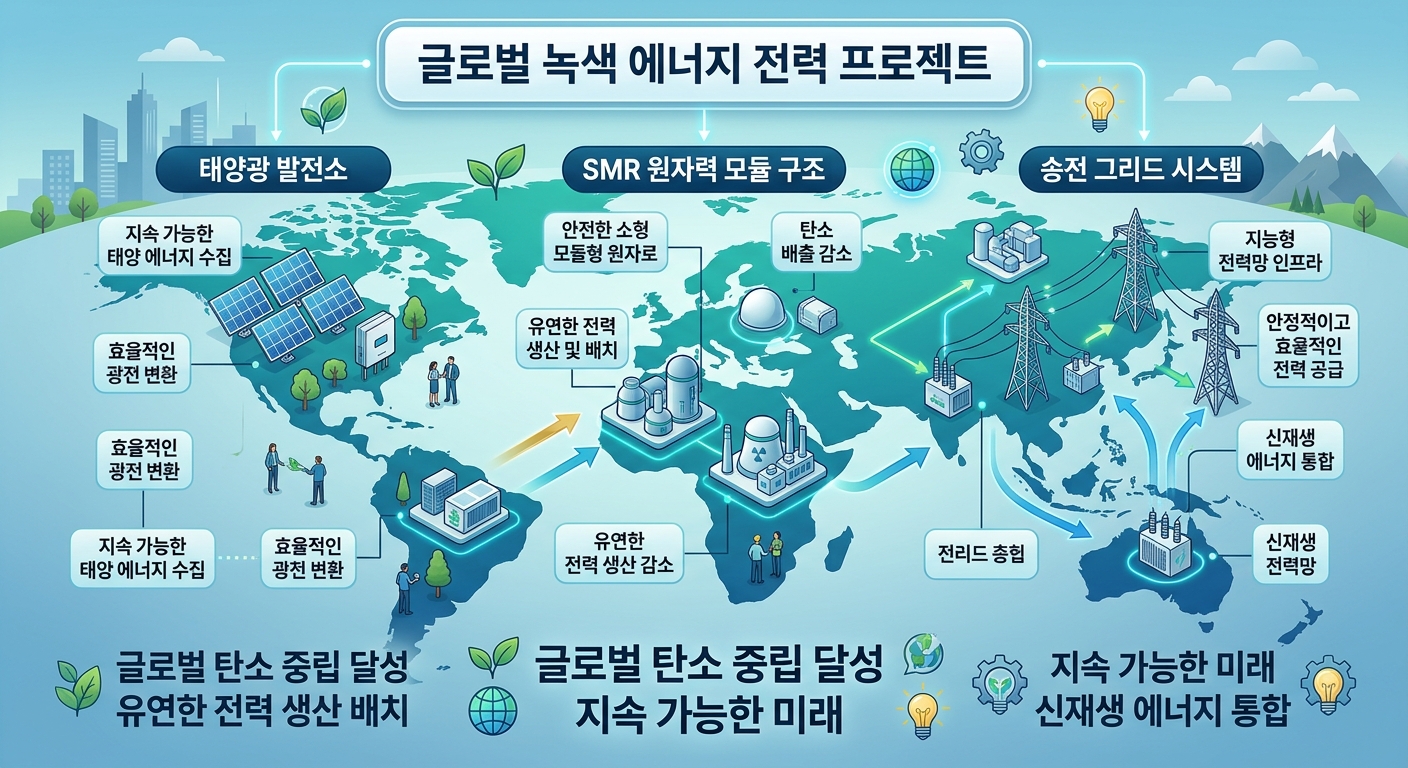
Samsung C&T (028260) is diversifying its order pipeline toward green energy projects—such as global solar development asset sales, small modular reactors (SMRs), and high-voltage direct current (HVDC) transmission—in addition to its legacy orders in high-tech semiconductor fab infrastructure.
At the same time, the company is sequentially canceling its treasury shares under a three-year shareholder return policy and aligning with the government's Corporate Value-up Program to foster revaluation momentum as the de facto holding company of the Samsung Group.
As of the market close on November 3, 2026, the KOSPI closed at 5,648.79, and the KRW/USD exchange rate closed at 1,340.90 KRW, amplifying foreign capital flow volatility across large conglomerate holding companies.
According to Daily Stock's proprietary Fear & Greed Index, the KOSPI currently stands in the 'Extreme Fear' zone at 19.5 (compared to 9.5 Extreme Fear 1 week ago, 40.9 Neutral 1 month ago, and 17.8 Extreme Fear 3 months ago), while the Nasdaq also indicates 'Fear' at 22.7.
Current Market Context
The domestic stock market remains highly sensitive to whether the exchange rate stabilizes around the 1,340 KRW level, the direction of the Bank of Korea's base interest rate, and foreign net trading trends across spot and futures markets in top-cap KOSPI sectors such as semiconductors, automotive, and financials.
While KOSPI 200 large caps face valuation downside tests driven by global economic slowdown concerns and capital outflow pressures from emerging markets, selective interest is flowing into conglomerate holding companies with robust financial fundamentals.
Samsung C&T's closing price for the day is marked as 'Unconfirmed for the session (based on latest verified data)'; however, the company is gaining recognition for both its defensive resilience and growth potential as its construction division outperforms and new energy business results materialize.
In particular, across North America, Europe, and the Middle East, order backlogs—including the Romanian SMR project, a 1.2GW-class nuclear cooperation project in Sweden, a 2,000MW solar plant in Qatar, and an Australian HVDC project—are entering the phase of sequential revenue recognition.
Financial Analysis
Samsung C&T's construction division continues to deliver top-line growth and solid margin structures, supported by captive high-tech plant projects from affiliates and global green energy EPC orders.
The shift away from conventional, contractor-oriented civil engineering and residential housing toward high-tech industrial infrastructure and renewable energy asset monetization with recoverable development gains has protected operating profit margins.
On a consolidated basis, the debt-to-equity ratio remains in the mid-60% range, maintaining a stable net debt profile close to net-cash status, alongside an accumulated retained earnings reserve exceeding 10 trillion KRW.
| Business Segment / Metric | Key Details & Trends | Financial Impact & Evaluation |
|---|---|---|
| **Construction (Green Energy & High-Tech)** | Qatar Solar (1.46T KRW), Australia HVDC, Romania/Sweden SMR Pre-EPC | Sustained recognition of mid- to long-term high-margin revenue based on percentage of completion |
| **Trading, Bio, Fashion, Resort** | Stake value growth in bio affiliates and diversified business portfolio | Mitigates construction cycle cyclicality and diversifies cash flow sources |
| **Financial Soundness Metrics** | Debt ratio around 65%, near net-cash operating structure | Contained financial costs during interest rate volatility and secured capacity for active investment |
| **Treasury Share Cancellation** | 5-year roadmap to sequentially cancel 24.71M common treasury shares | Drives growth in earnings per share (EPS) and book value per share (BPS) |
Valuation
Because Samsung C&T holds substantial equity stakes in core listed affiliates—such as Samsung Electronics (approx. 5%) and Samsung Biologics (approx. 43%)—it has historically traded at a holding company discount (NAV discount) of 50% to 60% or more.
Its price-to-book ratio (PBR) has hovered around 0.6x for an extended period. While this represents a premium over typical domestic construction peers (PBR 0.3–0.4x), it remains undervalued relative to global diversified infrastructure peers.
If the plan to retire 100% of its treasury shares—which account for over 12% of total common shares—is fully executed through 2026, the reduction in floating share count is expected to trigger a valuation rerating on a per-share basis.
However, potential fluctuations in affiliate share prices and incoming dividend receipts could directly offset Samsung C&T's standalone cash generation, representing a key variable in valuing this conglomerate.
Institutional and Analyst Perspectives
Brokerages and institutional investors are highlighting Samsung C&T's operational transformation from a traditional general trading and construction company into a 'green energy developer and EPC contractor.'
Analysts assess that its established track record in SMRs, solar power, and large-scale transmission grids—surging in demand due to global data center expansions—will drive qualitative improvements across its long-term order backlog.
With activist funds repeatedly advocating for expanded dividends and additional treasury share buybacks at annual general meetings, market specialists anticipate the company may further raise its shareholder return payout ratio in line with Value-up guidelines.
From a foreign investor supply-demand perspective, if the KRW/USD exchange rate stabilizes without further spikes beyond the 1,340 KRW range, favorable conditions could emerge for concurrent inflows from both index-tracking passive funds and value-oriented active funds.

Risk Factors
In the global macroeconomic landscape, policy shifts or subsidy cuts for renewable energy across major nations could delay Final Investment Decisions (FID) for North American and European solar and SMR projects.
If the exchange rate surges sharply above the 1,340 KRW mark, foreign investors' currency hedging and loss avoidance tendencies could create a supply-demand vacuum across large-cap KOSPI conglomerates.
A slower-than-expected pace of rate cuts by the Bank of Korea could elevate financing costs for domestic and overseas real estate PF and infrastructure projects, potentially compressing margins during project ground-breaking and settlement phases.
Furthermore, regulatory restrictions under the Financial-Industrial Separation Act regarding equity ties with financial affiliates such as Samsung Life and Samsung Fire & Marine, along with governance restructuring policy risks, remain essential long-term monitoring items.
Investment Outlook
Samsung C&T is navigating the Value-up cycle on two solid fundamental pillars: the materialization of its green energy order backlog and its treasury share cancellation roadmap.
Although the KOSPI Fear & Greed Index lingering at 19.5 ('Extreme Fear') underscores short-term market-wide downside pressure, it may also present an observation window for dip-buying large-cap names offering governance improvements and earnings resilience.
A prudent strategic approach would involve tracking the recovery in domestic export-import momentum and potential foreign net buying turnarounds across spot and futures, while sequentially monitoring the narrowing of the discount against its affiliate stake values.
Investor Checkpoint Q&A
Q1. Which segment within the green energy business converts into earnings most rapidly?
Gains on the sale of solar development assets, along with revenue recognition based on construction progress in large-scale solar and HVDC EPC projects across the Middle East and Australia, provide the most direct and immediate contribution.
Q2. When will SMR (Small Modular Reactor) projects begin meaningfully reflecting on the income statement?
The company is currently carrying out Pre-EPC work based on global partnerships in locations like Doicești, Romania, and Sweden. Financial visibility is expected to expand significantly around 2028–2030, when full-scale EPC contracting and ground-breaking commence.
Q3. What structural impact does Samsung C&T's treasury share cancellation have on its share price?
Sequentially canceling all treasury shares reduces the total number of issued shares, structurally driving up earnings per share (EPS) and net asset value (NAV) per share, which directly enhances shareholder value.
Q4. What are the liquidity and flow implications of the KRW/USD rate hovering around 1,340 KRW?
While a weaker won can be favorable for KRW-denominated revenue from overseas plant projects, it poses a double-edged sword by prompting foreign investors to trim large-cap KOSPI holdings to avoid foreign exchange losses, thereby increasing volatility.
Q5. What is the practical impact of activist funds' shareholder proposals on corporate governance?
Even if proposals do not pass at shareholder meetings, they serve as an effective catalyst pressuring management to adopt more market-friendly policies, including mid- to long-term dividend hikes, treasury share cancellations, and concrete Corporate Value-up roadmaps.