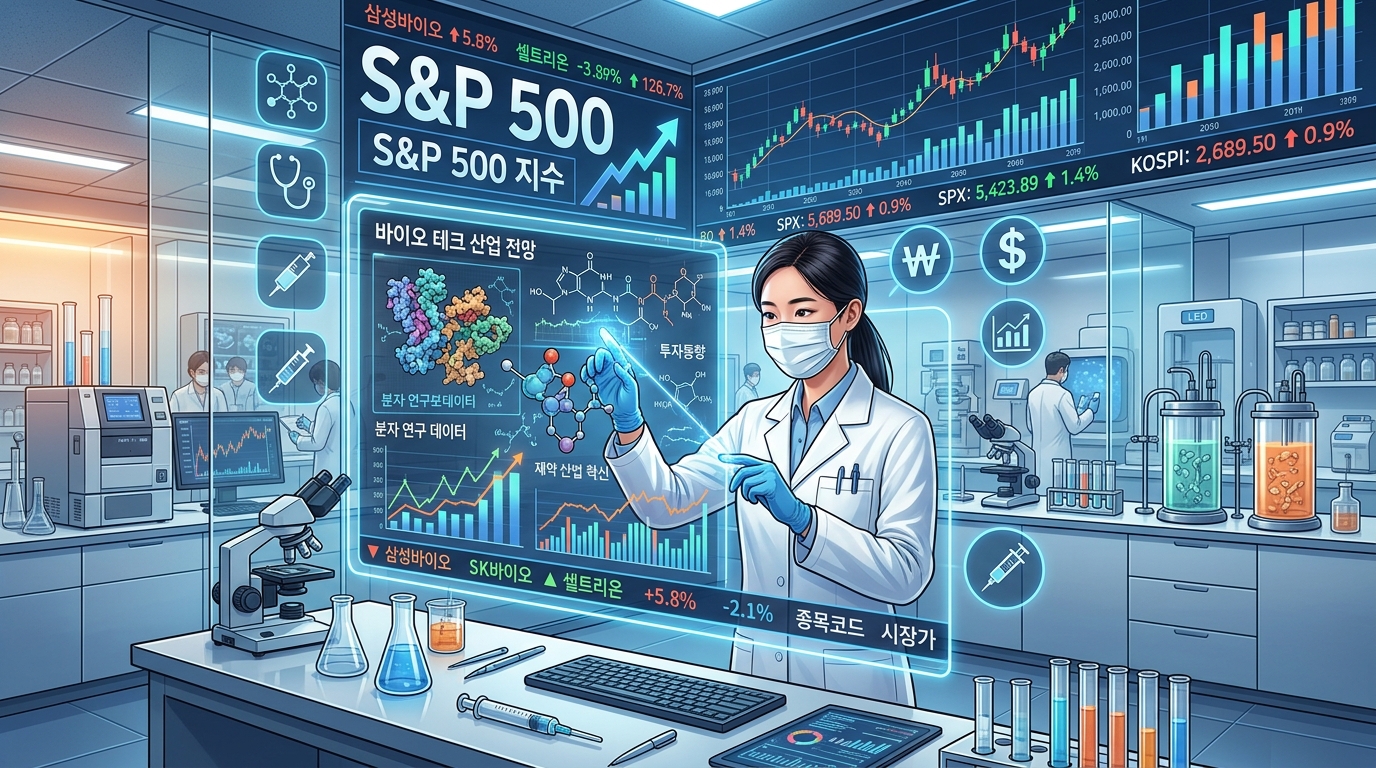
While the S&P 500 index experiences volatility near its record highs, the healthcare sector, which has been relatively overlooked, is quietly emerging as a strong candidate to lead the next leg of the market.
Stripping away the temporary illusion that appeared in the recently completed first-quarter earnings season, the core earnings strength of healthcare companies, armed with revolutionary new drugs and artificial intelligence (AI) integration, remains highly robust.
[Image: /stdaily/uploads/202606/gen_6a26146df265d1.06288109.png]
Executive Summary
The recently announced Q1 earnings per share (EPS) for the S&P 500 healthcare sector fell by approximately -8.7% year-on-year, posting the weakest performance among the 11 sectors.
However, this was largely a temporary illusion reflecting a one-time merger and acquisition charge of approximately $9.2 billion incurred by pharmaceutical giant Merck.
Excluding this one-off expense, the healthcare sector's actual earnings growth rate was positive, ranging from 2.8% to 4.1%, proving resilient underlying fundamentals.
Major pharmaceutical giants like Eli Lilly and Johnson & Johnson significantly raised their full-year guidance based on strong demand for new drugs and disciplined cost controls, raising expectations for an earnings turnaround in the second half of the year.
Market Update
As of midday on June 8, 2026 (provisional), the US stock market is showing a wait-and-see attitude ahead of key macroeconomic data releases.
On the same day, the domestic financial market recorded KOSPI at 7,591.26 and KOSDAQ at 937.90, while the USD/KRW exchange rate is hovering around 1,548.30 won.
The global technology-heavy Nasdaq index stands at 25,709.43, taking a breather near its highs.
According to Daily Stock's proprietary Fear & Greed Index, the KOSPI is currently in the "Fear" stage (26.6) and the Nasdaq is in the "Neutral" stage (42.1), reflecting a more cautious sentiment among investors.
Against this backdrop, the S&P 500 healthcare sector index (SPXHC), which bottomed out around the 1,739.78 level at the end of last month, recently rebounded to the 1,779.88 level as of June 5, showing signs of bargain-hunting inflows.
Financial Analysis
Key mega-cap names in the healthcare sector proved stronger-than-expected earnings resilience during the Q1 earnings season.
Eli Lilly (LLY), a leader in the obesity and diabetes treatment market, raised its full-year revenue guidance by $2 billion to $82 billion–$85 billion, driven by explosive demand.
Johnson & Johnson (JNJ) also demonstrated its large-cap prowess by projecting full-year revenue guidance above $100 billion for the first time in its history.
| Major Companies | Q1 Earnings Highlights | 2026 Full-Year Guidance Changes |
|---|---|---|
| **Eli Lilly (LLY)** | Surge in obesity drug sales, earnings surprise | Raised full-year revenue outlook to $82B–$85B |
| **Merck (MRK)** | Net income fell due to a one-off acquisition expense ($9.2B) | Adjusted full-year revenue guidance upper bound to $65.8B–$67B |
| **Johnson & Johnson (JNJ)** | Even growth across medical devices and innovative medicine divisions | Expected to top $100B in annual revenue for the first time in company history |
| **UnitedHealth (UNH)** | Solid core business confirmed despite cyberattack fallout | Eased short-term uncertainty and maintained full-year EPS outlook |
Beyond the pharma and biotech spaces, the medical device and healthcare services segments also showed moderate margin improvements, supporting the sector's overall financial health.
[Image: /stdaily/uploads/202606/gen_6a26147b030917.97006914.png]
Valuation
Currently, the 12-month forward price-to-earnings (P/E) ratio of the S&P 500 healthcare sector sits at around 27x.
This is somewhat elevated compared to historical averages, and given that the estimated earnings growth rate for 2026 is limited to about 3%, there is some near-term valuation pressure.
However, market participants view this year's flat earnings growth as a temporary transition phase.
Indeed, Wall Street analysts project that the healthcare sector's earnings growth will surge to around 19% in 2027, driven by low base effects from 2026 and the full-scale commercialization of innovative new drugs.
Thus, the prevailing view is that the current 27x P/E is priced to reflect this rapid future growth potential.
Expert and Institutional Analysis
Global investment institutions are beginning to focus on the appeal of healthcare as an alternative to the tech sector, where overvaluation concerns persist.
Charles Schwab recently designated the healthcare sector, alongside industrials, as one of its "Most Favored" sectors, its highest rating.
Furthermore, according to FactSet data, healthcare ranked third among the 11 S&P 500 sectors in terms of analysts' "Buy" ratings, at 62%.
Experts analyze that, beyond acting as a defensive play, generative AI is acting as a "Discovery-Accelerator" that drastically shortens drug development times, opening up structural growth for the sector.
A prime example is Eli Lilly's $2.75 billion AI-driven drug discovery licensing deal with Insilico Medicine.
Risk Factors
The most immediate risk is the massive "Patent Cliff" looming over the next four years.
According to industry analysis, approximately 200 drugs, including 69 blockbusters generating over $1 billion in annual sales, are facing patent expirations and will confront competition from generics.
Additionally, healthcare services and managed care providers, such as UnitedHealth (UNH), face risks of Medicare Advantage rate cuts and rising costs driven by increased medical utilization among the aging population.
Furthermore, as the digitization of the overall medical system accelerates, frequent exposure to data security breaches and cyberattacks represents an ongoing cost factor to overcome.
Investment Outlook
In conclusion, while the S&P 500 healthcare sector's Q1 earnings numbers appeared weak on the surface, its underlying fundamental earnings power was confirmed to be very solid.
This year's low earnings growth rate (3%) and relatively high valuation (27x) are factors that could trigger short-term stock price volatility.
However, the strong 19% earnings rebound potential projected for 2027 and biotech innovation incorporating AI send positive signals to long-term investors.
Rather than simply tracking the broader index, a selective approach focused on mega-cap pharmaceutical companies with unique pipelines or well-diversified ETFs may prove advantageous.
Investor Checklist Q&A
Q1. What is the real reason behind the apparent sharp drop in S&P 500 healthcare sector's Q1 earnings?
- It was due to Merck expensing approximately $9.2 billion in one-time research and development costs related to an acquisition. Excluding this, the sector's actual earnings showed positive growth.
Q2. Are the earnings outlooks for obesity drug companies like Eli Lilly still intact?
- Highly intact. In its recent earnings release, Eli Lilly raised its full-year revenue guidance by an additional $2 billion, reflecting robust global demand.
Q3. Is artificial intelligence (AI) technology being adopted in the healthcare sector actually contributing to financials?
- Yes. Beyond simple cost savings, AI plays a major role in drastically shortening the drug discovery phase and has become a key growth driver, generating licensing deals worth billions of dollars.
Q4. How serious is the "patent cliff" risk feared over the next few years?
- With patents for approximately 200 drugs, including blockbuster treatments, set to expire over the next four years, traditional pharmaceutical companies that fail to refresh their pipelines will inevitably face revenue hits.
Q5. What are the key macroeconomic indicators to monitor when investing in the healthcare sector?
- Investors should continuously monitor the Federal Reserve's interest rate path, government policy changes regarding Medicare premium rates, and medical service utilization trends among the aging demographic.