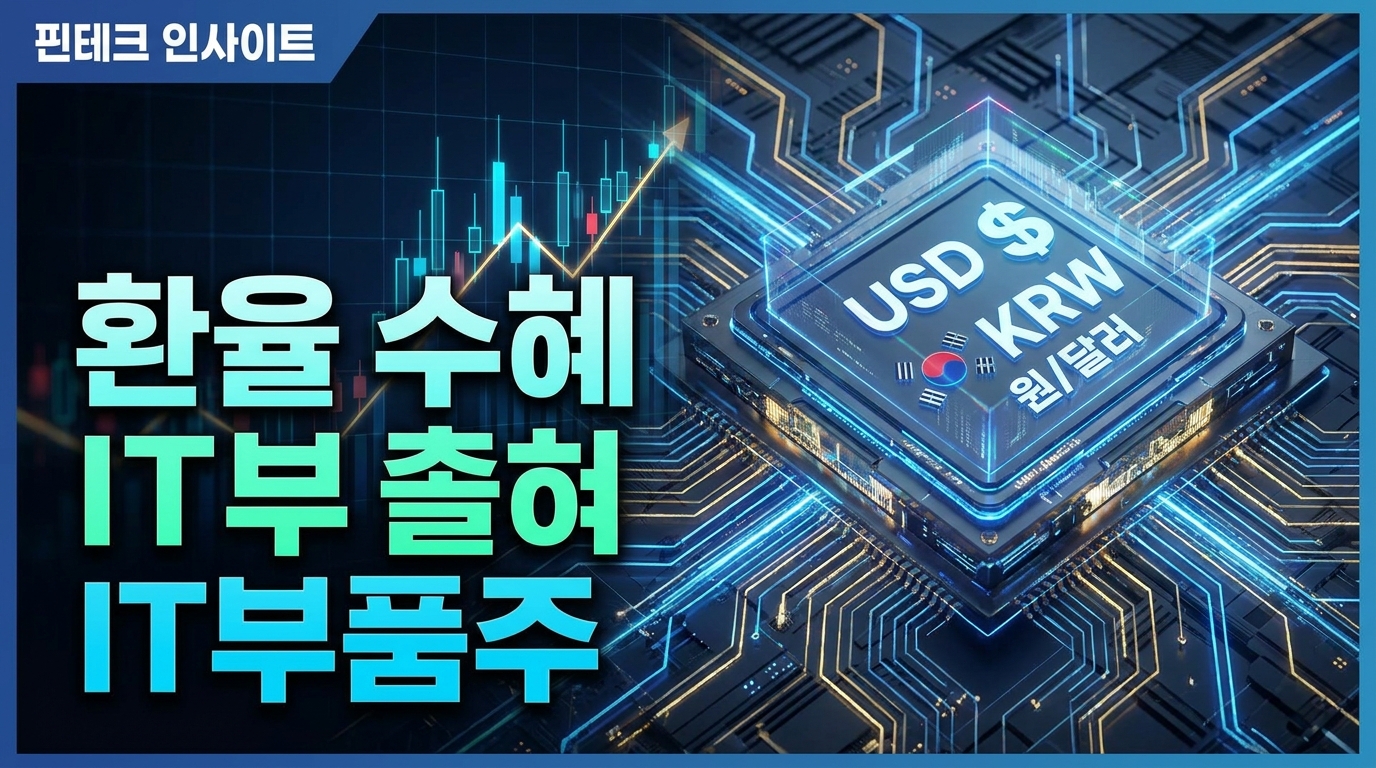
Hello, this is Daily Stock's in-depth KOSDAQ market analysis report.
Core Summary
As the KRW/USD exchange rate breaches the 1,514.00 mark, the potential for exchange rate benefits for KOSDAQ IT parts stocks that have secured global clients is being highlighted.
LEENO Industrial, ISC, and BH, which have an absolute proportion of exports, are proving the solidness of their fundamentals through strong earnings in the first quarter of 2026 and future momentum [1].
Rather than a simple theme-based approach, a strategy that examines objective valuation indicators such as PSR and EV/EBITDA, as well as foreign program trading trends, is required.
It is necessary to monitor the gap volatility between large-cap IT parts stocks and small-to-mid-cap value chains within the KOSDAQ 150 index and check risks from a conservative perspective.
[Image: /stdaily/uploads/202605/gen_6a12b11a361604.95065799.png]
Current Situation Summary
As of the market close on May 24, 2026, the KOSDAQ index closed at 1,161.13 and the KOSPI index at 7,847.71, showing a differentiated trend between the markets.
The synchronization with US tech stocks, such as the NASDAQ index recording 26,343.97, is directly affecting the supply and demand for large KOSDAQ growth stocks [2].
In particular, as the strong dollar trend, with the KRW/USD exchange rate reaching 1,514.00, is maintained, there is discussion about the possibility of institutional and foreign supply and demand concentrating on the IT parts sector, which has a high proportion of North American sales.
However, caution is needed regarding the phenomenon of liquidity gaps occurring as margin loan balances and retail investor deposits concentrate on specific small KOSDAQ themes.
According to Daily Stock's own Fear & Greed Index, the current KOSPI Fear & Greed level is at a Neutral (57.3) level.
This shows a pattern of gradually decreasing volatility from Neutral (58.9) one week ago, Greed (64.8) one month ago, and Greed (63.4) three months ago.
The NASDAQ Fear & Greed Index is also currently at Neutral (58.6), entering a stabilization phase compared to Greed (63.2) one week ago, Greed (68.5) one month ago, and Greed (66.8) three months ago.
The decline in indicators may signify a momentum digestion process rather than simple pessimism, so a selective approach based on earnings can be considered.
Financial Analysis
LEENO Industrial, a leading KOSDAQ IT parts stock, achieved a phenomenal operating profit margin of approximately 47.4%, recording 99.8 billion KRW in sales and 47.3 billion KRW in operating profit for the first quarter of 2026 [1].
The surge in demand for R&D testing of new AI and mobile AP chips is analyzed to be the core reason for the earnings defense [1].
Despite it being an off-season, ISC also achieved record-high quarterly earnings, recording an operating profit of 23.6 billion KRW (up approx. 237.8% YoY) in the first quarter [3].
The prevailing assessment is that the expansion of AI accelerator test socket supplies to North American clients led the profitability turnaround [3].
BH, whose main clients are North American smartphone manufacturers like Apple, is considered a candidate to simultaneously enjoy an increase in FPCB supply volumes and the strong dollar effect.
If the defense of North American high-end smartphone shipments and foreign exchange gains combine, there is room for positive financial results from the second quarter onwards.
| Company Name | Q1 2026 Operating Profit | Year-over-Year (YoY) | Operating Profit Margin (Est.) | Core Momentum |
|---|---|---|---|---|
| LEENO Industrial | 47.3B KRW | Approx. +35.0% | 47.4% | Mobile AP and R&D socket demand |
| ISC | 23.6B KRW | Approx. +237.8% | 35.0% | Expansion of AI accelerator test socket supply |
| BH | Current price unconfirmed (Based on latest confirmed value) | Current price unconfirmed (Based on latest confirmed value) | Current price unconfirmed (Based on latest confirmed value) | North American client new products and FX benefits |
Valuation
Recently in the KOSDAQ market, rather than simple PER (Price-to-Earnings Ratio), PSR (Price-to-Sales Ratio), which reflects sales growth, and EV/EBITDA, which shows operating cash flow, are being heavily utilized.
LEENO Industrial is trading at a PER of about 46x based on expected 2026 earnings, and there are assessments that it is receiving a valuation discount compared to its global peer group [1].
For ISC, as AI momentum is confirmed in numbers, the EV/EBITDA indicator is showing a rapid improvement trend [3].
Despite initial infrastructure investment costs being reflected as depreciation, cash-generating ability is maximizing, which could increase valuation attractiveness.
In BH's case, it has maintained a relatively low PSR, but if front-end supply and demand for displays and IT parts improve, the possibility of a re-rating is open.
In particular, given the characteristics of being included in the KOSDAQ 150 index, it should be kept in mind that EV/EBITDA multiples could be upgraded in the short term upon the inflow of passive funds.
[Image: /stdaily/uploads/202605/gen_6a12b12f2c3eb0.94259231.png]
Expert & Institutional Analysis
Market experts diagnose that the earnings synchronization of NASDAQ tech stocks will bring a direct trickle-down effect to large-cap KOSDAQ IT parts stocks [2].
The analysis is that the structural growth of AI infrastructure expansion and smartphone form factor changes, coupled with the high exchange rate in the 1,500 KRW range, is forming a strong earnings defense wall.
Foreign and institutional program trading trends are the core variables widening the return gap between the KOSDAQ 150 Index and the KOSDAQ Small Index.
While retail investors' margin loan balances are concentrated on specific small-cap theme stocks, institutional funds are flowing entirely into large-cap stocks with proven earnings, such as LEENO Industrial and ISC [1].
In terms of domestic policy momentum, favorable fund inflow conditions, such as the creation of funds supporting advanced strategic industries, are also expected [2].
Such priming-water liquidity supply could potentially act as a basis to justify the valuation premium of KOSDAQ growth stocks in the mid-to-long term [2].
Risk Factors
The most alarming risk currently is the possibility of a sharp contraction in front-line IT demand as the high-interest-rate trend prolongs.
No matter how large the exchange rate effect is, if global consumer sentiment dampens, it will be difficult to avoid a decrease in smartphone and PC parts shipments.
Also, if liquidity thins out in a situation where retail deposits are limited, short-term profit-taking selling may emerge, leading to large gap volatility in stock prices.
There remains a risk that downward pressure on the KOSDAQ index will proceed much faster and deeper than the KOSPI when institutional program selling is concentrated.
Risks of share sales by major shareholders (overhang) or financial burdens due to expanded capital expenditures (CAPEX) are also factors increasing the volatility of individual stocks [1].
The portfolio's earnings defense capabilities must be continuously checked, preemptively considering even scenarios where the exchange rate turns downward in the short term.
Investment Perspective Summary
The strong dollar trend at 1,514 KRW is providing a highly favorable operating environment for KOSDAQ IT parts export stocks in the short term.
LEENO Industrial, ISC, and BH have established solid positions in their respective niche markets, showcasing structural strengths that directly translate exchange rate benefits into profits.
However, after earnings are confirmed, market expectations rise further, leaving room for a stock price correction in the absence of additional momentum.
Therefore, rather than aggressively chasing buys, a scenario of approaching in installments when valuation indicators (EV/EBITDA, etc.) approach the lower end of their historical average bands could be reasonable.
In conclusion, it is important to respond flexibly while carefully checking the trends of US NASDAQ tech stocks and the consistency of foreign supply and demand.
We suggest a conservative and calm investment perspective that balances earnings momentum and changes in macroeconomic indicators (exchange rates, interest rates).
Investor Checkpoints Q&A
Q1. Is the high exchange rate in the 1,500 KRW range unconditionally good news for KOSDAQ IT parts stocks?
A1. It provides an operating profit increase effect for companies with a high export proportion that receive payments in dollars, but if the proportion of raw material imports is high, the cost burden may increase, making it essential to check the value chain for each company.
Q2. Where should we focus between the KOSDAQ 150 and KOSDAQ Small indices?
A2. Currently, foreign program trading and passive funds have a strong tendency to lean towards large-cap KOSDAQ 150 stocks with proven earnings (LEENO Industrial, ISC, etc.), so a large-cap-oriented approach may be relatively advantageous for defending against volatility.
Q3. What is the reason for emphasizing PSR and EV/EBITDA indicators?
A3. In phases where next-generation IT infrastructure investments are underway, depreciation costs from initial capital expenditures increase, which can distort PER; thus, EV/EBITDA, which shows actual cash-generating ability, or PSR, which signifies sales growth, are useful.
Q4. What are the supply and demand risks to watch out for in the short term?
A4. If trading volume shrinks while retail margin loan balances have surged, a gap down may occur due to thin liquidity. Therefore, it is advisable to take a conservative approach to stocks with a high proportion of debt-financed investments.
Q5. To what extent does domestic policy momentum affect stock prices?
A5. The government's creation of funds supporting advanced industries plays a role in partially supporting the downside of stock prices from a supply and demand perspective, but the ultimate upward trend is highly likely to depend more heavily on global IT demand and synchronization with the NASDAQ.