Hello, this is Daily Stock, tracking macroeconomic market trends and structural shifts in leading sectors with precision.
Executive Summary
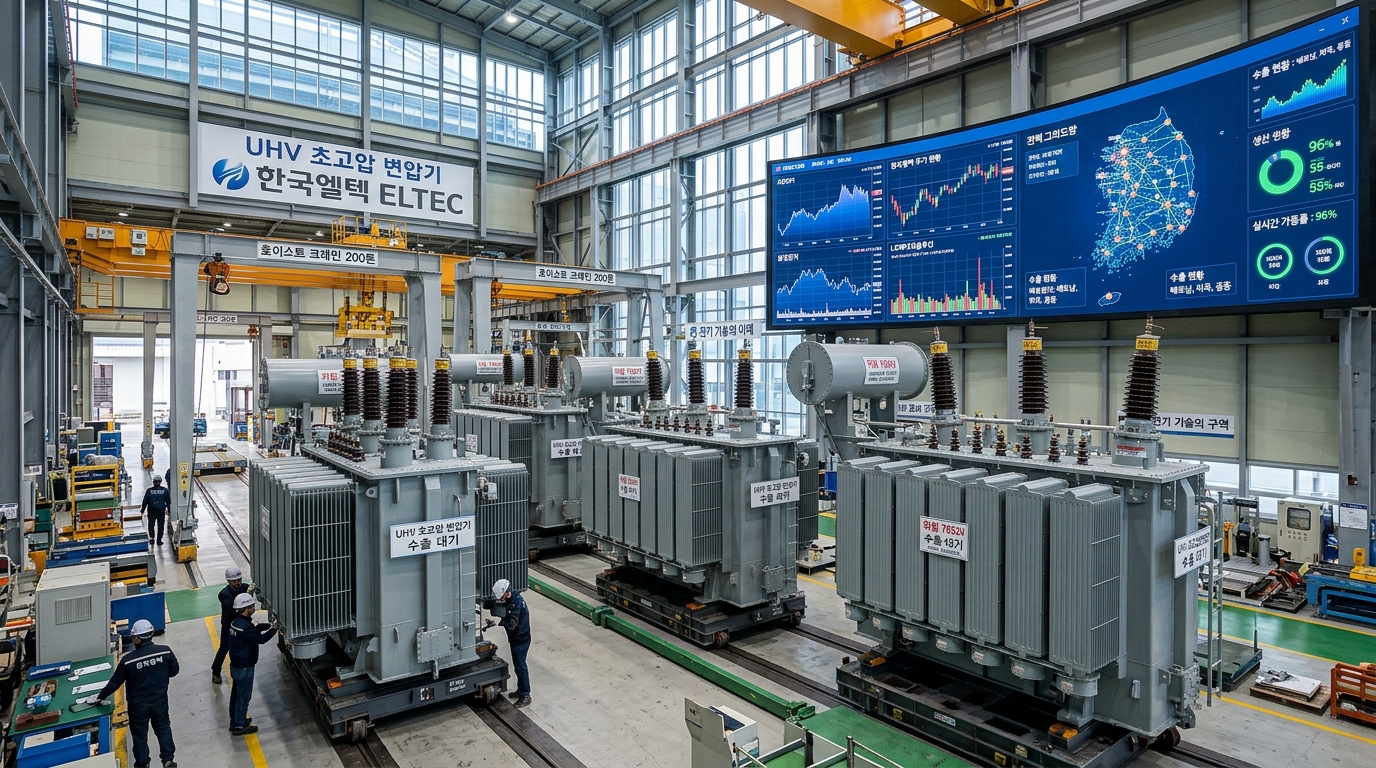
HD Hyundai Electric (267260) secured an order backlog of approximately $8.843 billion (around 12 trillion KRW) as of the end of Q3 2026, driven by prolonged shortages of extra-high voltage (EHV) transformers in North America and surging power demand from global artificial intelligence (AI) data centers.
With the ramp-up of the expanded Ulsan EHV plant, construction of the second plant in Alabama, USA, and the expansion of the distribution campus in Cheongju, North Chungcheong Province, sequential capacity additions place the company firmly on a structural growth trajectory extending high top-line expansion and solid margins through 2027–2028.
While foreign institutional flow volatility persists alongside a stabilizing KRW/USD exchange rate around 1,338.50 KRW and the KOSPI index at 4,915.68, selective orders secured within a supplier-dominated market provide strong downside support to corporate earnings.
Current Market Context
The domestic stock market shows the KOSPI at 4,915.68 and the KOSDAQ at 708.99, while macroeconomic indicators point to a KRW/USD exchange rate closing at 1,338.50 KRW.
Daily Stock's proprietary Fear & Greed Index reflects cautious wait-and-see sentiment across large-cap tech and cyclical stocks, posting 18.4 (Extreme Fear) for the KOSPI and 24.9 (Fear) for the NASDAQ.
| Indicator | Current | 1 Week Ago | 1 Month Ago | 3 Months Ago |
|---|---|---|---|---|
| KOSPI Index | 4,915.68 | - | - | - |
| KRW/USD Rate | 1,338.50 KRW | - | - | - |
| KOSPI Fear & Greed Index | 18.4 (Extreme Fear) | 10.9 (Extreme Fear) | 28.6 (Fear) | 47.9 (Neutral) |
| NASDAQ Fear & Greed Index | 24.9 (Fear) | 18.6 (Extreme Fear) | 32.9 (Fear) | 17.7 (Extreme Fear) |
Daily prices reflect market closure over the weekend (based on the latest verified figures); shares are currently in a consolidation phase following valuation re-rating, influenced by profit-taking near historic highs and concerns over a potential pacing adjustment in global AI infrastructure investments.
Conversely, contracts for North American aging grid replacements, renewable energy grid interconnects, and hyperscaler data center grid infrastructure remain robust.
Financial Analysis
HD Hyundai Electric posted consolidated revenue of approximately 1.1249 trillion to 1.1799 trillion KRW and operating profit of around 284.5 billion to 299.1 billion KRW in Q3 2026, maintaining an outstanding operating margin (OPM) between 24% and 26%.
Breaking through traditional heavy equipment manufacturing limits to sustain mid-20% quarterly OPM is primarily driven by expanding shipments of high-ASP 765kV EHV transformers and long-term US-bound contracts.
Based on cumulative 2026 performance, the company is on track to become the first domestic power equipment manufacturer to enter the 'annual operating profit 1 trillion KRW club.'
| Financial Metric (Consolidated) | 2024 (A) | 2025 (A) | 2026 (E) | 2027 (E) |
|---|---|---|---|---|
| Revenue (Trillion KRW) | 3.32 | 4.08 | 4.57 ~ 4.67 | 5.40 ~ 5.61 |
| Operating Profit (Trillion KRW) | 0.67 | 0.99 | 1.18 ~ 1.20 | 1.56 ~ 1.65 |
| Operating Margin (OPM) | 20.1% | 24.4% | ~25.5% | ~28.0% |
| Order Backlog (Billion USD) | 55.4 | 67.3 | 88.4 (as of Q3) | >95.0 |
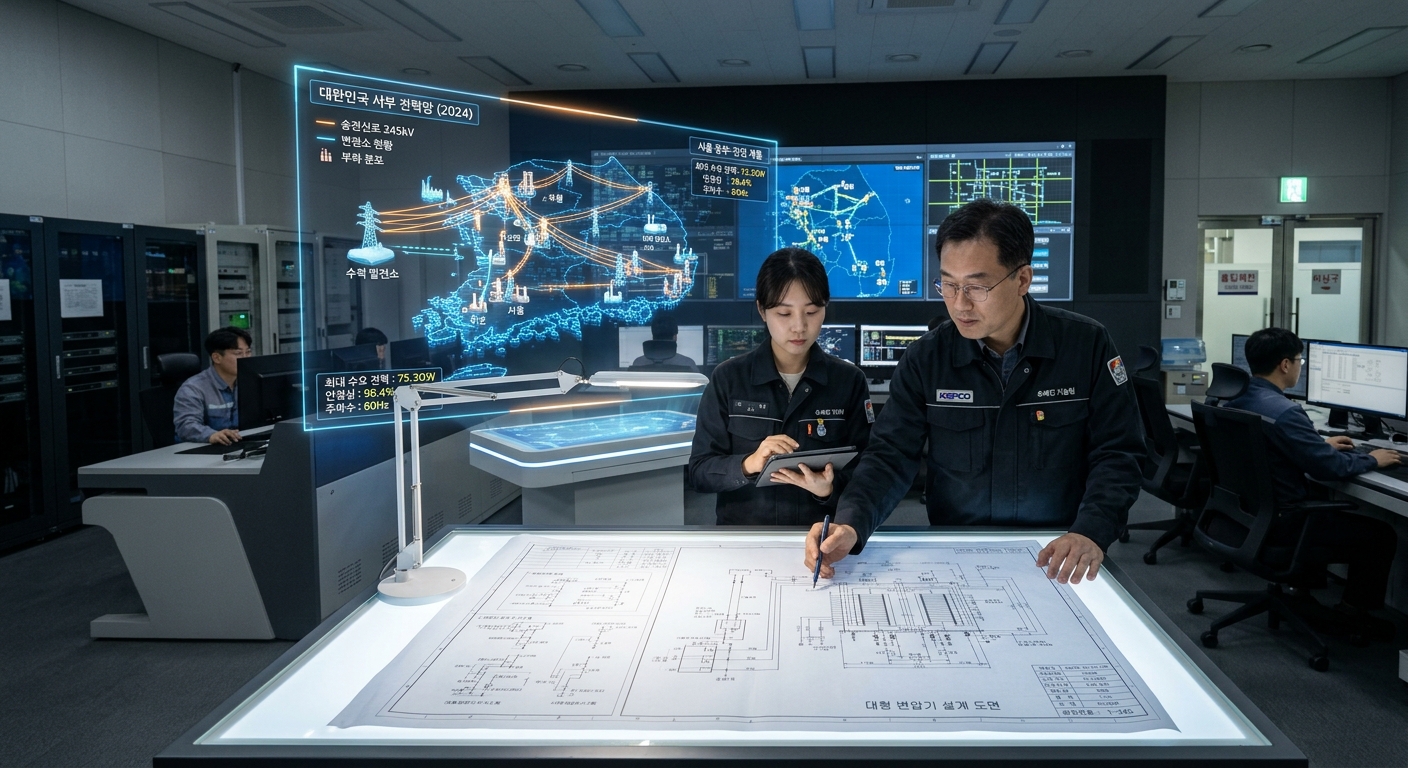
As of the end of Q3 2026, the order backlog reached approximately $8.843 billion, marking a more than 27% increase year-over-year.
High-margin North American demand accounts for approximately 68% to 70% of this backlog, securing three to four years of highly profitable work.
Valuation
HD Hyundai Electric's valuation has cooled down from past overheated levels of 8–9x Price-to-Book (PBR) during previous surges, settling into a Price-to-Earnings (PER) range of 14–16x.
Compared to global peers such as Eaton, GE Vernova in the US, and Hitachi Energy in Japan, which trade at forward PERs around 25–30x, relative valuation attractiveness remains intact.
It differentiates itself within the heavy industrial segment of the KOSPI 200, where generating both Return on Equity (ROE) and operating margins exceeding 25% is rare.
However, as the rapid multiple expansion observed across 2024–2025 transitions into a phase of fundamental performance validation in 2026, conservative expectation adjustments are underway in parts of the market.
The key to future share price re-rating will rely not merely on securing contract volume, but on actual operational utilization rates of expanded facilities and cost discipline.
Expert & Institutional Perspectives
Brokerage analysts suggest that full-scale shipments from expanded capacity in Ulsan and Alabama will drive the second phase of top-line and earnings growth.
Yuanta Securities estimated that the Ulsan EHV transformer plant, which started operations in November 2026, adds annual production capacity of 40–50 units, generating over 200 billion KRW in additional annual sales.
Leading Investment & Securities and BNK Securities highlighted the $8.8 billion backlog with its ~70% North American concentration, along with a 1.12 trillion KRW long-term package supply agreement signed in July for distribution and power equipment with a Big Tech player.
Expanding supply scope beyond traditional utility-focused transmission clients to include distribution equipment for hyperscale Big Tech firms proves higher product mix sophistication.
Conversely, some institutions, including DS Investment & Securities, note widening share price volatility relative to global peers, adjusting target price ranges downward to emphasize the need to monitor the conversion pace into recognized revenue.
Risk Factors
The foremost macro risk is sharp volatility in the KRW/USD exchange rate.
While the rate shows relative stability around 1,338.50 KRW, additional KRW appreciation could dilute KRW-denominated revenue and operating margins.
A second risk is project execution delays in North American infrastructure alongside grid interconnect bottlenecks.
Permitting hurdles or logistics bottlenecks in US renewable energy developments and AI data centers introduce the risk of shipment slot deferrals into subsequent quarters.
A third consideration includes initial fixed cost burdens from heavy capex alongside potential global trade and tariff policy shifts following the second Trump administration.
Until the second Alabama plant begins full operations, pre-emptively managing tariff barrier risks on domestic exports remains an ongoing requirement.
Investment Outlook
HD Hyundai Electric stands at an inflection point, shifting from the first wave of the AI power supercycle characterized by surging orders and rising ASP (Price) to volume ramp-up via capacity expansion (Quantity).
The stabilization of domestic Ulsan operations alongside the 2027–2028 completion timeline for the Alabama plant addresses localized North American procurement requirements while acting as a mid- to long-term backlog defense buffer.
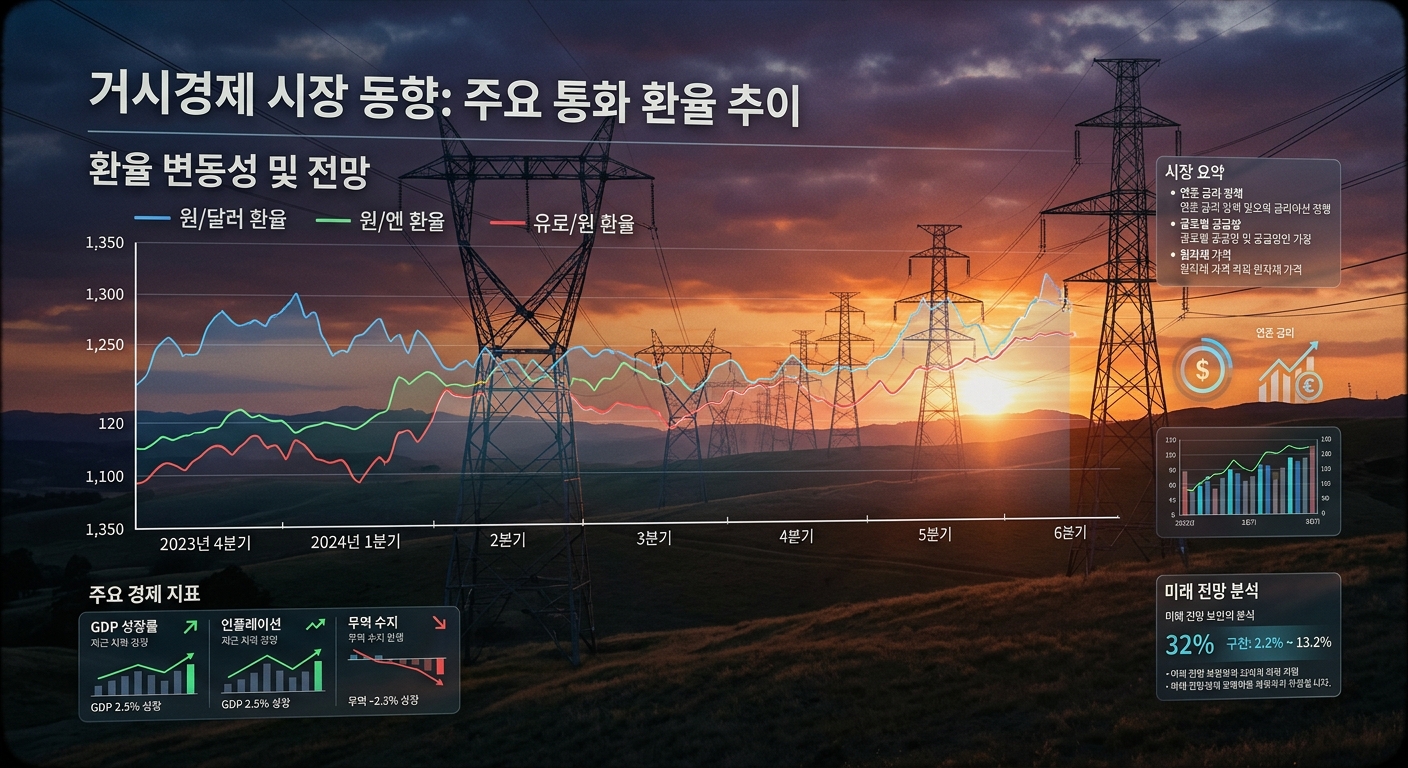
Across large-cap Korean equities, the Bank of Korea's policy rate trajectory and KRW/USD trends directly sway foreign institutional spot and futures trading flows.
Within the 1,330–1,350 KRW exchange rate band, export profitability remains defensible. As the KOSPI digests fear sentiment near 4,915, tracking quarterly revenue conversion from the high-margin backlog is an effective approach.
Ultimately, rather than short-term thematic trades, a disciplined strategy monitoring new distribution equipment contract inflows and the actual capacity utilization of expanded facilities is warranted.
Investment Checklist
- **Sustained North American EHV Backlog**: Verify whether the North American share (~68–70%) of the $8.843 billion backlog continues to deliver high profitability.
- **Ulsan & Alabama Expansion Progress**: Monitor the ramp-up of commercial shipments from the Ulsan EHV plant and the pace of civil engineering and equipment investment for the second Alabama plant.
- **Distribution Equipment & Big Tech Penetration**: Track additional package contracts for distribution equipment to global Big Tech data centers following the completion of the Cheongju medium/low-voltage breaker smart factory.
- **FX & Trade Policy Environment**: Review whether the KRW/USD rate holds above 1,330 KRW and whether contracts retain price pass-through clauses regarding US transformer tariffs and regulatory barriers.
- **Sustained Profitability Metrics (OPM 24%+ )**: Ensure quarterly operating profit margins reliably maintain the mid-20% range amid raw material price fluctuations and potential delivery schedules.