Hello, this is Daily Stock.
Key Takeaways
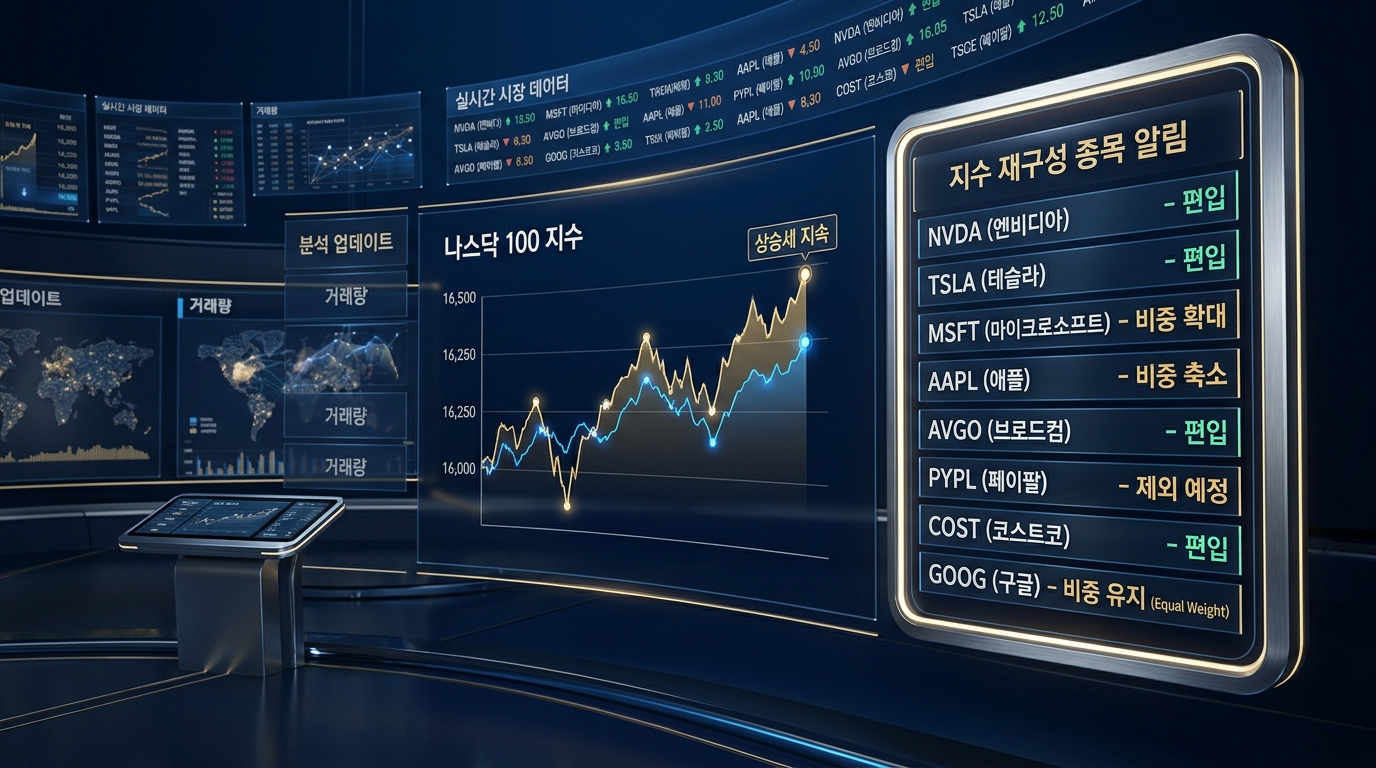
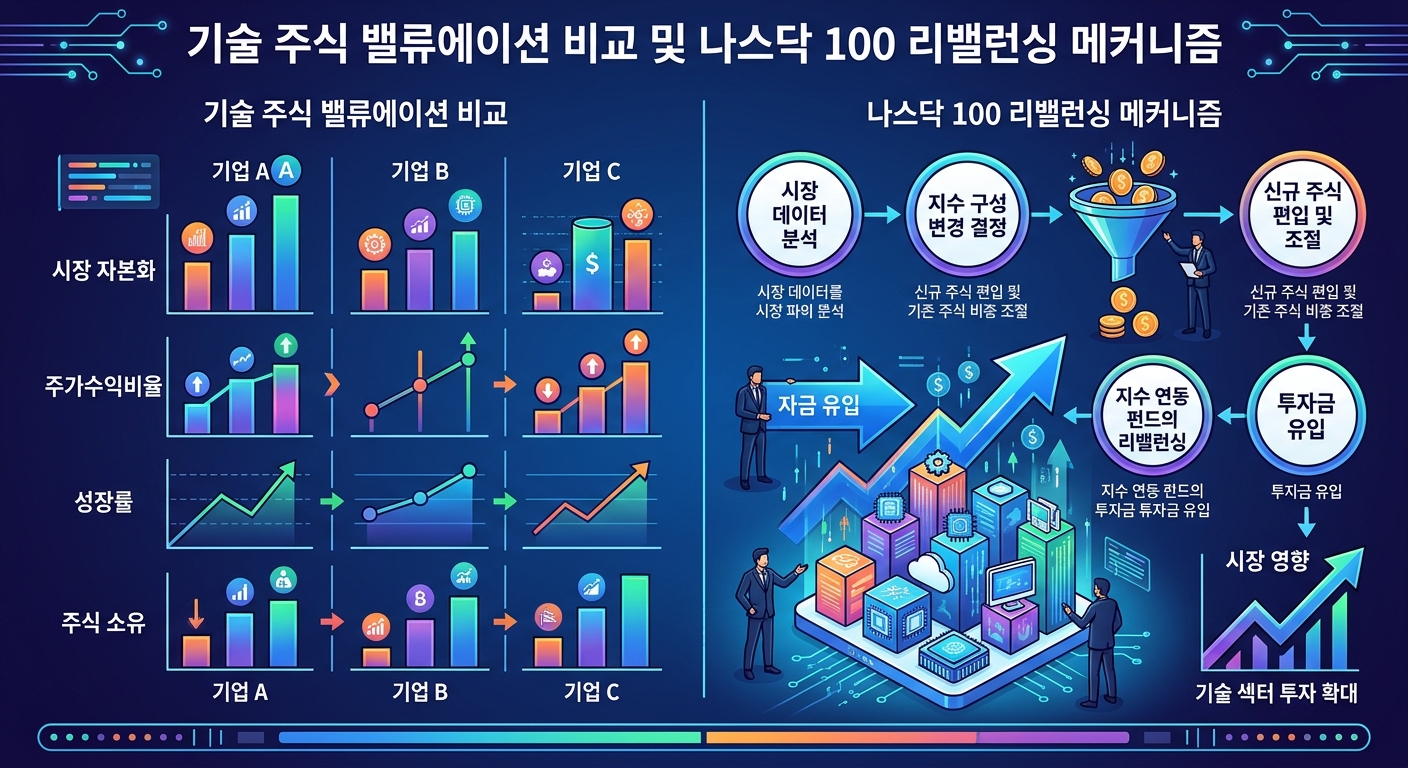
The Nasdaq-100 index carries out its annual reconstitution and rebalancing every December on the third Friday, coinciding with the quadruple witching expiration date.
Based on end-of-November trading data, the top non-financial companies by market capitalization earn eligibility for inclusion.
Passive assets totaling hundreds of billions of dollars—including the Invesco QQQ ETF and related index products—execute mechanical rebalancing trades simultaneously.
Prospective additions stand to benefit from significant liquidity inflows, whereas companies at risk of exclusion may face near-term volatility due to passive outflows.
As of November 29, 2026, the Nasdaq stands at 24,129.50, and the USD/KRW exchange rate is at 1,336.50 KRW. Daily Stock's proprietary Fear & Greed Index places the Nasdaq in the "Fear (24.9)" zone, underscoring heightened sensitivity to capital flows.
Current Market Context
Under the Nasdaq-100 methodology, non-financial companies listed on the Nasdaq ranked in the top 75 by market capitalization are automatically eligible for inclusion.
Conversely, current constituents that drop below the top 100 and fail to satisfy secondary maintenance criteria are slated for exclusion.
Amid recent swings in the 10-year US Treasury yield (US10Y) and persistent strength in the US Dollar Index (DXY), valuation scrutiny on growth multiples has intensified.
This dynamic has prompted noticeable shifts in market-cap rankings, affecting not only mega-cap tech leaders but also enterprise AI software and high-performance infrastructure firms.
In South Korea, where the KOSPI closed at 4,915.68 and the KOSDAQ at 708.99, market participants are closely monitoring the supply-and-demand ripple effects of the global rebalancing. While the Nasdaq Fear & Greed Index ticked up slightly from "Extreme Fear (18.6)" a week ago to "Fear (24.9)," defensive sentiment continues to prevail.
| Category | Key Criteria & Recent Trends | Market Impact & Scenarios |
|---|---|---|
| **Reference Date & Timeline** | Market cap evaluated as of late November; changes announced mid-December | Mechanical portfolio rebalancing executed just prior to options expiration |
| **Key Inclusion Criteria** | Nasdaq-listed non-financials, meeting minimum average daily volume | Automatic entry potential for non-constituents breaking into the top 75 |
| **Passive Tracking Scale** | Over $600 billion across QQQ and related derivative ETPs | Hundreds of millions of dollars in net passive buying per newly included stock |
| **Market Sentiment** | Nasdaq Fear & Greed at 24.9 (Fear level) | Elevated short-term volatility depending on whether inflows are priced in |
Financial Analysis
Companies seen as frontrunners for inclusion demonstrate resilient revenue growth trajectories and improving free cash flow (FCF).
Notably, candidates across enterprise AI solutions and mobile adtech have delivered quarterly forward guidance that exceeded consensus expectations.
These firms' capital expenditure (CAPEX) efficiency is creating operating leverage alongside the aggressive infrastructure buildouts by hyperscale tech majors.
Supported by internal cash-generation capabilities, these companies have kept leverage ratios stable while climbing rapidly up the market-cap ladder.
Conversely, candidates vulnerable to deletion have faced repeated downward revisions to their fiscal 2026 earnings forecasts due to slowing downstream demand and margin pressure. Stagnant top-line growth and shrinking operating cash flows have triggered a downward spiral in market capitalization, pushing them outside the index's top-100 threshold.
Valuation
The forward price-to-earnings (Forward P/E) ratio of the Nasdaq-100 continues to hold a relative premium compared to the Philadelphia Semiconductor Index (SOX) and the S&P 500 Growth Index.
Potential inclusion candidates currently trade at multiples higher than the index average, leaving them particularly sensitive to interest rate fluctuations.
Any upward pressure on the 10-year US Treasury yield raises discount rates for high-multiple growth equities, exerting downward pressure on valuations.
However, mandatory buying demand from passive index funds could provide a stabilizing buffer against near-term valuation headwinds.
Historically, supply-driven price premiums have tended to concentrate between the formal announcement date and the actual effective date.
Investors should note that equities whose multiples expanded excessively ahead of fundamentals often face post-reconstitution profit-taking.
Institutional and Expert Analysis
Major Wall Street investment banks anticipate that the December Nasdaq-100 reconstitution will marginally broaden index exposure beyond mega-cap tech, distributing passive liquidity into emerging secular growth names.
Nonetheless, analysts caution that overlapping with the year-end quadruple witching day could trigger execution imbalances and order book distortion into the market close.
To minimize tracking error against the benchmark, passive portfolio managers execute the bulk of their required volume right around the closing cross on the effective date.
Institutional research desks are actively modeling the anticipated liquidity impact by comparing projected net inflows against candidates' 90-day average daily traded volume (ADTV).
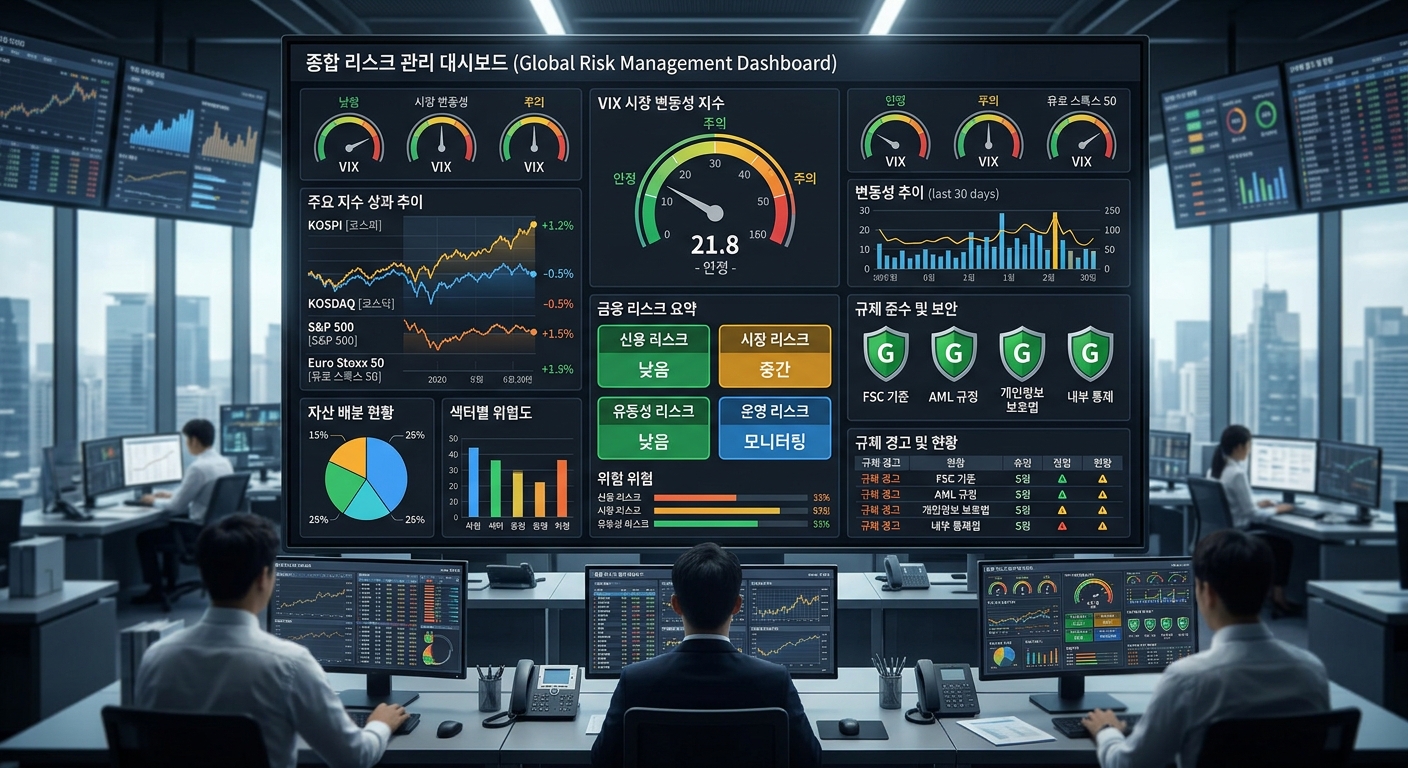
Some analysts observe that if macroeconomic uncertainty drives the Volatility Index (VIX) sharply higher, the liquidity tailwind from rebalancing could be overshadowed by broader market noise.
Institutional sentiment remains wary of blind momentum buying in names that lack verified cash-generation sustainability and earnings durability.
Risk Factors
The principal downside risk centers on monetization delays across the enterprise AI landscape and potential CAPEX reprioritization by major hyperscalers.
Any moderation in infrastructure spending by large-cap tech could prompt synchronized downward revisions to growth expectations for incoming constituents.
From a macroeconomic standpoint, the risk of a rebound in 10-year Treasury yields remains should the pace of monetary easing slow down.
In a delayed rate-cut scenario, maintaining elevated valuation multiples becomes increasingly difficult, compounding profit-taking pressure.
Furthermore, heightened antitrust scrutiny and global regulatory oversight of AI technologies pose potential obstacles to international expansion.
Market participants should also prepare for classic "sell-the-news" dynamics once the rebalancing event concludes.
Investment Perspective
The December Nasdaq-100 rebalancing serves as a key institutional liquidity event shaping end-of-year market dynamics in the US.
With sentiment parked in "Fear (24.9)," concentrated passive flows can trigger sharp two-way price swings in individual constituents.
When evaluating prospective additions, investors should assess quarterly guidance and underlying free cash flow trends rather than relying solely on index-entry speculation.
At the same time, managing exposure requires scenario planning for the post-reconstitution phase, when short-term passive buying subsides and profit-taking volumes enter the market.
FAQ
Q1. How often does the Nasdaq-100 undergo regular rebalancing?
The comprehensive annual reconstitution—where the member list is refreshed—takes place once a year on the third Friday of December. Quarterly weight adjustments (rebalancings) occur in March, June, and September, alongside ad-hoc revisions when specific replacement criteria are met.
Q2. What is the single most critical criterion for new inclusion?
The most definitive threshold is ranking among the top 75 largest non-financial companies listed on the Nasdaq by market capitalization. Candidates must also satisfy liquidity thresholds, such as maintaining minimum average daily trading volume (typically at least 200,000 shares).
Q3. Does an inclusion guarantee that a stock's price will rise?
While mechanical buying by passive funds improves short-term supply dynamics, it does not guarantee share price appreciation. If the market has already fully priced in the inclusion or if broad macro conditions turn adverse, stocks can trade lower following the announcement.
Q4. What typically happens to companies dropped from the index?
Because tracking ETFs and index funds are required to liquidate their holdings, excluded stocks face short-term mechanical selling pressure. However, if a company's underlying fundamentals remain intact, its share price may recover toward fair value once the rebalancing flow concludes.
Q5. What should investors watch out for when positioning around rebalancing dates?
Volatility tends to peak during the closing cross on the options expiration day, when portfolio reallocations take effect. Investors should watch for "sell-the-news" pullbacks immediately following the event as event-driven liquidity exits.