
Hello, this is Daily Stock, calmly examining complex stock market trends through data.
Key Takeaways
Kia (000270) is proving its earnings resilience by rapidly expanding its high-margin hybrid electric vehicle (HEV) sales mix, even amid the global electric vehicle (EV) chasm.
Solid demand for RV-centered hybrid lineups—such as the Sorento, Carnival, and Sportage—primarily in the U.S. market, is supporting record-high quarterly revenue trends.
At the same time, Kia has adopted an advanced dividend process that operates on a "dividend amount determined first, record date set later" framework. Therefore, investors need a differentiated supply-demand strategy aligned with the dividend record date in the following spring, rather than the traditional late-December ex-dividend date.
Despite foreign exchange volatility and pressure from rising dealer incentives, the company's promised minimum dividend of 6,000 KRW and its total shareholder return (TSR) target of 35% are viewed as solid downside support for the stock price.
Market Context
On November 25, 2026, the domestic stock market closed with the KOSPI at 4,697.51 and the KOSDAQ at 650.64 amid ongoing domestic and external macroeconomic uncertainties. In the Seoul foreign exchange market, the USD/KRW exchange rate recorded 1,342.30 KRW, creating mixed impacts on large-cap export stocks sensitive to currency movements.
Looking at the Daily Stock Fear & Greed Index, the KOSPI Fear & Greed reading currently indicates Extreme Fear (14.1). This shows that market sentiment remains deeply suppressed compared to Extreme Fear (11.6) one week ago, Fear (24.2) one month ago, and Neutral (55.6) three months ago. Meanwhile, the Nasdaq Fear & Greed reading also stands in Extreme Fear (17.4), following Fear (29.9) one week ago, Extreme Fear (16.7) one month ago, and Extreme Fear (15) three months ago, highlighting weakened global risk appetite.
In this environment, Kia's (000270) stock price has traded in the mid-to-high 90,000 KRW range (based on recent benchmark checks). Within the broader KOSPI market, the automotive sector—alongside semiconductors and financials as key large-cap exporters—is navigating a phase where foreign exchange tailwinds coexist with concerns over a slowdown in global demand.
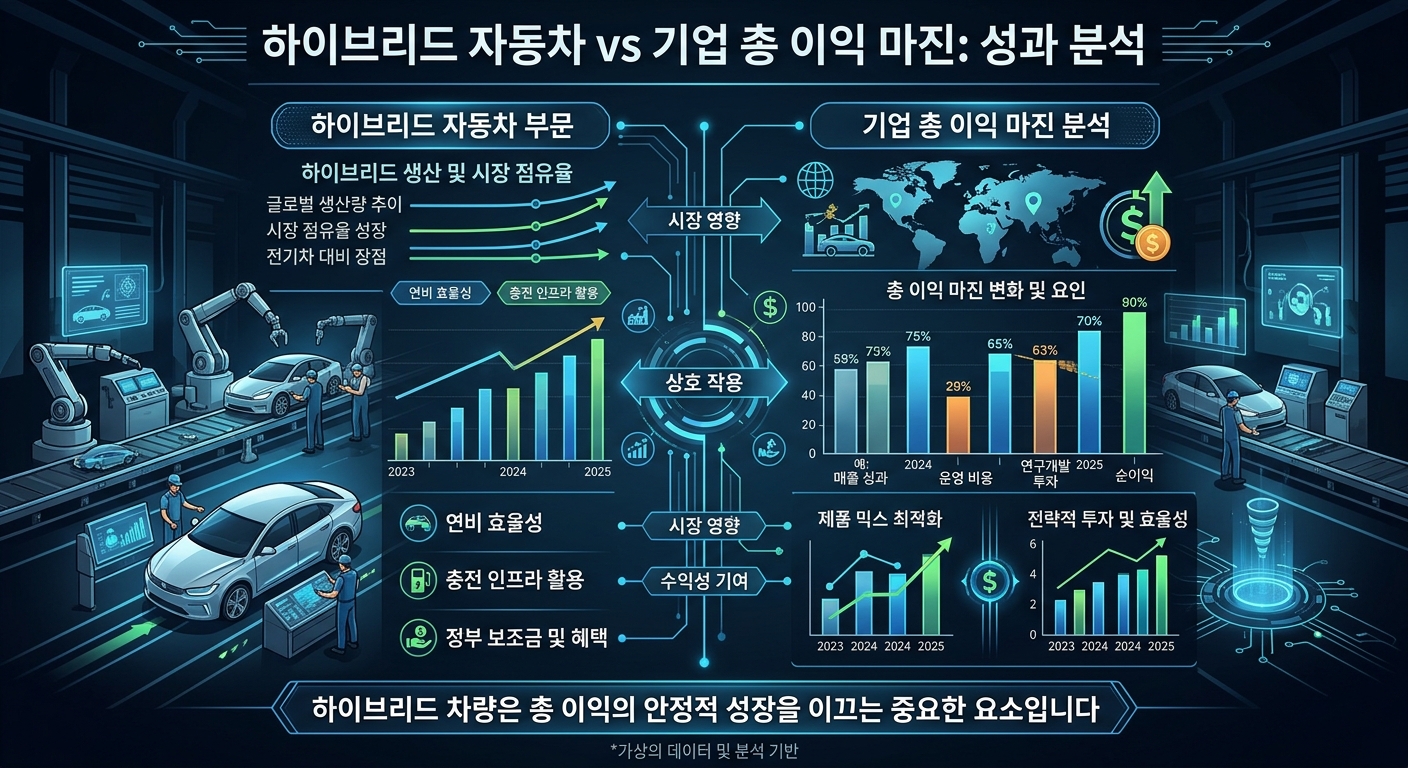
In particular, Kia is executing a product-mix enhancement strategy by expanding the supply of high-margin hybrids in North America, lifting the U.S. HEV share from around 21% in Q2 to approximately 24% in Q4.
Financial Analysis
In Q3 2026, Kia posted consolidated revenue of 31.5974 trillion KRW and operating profit of 1.8183 trillion KRW, achieving its highest-ever revenue for a third quarter. However, operating margin settled at 5.8% due to rising incentives in response to reduced EV subsidies in Europe and raw material cost burdens.
On a cumulative basis, Kia maintains solid financial buffers backed by more than 20 trillion KRW in abundant net cash and cash equivalents. This liquidity serves as a foundational resource to sustain R&D investments and stable cash dividends even during an industry downturn.
| Metric | FY2024 | FY2025 | 3Q 2026 Cum. (Est.) | Shareholder Return Guidance |
|---|---|---|---|---|
| **Consolidated Revenue (Trillion KRW)** | 107.4 | 114.1 | Around 90 | Sustainable upward trend |
| **Operating Profit (Trillion KRW)** | 12.6 | 9.0 | 6.65 | Defend via high-margin mix |
| **Dividend Per Share (DPS)** | 5,600 KRW | 6,800 KRW | Single year-end dividend | Guaranteed min. 6,000 KRW |
| **Total Shareholder Return (TSR)** | Approx. 25%+ | Approx. 30% | Ongoing execution | Targeted at 35%+ |
The USD/KRW exchange rate holding in the 1,340 KRW range provides positive operational leverage for Kia, which generates over 80% of its sales overseas. Conversely, incentive-driven price competition among major rival automakers in the U.S. and European markets remains the primary headwind for Q4 profitability.
Valuation
Currently, Kia's 12-month forward price-to-earnings ratio (PER) stands in the low-to-mid 4x range, representing a notable discount compared to global automotive peers. Its price-to-book ratio (PBR) also hovers around 0.6–0.7x, presenting an attractive price band relative to KOSPI 200 large-cap averages and major foreign automakers like Toyota and Honda.
In particular, applying Kia's pledged minimum DPS of 6,000 KRW to a share price in the mid-to-high 90,000 KRW range yields an estimated dividend yield in the low-to-mid 6% range. This significantly exceeds commercial bank fixed-deposit rates and the Bank of Korea's base rate.
Substantial retained earnings relative to total equity and a shareholder return policy anchored by year-end dividends provide robust downside resilience when market indices enter an "Extreme Fear" phase.
However, potential deceleration in medium-to-long-term return on equity (ROE) due to aggressive global expansion by Chinese EV makers and rising North American incentives remains a factor capping valuation multiples.
Expert & Institutional Analysis
Major domestic brokerages have given high marks to the visibility of Kia's shareholder return policy, even though its third-quarter earnings slightly missed expectations. Korea Investment & Securities and Daishin Securities noted that the strength in North American hybrid sales and dividend appeal outweigh concerns over margin contraction caused by higher European EV incentives.
Conversely, some institutions, including Samsung Securities, previously trimmed their target prices, pointing to potential peaking of net cash reserves under the burden of warranty provisions and intensified marketing competition in the U.S. and Europe. A cautious view also suggests that increasing capital expenditures for autonomous driving and software-defined vehicle (SDV) data centers could constrain future shareholder return headroom.
From a foreign investor perspective, position adjustments in large-cap automotive stocks have continued in the cash market while the USD/KRW exchange rate fluctuates in the 1,340 KRW range. Institutional investors are noting that typical year-end dividend arbitrage flows may deviate from historical patterns due to the shifted dividend framework.
Risk Factors
- **Macro Slowdown and Rising Incentives**: Prolonged high interest rates increase auto financing burdens for U.S. and European consumers, potentially driving continuous increases in dealer incentive expenses.
- **FX Volatility and Trade Policy**: A sharp downward stabilization in the USD/KRW rate could reduce foreign-exchange translation gains, while shifts in tariff policies in key importing nations could pressure export profitability.
- **Price Competition in EVs**: As affordable Chinese EVs enter markets like Europe, Kia's mass-market EV models face increasing downward pricing pressure.
Investment Perspective
An approach to Kia should be grounded in its hybrid-led product mix defense and a structural understanding of its dividend calendar, rather than short-term quarterly earnings fluctuations alone. In the short term, tracking incentive cost controls in the fourth-quarter results is the primary checkpoint.
From a dividend-investing standpoint, investors must factor in Kia's amended articles of incorporation, which specify determining dividend amounts before setting the record date. Because holding shares at the end of December is no longer a prerequisite for receiving dividends, observing supply and demand around the announced record date (typically late March of the following year) is an effective strategy.
During periods when market sentiment lingers in "Extreme Fear," the downside support of a 6% dividend yield alongside resilient hybrid sales will likely serve as the central anchor for valuation.

Investor Checkpoint Q&A
Q1. Is Kia's ex-dividend date in late December like other conventional stocks?
Kia has implemented an advanced dividend process where the dividend amount is determined first at the board and shareholders' meetings before the record date is established. The record date is typically set around late March, meaning dividend eligibility is not lost if shares are not purchased by late December.
Q2. Why is expanding hybrid (HEV) sales mix critical to Kia's profitability?
While EV margins have faced short-term pressure from subsidy cuts and price competition, HEVs offer higher average selling prices (ASP) than conventional internal combustion vehicles alongside solid margins. Expanding the HEV share in North America helps cushion the overall operating margin against sharp declines.
Q3. Can the company's promised minimum DPS of 6,000 KRW be safely maintained?
Management reiterated during earnings conference calls that it will honor the minimum 6,000 KRW DPS commitment despite short-term profit moderation. With over 20 trillion KRW in net cash and cash equivalents, consensus views the company's dividend funding capacity as solid.
Q4. What is the main reason operating margin dropped to the 5% level recently?
The decline was driven by a combination of raw material cost burdens, elevated logistics costs from Middle East tensions, and expanded dealer incentives across Europe and North America. As incentive costs are expected to stay elevated in Q4, the focus is on gradual product-mix optimization rather than an immediate margin rebound.
Q5. What strategy is reasonable when the Daily Stock Fear & Greed Index is at 'Extreme Fear (14.1)'?
When the index reflects extreme fear, low-valuation, cash-rich large caps with solid dividend yields can serve as defensive holdings. Rather than pursuing short-term trading, a phased accumulation approach that monitors hybrid sales trends and leverages the flexibility of the deferred dividend record date is a constructive scenario.