Hello, this is the Daily Stock specialized analysis team.
Key Summary
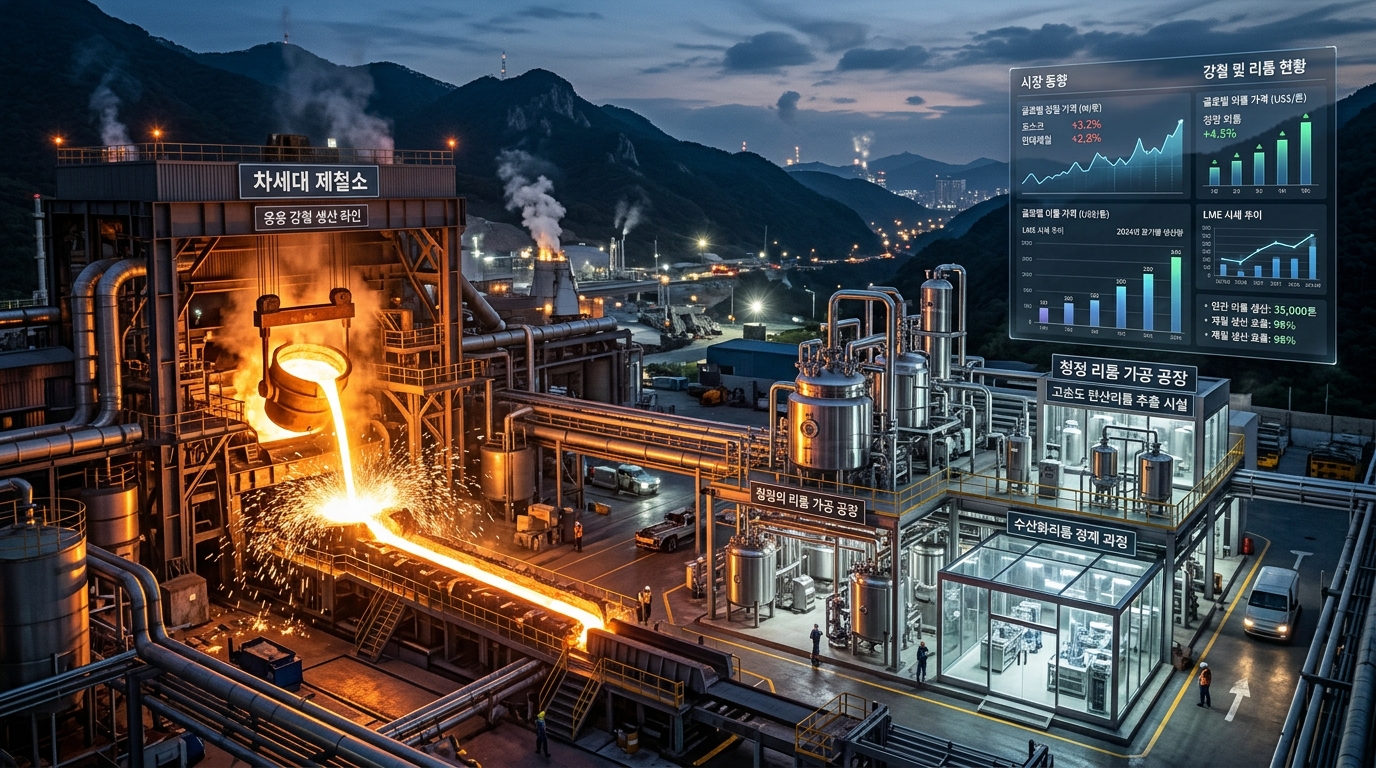
POSCO Holdings is at a pivotal crossroads marked by two core growth drivers: price recovery in its primary steel business and expanding new-growth engines with the upstream completion of its Argentine brine lithium plant 2.
For the third quarter of 2026, consolidated operating profit reached 945 billion KRW, exceeding market consensus. Steel subsidiary POSCO successfully defended fundamentals, reclaiming quarterly operating profit in the 400 billion KRW range for the first time in four quarters.
While the secondary battery materials division experienced short-term sluggishness due to lithium spot price corrections and inventory valuation losses, its mid- to long-term cost competitiveness is increasingly coming into focus as large-scale commercial production systems based on both hard-rock and brine lithium take shape.
In the domestic macro environment, with the KOSPI at 4,869.96 and the KRW/USD exchange rate at 1,346.50, our proprietary KOSPI Fear & Greed Index remains in the "Extreme Fear" zone at 11.7, pointing to heightened supply-and-demand volatility.
Current Status Summary
Investor sentiment toward POSCO Holdings has entered a structural reorganization phase, characterized by coexisting expectations of a bottoming-out in the traditional steel cycle and incoming operational gains from commercial lithium production.
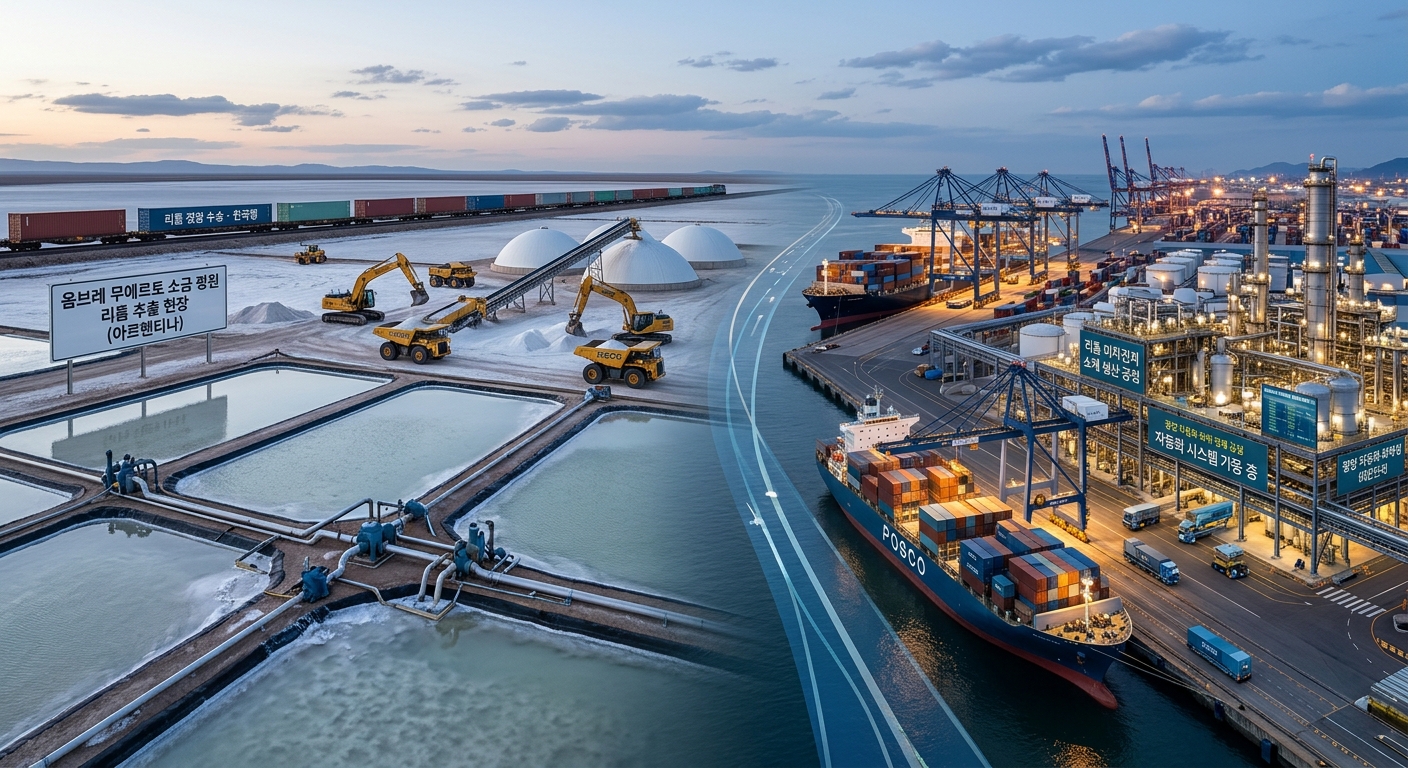
With the completion of the upstream facility at its Argentine brine lithium plant 2 at the Hombre Muerto salt flat, the company has secured a local production capacity of 48,000 tons of lithium carbonate, added to the existing 25,000 tons from plant 1. Moving forward, the company plans to link this with its Yulchon downstream facility to build a 50,000-ton-per-year lithium hydroxide value chain.
In the steel division, despite global raw material cost pressures, margin spreads improved visibly quarter-on-quarter, supported by carbon steel price hikes and cost reduction efforts.
However, short-term headwind factors persist, including a temporary production dip due to scheduled maintenance (such as revamping Gwangyang Blast Furnace No. 2 in Q4) and subdued profitability in battery materials amid the global EV chasm.
Financial Analysis
POSCO Holdings' preliminary Q3 2026 results reflected a combined dynamic of profitability defense in traditional manufacturing and solid earnings in non-steel infrastructure.
Consolidated revenue stood at 19.141 trillion KRW, up 10.9% year-on-year, while operating profit surged 47.9% to 945 billion KRW, posting an earnings surprise.
| Classification (Consolidated) | Q3 2025 | Q2 2026 | Q3 2026 | YoY Change |
|---|---|---|---|---|
| Revenue (Trillion KRW) | 17.26 | 18.51 | 19.14 | +10.9% |
| Operating Profit (Billion KRW) | 6,390 | 8,190 | 9,450 | +47.9% |
| Operating Margin (%) | 3.7% | 4.4% | 4.9% | +1.2%p |
| Net Income (Billion KRW) | 2,850 | 3,420 | 3,800 | +33.3% |
| POSCO (Standalone) OP (Billion KRW) | 5,850 | 2,740 | 4,550 | -22.2% |
Operating margin at operating company POSCO improved from 2.9% in Q2 to 4.6% in Q3, demonstrating its core capability to pass rising raw material costs through to selling prices.
Conversely, the secondary battery materials unit recorded an operating loss of approximately 17 billion KRW, impacted by weak lithium selling prices and inventory valuation losses (around 29 billion KRW).
Valuation
Regarding current market valuation indicators, POSCO Holdings' daily market quote as of 2026-11-22 is unconfirmed based on market close (latest confirmed value criteria).
From a historical band perspective, POSCO Holdings' price-to-book ratio (PBR) hovers near the lower bound of 0.5–0.6x, placing the stock in a structurally undervalued zone relative to its asset base.
As the company transitions from a single-business steel model into a 'Triple-Core' conglomerate spanning 'Steel, Lithium, and Energy,' the operational normalization and turnaround timing of its lithium subsidiaries will be key drivers of a valuation re-rating.
Compared to average KOSPI 200 large-cap PBR multiples and global mineral mining/refining peer groups (e.g., Albemarle, SQM), POSCO Holdings can demonstrate relative downside rigidity, anchored by the cash generation power of its core steel business.
Expert & Institutional Analysis
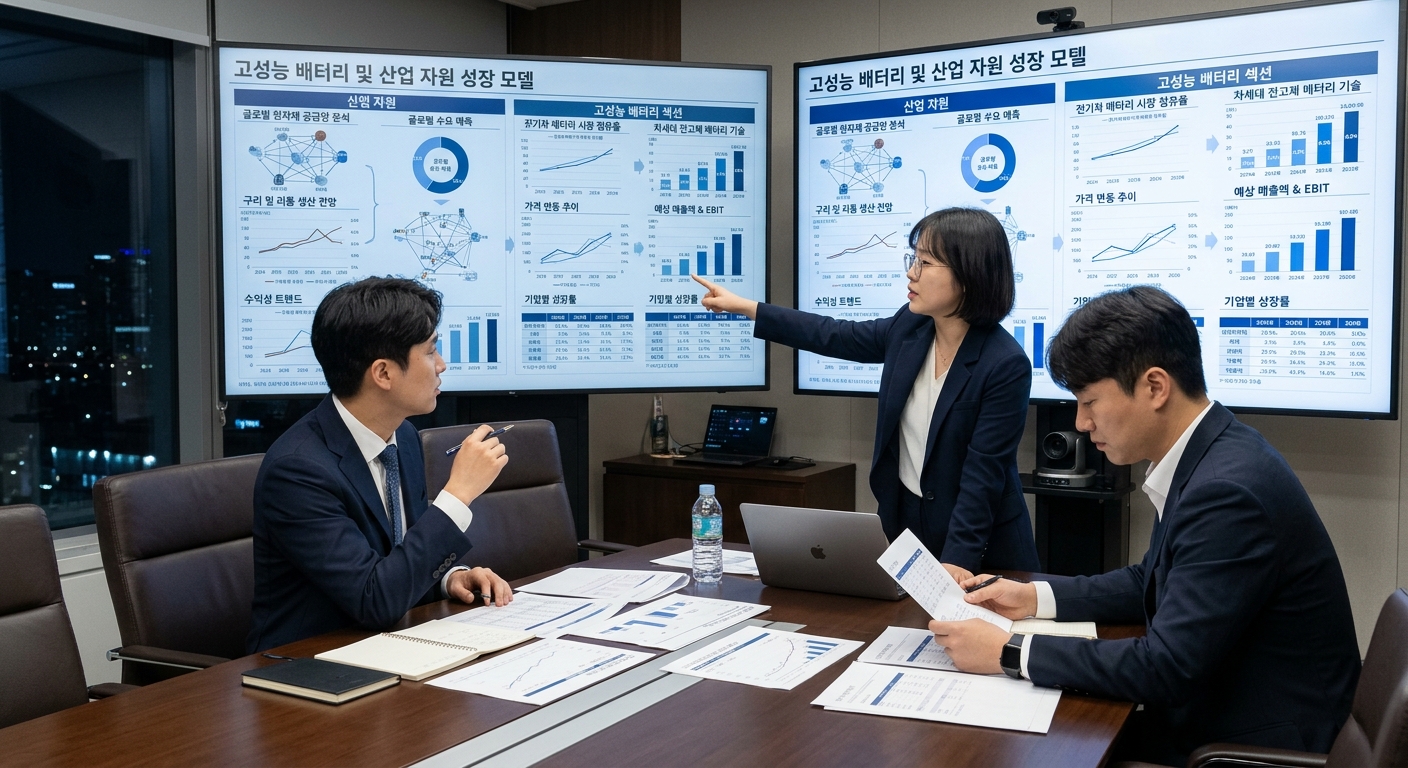
Securities analysts assess that POSCO Holdings has arrived at an inflection point where it can pursue both a turnaround in primary steel operations and the commercialization of its eco-friendly mineral business.
According to institutional analyses, securing low-cost brine-based lithium carbonate through the Argentine plant 2 and accelerating the ramp-up at POSCO-Pilbara Lithium Solution's hard-rock plants 1 and 2 (annual capacity of 43,000 tons) could set the stage for an operational turnaround around 2027.
Nevertheless, some analysts caution that near-term factors must be monitored, including reduced product shipments in Q4 due to the Gwangyang Blast Furnace No. 2 revamping and the broader slowdown in global steel demand.
In terms of institutional and foreign capital flows, trading patterns remain sensitive to FX fluctuations around the 1,346.50 KRW/USD mark; easing macro risks will likely determine the intensity of passive fund inflows into cyclical large-cap equities.
Risk Factors
The most direct risk is potential prolonged weakness in lithium carbonate and hydroxide prices stemming from stagnation in electric vehicle demand.
If lithium market prices remain close to marginal extraction and refining costs, the depreciation burden from newly completed, large-scale facilities could delay reaching the operational break-even point in early phases.
On the macroeconomic front, the Bank of Korea's policy rate trajectory and heightened U.S. trade protectionism could inject uncertainty into steel export margins.
Sharp exchange rate swings require continuous monitoring, as they directly influence raw material import costs in the steelmaking process as well as translation gains/losses on foreign currency debt.
Additionally, the fact that our proprietary KOSPI Fear & Greed Index sits at 11.7 in the "Extreme Fear" territory signals potential risks of broader market panic-selling and volatility spillover.
Investment Perspective Summary
POSCO Holdings has demonstrated earnings resilience through product mix improvements, even while navigating the downcycle in global steel conditions.
From a mid- to long-term investment perspective, a well-timed approach would be to track the milestones where commercialization of the Argentine brine lithium and Australian spodumene value chains begins materially contributing to consolidated operating cash flows.
Macro-level leading indicators to watch closely include a turnaround in foreign futures flow, stabilization of the KRW/USD exchange rate, and a breakout of KOSPI market sentiment from extreme fear.
Rather than chasing short-term momentum, a prudent strategy involves pacing positioning while observing progress milestones and capacity utilization rates across its cost-competitive raw material internalization roadmap.
FAQ
Q1. What is the specific significance of completing Argentine Brine Lithium Plant 2?
With the completion of plant 2 at the Hombre Muerto salt flat, POSCO Holdings has secured a total production capacity of 48,000 tons of lithium carbonate locally in Argentina. This lays the foundation for a 50,000-ton-per-year battery-grade lithium hydroxide supply chain when integrated with its domestic Yulchon downstream facility.
Q2. What were the primary drivers behind the steel division's Q3 performance recovery?
Despite raw material cost headwinds, including higher coking coal prices, raising carbon steel selling prices by approximately 20,000 KRW per ton alongside company-wide cost-reduction initiatives successfully improved roll margin spreads.
Q3. Are there any concerns regarding Q4 steel performance?
Yes. Due to planned maintenance and revamping at Gwangyang Blast Furnace No. 2 and associated facilities, finished product output is projected to decline by roughly 920,000 tons quarter-on-quarter, presenting a temporary shipment drag.
Q4. When is the lithium business expected to turn profitable?
Achieving optimal yields and ramping up operating rates takes time following plant completion. Industry and institutional analysts anticipate that full-scale earnings contributions will materialize around 2027, when operational normalization aligns with stabilization in global lithium market conditions.
Q5. What is the current market sentiment and macro liquidity backdrop?
As of November 22, 2026, the KOSPI stands at 4,869.96 and the KRW/USD exchange rate is 1,346.50. With our proprietary KOSPI Fear & Greed Index at 11.7 in "Extreme Fear" territory, caution is warranted regarding large-cap supply-and-demand volatility.