Welcome to Daily Stock, delivering in-depth insights into global tech trends and structural shifts across the semiconductor value chain.
Key Summary
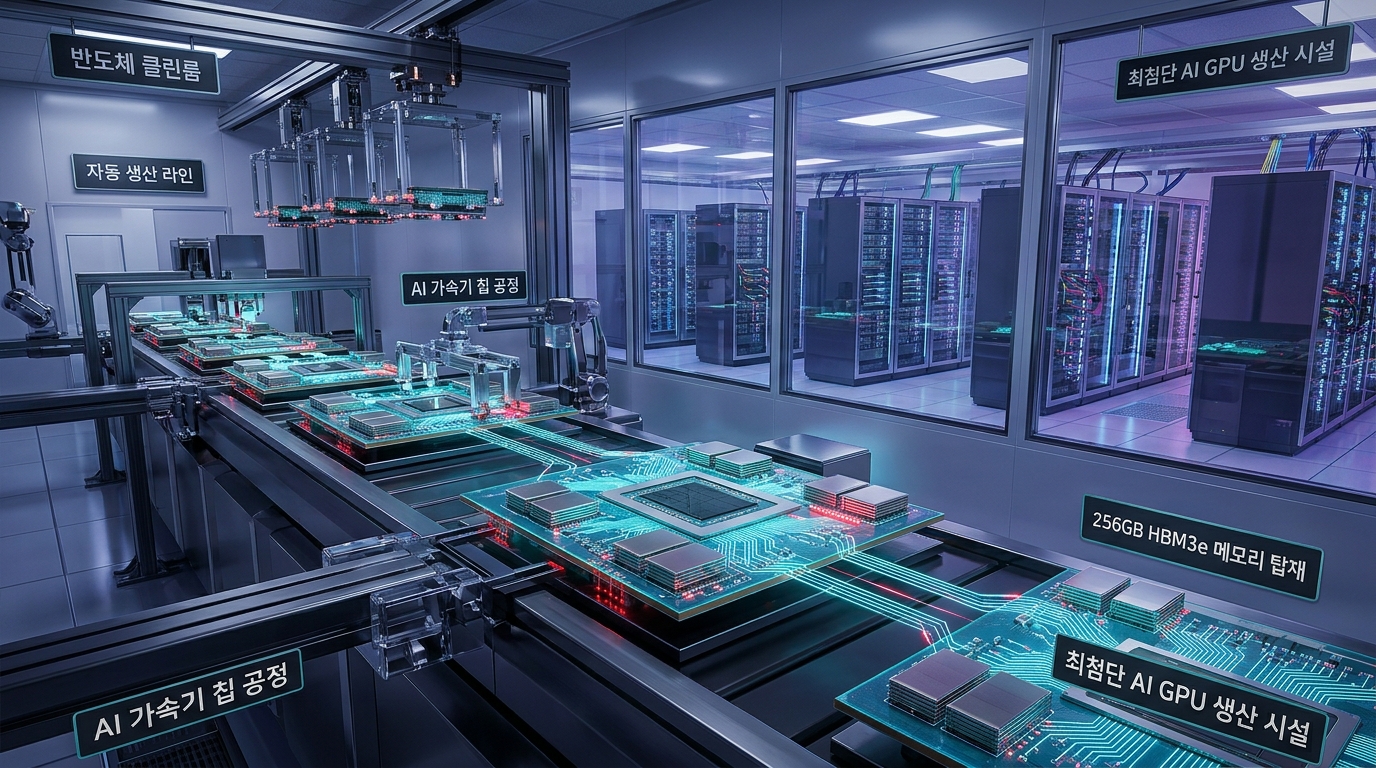
AMD is creating fissures in Nvidia's market monopoly as it enters full mass-production delivery of its Instinct MI325X accelerator, equipped with 256GB of HBM3E memory.
Engineered specifically to alleviate memory bottlenecks in large language model (LLM) inference workloads, the hardware aligns well with demand from major hyperscalers seeking a viable "second source."
Meanwhile, the global macroeconomic backdrop continues to weigh on growth stock multiples, with the 10-year US Treasury yield (US10Y) hovering around 5.0% and the US Dollar Index (DXY) maintaining its strength.
As of November 19, 2026, Daily Stock's proprietary Nasdaq Fear & Greed Index stood at 24.6 (Fear), reflecting heightened investor caution regarding the capital expenditure (CAPEX) efficiency of hyperscalers' AI investments.
Current Market Context
The artificial intelligence accelerator market is gradually shifting its center of gravity from conventional model training to inference workloads, which encompass large-scale model serving and autonomous agent execution.
Aligning with this transition, AMD has scaled deliveries of the MI325X, which features a massive 256GB HBM3E memory capacity and 6.0 TB/s of bandwidth.
While Nvidia focuses on deploying rack-scale architectures powered by its Blackwell generation, AMD aims to expand its data center GPU market footprint by emphasizing its single-socket memory capacity advantages.
Major tech giants such as Meta and Microsoft (MSFT) are actively reviewing the adoption of AMD accelerators to curb overreliance on a single vendor and optimize the power and cost efficiencies of their AI workloads.
During trading on November 19, 2026 (tentative), the domestic Korean indices showed the KOSPI at 5,067.44 and the KOSDAQ at 662.81. Overnight, the Nasdaq Composite finished at 24,429.89, but overall market sentiment remains conservative and cautious.
With the USD/KRW exchange rate positioned at 1,334.00 and the potential for a rebound in the CBOE Volatility Index (VIX), equity volatility across big-tech hardware supply chains continues to face upward pressure.
Financial Analysis
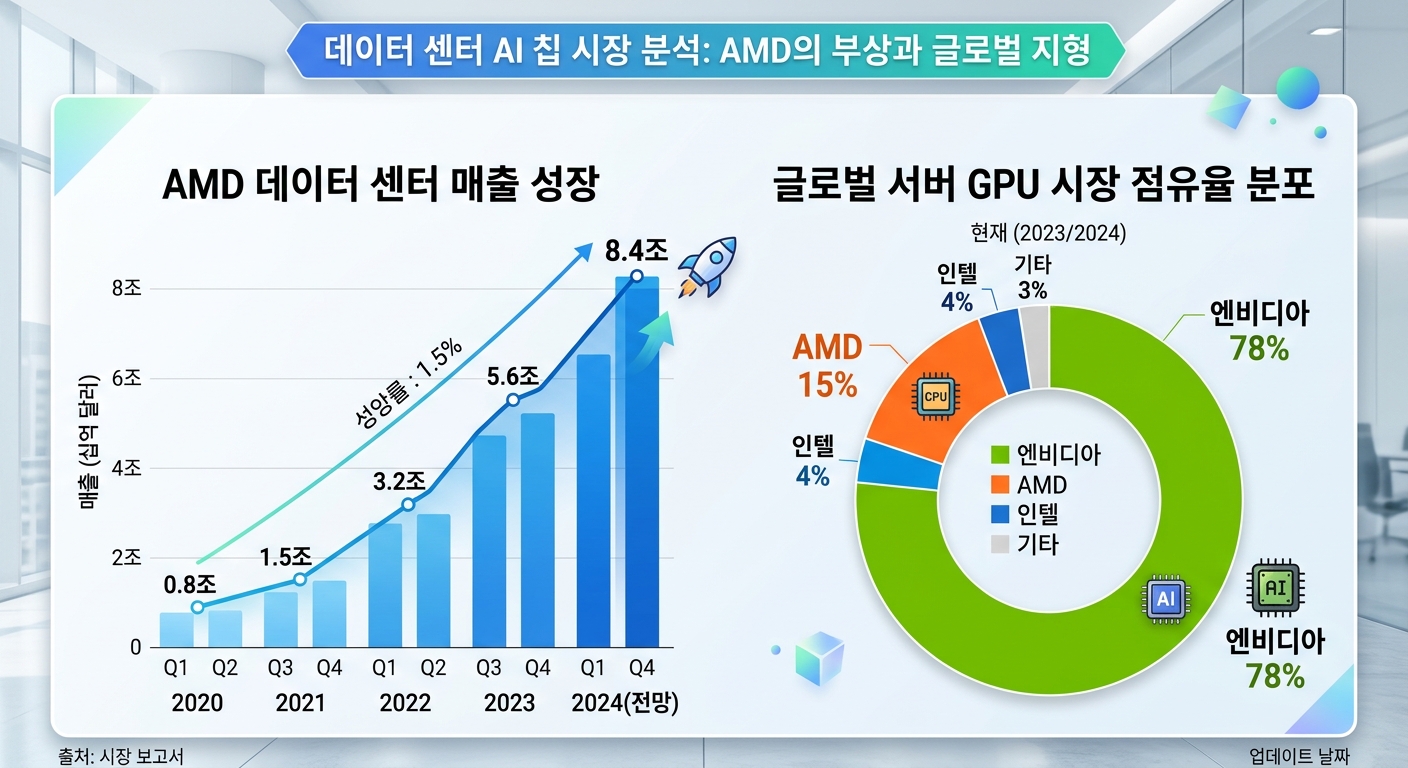
The most prominent structural transformation in AMD's earnings is that its Data Center segment has firmly established itself as the primary engine driving top-line revenue and operating income.
Combined with continued market share gains by its EPYC server CPUs, revenue contributions from the MI300 and MI325X accelerators have driven explosive year-over-year revenue growth in the Data Center unit.
| Business Segment | FY2025 Revenue Contribution | Latest Qtr 2026 Contribution | Key Drivers & Highlights |
|---|---|---|---|
| **Data Center (GPU/CPU)** | ~47% | ~64% (All-time high) | Initiation of MI325X mass production; 5th Gen EPYC (Turin) adoption expansion |
| **Client (PC CPU)** | ~28% | ~20% | Sustained demand for AI PC Ryzen processors alongside seasonality |
| **Gaming (Console/Radeon)** | ~15% | ~9% | General cyclical slowdown amid the late stage of current-gen console lifecycles |
| **Embedded (Xilinx)** | ~10% | ~7% | Navigating ongoing industrial and telecom infrastructure inventory corrections |
(Source: Compiled from company quarterly earnings filings and conference call transcripts)
AMD's quarterly Data Center revenue has expanded from several hundred million dollars in past years to over $8 billion, demonstrating solid operational execution as a supplier to hyperscalers.
Consolidated gross margin has also consolidated firmly in the mid-50% range, lifted by the growing revenue mix of high-margin AI accelerators.
Valuation
While AMD's intraday share price as of November 19, 2026 is unconfirmed (based on the latest verified data), its 12-month forward price-to-earnings (Forward P/E) ratio trades around 34x.
This reflects a slight premium relative to Nvidia's forward P/E, which carries higher hardware unit volumes, suggesting that the market has begun pricing in the prospect of AMD surpassing a 10% data center GPU market share.
The justification for this valuation remains intrinsically tied to the direction of the 10-year US Treasury yield (US10Y).
With the 10-year yield holding above 5.0%, AMD must consistently deliver quarterly earnings beats and upward guidance revisions to justify its elevated multiple.
Its relative performance against the Philadelphia Semiconductor Index (SOX) and the Nasdaq 100 will increasingly depend on whether AMD can prove its total cost of ownership (TCO) and power efficiency at the scale of entire data center clusters, rather than relying solely on single-chip hardware specifications.
Expert & Institutional Analysis
Major Wall Street investment banks and research houses broadly agree that AMD has cemented its position as the sole viable commercial merchant alternative to Nvidia.
Morgan Stanley and Bloomberg Intelligence project that as Nvidia's AI accelerator market share moderates slightly from its historical peak of roughly 87%, AMD will likely capture a 7% to 10% market share by 2026.
However, several global investment banks note growing risks from hyperscalers expanding proprietary custom ASICs, such as Google TPU and AWS Trainium.
They emphasize that the growth of custom silicon developed in partnership with Broadcom could cannibalize the commercial merchant GPU addressable market, potentially capping AMD's market share upside.
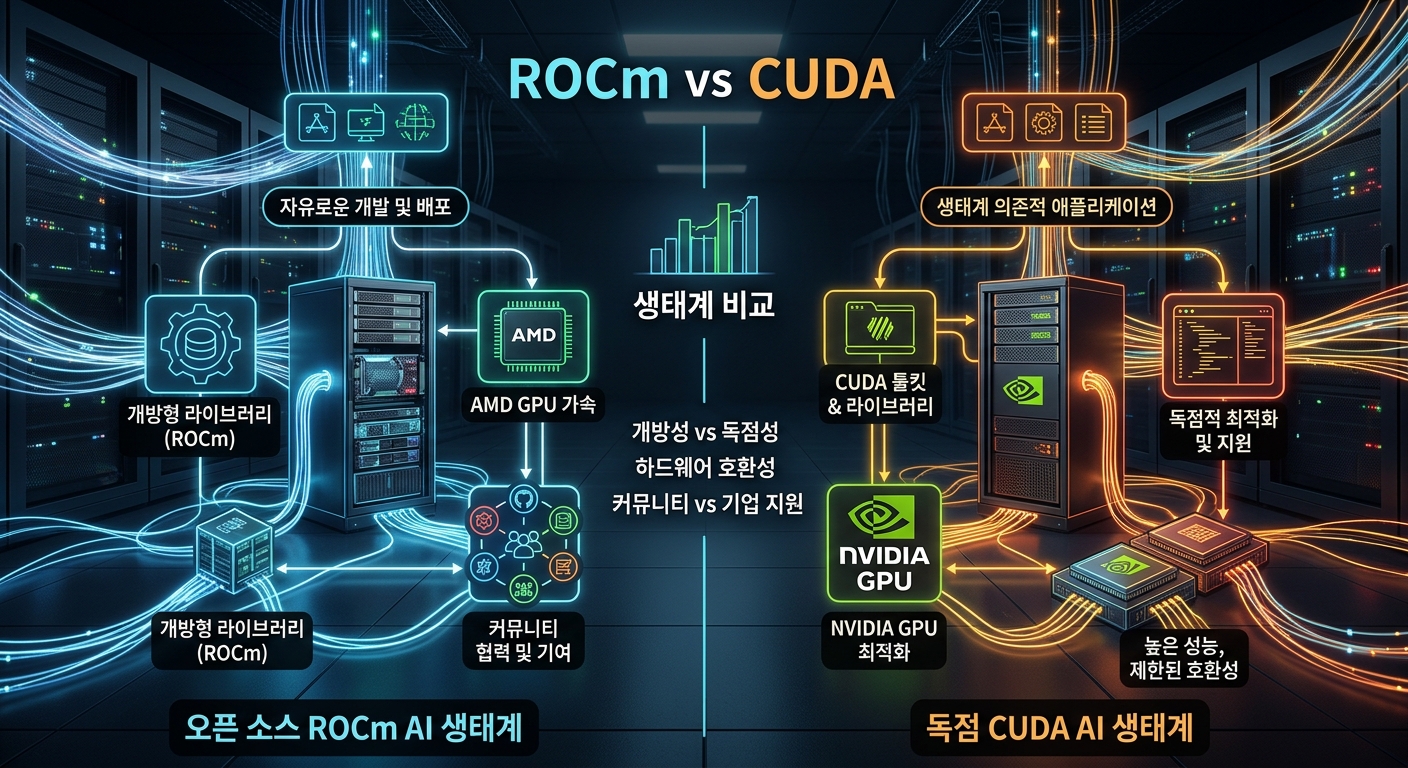
Conversely, research firms such as Morningstar view AMD favorably, emphasizing rapid software compatibility improvements across its open-source ROCm stack and the MI325X's large memory capacity as direct drivers of lower inference operating costs.
Risk Factors
The first risk is the software ecosystem lock-in effect.
Nvidia's CUDA ecosystem benefits from over 15 years of accumulated software libraries and an established developer base, creating significant switching costs for enterprises migrating infrastructure entirely to AMD's ROCm.
The second risk involves supply chain bottlenecks across advanced packaging (CoWoS) and 12-layer HBM3E.
Amid fierce competition for TSMC's advanced packaging capacity allocations, AMD's ability to deliver planned MI325X volumes aligned with hyperscalers' tight deployment schedules remains critical.
The third risk centers on the macro environment and debate over return on investment (ROI) on hyperscaler AI CAPEX.
Elevated 10-year US Treasury yields and sustained strength in the US Dollar (DXY) could weigh on technology capital spending, and delayed monetization of enterprise AI software may eventually lead to reductions in forward hardware component orders.
Investment Perspective
Investment assessments of AMD should focus not on near-term retail graphics card volumes, but on its capacity to deliver comprehensive, full-scale data center infrastructure solutions.
The mass-production ramp of the MI325X serves as an operational benchmark for broader customer diversification across the hyperscale sector.
Over the long term, investors should closely track the smooth execution of AMD's product roadmap toward its next-generation MI350 and MI450 architectures.
In the short run, with the Daily Stock Fear & Greed Index lingering at 24.6 (Fear), conditional strategies looking for phased accumulation during pullbacks that ease multiple compression may offer a balanced approach.
Rather than concentrating on a single equity, a diversified portfolio strategy encompassing AI accelerators, the HBM value chain, and custom ASIC beneficiaries remains preferable for mitigating macro-driven volatility.
Q&A with Daily Stock
Q1. What are the key technical advantages of the AMD MI325X compared to the Nvidia B200?
A1. The MI325X's primary strengths are its 256GB single-package HBM3E memory capacity and 6.0 TB/s bandwidth. For inference of large-parameter AI models, this configuration minimizes inter-chip sharding communication overhead, thereby offering total cost of ownership (TCO) savings.
Q2. When might AMD's data center GPU market share surpass 10%?
A2. Major market research firms project that AMD's accelerator market share could rise from historical ~5% levels to the 7%–10% range by the second half of 2026. However, this trajectory remains dependent on the adoption rate of in-house hyperscaler ASICs and Nvidia's supply delivery timelines.
Q3. Can AMD's ROCm software sufficiently replace Nvidia CUDA?
A3. Native integration with leading open-source AI frameworks such as PyTorch and Hugging Face has improved significantly, substantially reducing switching barriers in inference workloads. However, CUDA's mature ecosystem is still widely viewed as superior for complex distributed training cluster optimization.
Q4. Why does a rise in the 10-year US Treasury yield matter to AMD's stock price?
A4. As a high-growth asset trading at a forward P/E exceeding 30x, AMD is sensitive to rising bond yields (higher discount rates), which compress the present value of future cash flows. If yields remain sustained around 5%, multiple compression risks will continue to linger.
Q5. What forward indicators should investors monitor most closely?
A5. Key leading metrics include quarterly revisions to AI CAPEX guidance from major hyperscalers (Meta, Microsoft, Google, etc.), quarterly revenue growth trajectories in AMD's Data Center segment, and advanced packaging (CoWoS) capacity utilization rates at TSMC.