
Hello, this is Daily Stock.
Key Summary
Celltrion has secured over 90% reimbursement coverage in the U.S. market for Zymfentra, a subcutaneous (SC) formulation of infliximab launched as a novel drug, driven by preferred drug listings on the formularies of the top three PBMs and major health insurers.
By reducing intermediary distribution margins and establishing a direct sales network, the company is transitioning from biosimilar-centric top-line expansion into a stage of high-margin novel drug operating leverage.
In its recent quarterly earnings, Celltrion demonstrated record quarterly fundamental strength, posting consolidated revenue of KRW 1.5 trillion and an operating profit of KRW 510 billion.
With improving cost-of-sales ratios and an expanding new portfolio (such as Steqeyma and Omlyclo), the company is demonstrating both defensive strength and growth potential within the KOSPI as a leading large-cap biopharmaceutical stock.
Key market indicators and Celltrion's core business achievements as of November 17, 2026, are summarized below.
| Category | Key Data & Core Indicators (As of 2026-11-17) |
|---|---|
| KOSPI Index / NASDAQ Index | 4,968.48 / 24,509.76 |
| USD/KRW Exchange Rate | 1,337.70 KRW |
| Daily Stock Fear & Greed Index | KOSPI: 9.8 (Extreme Fear) / NASDAQ: 31.0 (Fear) |
| Celltrion Daily Price | Unconfirmed on the day (Based on latest verified data) |
| Zymfentra U.S. Reimbursement Coverage | Secured over 90% including PBM formulary listings |
| Q3 Preliminary Consolidated Earnings | Revenue: KRW 1.5 trillion / Operating Profit: KRW 510 billion |
Current Situation Summary
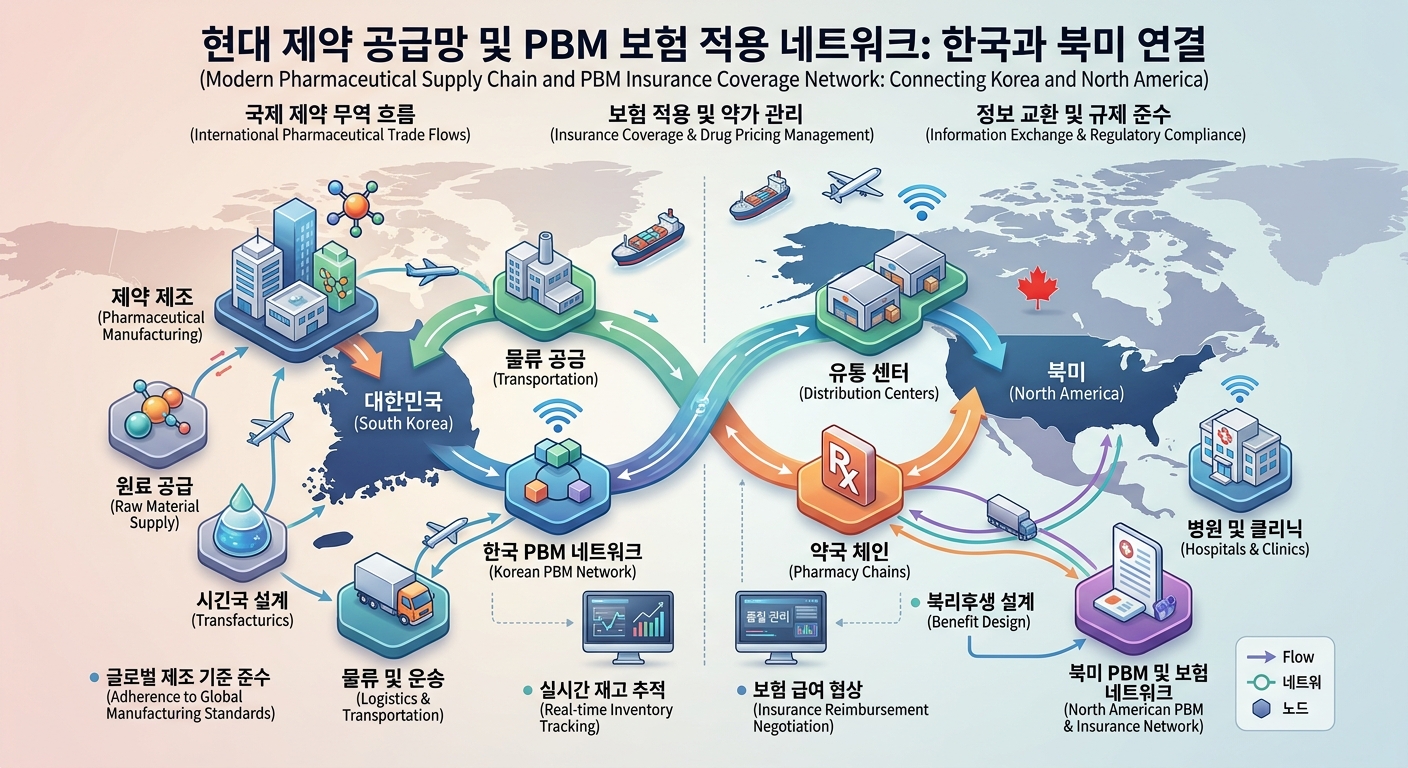
As formulary listings across major U.S. pharmacy benefit managers (PBMs)—including Express Scripts (ESI) and Cigna's Evernorth—reach their final stages, actual prescription volume across hospitals and clinics is charting a steep upward trajectory.
Combined with the localized '3P Strategy' connecting Providers, Payers, and Patients alongside targeted media and institutional advertising, prescription feedback loops indicating successful penetration beyond initial market entry are being observed.
Domestically, the market environment is characterized by the KOSPI Fear & Greed Index hitting 9.8 (Extreme Fear), heavily impacted by peak-out concerns regarding traditional large export stocks such as semiconductors and automobiles, as well as macro volatility.
In this phase, with the USD/KRW exchange rate maintaining the 1,337.70 KRW level, the biopharmaceutical sector's inherent non-cyclical earnings defensiveness is emerging as an alternative destination for foreign institutional capital inflows.
Financial Analysis
Following the launch of the integrated Celltrion, merger-related amortization expenses and inventory valuation burdens that lingered over an extended period have steadily subsided, allowing cost-of-goods-sold (COGS) ratios to normalize.
Gross profit margin (GPM) recovered to the 60% range, and the operating profit margin also rebounded to the mid-30% level, serving as the primary drivers behind the KRW 510 billion operating profit achieved in the third quarter.
An expanding revenue contribution from high-margin Zymfentra in the U.S. is lowering unit fixed costs and accelerating cash-flow generation.
Concurrently, cash cow contributions from Truxima (approximately 39% U.S. market share) and Inflectra (approximately 31% market share) remain stable, while initial rollout costs for follow-up products are increasingly offset.
Valuation
Compared to KOSPI 200 large-cap peers, Celltrion has traditionally commanded a growth premium; however, temporary earnings distortions following the merger led to wide fluctuations in its 12-month forward P/E.
Currently, with earnings visibility sharpening, valuation multiples appear to have entered a rational re-rating corridor relative to global big-pharma biosimilar peer groups.
Although direct SG&A expenditures related to U.S. novel drug commercialization persist, valuation appeal could expand significantly once operating leverage accelerates, considering its exclusive formulation status within the U.S. subcutaneous inflammatory bowel disease (IBD) market.
Even when compared to overseas major healthcare indices, the recovery of mid-double-digit operating profit margins narrows its relative discount factor.
Expert and Institutional Analysis
Domestic and foreign institutional investors are focusing on the pace of Zymfentra's U.S. market share expansion and additional PBM listings for new biosimilars (Steqeyma, Omlyclo).
Analysts suggest that amid uncertainty surrounding the Bank of Korea's future interest rate path and foreign exchange volatility, selective programmatic net buying by foreign investors could concentrate on companies possessing a stable dollar revenue base.
Securities analysts highlight that having surpassed the fixed-cost break-even threshold of its direct distribution network, quarterly operating profit capacity may structurally settle above KRW 500 billion starting from the second half of 2026 onward.
Consequently, Celltrion continues to be cited as a prime large-cap candidate capable of absorbing supply-demand voids left by cyclical sectors on the KOSPI, such as secondary batteries and IT hardware.
Risk Factors
Institutional variables in the U.S. healthcare market and legislative discussions on reforming PBM fee structures remain primary risks requiring medium- to long-term monitoring.
Should the proportion of rebates required to maintain formulary status exceed expectations, downward pressure on net realized selling prices could emerge.
A sharp drop in the USD/KRW exchange rate below the lower 1,300 KRW range could decelerate KRW-converted export earnings.
Furthermore, intense competition to acquire and retain patients against alternative TNF-α inhibitors and next-generation interleukin inhibitors from global pharmaceutical companies remains a continuous challenge in the U.S. market.
Investment Perspective Summary
Celltrion stands at a pivotal turning point, transitioning from a pure biosimilar developer into a fully integrated biopharmaceutical firm equipped with U.S. novel drug commercialization capabilities.
How steeply real prescription volumes accumulate along the distribution highway opened by securing 90% PBM coverage will be the decisive metric charting future stock price trajectories.
In the short term, index-linked volatility resulting from extreme fear sentiment on the KOSPI and macroeconomic instability must be taken into account.
Over the medium to long term, a dollar-cost averaging approach remains valid while monitoring whether structural operating profit margin expansions materialize alongside the increasing revenue share of high-margin novel drugs.
Investor Checkpoint Q&A
Q1. Why is Zymfentra classified as a 'novel drug' rather than a 'biosimilar' in the United States?
Because it is the world's only infliximab formulation approved by the U.S. FDA for subcutaneous (SC) administration. Securing novel drug status established the foundation for independent patent exclusivity barriers and higher list pricing.
Q2. What is the practical business significance of securing 90% PBM formulary coverage?
It indicates that the administrative infrastructure enabling patients to receive Zymfentra without prohibitive out-of-pocket burdens across major private and public insurance reimbursement systems covering most of the U.S. population is complete. Prescription bottlenecks caused by listing delays have been cleared, allowing marketing activities to directly translate into top-line revenue.
Q3. What was the core driver behind achieving KRW 1.5 trillion in Q3 quarterly revenue?
Existing flagship products like Truxima and Inflectra sustained market shares in the 30% range in the U.S., while newer pipeline products accelerated market penetration across the U.S. and Europe. Additionally, the easing of merger-related inventory amortization charges significantly expanded profit margins.
Q4. Is the current macro environment (1,337.70 KRW exchange rate, interest rates) favorable for Celltrion?
The elevated USD/KRW exchange rate is an advantageous factor that maximizes KRW-converted earnings derived from U.S. direct sales revenue denominated in dollars. Should a global interest rate easing cycle unfold, reduced financing costs across the broader bio sector and valuation multiple expansions can also be anticipated.
Q5. What is the most critical metric for investors to track over the next 6 months?
The growth rate of weekly and monthly U.S. IQVIA total prescription volume (TRx) data for Zymfentra. Additionally, investors should monitor whether net realized selling prices are preserved as coverage expands beyond Evernorth and the top three PBMs into mid-to-small formularies.