Hello, this is Daily Stock, delivering in-depth analysis of key defense stocks on the Korea Composite Stock Price Index (KOSPI) and broader macroeconomic trends.
Key Summary
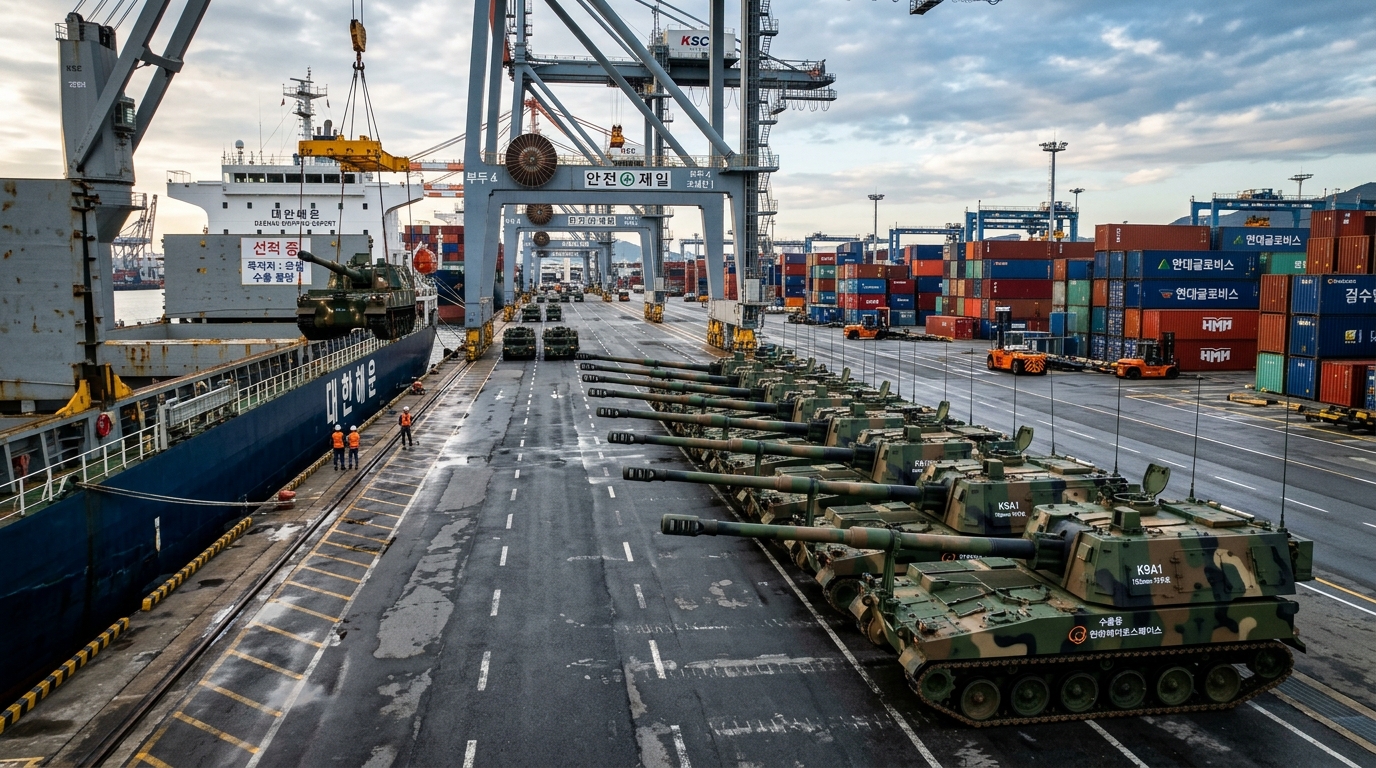
Hanwha Aerospace is enhancing its medium- to long-term earnings visibility as it ramps up mass production and shipments under its approximately KRW 3.4474 trillion second execution contract for K9 self-propelled howitzers with the Polish Armament Agency.
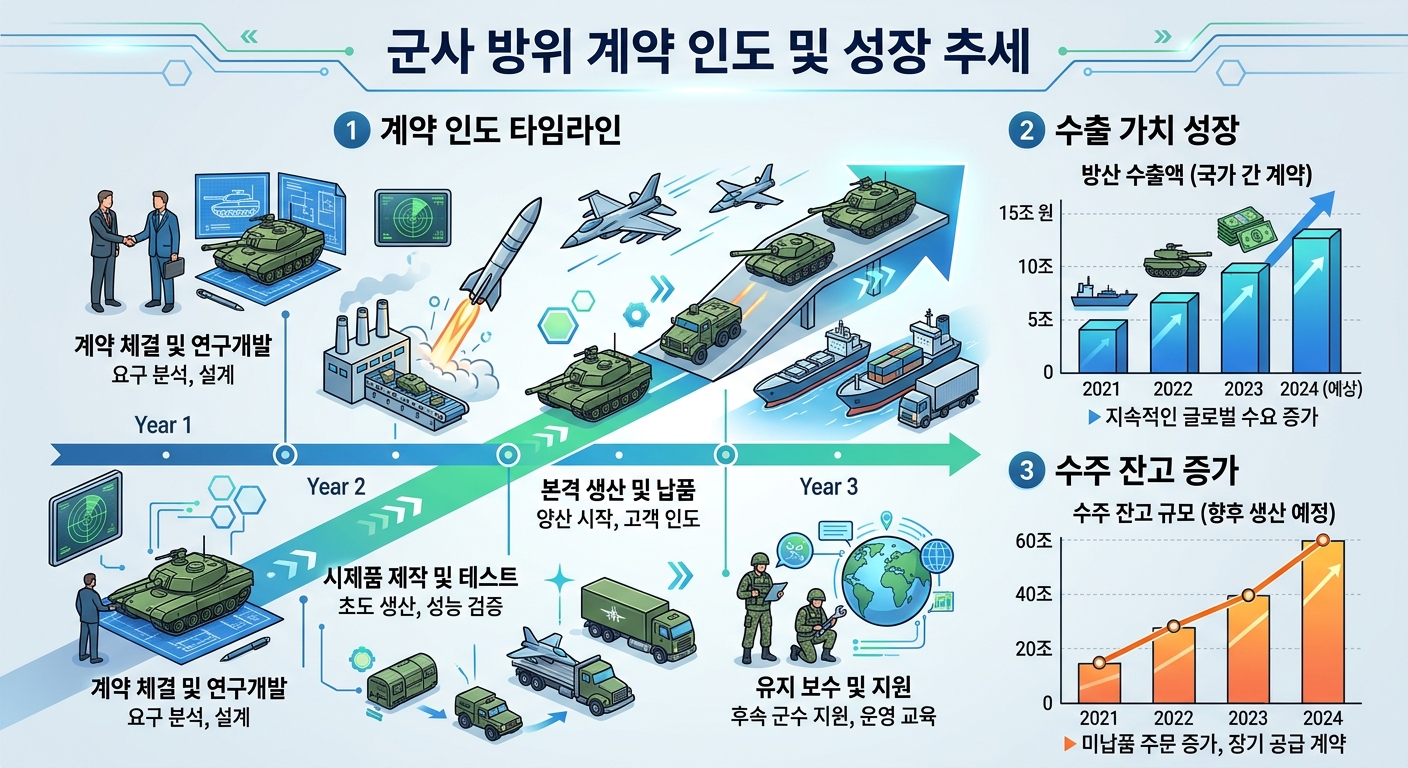
Following the spin-off of non-core businesses, the company reorganized its business portfolio around land systems and aerospace. It has secured a massive order backlog of around KRW 35 trillion in the land defense division alone, reinforcing its structural profit-generation base.
Amid a macroeconomic environment where the USD/KRW exchange rate stands at 1,335.00, the sustained high exchange rate serves as a favorable factor in defending KRW-denominated revenue and operating profit margins for defense export plays.
Current Market Context
On November 16, 2026, in the domestic stock market, the KOSPI closed at 5,100.50, and the KOSDAQ ended trading at 665.65.
While the Nasdaq Composite recorded 25,136.27, the USD/KRW exchange rate closed at 1,335.00.
According to Daily Stock's proprietary Fear & Greed Index, the KOSPI is currently recording Extreme Fear (15.4), compared to Extreme Fear (15.9) one week ago, Extreme Fear (6.6) one month ago, and Neutral (54.8) three months ago.
The Nasdaq Fear & Greed Index is currently at the Fear (38.6) stage, remaining in a cautionary zone compared to one week ago (24.4) and one month ago (45.6).
Even amid subdued market sentiment, large-cap KOSPI defense stock Hanwha Aerospace is drawing differentiated supply and demand interest, driven by the start of deliveries for the second batch of 152 Polish K9 units and steady progress in its export projects.
Currently, Hanwha Aerospace's closing price for the day is in an 'unconfirmed intraday quote (based on latest verified value)' state, but there is a clear push to offset the Q3 earnings gap caused by delivery deferrals through concentrated deliveries in Q4.
Financial Analysis
Hanwha Aerospace's earnings momentum is structured such that, following stable deliveries under the first Polish contract, deliveries under the second execution contract will be heavily recognized starting from Q4.
In the third quarter of 2026, a temporary earnings vacuum emerged due to shifts in quarterly delivery schedules for select export volumes. However, this is analyzed as a phenomenon resulting from the concentration of delivery schedules rather than any deterioration of the order backlog.
| Category | Key Details & Figures | Specifics |
|---|---|---|
| Poland K9 2nd Execution Contract | Approx. KRW 3.4474 trillion | Sequential supply of 152 K9 units and integrated logistics support |
| Land Defense Order Backlog | Approx. KRW 35T – 38T | Poland K9/Chunmoo, Australia Redback, Egypt K9, etc. |
| Macroeconomic Indicator | USD/KRW Exchange Rate: 1,335.00 | Contributes to export margin improvement if sustained high |
| KOSPI Market Sentiment | Fear & Greed Index: 15.4 (Extreme Fear) | Highlights earnings defensiveness of defense sector amid market downturn |
The KRW 35 trillion-level backlog in the land defense division represents a solid workload for the next three to four years or more, and fixed-cost reduction effects resulting from top-line expansion are expected to continue.
The key going forward is whether quarterly delivery volumes for large projects are shipped without disruptions as planned, translating into accounts receivable collection and operating cash flow.
Valuation
The domestic stock market is currently closely linked to cyclical fluctuations in traditional large-cap manufacturing sectors such as semiconductors, automobiles, and financials.
In contrast, the defense sector operates on government-to-government contracts and long-term confirmed backlogs, making it relatively insulated from macroeconomic volatility.
Compared to major global defense contractors (such as Lockheed Martin and Rheinmetall), South Korean defense firms have expanded their global market share based on adherence to delivery deadlines and superior cost-to-performance competitiveness.
As a result, they have commanded valuation premiums over traditional manufacturing, though delivery delays could trigger multiple de-rating pressures.
Within the KOSPI 200 large-cap index, defense stocks also play a role in hedging against growth slowdown concerns, making the actual conversion rate of order backlogs into revenue the critical metric for sustaining valuations.

Expert & Institutional Analysis
The financial investment community and defense research institutions assess that fulfilling the second Polish contract elevates Hanwha Aerospace's status in Europe from a simple vendor to a key strategic defense partner.
In particular, the supply of customized K9PL units and the establishment of local maintenance, repair, and overhaul (MRO) and component cooperation frameworks create a virtuous cycle that extends beyond one-off arms sales into recurring, long-term parts supply revenue.
In terms of institutional flows, under the KOSPI Extreme Fear (15.4) environment, foreign investors are assessing FX loss risks against the 1,335.00 exchange rate level while selectively adjusting exposure to defense stocks.
Experts observe that if additional procurement discussions in Europe—including Romania and Spain—and export diversification across the Middle East materialize, earnings forecasts could be revised upward once again.
Risk Factors
The most direct risk factors include the possibility of local delivery schedule delays and issues regarding safety and process management at manufacturing facilities.
Because defense exports involve intergovernmental agreements, complex export/import customs clearance, and rigorous safety verification processes, any minor scheduling delays inevitably increase quarterly earnings volatility.
On the macroeconomic front, along with a global economic slowdown, sharp USD/KRW exchange rate volatility poses a potential headwind.
A rapid appreciation of the Korean won could dampen export profitability, while the Bank of Korea's base interest rate policy and shifts in defense budget priorities across customer nations must also be closely monitored.
Investment Perspective
Hanwha Aerospace's medium- to long-term investment appeal hinges on the pace at which its KRW 35 trillion land defense order backlog converts into realized earnings.
The ramping up of shipments under the second Polish K9 execution contract serves as key momentum to overcome the temporary Q3 earnings lull and support performance improvements in Q4 and the subsequent year.
However, because the broader KOSPI market remains in Extreme Fear (15.4) and the USD/KRW exchange rate of 1,335.00 implies heightened volatility, a conditional approach—verifying quarterly delivery figures rather than chasing short-term price spikes—appears prudent.
Investors need to track milestones step-by-step, including adherence to delivery schedules, expansion into new customer countries, and the improvement of operating cash flows according to foreign exchange trends.
Investment Checklist
- Have you verified that delivery plans for the second Polish K9 execution contract are progressing without disruption according to the Q4 and subsequent-year schedules?
- Have you checked the quarterly revenue conversion rate of the land defense division's KRW 35T-level backlog and the recovery in actual operating profit margins?
- Have you evaluated the impact of sharp fluctuations in the USD/KRW exchange rate (1,335.00) on FX gains/losses and export profitability?
- Have you distinguished foreign and institutional capital flows into large-cap defense stocks amid the KOSPI Extreme Fear (15.4) phase?
- Are you periodically monitoring the progress of additional order pipelines across Europe (e.g., Romania, Spain) and the Middle East?