Hello, this is a financial content analyst from Daily Stock.
Executive Summary
CrowdStrike (CRWD) has overcome customer churn concerns following its massive 2024 system outage, defending a robust Gross Retention Rate above 97% and proving its platform consolidation strength in the next-generation XDR (Extended Detection and Response) market.
Its strategy of leading with the Customer Commitment Package and its flexible billing model, 'Falcon Flex,' is evaluated as effective in curbing short-term churn risk and driving an expansion in module adoption per customer.
Amid US 10-year Treasury yield (US10Y) volatility and mild fluctuations in the US Dollar Index (DXY), high multiples in the cybersecurity software sector are differentiating based on the quality of Remaining Performance Obligations (RPO) and sustainable Free Cash Flow (FCF) generation capability.
Currently, Daily Stock's market sentiment metric shows the Nasdaq Fear & Greed Index at 38.6 (Fear), indicating lingering defensive sentiment that favors quality tech stocks equipped with earnings visibility and platform lock-in effects.
Current Status Overview
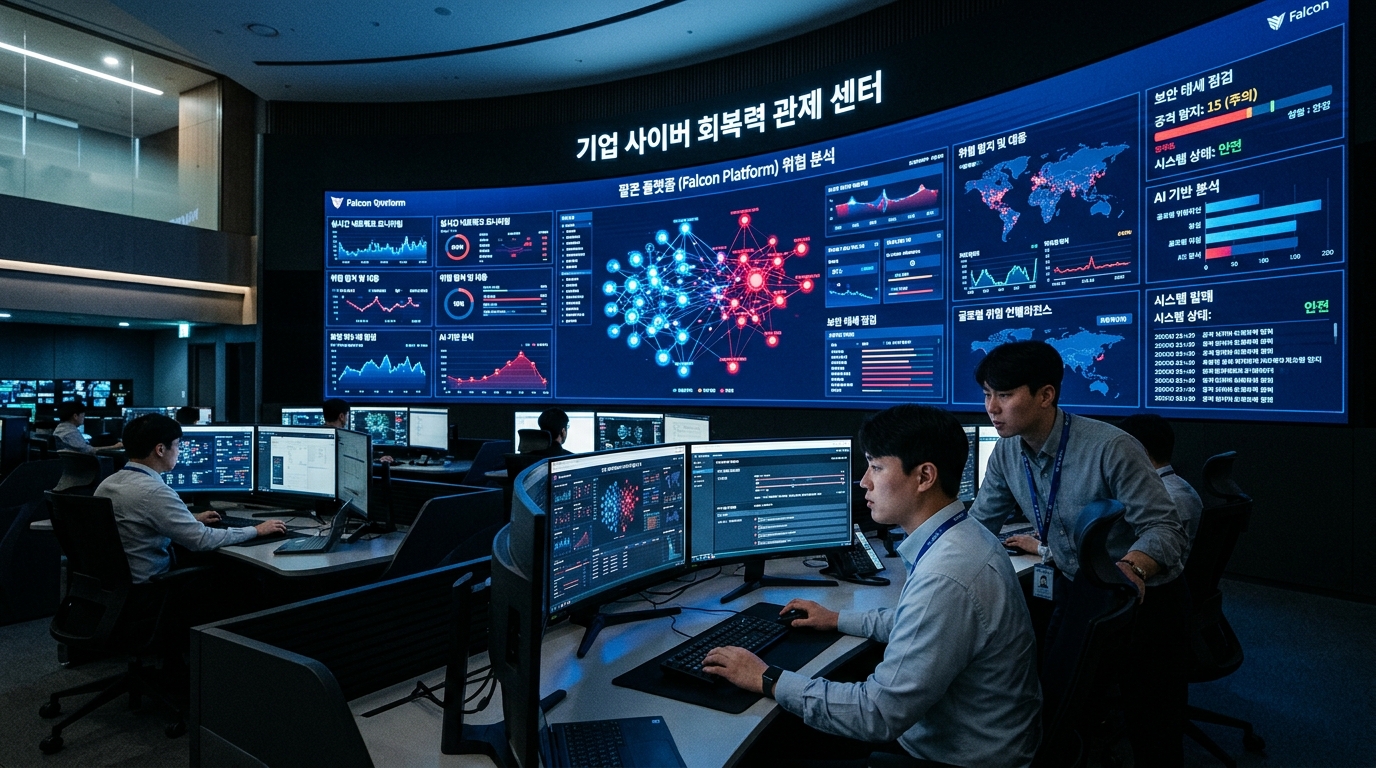
CrowdStrike, the global leader in endpoint security, has successfully mitigated the large-scale customer churn that was feared after the incident.
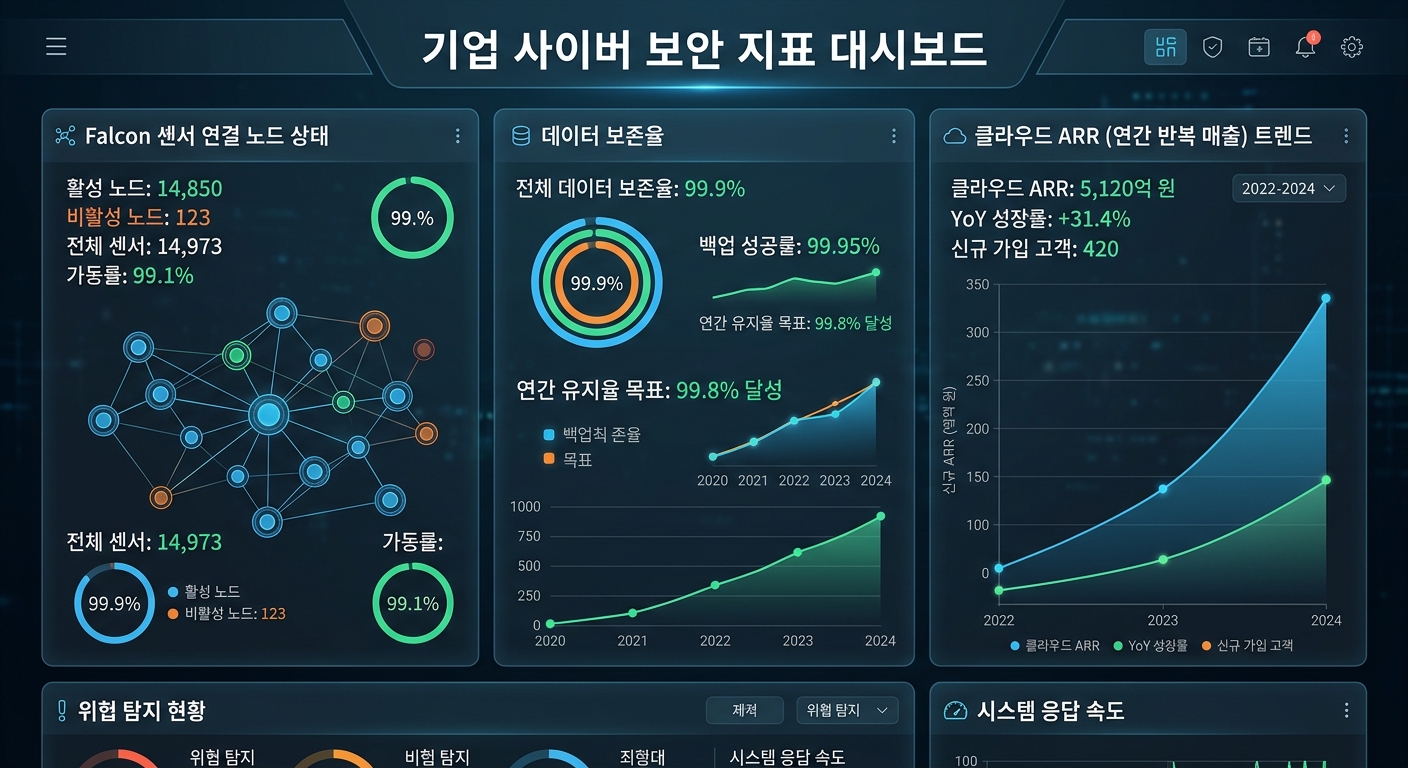
A key metric, Annual Recurring Revenue (ARR), exceeded $5.84 billion in the latest fiscal quarter (Q2 FY2027), growing 25% year-over-year, while quarterly Net New ARR hit a record high of $333 million.
Falcon Flex account ARR exceeded $2.29 billion, surging more than 100% year-over-year, serving as a primary pipeline for adopting single-agent-based next-gen XDR and AI-powered security (Charlotte AI).
As of 2026-11-14, CrowdStrike's share price is 'unconfirmed for the day (based on latest confirmed value)', but following a 1:4 stock split conducted in the summer of 2026, it is trading around the mid-$220s, indicating a partial recovery toward its pre-incident valuation multiples.
In the broader macro environment, the Nasdaq closed at 25,136.27, and the USD/KRW exchange rate recorded 1,339.00 KRW, as valuation reassessments of tech stocks continue alongside the trajectory of US Treasury yields.
The KOSPI closed at 5,290.53 and the KOSDAQ at 699.66. According to Daily Stock's proprietary Fear & Greed Index, the Nasdaq sits in Fear (38.6), compared to Fear (24.4) one week ago, Neutral (45.6) one month ago, and Fear (24.5) three months ago.
The KOSPI Fear & Greed Index stands at Extreme Fear (19.3), compared to Extreme Fear (15.9) one week ago, Extreme Fear (6.6) one month ago, and Neutral (54.8) three months ago, highlighting subdued overall market appetite for risk assets.
Financial Analysis
CrowdStrike's financial resilience is evidenced by gross margin preservation and a steep expansion in Remaining Performance Obligations (RPO).
In the latest quarter, subscription revenue reached $1.4 billion, up 27% year-over-year, while Non-GAAP subscription gross margin remained solid at 81%.
| Key Financial & Operational Metrics | Q2 FY2026 | Q2 FY2027 (Latest) | YoY Change |
|---|---|---|---|
| **Total Revenue** | $1.17B | $1.47B | +26.0% |
| **Total ARR** | $4.67B | $5.84B | +25.0% |
| **Net New ARR (Quarterly)** | $221M | $333M | +50.7% |
| **Gross Retention Rate** | ~97.0% | 97.0%+ (Net Increase) | Maintained / Slight Improvement |
| **Dollar-based Net Retention (NRR)** | ~112% | ~115% | +3%p QoQ improvement |
| **Falcon Flex ARR** | $1.14B | $2.29B | +101.0% |
| **Total RPO** | $8.40B | $10.70B | +27.4% |
| **Current RPO (cRPO, next 12 mos)** | $3.90B | $4.90B | +25.6% |
Although the company provided short-term price discounts and module credits through customer remediation programs following the outage, the gross retention rate did not slip below 97%, keeping churn controlled.
Operating Cash Flow (OCF) reached approximately $590 million for the quarter, keeping the company well above the Rule of 40 (revenue growth rate + FCF margin) and putting it on track for the Rule of 50.
Valuation
CrowdStrike continues to command a premium valuation compared to cloud SaaS and cybersecurity peers within the Nasdaq 100.
Its forward 12-month Enterprise Value to Sales (Forward EV/Sales) stands at 14–16x, representing a higher multiple than big tech like Microsoft (MSFT) or peers such as Palo Alto Networks (PANW) and SentinelOne (S).
This premium is directly tied to sensitivity around the US 10-year Treasury yield (US10Y); stabilization in the low-4% range supports multiple defense, but yield rebounds could exert valuation pressure.
While sharp rises in the Volatility Index (VIX) or strength in the US Dollar Index (DXY) could spark concerns over enterprise IT spending approval delays, the $4.9 billion in cRPO serves as a downside cushion.
With the Nasdaq 100 near all-time highs while investor sentiment lingers in Fear (38.6), this reflects a divergence between earnings expectations and valuations for high-growth stocks.
Expert and Institutional Analysis
Major Wall Street institutions assess that CrowdStrike has transitioned completely out of the remediation phase and is firmly established in an platform expansion cycle.
Reports from Morgan Stanley and Goldman Sachs cited the high switching costs of the Falcon single lightweight agent as the primary reason the initial worst-case scenarios of mass contract cancellations did not materialize.
Their analysis points out that the cost and operational risk of ripping out and recertifying existing kernel-level drivers in enterprise environments to switch to competing solutions significantly exceeds the cost of retaining CrowdStrike.
Furthermore, analysts highlight that the Falcon Flex model reduces enterprise procurement friction, accelerating the adoption of add-on modules such as Cloud Security, Next-Gen SIEM, and Identity Protection.
However, some institutions note that investors should carefully monitor the residual impact of long-term contract discounts from the Customer Commitment Package (CCP) on upsell pricing realizations over the next 1–2 years.
Risk Factors
The most direct risk stems from ongoing damage-claim litigation filed by corporate customers, including major airlines like Delta, in connection with the outage.
While serious allegations such as fraud have been dismissed in certain filings, legal proceedings over negligence and settlement costs could lead to non-recurring charges and brand reputation headwinds.
A second risk is the potential slowing of enterprise IT budget deployment due to macroeconomic uncertainties and shifts in cybersecurity spending priorities during enterprise AI rollouts.
Aggressive capital expenditure (CAPEX) for AI infrastructure among big tech firms poses a risk of temporarily crowding out software security budgets or extending project sign-off cycles.
Lastly, trading at an elevated valuation leaves the stock vulnerable to sharp volatility if forward earnings guidance fails to meet market expectations.
Investment Perspective Summary
CrowdStrike has demonstrated business execution by converting a crisis into an opportunity for customer lock-in and billing model diversification.
Defending gross retention above 97% and accelerating Net New ARR suggest the platform's economic moat remains intact.
However, with the Nasdaq Fear & Greed Index at 38.6 (Fear), a staggered accumulation approach that tracks macro rate trends and litigation milestones appears more prudent than aggressive chasing.
Market share gains in the next-generation XDR space and concrete revenue contributions from AI-agent-driven security will be the primary gauges for long-term valuation re-rating.

Investor Checkpoint Q&A
Q1. How has customer gross retention actually performed since the 2024 outage?
A1. Contrary to initial concerns over mass churn, gross retention remained resilient around 97%, and even trended slightly higher quarter-over-quarter in the latest reporting period.
Q2. What is the primary reason customers stayed with CrowdStrike instead of churning?
A2. Due to the single-agent architecture, the enterprise implementation costs and operational risks involved in fully migrating to a competitor's solution are prohibitively high.
Q3. How is the Falcon Flex licensing model impacting business performance?
A3. It allows customers to flexibly add and swap modules within a pre-committed spend amount, lowering procurement friction and accelerating the adoption of multiple modules.
Q4. What is the correlation between macro indicators (yields, USD) and CrowdStrike's stock price?
A4. As a high-multiple software SaaS stock, higher US 10-year Treasury yields raise discount rates applied to future cash flows, creating structural valuation multiple compression.
Q5. What are the key metrics investors should watch closely in upcoming quarters?
A5. Sustained growth in Net New ARR, trajectory of Remaining Performance Obligations (RPO), and Non-GAAP Free Cash Flow (FCF) margins excluding one-off litigation settlement expenses.