Hello, this is Daily Stock, tracking core market macro trends and large-cap supply/demand dynamics with objective data.
Executive Summary
Korea Electric Power Corporation (KEPCO, 015760) reported a Q3 consolidated operating profit of 1.6441 trillion KRW, plunging 70.9% year-on-year and missing the market consensus (2.4143 trillion KRW) by 31.9% in an earnings shock. On a standalone basis (excluding subsidiaries), the company logged an operating loss of 99.0 billion KRW, swinging into the red for the first time in eight quarters.
Despite the effect of industrial electricity rate hikes, this was driven by a combination of rising USD/KRW exchange rates, higher raw material prices, a rebound in the System Marginal Price (SMP), and massive one-off costs including carbon emission allowances and provisions for nuclear plant decommissioning. Heading into Q4, the company faces the possibility of swinging to a consolidated operating loss due to seasonal off-peak dynamics coupled with heavy wholesale power purchase costs.
Current Market Overview
On November 13, 2026, the domestic stock market closed with the KOSPI at 5,290.53 and the KOSDAQ at 699.66. In the Seoul foreign exchange market, the USD/KRW finished at 1,335.90 KRW, while the US Nasdaq stood at 25,366.09.
According to Daily Stock's proprietary Fear & Greed Index, the KOSPI Fear & Greed Index registered at 20 (Extreme Fear). Although this represents a slight improvement from 14.9 (Extreme Fear) a week ago and 6.6 (Extreme Fear) a month ago, it reflects deep lingering caution across the market compared to the Neutral level of 50.9 recorded three months ago.
The Nasdaq Fear & Greed Index currently sits at 39.8 (Fear), recovering from 24.4 (Fear) a week ago but down compared to 45.6 (Neutral) a month ago. This elevated FX environment and risk-off sentiment directly translate into heavier cost and financing burdens for KEPCO, which relies heavily on imported raw materials and carries massive debt liabilities.
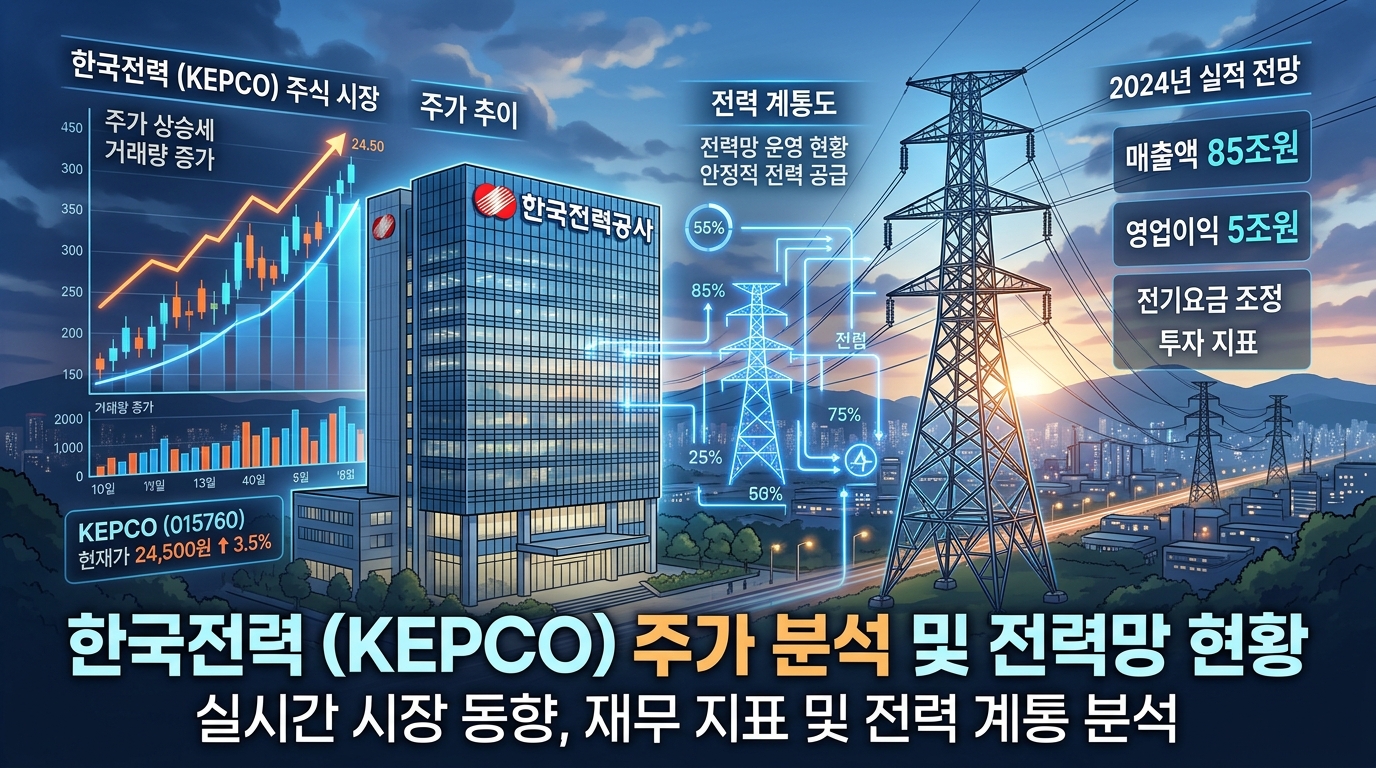
During trading on November 13, KEPCO's share price exhibited heightened volatility, dropping to the mid-27,000 KRW range as Q3 earnings shock and Q4 operating loss concerns were priced in. The regular session closed weak in the mid-to-high 27,000 KRW range.
Financial Analysis
KEPCO's Q3 performance slowdown stemmed from the dual pressures of stagnant top-line revenue and surging expenses. Q3 consolidated revenue came in at 26.8518 trillion KRW, down 2.6% year-on-year.
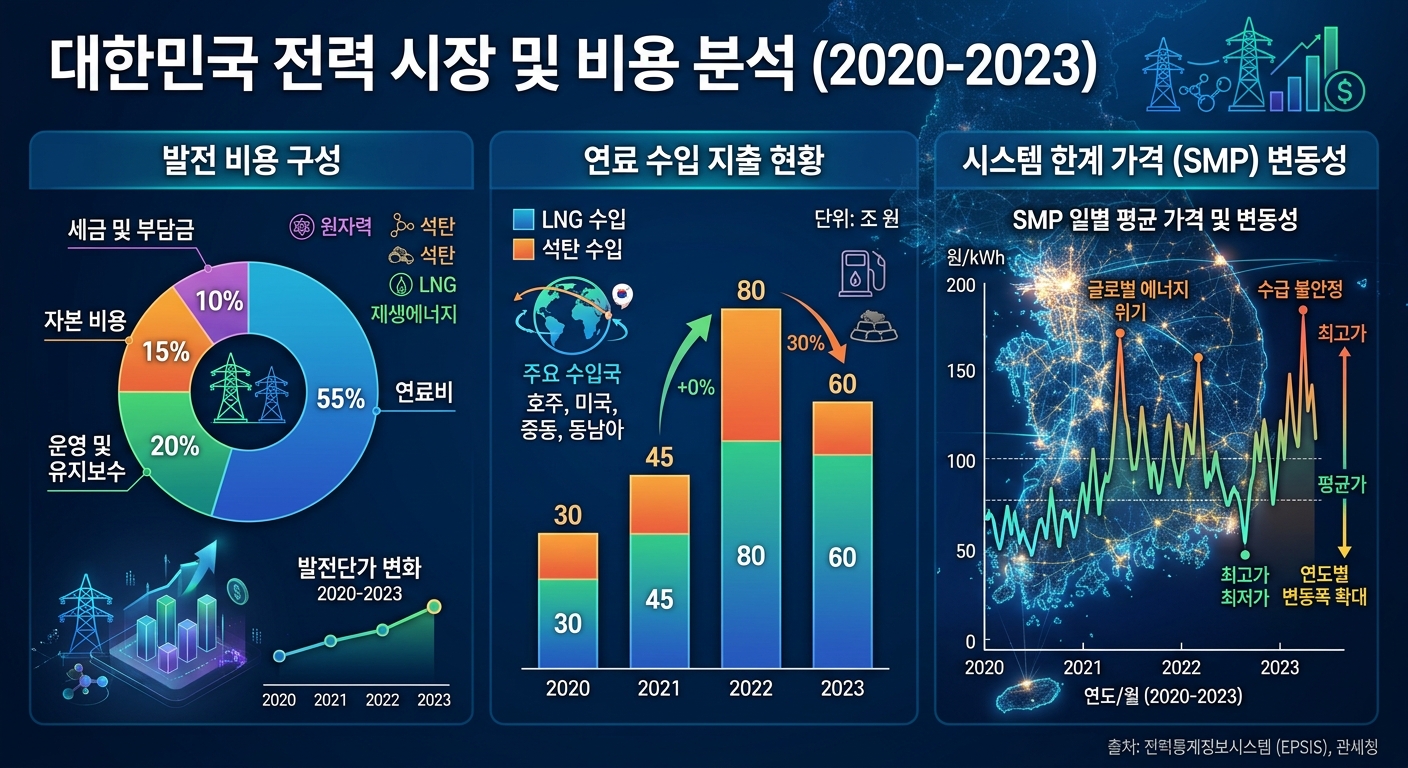
On the cost side, generation subsidiaries' fuel costs reached 6.8838 trillion KRW, up 25.1% year-on-year, while purchased power costs from independent power producers (IPPs) rose 11.4% to 10.3028 trillion KRW. Combined price increases in raw materials such as bituminous coal and LNG alongside the USD/KRW climb drove up overall cost baselines.
| Metric | Q3 2025 | Q3 2026 | YoY Change (%) | Market Consensus |
|---|---|---|---|---|
| Consolidated Revenue | ~27.5720T KRW | 26.8518T KRW | -2.6% | ~27.5000T KRW |
| Consolidated Operating Profit | 5.6519T KRW | 1.6441T KRW | -70.9% | 2.4143T KRW |
| Standalone Operating Profit/Loss | Continued Profit | -99.0B KRW (Turn to Loss) | Turn to Loss | Below Profit Expectation |
| Subsidiary Fuel Costs | 5.5026T KRW | 6.8838T KRW | +25.1% | - |
| IPP Purchased Power Costs | 9.2485T KRW | 10.3028T KRW | +11.4% | - |
In addition, over 1 trillion KRW in one-off and settlement-type costs were recognized in other operating expenses, including a provision adjustment for Wolsong Unit 1 decommissioning (approx. 544.7 billion KRW) and carbon emission settlement costs under Phase 4 allocation (approx. 545.6 billion KRW). With cumulative debt hovering around 209 trillion KRW and annual interest expenses exceeding 4 trillion KRW, this cost escalation once again threatens the breakeven threshold of KEPCO's standalone balance sheet.
Valuation
KEPCO's current valuation trades around 0.38x to 0.4x 12-month forward Price-to-Book Ratio (PBR). This represents a marked discount compared to the global utility peer group average PBR of 1.5x to 1.7x.
However, this persistent undervaluation reflects chronic debt leverage, regulatory overhang, and structural policy limits preventing raw material cost fluctuations from being promptly passed through to retail electricity tariffs. Even as large-cap KOSPI 200 constituents experienced broad valuation rerating, KEPCO has remained anchored near the lower bound of its historical PBR band due to impaired earnings visibility.
For a sustainable share price rerating to unfold, KEPCO must generate stable operating cash flows capable of funding massive capital expenditures (CAPEX) alongside a concrete, actionable debt reduction roadmap. While downside support may hold around current PBR levels in the near term, downward revisions to earnings estimates continue to exert downward pressure on Book Value Per Share (BPS).
Expert & Institutional Commentary
Following the Q3 earnings shock, domestic brokerages swiftly cut Q4 earnings projections and trimmed target prices. DS Investment & Securities highlighted the ongoing limitation in passing elevated costs to retail billing, lowering its target price to 31,000 KRW and cautioning against a potentially substantial Q4 loss.
Shinhan Securities similarly projected a potential Q4 consolidated operating loss of roughly 246.7 billion KRW, citing the rebound of the mainland SMP back to the 140 KRW/kWh range in early November, leading to a 16.5% downward revision in its full-year operating profit estimate.
Conversely, KB Securities and Hana Securities maintained medium-to-long term Buy ratings. While acknowledging inevitable near-term profitability headwinds, they pointed to year-end electricity rate adjustment directions and the expanded baseload contribution from new nuclear reactor commercial operations next year. Their view holds that structural margin spreads can recover as nuclear capacity utilization climbs and wholesale power market reforms, such as Locational Marginal Pricing (LMP), take shape.
From a foreign institutional flow perspective, passive inflows have slowed and cash selling has surfaced amid persistent FX pressures in the mid-to-high 1,330 KRW range and Q4 earnings uncertainties, maintaining a conservative stance overall.
Risk Factors
First, global energy price and currency volatility. Renewed geopolitical tensions in the Middle East could drive import costs for LNG and coal higher, pulling up wholesale SMP again.
Second, domestic economic slowdown and softer manufacturing run rates. Weak conditions across energy-intensive manufacturing sectors like petrochemicals and steel dampen high-margin industrial power sales volumes, offsetting the top-line benefits of prior tariff hikes in an adverse loop.
Third, regulatory and tariff politicization risks. Despite the existence of a fuel cost pass-through adjustment framework, retail tariff adjustments remain constrained by inflation control and broader policy imperatives, leaving the utility to absorb structural cost shocks.
Fourth, macroeconomic and interest rate dynamics. If the Bank of Korea's policy rate cutting cycle progresses at a slow pace, interest burdens on the company's 200+ trillion KRW debt pile will not recede rapidly.
Investment Perspective
KEPCO stands at a pivotal crossroads balancing steep valuation discounts against earnings contraction risks. While the front-loaded absorption of one-off charges in Q3 provides an optical base effect, whether wholesale power costs after November and Q4 heating-season demand pricing can defend operating breakeven remains the key determinant.
Therefore, rather than aggressively positioning for an immediate earnings turnaround, a conservative approach is prudent—first verifying the downward stabilization of SMP and the government's year-end electricity tariff policy directions. Over the medium to long term, phased allocation adjustments can be reconsidered once policy drivers, including nuclear plant utilization gains and the Special Act on Electric Power Grid Infrastructure, gain clear momentum.
Investment Checklist
- [ ] Monitor whether wholesale power purchase price (SMP) stabilizes below 120–130 KRW/kWh through November–December
- [ ] Check government announcements on year-end fuel cost pass-through adjustments and the Q1 2027 electricity tariff reform plan
- [ ] Track whether the USD/KRW rate settles into the low 1,300s, mitigating import commodity cost burdens
- [ ] Confirm potential additional non-recurring costs in Q4, including Wolsong Unit 1 provisions and carbon emission reconciliations
- [ ] Watch for a shift to net foreign buying in KOSPI large-caps and the KOSPI Fear & Greed Index exiting the Fear zone