Hello, this is Daily Stock, delivering in-depth tracking of capital flows across global tech and financial markets.
Executive Summary
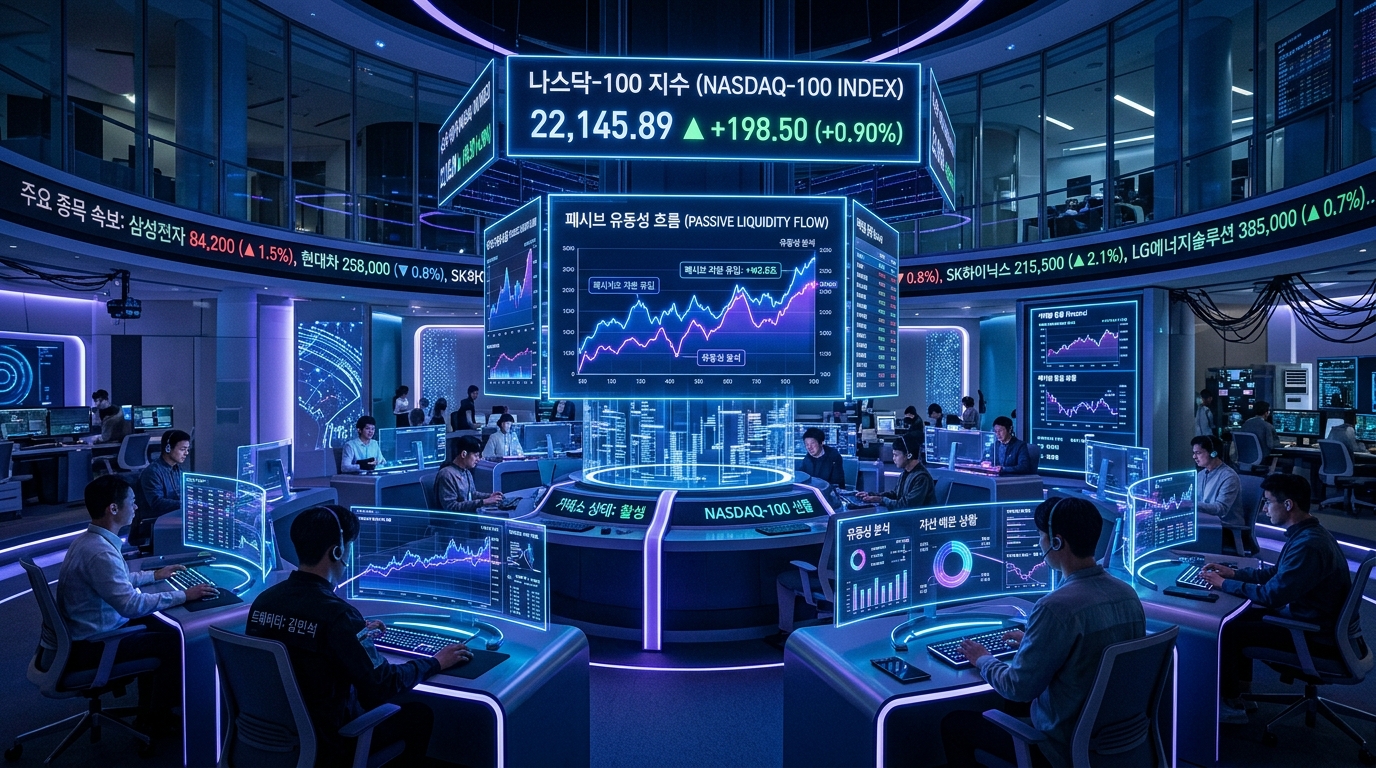
The Nasdaq 100 (NDX) undergoes its annual rebalancing every December, reshuffling constituent stocks and adjusting weighting caps based on market capitalization and liquidity rankings.
As of intraday trading on 2026-11-13 (provisional), with the Nasdaq index trading at 25,366.09, mechanical rebalancing flows from massive passive ETFs such as QQQ and QQQM are emerging as a critical turning point for growth stock volatility.
According to Daily Stock's proprietary Fear & Greed Index, the Nasdaq Fear & Greed Index currently stands in "Fear" territory at 39.9. While attempting a technical rebound from "Extreme Fear" (20) a week ago, investor sentiment remains predominantly defensive.
Current Market Context
The year-end rebalancing selects top non-financial companies based on market cap rankings as of late October and late November, with official implementation taking place around intraday trading on the third Friday of December (provisional).
Market watchers expect mechanical selling in existing constituents that have fallen outside the top 100 threshold, counterbalanced by passive net inflows into new candidate companies breaking into the top 100.
As of intraday trading on 2026-11-13 (provisional), with the USD/KRW exchange rate at 1,336.00, the KOSPI at 5,342.73, and the KOSDAQ at 696.53, global liquidity continues to display selective concentration within risk assets.
Amid mild fluctuations in the U.S. 10-Year Treasury yield (US10Y) and the U.S. Dollar Index (DXY), valuation sensitivity across tech growth stocks is expanding in tandem with the index rebalancing event.
Financial Analysis
The fundamental divergence between addition candidates and deletion candidates is increasingly evident in free cash flow (FCF) generation and revenue growth linked to AI infrastructure.
Cloud virtualization, high-performance software, and mobile monetization platform companies are expanding their footprint within the index backed by solid operating cash flows.
Conversely, certain tech hardware manufacturers facing cyclical downturns or accounting and governance controversies are seeing their market cap rankings drop due to narrowing operating margins and burdensome capital expenditures (CAPEX).

| Category | Key Characteristics & Requirements | Passive Inflow/Outflow Impact | Core Metrics to Monitor |
|---|---|---|---|
| **Inclusion Candidates** | Entering top market cap rank among Nasdaq non-financials, meeting ADV requirements | Mechanical net buying by tracking funds | Buy demand multiple relative to average daily volume (ADV) |
| **Deletion Candidates** | Falling to the lower tier of top 100 or beyond rank 125 | Passive selling volume from ETFs and index funds | Open interest and short interest/securities lending trends |
| **Big Tech Weighting Caps** | Cap rules on combined weight of top holdings (linked to Special Rebalancing) | Marginal adjustments to mega-cap passive weights | SEC diversification rules and index calculation methodology |
Valuation
The 12-month forward price-to-earnings (Forward P/E) ratio for the Nasdaq 100 remains near its historical upper band, rendering it exceptionally sensitive to the macroeconomic interest rate path.
If the U.S. 10-Year Treasury yield trades sideways or rebounds, the pace at which positive inclusion news is priced into high-multiple software and platform stocks could be constrained.
Compared to the Philadelphia Semiconductor Index (SOX) and S&P 500 growth stocks, the Nasdaq 100 carries a structural tilt with higher exposure to the AI value chain, making it more vulnerable to concerns over delayed monetization relative to aggressive CAPEX spending.
While mechanical passive flows can temporarily validate valuation premiums for candidate names, a reversal may occur shortly after the rebalancing if corporate earnings guidance fails to support higher prices.
Expert & Institutional Analysis
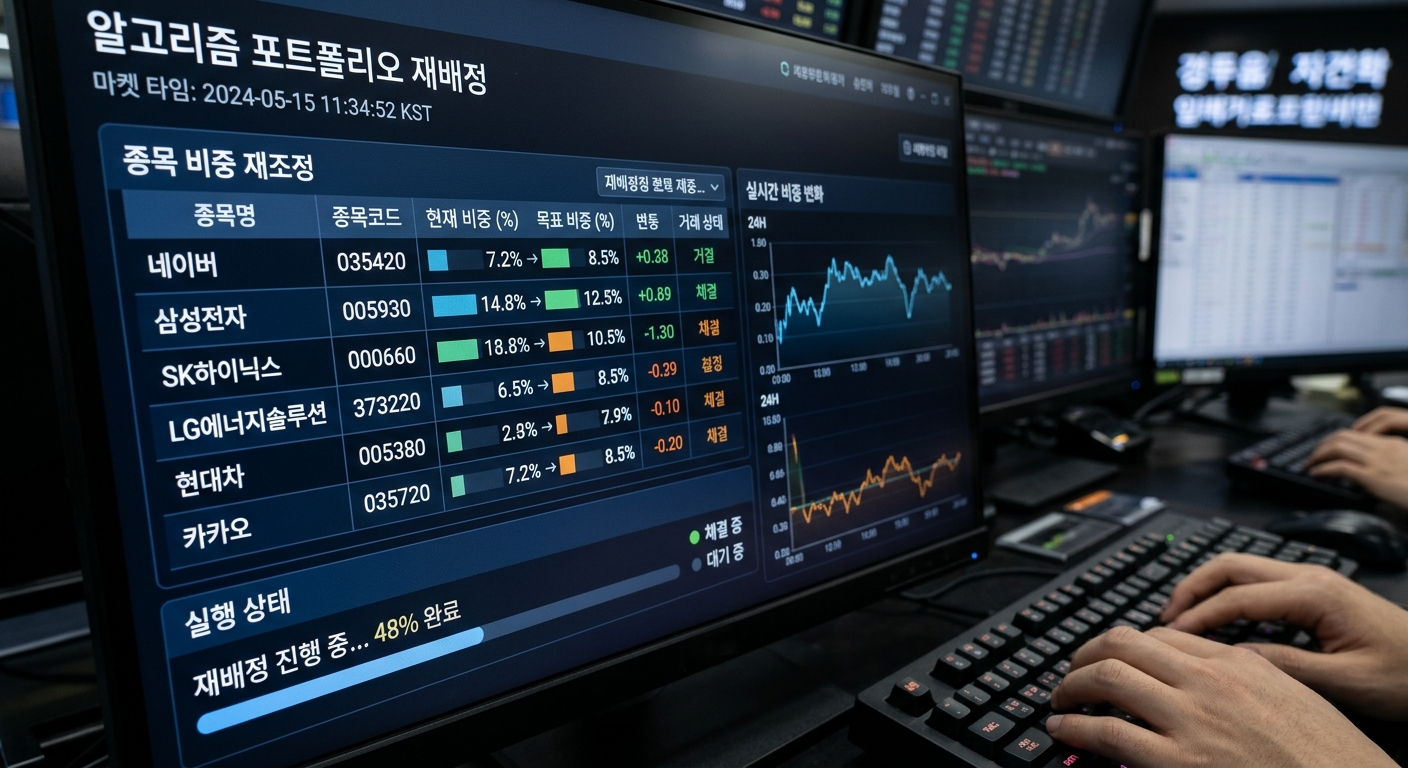
Major Wall Street investment banks note that index arbitrage execution strategies ahead of the December Nasdaq 100 rebalancing have grown increasingly sophisticated compared to past cycles.
Hedge funds tend to ramp up long/short positioning starting in mid-November to front-run net asset value (NAV) tracking demand from QQQ and QQQM, which collectively manage hundreds of billions of dollars.
Institutions caution that while flow-driven events exert strong upward pressure during periods of low Volatility Index (VIX) readings, a broader macroeconomic shock could rapidly erase passive price boosts over the short term.
As differentiation within the broader AI theme intensifies, institutional consensus highlights the need to examine both FCF generation and debt ratios rather than relying solely on index inclusion expectations.
Risk Factors
The primary risk factor is a scenario in which real monetization from Big Tech's massive AI CAPEX fails to meet elevated market expectations.
A retreat in Federal Reserve rate-cut expectations or delays in monetary easing could further compress multiples for high-P/E candidate additions.
Furthermore, if speculative leveraged capital front-runs well-telegraphed inclusion candidates right before the rebalancing, there is an ongoing risk of supply-demand distortions as heavy profit-taking concentrates around the effective date.
Unforeseen policy variables, such as heightened global antitrust scrutiny and stricter technology export controls, also represent major threats that could diminish the upside of passive inflows.
Investment Perspective
The year-end Nasdaq 100 rebalancing is a critical macro and micro catalyst that extends beyond routine stock turnover to drive a liquidity realignment across global growth portfolios.
With the Nasdaq market currently situated in the Fear zone (39.9) as of intraday trading on 2026-11-13 (provisional), chasing short-term liquidity themes without checking valuation divergences carries elevated risk.
The KOSPI Fear & Greed Index is likewise in Fear territory at 23.3, recovering slightly from Extreme Fear (14.9) a week ago, signaling a period that demands disciplined asset allocation across both domestic and overseas markets.
For trading strategies centered on index inclusion, a measured approach is recommended—evaluating spreads between announcement and effective dates while verifying the valuation sustainability of confirmed additions in phases.
FAQ
Q1. What is the standard schedule and selection criteria for the Nasdaq 100 annual rebalancing?
The Nasdaq 100 evaluates top non-financial stocks based on market data from late October and late November. Changes are announced on the second Friday of December and implemented during intraday trading around the third Friday of December (provisional).
Q2. How do passive fund inflows affect share prices?
Large passive vehicles tracking the index, including QQQ and QQQM, mechanically buy newly added constituents and sell removed names according to index weights, creating short-term supply-demand imbalances.
Q3. What is the typical stock price pattern around the inclusion announcement?
Shares often see upward momentum starting in November driven by anticipatory buying, frequently followed by short-term pullbacks around the actual effective date as hedge funds take profits.
Q4. Why are movements in the U.S. 10-Year Treasury yield (US10Y) and DXY critical for rebalanced stocks?
A simultaneous rise in Treasury yields and the Dollar Index increases the discount rate applied to future cash flows of high-valuation growth stocks, capping price gains even amidst positive passive flow dynamics.
Q5. How should the 'Fear' reading on the Daily Stock Fear & Greed Index be interpreted in this rebalancing cycle?
Even with the Nasdaq at 25,366.09, a Fear score of 39.9 on the volatility- and momentum-based index indicates underlying risk aversion remains prevalent, calling for caution when trading flow-based momentum.