
Hello, this is Daily Stock, delivering core insights across global tech and capital markets.
Executive Summary
Amazon is strengthening its earnings momentum along two main pillars: improving operating margins in its cloud infrastructure unit (AWS) and structurally optimizing its North American retail logistics network.
AWS has posted a high operating margin of around 38%, driven by surging AI workload demand and disciplined server lifecycle management, leading company-wide cash generation.
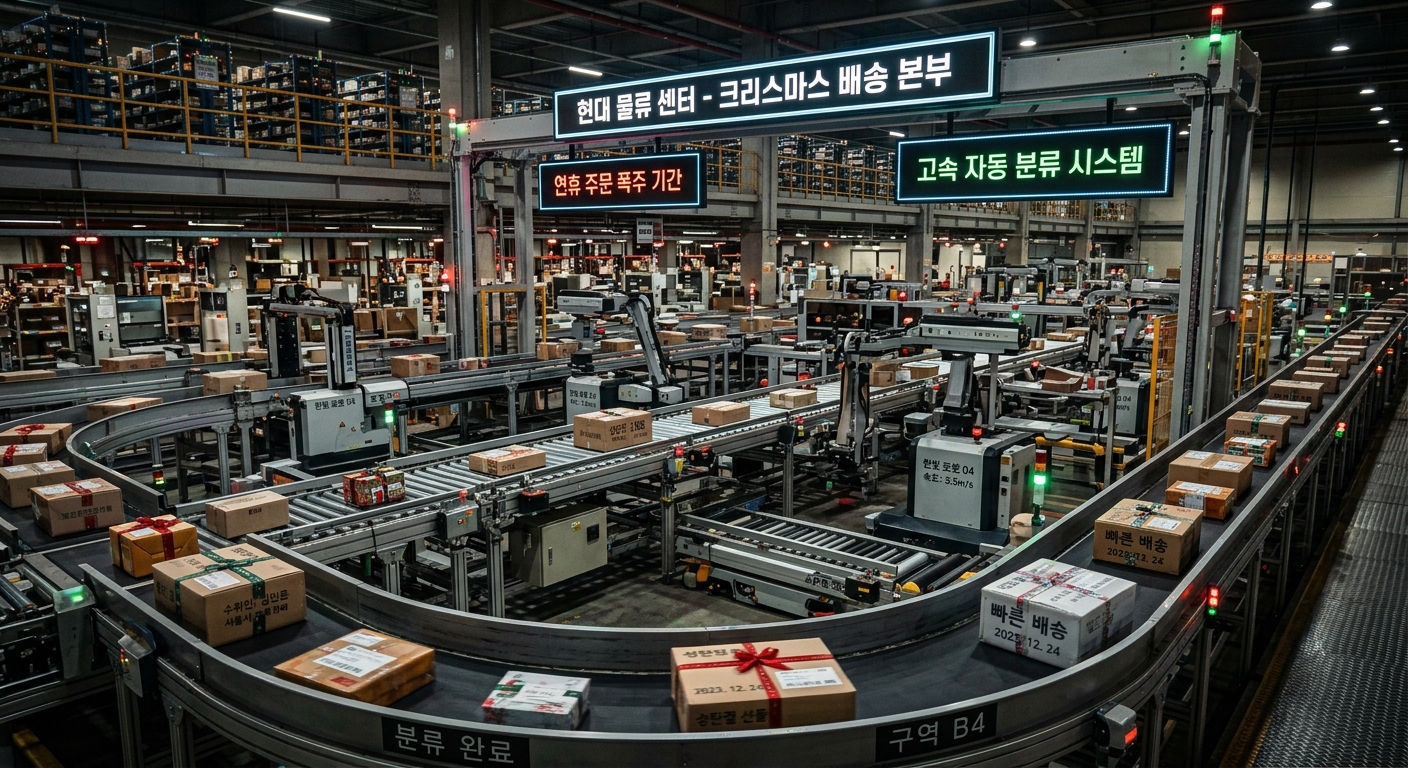
At the same time, reorganizing into a Regional Fulfillment Network has lowered unit delivery costs and increased service speeds, securing margin defense capabilities heading into the fourth-quarter holiday shopping season.
However, expanding capital expenditures (CAPEX) for large-scale AI infrastructure and the volatility of the 10-year US Treasury yield remain sensitive variables influencing growth stock multiples.
Current Market Snapshot
As of intraday trading on 2026-11-10 (tentative), the Nasdaq index stands at 25,253.14, and the USD/KRW exchange rate sits at 1,342.00 KRW.
In the domestic South Korean market, the KOSPI is trading at 5,018.85, while the KOSDAQ trades at 638.97.
According to Daily Stock's proprietary Fear & Greed Index, which gauges market sentiment, the Nasdaq is currently pointing to Fear (31.7).
Although this marks a slight rebound from Extreme Fear (19.4) a week ago, it indicates that cautionary sentiment remains heavy compared to Neutral (43.5) one month ago and Fear (20.4) three months ago.
For reference, the KOSPI Fear & Greed Index is currently in Extreme Fear (13.8), sustaining severe contraction following 19.5 a week ago, 12.4 a month ago, and 21.7 three months ago.
Amazon's (AMZN) share price is unconfirmed for the session (based on the latest confirmed data), but it has demonstrated relative resilience within the tech sector since its strong Q3 earnings release.
Market participants are now shifting their attention to logistics throughput and margin trends through the fourth-quarter peak shopping season, spanning November and December's Black Friday and Cyber Monday.
| Category | Key Metrics / Indicators | Market Interpretation and Context |
|---|---|---|
| Nasdaq Composite | 25,253.14 (Intraday tentative) | Taking a breather amid Big Tech earnings differentiation |
| Nasdaq Fear & Greed Index | 31.7 (Fear) | Rebounded from 19.4 a week ago, but caution persists |
| AWS Operating Margin | Approx. 38.1% (Prior quarter) | Margin expansion driven by AI demand and cost controls |
| North America Commerce Operating Margin | Approx. 5.9% | Unit delivery costs reduced via logistics regionalization |
| Key Risk Variables | Rising CAPEX & US 10Y Yield | Concerns over decelerating FCF relative to AI infrastructure investments |
Financial Analysis
The most prominent feature in Amazon's recent earnings structure is the expanding profit contribution from AWS.
The AWS segment restored revenue growth to around 19% while its operating margin surged to 38.1%, generating over $10.4 billion in quarterly operating profit.
This margin expansion reflects a combination of accelerating adoption of generative AI workloads (Trainium, Inferentia, Bedrock) and extended depreciation periods for high-cost infrastructure assets.
With high-margin infrastructure revenue increasing, AWS has solidified its position as a cash cow, single-handedly accounting for roughly 60% of consolidated operating profit.
The retail division is also displaying a structural margin turnaround.
The North American segment's operating margin improved from 4.9% in the prior-year period to 5.9%, fueled by the division of logistics fulfillment into eight separate regional networks.
Pre-positioning inventory closer to end customers significantly lowered last-mile transportation mileage and same-day delivery costs.
This provides the operational leverage to maximize fixed-cost efficiency throughout the year-end peak season.
Valuation
Amazon is valued through a blend of retail sales multiples (P/S) and Big Tech cloud cash-flow multiples (EV/EBITDA, P/E).
With high AWS margins normalizing and advertising delivering sustained double-digit growth, its forward P/E ratio sits in the low-to-mid 30s—a reasonable level relative to its historical 5-year average.
From a macroeconomic perspective, the trajectory of the 10-year US Treasury yield (US10Y) remains a core determinant of Amazon's multiple.
Whenever yields experience upward pressure, high-CAPEX growth stocks tend to face valuation discount headwinds.
Compared to the Nasdaq-100 index, Amazon's superior free cash flow generation capability justifies a premium.
Unlike semiconductor equipment names in the Philadelphia Semiconductor Index (SOX) that are directly exposed to the volatility of capital expenditure cycles, Amazon possesses a two-sided hedge through its sticky cloud enterprise base and platform commerce fees.
However, a substantial upward revision in full-year capital expenditures could temporarily slow down the rate of FCF (Free Cash Flow) generation, serving as a ceiling on valuation upside.
Expert & Institutional Analysis
Major Wall Street institutions broadly agree that Amazon's dual-engine strategy is now firmly on track.
Firms including Goldman Sachs and Morgan Stanley viewed the growing AWS backlog and the wind-down of enterprise cloud optimization cycles favorably.
In particular, analysts note that compute cost reductions via in-house AI accelerator chips act as a protective moat, preventing cloud customer churn and shielding long-term margins.
Simultaneously, regarding peak shopping season logistics efficiency, supply chain robotics deployments and inbound logistics process improvements are expected to restrain seasonal margin dilution.
Conversely, conservative perspectives remain regarding the payback period on infrastructure outlays.
Some note that if generative AI infrastructure competition triggers aggressive CAPEX spending wars alongside Microsoft and Alphabet, the rapid margin expansion seen historically could be delayed until 2027 or beyond.
Risk Factors
The primary near-term risk to monitor is consumer spending deceleration caused by macroeconomic softness.
Even with logistics network efficiencies, if inflationary fatigue causes average order value (AOV) to decline during the holiday season, it could offset unit logistics cost savings.
A second risk is intensifying price competition and escalating CAPEX among cloud hyperscalers.
As chip procurement and data center expansion costs surge to secure AI infrastructure, there is a risk of capital expenditures straining near-term operating cash flows.
A third factor is US Dollar Index (DXY) strength and foreign exchange volatility.
Persistent dollar strength could reduce the translated revenue performance of overseas retail and global cloud operations in KRW and local currencies.
Lastly, antitrust scrutiny from global regulatory authorities and algorithmic rules governing third-party sellers on its marketplace may introduce ongoing legal and compliance expenses.

Investment Perspective
Amazon operates a hybrid business model leveraging the combined strengths of a technology infrastructure leader and a global retail platform.
AWS maintaining an operating margin in the 38% range proves robust profitability during the commercialization phase of AI.
At the same time, holiday season logistics efficiency can serve as a catalyst, transforming the e-commerce segment—which previously represented a heavy fixed-cost burden—into a stable cash flow engine.
Consequently, investors should focus on the operating margin spread across segments rather than top-line revenue expansion alone.
Amid fluctuations in volatility metrics (VIX) and the 10-year US Treasury yield, a dollar-cost averaging strategy remains a viable consideration.
Keeping macro policy shifts in mind, an approach that comprehensively tracks holiday delivery volumes alongside cloud margins around upcoming earnings announcements is warranted.
Investor Checkpoint Q&A
Q1. Is AWS's ~38% operating margin structurally sustainable over the long term?
A1. This figure reflects increased high-margin AI workloads and extended server depreciation schedules.
If operating costs for new data centers and power infrastructure accelerate, investors should account for the possibility of margins temporarily adjusting into the mid-30% range.
Q2. What is the core driver behind the holiday season logistics optimization?
A2. The primary catalyst is the regional network model, which partitioned the single contiguous US network into eight distinct regions.
This shortened fulfillment distances and increased same-day and next-day delivery shares, lowering the fulfillment cost per order.
Q3. How does volatility in the 10-year US Treasury yield impact Amazon?
A3. Because Amazon is a growth stock executing large-scale capital investments, rising yields increase discount rates on future cash flows, compressing multiples.
Conversely, when yields stabilize, earnings momentum in AWS and e-commerce tends to be reflected quickly in share price recovery.
Q4. Does the hyperscaler AI CAPEX race place an excessive burden on Amazon's balance sheet?
A4. Surging infrastructure investments could temporarily compress free cash flow (FCF).
However, internal silicon deployments and AWS's massive cash-generation capability provide a stronger financial buffer than peers.
Q5. How should investors navigate Amazon given current market sentiment (Fear & Greed Index)?
A5. With the Nasdaq Fear & Greed Index situated in Fear (31.7), disciplined phased positioning is more appropriate than aggressive chasing.
Rather than reacting to short-term volatility, it is prudent to prepare scenario-based approaches around Q4 holiday performance and 2027 guidance updates.