Hello, this is Daily Stock, delivering precise insights into macroeconomic contexts and structural shifts in key market leaders.
Executive Summary
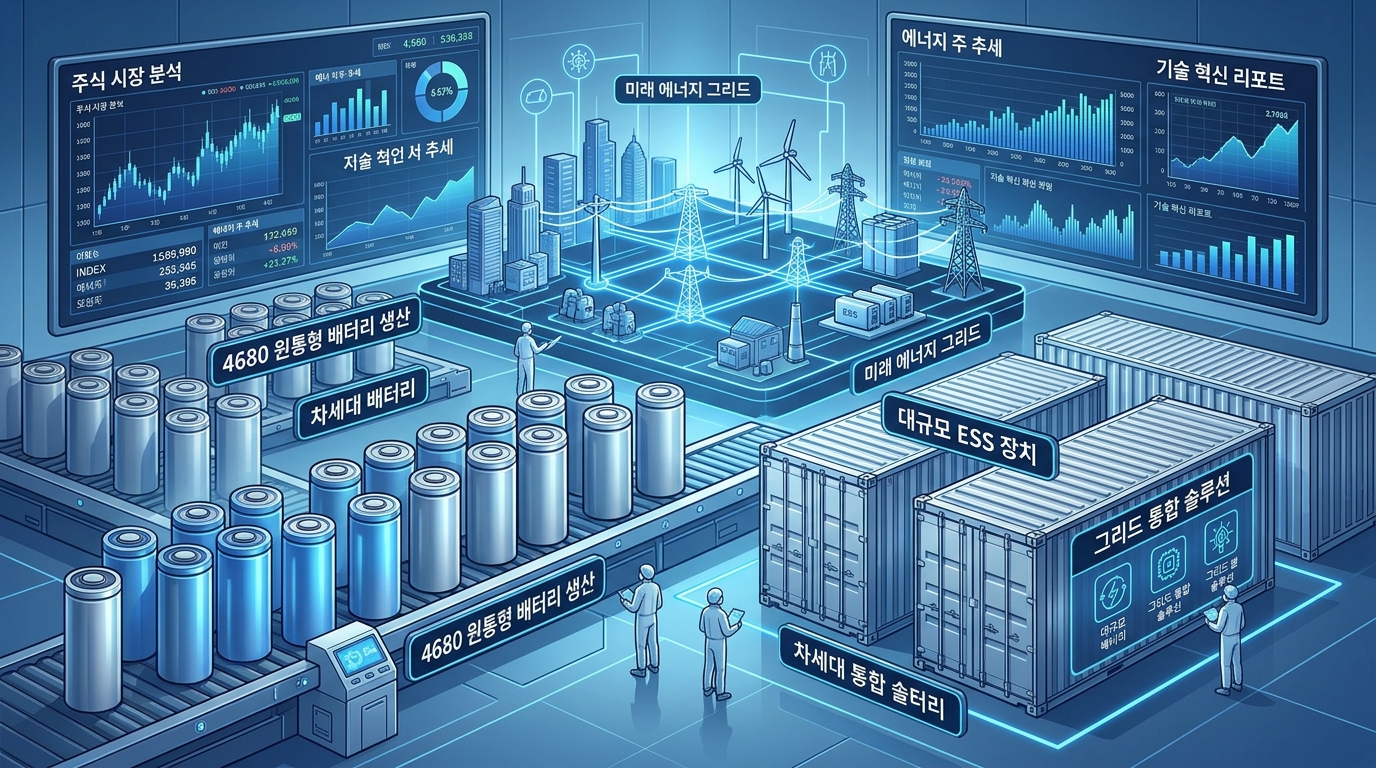
LG Energy Solution (373220) is accelerating its business restructuring amid a prolonged electric vehicle (EV) chasm, anchored by the mass production of next-generation 46-series cylindrical batteries and a massive energy storage system (ESS) order backlog exceeding 160GWh.
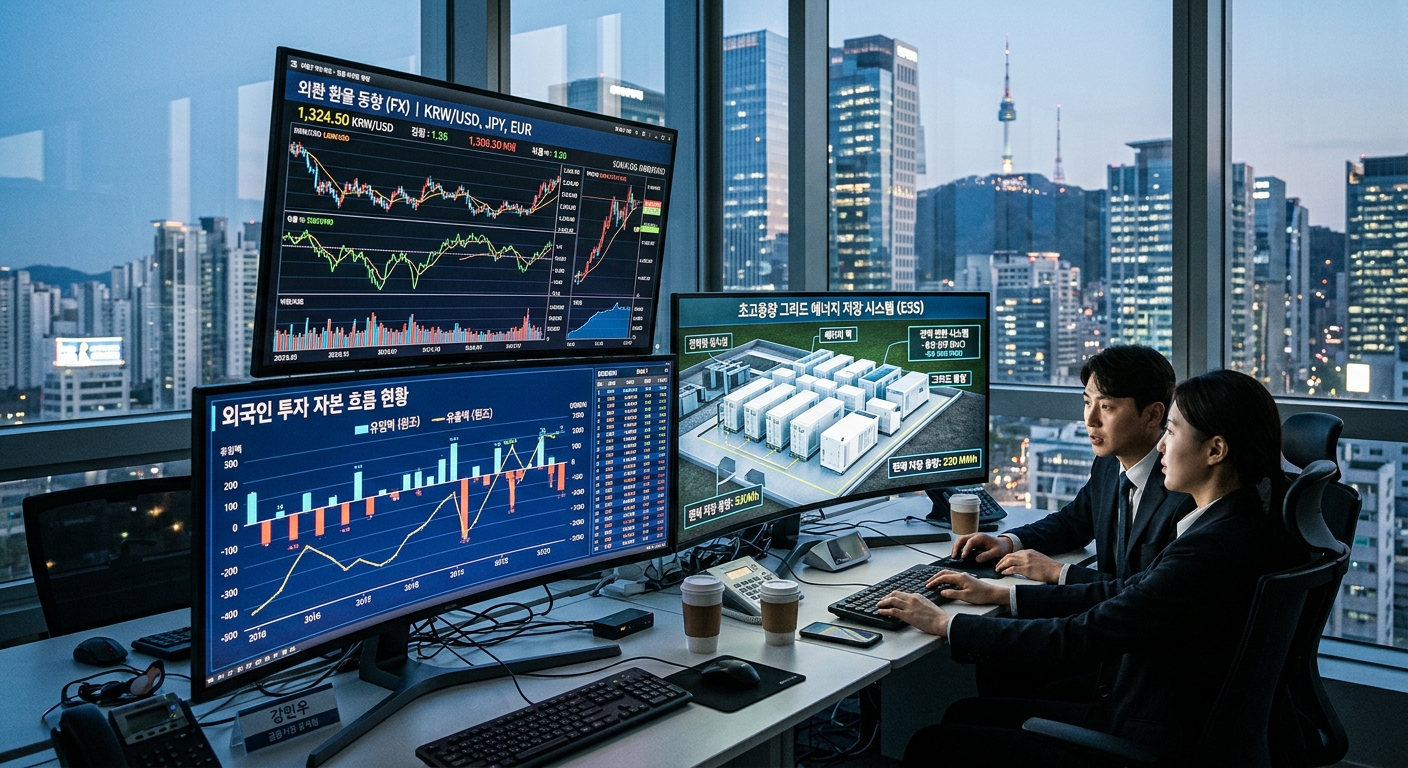
With the USD/KRW exchange rate standing at 1,347.30 and the KOSPI index at 5,018.85, foreign investor sensitivity to spot and futures flows is intensifying. In this environment, readiness for the North American Inflation Reduction Act (IRA) and rising battery demand for AI data center power grids are emerging as critical defense lines for enterprise value.
According to Daily Stock's proprietary Fear & Greed Index, the KOSPI Fear & Greed Index currently sits at Extreme Fear (15.9), following readings of Fear (28.6) a week ago, Extreme Fear (15.5) a month ago, and Extreme Fear (17.5) three months ago, pointing to deeply depressed sentiment across large-cap equities.
The Nasdaq Fear & Greed Index is also registered at Fear (22.1), compared to Fear (26.3) a week ago, Neutral (47) a month ago, and Fear (24.3) three months ago, indicating sustained caution regarding market volatility.
Current Status Overview
As of the market close on November 9, 2026, LG Energy Solution's intraday price action remains in range-bound consolidation—reflecting both concerns over downstream EV demand slowdowns and positive progress in new battery form factors and grid projects.
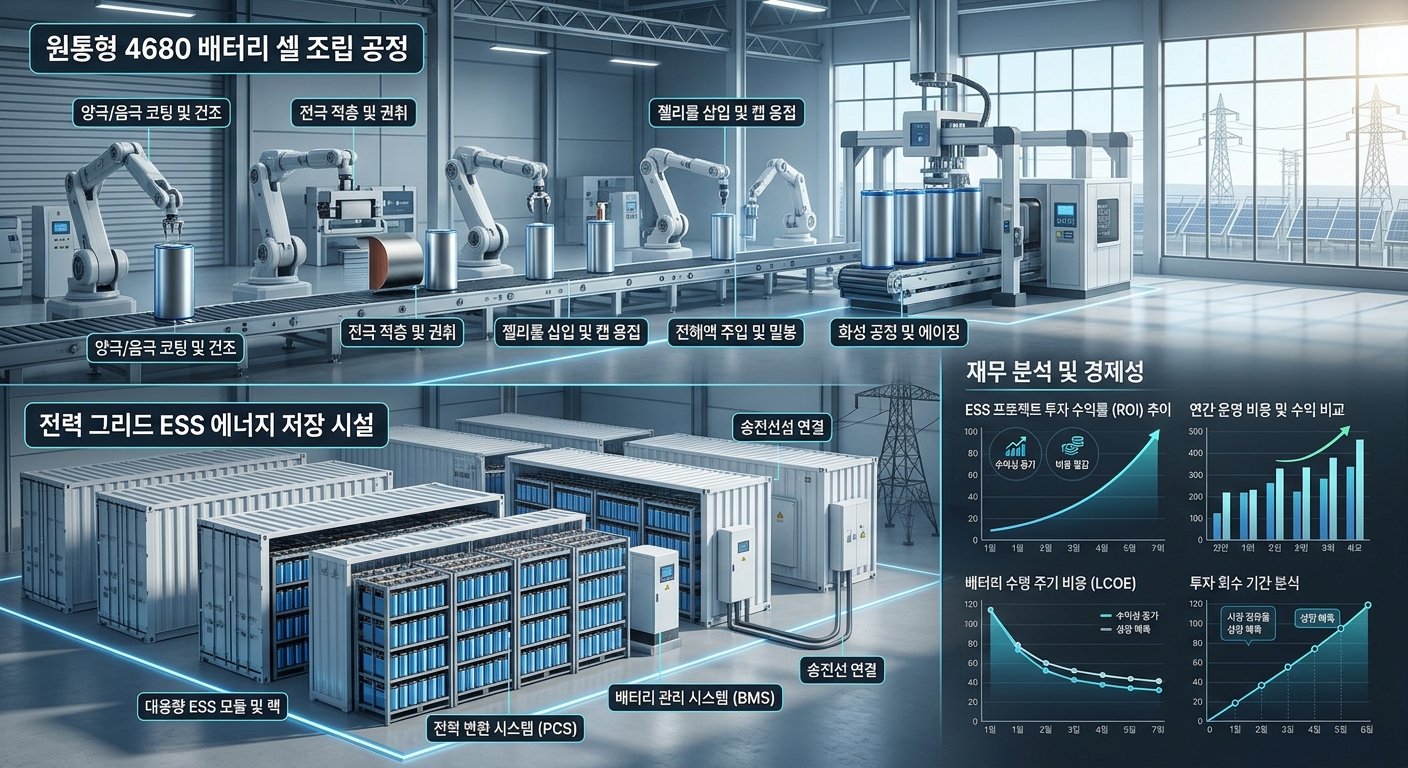
The company is stabilizing production processes for next-generation 46-series cylindrical batteries (such as 4680 and 4695) using its Ochang Energy Plant in North Chungcheong Province as a "mother factory," while diversifying its mass-production footprint via its Arizona plant in North America.
Simultaneously, the ESS business has secured an aggregate order backlog of approximately 160GWh, primarily driven by North American grid-scale projects, preemptively locking in medium-term supply volumes through 2028.
In the recent 3rd domestic centralized ESS auction market, rather than entering a short-term price-cutting race, the company reinforced its focus on qualitative margins by prioritizing the stable execution of 1st and 2nd round projects alongside AI-integrated distribution grid ESS initiatives.
Financial Analysis
LG Energy Solution's recent financial results demonstrated that utilization rate fluctuations in pouch-type EV batteries were partially offset by cylindrical cell shipments and deliveries to high-margin ESS projects.
In particular, expanding local North American ESS LFP (lithium iron phosphate) long-cell supplies and Advanced Manufacturing Production Credit (AMPC) benefits are providing strong downside support for operating profit.
| Segment | Key Strategic Focus & Current Status | Notes & Target Schedule |
|---|---|---|
| **Next-Gen Cylindrical (46-Series)** | Commercial mass production at Ochang Mother Factory and dedicated Arizona lines | Cumulative orders exceeding 440GWh; expanding diversified client supply |
| **ESS Business Portfolio** | Supplying LFP cells/packs for North American grids linked with SI subsidiary Vertech | Order backlog surpassing 160GWh; delivery volumes secured through 2028 |
| **Portfolio Diversification** | Tabless 2170, LFP for Battery Backup Units (BBU), Sodium-ion battery R&D | Addressing backup power needs for AI data centers, robotics, and HEVs |
| **Cost & CAPEX Management** | Avoiding aggressive capacity additions; repurposing idle lines for ESS and new form factors | Capital expenditure efficiency and selective order acceptance |
Stabilizing production yields for 46-series cells at Ochang and expanding North American capacity are expected to maximize capital expenditure (CAPEX) efficiency.
If ESS revenue expands to represent a mid-20% share of total consolidated sales, it could serve as a practical cushion offsetting the fixed-cost burden resulting from the extended EV chasm.
Valuation
Secondary battery large-caps currently trade near the lower end of their historical valuation bands; however, they still carry a multiple premium relative to traditional OEMs, semiconductors, and financials, making sustained earnings verification a crucial test.
Compared to its global peer CATL, LG Energy Solution enjoys early-mover advantages in North America amid geopolitical trade barriers, but faces the ongoing challenge of narrowing the cost competitiveness gap against domestic Chinese production.
In competing for 4680 volumes against Japanese manufacturers like Panasonic, proactive commercial production and an established North American OEM client base could support relative valuation premiums.
Nonetheless, as long as downward revisions to KOSPI 200 large-cap earnings estimates and uncertainty surrounding US interest rate trajectories persist, a rapid short-term multiple re-rating may remain constrained.
Expert & Institutional Analysis
Domestic and international securities analysts and research institutions note that LG Energy Solution's strategy is evolving from reliance on single-vendor EV supply toward becoming an integrated ESS System Integration (SI) provider.
By leveraging its subsidiary Vertech, the company's business model goes beyond cell supply to deliver integrated software, BMS, and maintenance services, which is viewed favorably for long-term profitability.
Market observers also emphasize the need to balance OEM battery internalization initiatives, including Tesla's, against their outsourced procurement shares.
Furthermore, if the monetary policies of the Bank of Korea and the global pace of rate cuts facilitate a more favorable project financing (PF) environment for renewable energy infrastructure, earlier revenue recognition for secured ESS projects could materialize.
Risk Factors
The primary variable remains the potential scale-back of IRA AMPC benefits driven by trade and economic policy changes under the incoming US administration.
Additional volatility in the USD/KRW exchange rate from the current 1,347.30 level could elevate raw material import costs and FX hedging expenses, putting pressure on profitability.
Additionally, delays in electrification roadmaps by global OEMs or an accelerated pivot toward hybrid electric vehicles (HEVs) represent risk factors that could suppress battery shipment volumes for pure battery electric vehicles (BEVs).
Persistent low-price competition from Chinese LFP battery manufacturers in domestic and international ESS markets also requires continuous monitoring regarding long-term average selling price (ASP) preservation.
Investment Perspective
In the short term, LG Energy Solution remains vulnerable to foreign investor flow volatility and prevailing sentiment within the KOSPI's Extreme Fear (15.9) zone.
However, building out a next-generation cylindrical supply chain spearheaded by the 4680 format, combined with a North American ESS backlog of 160GWh, provides core structural support for medium- to long-term earnings visibility.
Rather than chasing short-term momentum, investors should employ a scenario-based approach monitoring North American ramp-up yields, quarterly revenue recognition from ESS projects, and macroeconomic foreign exchange stability.
Verifying whether capital efficiency and selective order-taking translate into sustainable quarterly operating profits should be the prerequisite before adjusting positioning.
Investor Checkpoint Q&A
Q1. What is the specific role of the Ochang plant as a "mother factory"?
The Ochang Energy Plant serves as the dedicated hub for developing and verifying initial mass production for next-generation cells, including the 46-series, advanced LFP, and sodium-ion batteries. Proven manufacturing recipes and process expertise established here are transferred to global sites such as Arizona.
Q2. When will the 160GWh ESS order backlog be recognized in financial results?
Deliveries are scheduled to ramp up gradually starting in 2026 and will be recognized sequentially as revenue through 2028. The heavy weighting of North American utility grid projects offers relatively stable delivery milestone visibility.
Q3. Why did the company opt out of the 3rd domestic centralized ESS market auction?
It was a strategic decision to avoid profitability erosion caused by aggressive short-term price competition, allowing the company to concentrate resources on executing its existing 1st and 2nd round awards and national grid-connection projects without operational disruption.
Q4. What is the impact of Tesla's in-house battery production initiatives?
While OEM in-house battery efforts represent a structural consideration, challenges in scaling dry electrode processes and stabilizing yields mean that strategic partnerships with top-tier battery manufacturers remain essential for high-volume vehicle platforms.
Q5. How does the expansion of AI data centers benefit the battery business?
Massive power consumption and grid instability linked to AI data centers are driving sharp increases in demand for large-scale utility ESS and Battery Backup Units (BBUs), emerging as a key new growth driver.