Hello, this is Daily Stock.
Key Summary
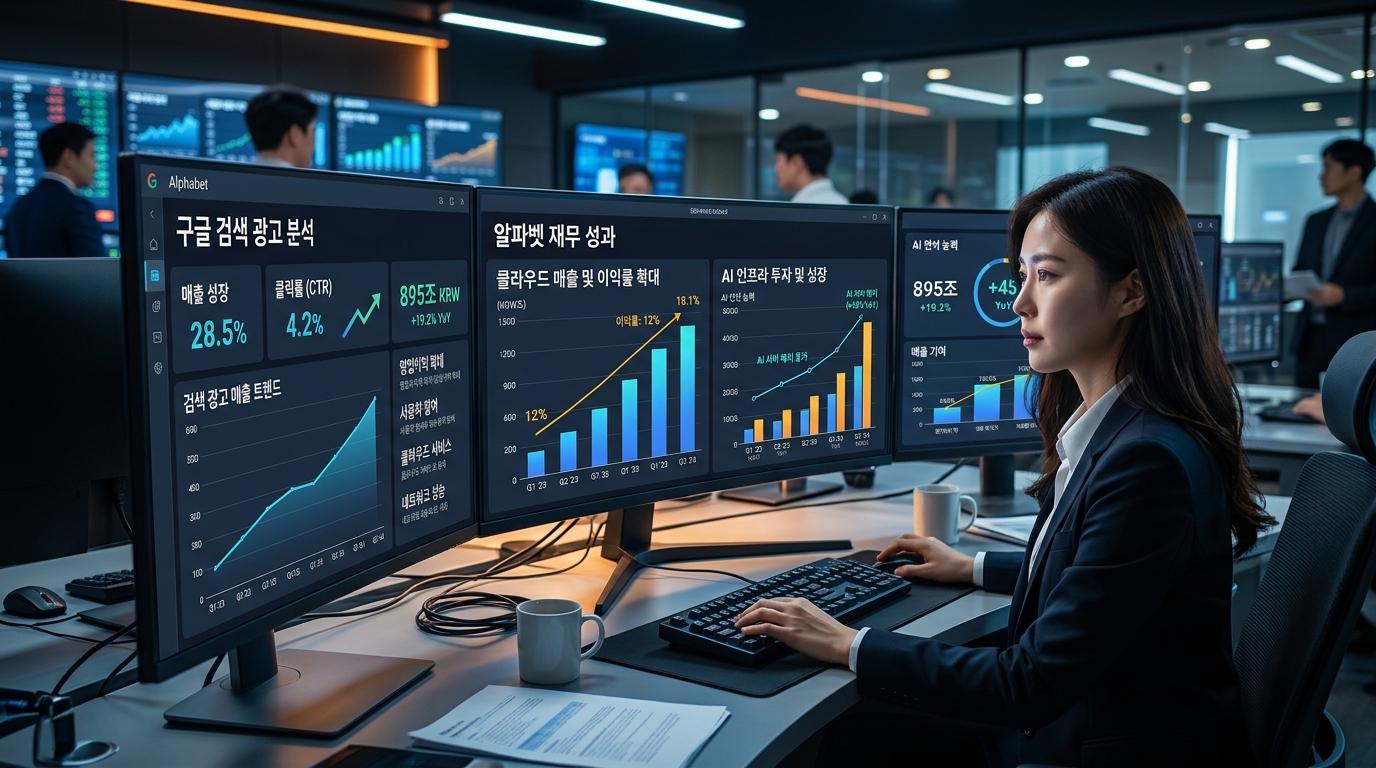
Alphabet's (GOOGL) Q3 earnings clearly demonstrated solid query growth in its search advertising business and explosive margin expansion in the Google Cloud division.
With search query growth hitting its highest level in five years, Google Search & other revenue increased 12% year-over-year to $63.35 billion.
In particular, Google Cloud generated $30.71 billion in revenue, up 103% YoY, while operating margin surged to 36.2%, solidifying the segment as the primary engine for enterprise AI monetization.
Conversely, quarterly capital expenditures (CAPEX) reached a massive $51.4 billion, driving free cash flow (FCF) into negative territory. Consequently, future capital efficiency and macro interest rate trajectories are expected to serve as key watershed moments for valuation.
Market Context
As of intraday trading on October 30, 2026 (tentative), the Nasdaq index stands at 26,184.73, the USD/KRW exchange rate is at 1,339.00 KRW, and the KOSPI and KOSDAQ are fluctuating around 5,758.22 and 738.78, respectively.
According to Daily Stock's proprietary Fear & Greed Index, the Nasdaq is currently in 'Fear' (34.6), slightly improved from 'Extreme Fear' (20) a week ago, but broad market caution remains deeply rooted compared to a month ago (31.1) and three months ago when it was in 'Neutral' (42.1).
The KOSPI Fear & Greed Index also sits in 'Fear' (27.6), merely rebounding from 'Extreme Fear' (7.5) one week ago, signaling persistent risk-off sentiment.
Against this macroeconomic backdrop, Big Tech companies are facing strict scrutiny compared to the Philadelphia Semiconductor Index (SOX) and S&P 500 growth stocks regarding the gap between their pace of AI CAPEX deployment and actual cash generation.
While Alphabet successfully defended search and expanded cloud margins backed by the rollout of its Gemini 4 model lineup and proprietary TPU accelerator ecosystem, the market remains focused on potential near-term margin dilution driven by aggressive infrastructure spending.
Financial Analysis
Alphabet's consolidated Q3 revenue grew 25% YoY to $127.58 billion.
By business segment, Google Services revenue rose 11% YoY to $96.3 billion, while the core Google Search & other segment generated $63.35 billion—a 12% YoY increase driven by the expansion of generative AI search features (AI Overviews).
| Key Financial Metrics | Q3 Results | YoY Change | vs. Market Consensus |
|---|---|---|---|
| Consolidated Total Revenue | $127.58 billion | +25.0% | Slight Miss (Est. $127.93B) |
| Google Search & Other Revenue | $63.35 billion | +12.0% | Slight Miss (Est. $64.85B) |
| Google Cloud Revenue | $30.71 billion | +103.0% | Beat (Est. $29.10B) |
| Cloud Operating Income (Margin) | $11.12 billion (36.2%) | Sharp Expansion | Beat (Est. $9.75B) |
| Capital Expenditures (CAPEX) | $51.4 billion | Substantial Increase | Below Est. (Est. $55.20B) |
| Free Cash Flow (FCF) | -$9.065 billion | Remained Negative | Wider Deficit |
The most notable operational shift was the fundamental turnaround in Google Cloud.
Cloud revenue surged 103% to $30.71 billion, driven by explosive demand for AI infrastructure solutions and enterprise model serving, generating $11.12 billion in operating income and a high operating margin of 36.2%.
However, quarterly CAPEX reached $51.4 billion due to AI server and data center expansion, exceeding cash flow from operations ($42.3 billion) and resulting in negative quarterly FCF of -$9.065 billion.
Additionally, reflecting valuation losses on equity securities ($8.7 billion), net income came in at $26.17 billion, with diluted earnings per share (EPS) at $2.12.
Valuation
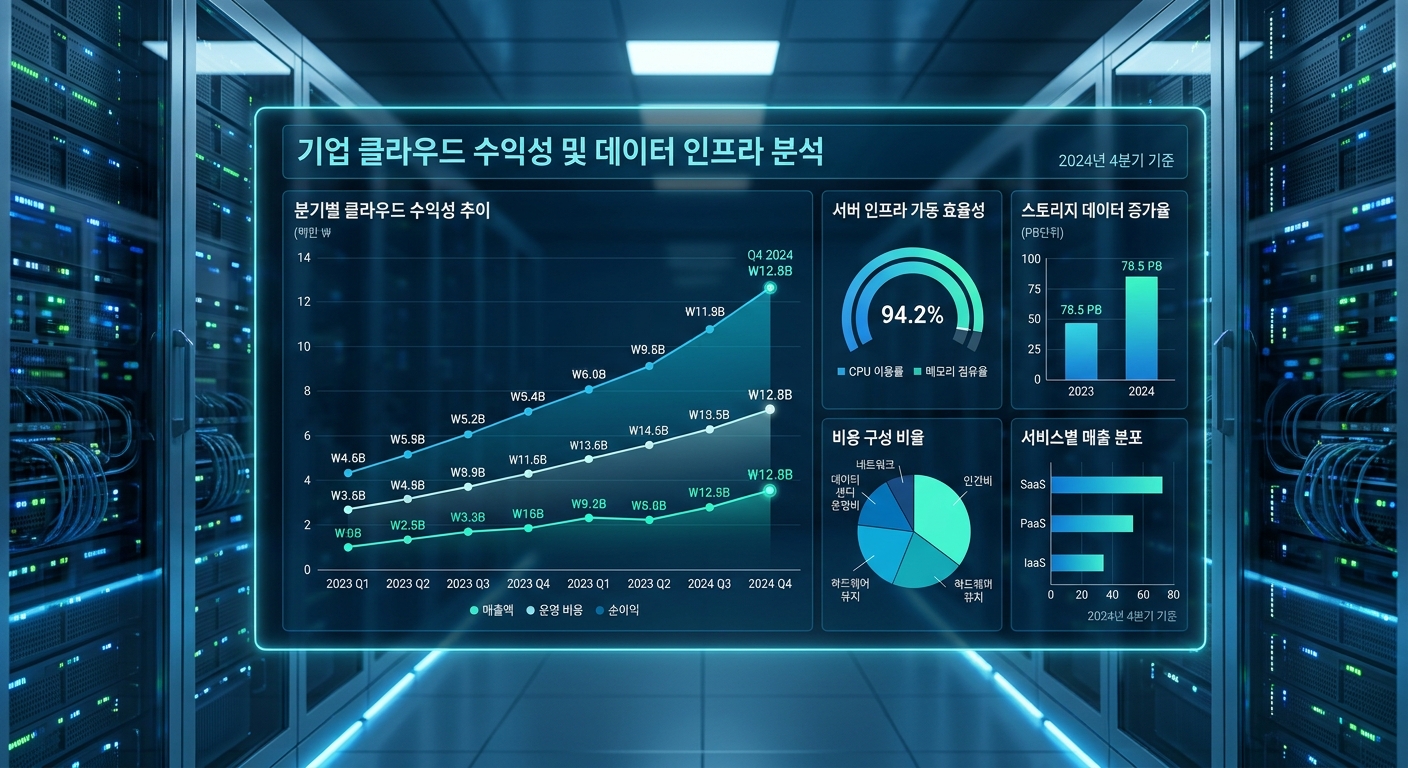
Alphabet's valuation multiple has maintained a relative discount compared to the Nasdaq 100 average; however, deceleration in free cash flow resulting from heavy CAPEX execution is acting as a resistance line against multiple expansion.
In particular, amid elevated volatility in the 10-year U.S. Treasury yield (US10Y) and movements in the U.S. Dollar Index (DXY), growth stock valuations remain sensitive to discount rates on future cash flows.
Google Cloud's establishment of a high-margin structure is positive, as it diversifies earnings previously concentrated in traditional search advertising.
Nonetheless, posting negative FCF for two consecutive quarters may constrain capital return capacity (share repurchases and dividends) in the near term.
As a result, the market has entered a phase where Alphabet's intrinsic corporate value is being reassessed not only by traditional P/E ratios, but also by the cash conversion rate of its new order backlog relative to deployed CAPEX.
Expert & Institutional Analysis
Major Wall Street investment banks assess Alphabet's Q3 results as a mixed bag, balancing 'overwhelming strength in cloud' against 'modest softness in search ads and near-term profitability.'
JPMorgan and Bank of America (BofA) noted that Google Cloud's triple-digit YoY growth and 36%+ operating margin validate its structural positioning in the enterprise AI market.
On the other hand, some analysts pointed out that search ad revenue missing consensus by roughly 1.5% and quarterly operating profit falling short of expectations reflect economic slowdown concerns and pricing pressure on ads.
With the Cboe Volatility Index (VIX) lingering in the macro background, institutional observers are monitoring whether Alphabet's proprietary TPU supply capabilities can reduce reliance on NVIDIA and drive long-term cost efficiencies.
Risk Factors
The primary structural risk lies in the potential monetization lag during the interface transition toward generative AI search.
While overall query volume posted its fastest growth rate in five years, ad conversion rates and pricing defense for traditional top-of-page sponsored links remain to be fully proven following the introduction of AI Overviews.
A second risk is the infrastructure CAPEX burden.
If annual AI investments estimated around $200 billion persist through 2027, consolidated cash flow impairment could be prolonged despite robust top-line cloud growth.
Lastly, regulatory headwinds persist, led by the U.S. Department of Justice (DOJ) antitrust proceedings and the potential risk of structural remedies concerning web browsers and search distribution channels.
Concurrently, if rate cut expectations recede or the 10-year U.S. Treasury yield spikes again, multiple compression on capital-intensive Big Tech firms could intensify.
Investment Takeaway
Alphabet has demonstrated a query rebound that dispels concerns over waning search engine dominance, while successfully transforming Google Cloud into a bona fide high-margin cash generator.
This serves as tangible proof that Alphabet's full-stack infrastructure capabilities are functioning effectively in the large language model (LLM) race.
However, market expectations have expanded beyond technological leadership to focus on when massive capital outlays will translate into sustainable free cash flow.
Given that Daily Stock's Fear & Greed Index remains in 'Fear' territory, a phased approach—tracking CAPEX trajectories and the durability of cloud margins step-by-step—appears more prudent than aggressive chase buying.
Q&A with Daily Stock
Q1. Why is Alphabet's Q3 search advertising performance viewed as a rebound?
Because search query growth hit a five-year high as generative AI-integrated features (AI Overviews) gained traction among global users.
Although revenue slightly missed consensus, it delivered 12% double-digit YoY growth, easing concerns over market share erosion.
Q2. What drove Google Cloud's operating margin to surge to 36.2%?
Surging enterprise demand for generative AI workloads drove an explosion in infrastructure utilization.
An efficient compute architecture centered around proprietary AI chips (TPUs) alongside expanding enterprise solution licensing unlocked economies of scale, significantly lifting margins.
Q3. What was the main reason for the negative FCF in Q3?
Quarterly CAPEX reached $51.4 billion, surpassing cash flow from operating activities ($42.3 billion).
Aggressive front-loaded investments in next-generation AI model training and global data center expansion weighed on short-term free cash flow.
Q4. How do fluctuations in the 10-year U.S. Treasury yield (US10Y) impact Alphabet's stock?
Big Tech growth stocks like Alphabet are sensitive to the discount rates applied to future earnings.
Higher yields lower the present value of distant future cash flows, creating multiple contraction pressure during phases of heavy capital expenditure.
Q5. Which metrics should investors monitor most closely going forward?
Investors should track whether Google Cloud can sustain its 30%+ operating margin and observe the recovery speed of FCF relative to quarterly CAPEX.
Additionally, watching for a rebound in commercial cost-per-click (CPC) within AI search results and monitoring developments in antitrust litigation across regulatory bodies remain essential.