
This is Daily Stock, delivering precise analysis on large-cap semiconductor earnings milestones and macroeconomic supply-demand dynamics.
Executive Summary
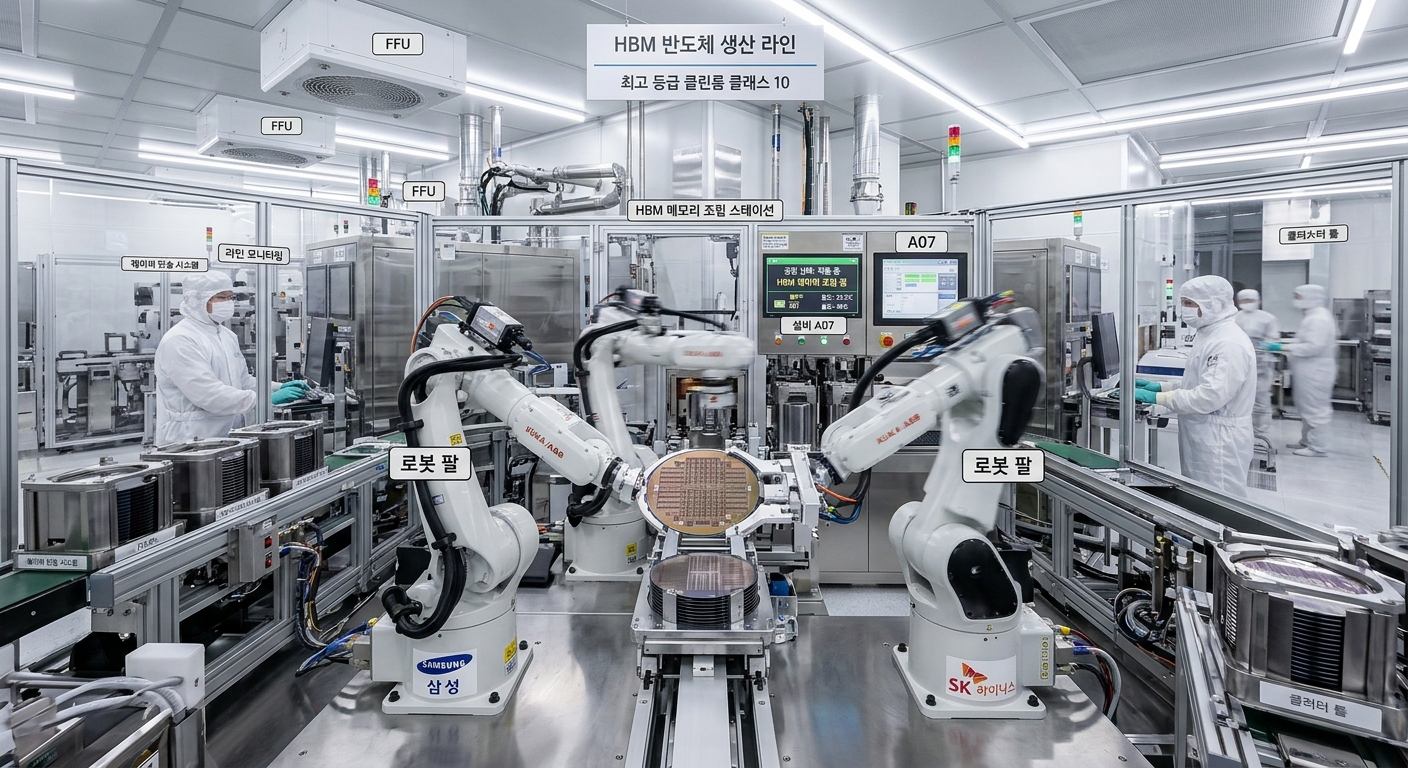
SK hynix is solidifying its leadership in the global artificial intelligence (AI) memory market by advancing mass production of 12-layer HBM3E and preparing for 6th-generation HBM4.
In its Q3 2026 earnings release on October 28, 2026, the company posted record-breaking figures that significantly beat market consensus, with quarterly revenue of KRW 104.6155 trillion and operating profit of KRW 83.3338 trillion.
In the fourth quarter, an expanding shipment share of higher-stack HBM coupled with the ramp-up of the Cheongju M15X fab is expected to further reinforce profitability defense through product mix improvements.
Meanwhile, the shareholder return policy—amounting to roughly KRW 100 trillion annually, including an announced KRW 20 trillion share buyback and a quarterly dividend of KRW 20,000 per share—stands out as a key factor supporting downside price resilience.
However, debates over capital expenditure (CAPEX) payback periods among global Big Tech companies and shifts in foreign passive fund flows due to KRW/USD exchange rate volatility remain critical risk factors to monitor closely.
Current Market Overview
On October 28, 2026, domestic equity markets closed with the KOSPI at 6012.44 and KOSDAQ at 771.28, bolstered by strong earnings from large-cap semiconductor names and enhanced shareholder returns.
On the same day in the Seoul foreign exchange market, the KRW/USD exchange rate closed at 1,338.90, continuing a tug-of-war between supply and demand.
Looking at Daily Stock's proprietary Fear & Greed Index (based on volatility, RSI, and momentum), cautious sentiment still prevails despite the rise in index levels.
The KOSPI Fear & Greed Index is currently in the "Fear" zone (24.2), rebounding from "Extreme Fear" (9.6) a week ago, but lower than "Neutral" (40.5) a month ago, while showing recovery compared to "Extreme Fear" (12.6) three months ago.
The Nasdaq Fear & Greed Index is also in "Fear" (33.6), reflecting similar caution compared to "Fear" a week ago (30.3), a month ago (32.4), and three months ago (39.3).
In the KOSPI market on this day, SK hynix responded to the blowout earnings and strong shareholder return measures, surging 10.89% from the previous trading day to close at KRW 1,487,000.
Institutional and foreign buying surged strongly enough to trigger intra-day Volatility Interruption (VI) mechanisms, leading the large-cap rally.
During its conference call, the company stated that based on stable mass-production yields for 12-layer HBM3E, it plans to accelerate the crossover to the next-generation HBM4 product family starting in Q4.
Financial Analysis
SK hynix's finalized Q3 2026 results reflect the full benefit of rising ASPs for high-value AI memory, including HBM and enterprise SSDs (eSSDs).
Consolidated Q3 revenue reached KRW 104.6155 trillion, up 327.9% YoY, while operating profit surged 632.1% YoY to KRW 83.3338 trillion.
The operating profit margin (OPM) stood at approximately 79.7%, demonstrating unmatched margin resilience within the global high-tech hardware sector.
Net profit came in at KRW 39.7756 trillion, reflecting some foreign-exchange losses and non-operating expenses.
| Financial Metric | Q3 2025 (YoY Base) | Q2 2026 (Preceding Quarter) | Q3 2026 (Finalized Current Quarter) | Growth Rate (YoY / QoQ) |
|---|---|---|---|---|
| **Revenue** | KRW 24.4490 T | KRW 79.2542 T | KRW 104.6155 T | +327.9% / +32.0% |
| **Operating Profit** | KRW 11.3830 T | KRW 60.5426 T | KRW 83.3338 T | +632.1% / +37.6% |
| **Operating Margin (OPM)** | 46.6% | 76.3% | 79.7% | +33.1%p / +3.4%p |
| **Net Profit** | KRW 9.5200 T | KRW 95.4100 T | KRW 39.7756 T | +317.8% / -58.3% |
| **Cash & Cash Equivalents** | KRW 28.1000 T | KRW 88.0000 T | KRW 114.5000 T | Net Cash KRW 98.7000 T |
In terms of balance sheet health, cash and cash equivalents grew to KRW 114.5000 trillion as of the end of Q3, while borrowings contracted to KRW 15.8000 trillion, achieving a net cash position of KRW 98.7000 trillion.
Backed by this immense liquidity, the board approved a quarterly dividend of KRW 20,000 per common share (totalling KRW 14.1035 trillion) along with a KRW 20 trillion share repurchase plan.
Of the repurchased shares, KRW 10 trillion worth will be retired to enhance shareholder value, and fixed margins are expected to be defended into the fourth quarter.
Valuation
Following the massive Q3 earnings results, SK hynix's 12-month forward price-to-earnings ratio (Forward PER) is being recalculated around 6.3x.
This represents a substantial discount compared to global peers such as Micron Technology (~10–11x) or foundry leader TSMC (~18–20x).
The price-to-book ratio (PBR) has settled near 3.8x following rapid growth in book value, approaching the peak multiple ranges seen in past semiconductor upcycles.
The exceptionally steep trajectory of earnings growth relative to other traditional manufacturing sectors within the KOSPI 200 serves as a core valuation pillar.
However, some market participants apply conservative multiples, pricing in potential oversupply scenarios should semiconductor fab expansions accelerate post-2027.
Conversely, management highlighted that it has already locked in a significant portion of production capacity through 2029 via long-term agreements (LTAs) with 14 major global customers, suggesting the amplitude of future downcycles may be more muted than in the past.
Expert & Institutional Analysis
Domestic brokerages assess that the successful mass-production ramp of 12-layer HBM3E and demand for high-value server DDR5 will serve as strong backstops for Q4 earnings.
In a report published on the 28th, Hanwha Investment & Securities maintained a 'Buy' rating on SK hynix with a target price of KRW 3,150,000.
The report analyzed that even amid architectural shifts across AI accelerator platforms, SK hynix's advanced packaging yield competitiveness acts as an indispensable economic moat preventing customer defections.
On the foreign capital front, foreign investors resumed net purchases in the semiconductor spot market even as the KRW/USD exchange rate hovered in the upper 1,330 range.
In foreign futures positions, short-covering flows were also observed following the clearance of major earnings event risks.
Nevertheless, some foreign investment banks (IBs) maintain a neutral stance, noting that investors must first monitor whether tech companies can sustain their infrastructure investment capacity going forward.
Risk Factors
The primary macroeconomic risk to watch is the possibility that major Big Tech companies will moderate the pace of their investments if AI service monetization faces delays.
If hyperscalers reduce the scale of their CAPEX, a slowdown in the shipment growth of high-margin HBM cannot be ruled out.
Sudden foreign exchange market volatility is another potential source of instability that could trigger foreign capital outflows.
If the KRW/USD rate turns sharply upward from 1,338.90, passive selling by foreign investors to hedge against won-denominated FX losses may emerge.
On the domestic monetary policy front, the direction of Bank of Korea base rates and downward pressure on domestic consumption from household debt management could cap multiple expansion across the broader index.
Additionally, investors must keep in mind scenarios in which the pricing premium could gradually narrow depending on whether competitors successfully achieve mass-production qualification for next-generation HBM.
Investment Perspective
Amid short-term industry skepticism, SK hynix proved its fundamental resilience through a quarterly earnings surprise and proactive shareholder return initiatives.
The product mix transition from 12-layer HBM3E to HBM4 will serve as a potent pillar defending against any steep erosion of Q4 operating margins.
However, the potential for short-term profit-taking following the single-day rally and the Daily Stock Fear & Greed Index lingering in the "Fear (24.2)" territory indicate that broader market conviction has not yet fully formed.
Therefore, rather than chasing gains on short-term momentum, a staggered accumulation strategy while tracking Q4 blended DRAM average selling prices (ASP) and foreign exchange trends appears prudent.
Now is the time for scenario-based portfolio adjustments centered on stable earnings generation backed by long-term supply agreements and attractive dividend yields.
Investor Checkpoint Q&A
Q1. What were the primary drivers behind Q3 earnings significantly beating market consensus?
Strong results were driven by expanded shipments of HBM3E and next-gen products for AI data centers, along with rising ASPs for high-capacity server DDR5 and 321-layer eSSDs.
Q2. What is the progress on 12-layer HBM3E mass production and its expected Q4 share?
12-layer HBM3E has achieved stable advanced packaging yields and is poised to lead the upgrading of total HBM revenue in Q4 as it interfaces with next-generation products.
Q3. What are the specifics of the KRW 100 trillion annual shareholder return program?
The framework targets approximately KRW 100 trillion in annual returns, including a Q3 cash dividend of KRW 20,000 per share (~KRW 14 trillion total) and a KRW 20 trillion share buyback program (with KRW 10 trillion slated for retirement).
Q4. How do FX and macroeconomic indicators impact SK hynix's supply-demand dynamics?
If the KRW/USD exchange rate stabilizes around 1,338.90, it acts favorably for foreign net inflows; however, sharp spikes could increase foreign exchange evaluation losses and passive selling pressure.
Q5. What is the most critical short-term metric for investors to watch?
Investors should closely track next year's AI infrastructure CAPEX guidance during Big Tech Q4 earnings calls and the actual mass-production ramp-up pace of the Cheongju M15X fab.