Hello, this is Daily Stock.
Key Takeaways
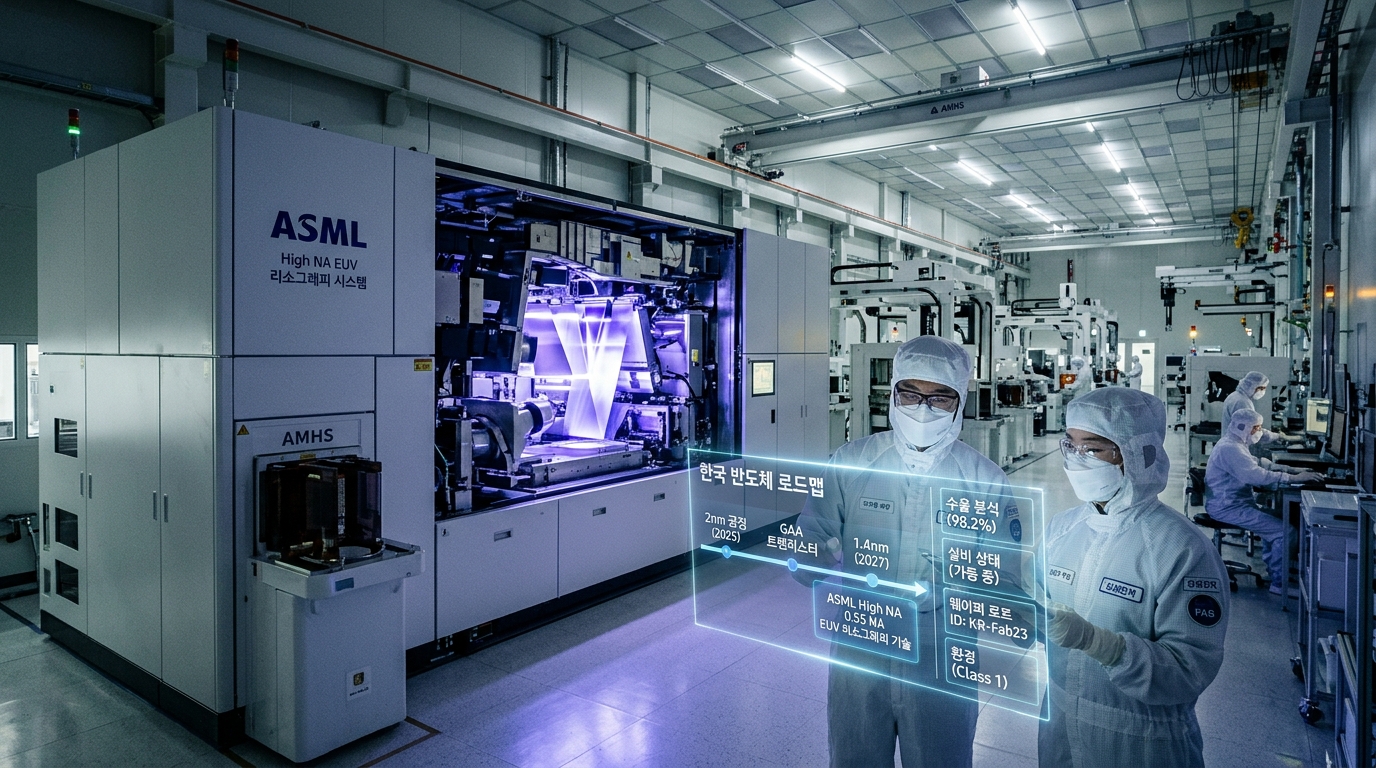
As demand for artificial intelligence (AI) chips concentrates on ultra-fine processes, the commercialization schedule of High NA EUV equipment supporting a numerical aperture (NA) of 0.55 has emerged as a critical watershed in global foundry competition.
While Intel leads initial pilot validation, TSMC and Samsung Electronics are differentiating their timing for commercial adoption by weighing process costs against equipment utilization rates, directly impacting the conversion pace of ASML's medium- to long-term order backlog.
From a macroeconomic perspective, fluctuations in the 10-year US Treasury yield (US10Y) and Big Tech capital expenditure (CAPEX) trends serve as critical variables determining the multiple recovery across the semiconductor equipment sector.
Market Overview
Looking at major market indicators as of intraday trading on 2026-10-27 (preliminary), the domestic market shows the KOSPI at 5,645.01 and the KOSDAQ at 738.99.
The tech-heavy US Nasdaq index is recording 26,169.38, while the USD/KRW exchange rate continues to fluctuate around 1,325.00 won.
According to Daily Stock's proprietary Fear & Greed Index analysis, the Nasdaq Fear & Greed reading currently stands at Fear (27.1), following Fear (20.8) a week ago, Fear (36.9) a month ago, and Fear (32.5) three months ago, indicating an ongoing broad wait-and-see sentiment.
The KOSPI Fear & Greed reading stands at Extreme Fear (7.1), following Extreme Fear (6.7) a week ago, reflecting an extreme risk-off environment.
ASML's (ASML) common stock price is currently unverified for the day (based on the latest confirmed data), but the market is closely watching the official delivery schedule and backlog absorption path for its High NA EUV systems.
The adoption cycle for next-generation lithography equipment, costing hundreds of millions of dollars per unit, is undergoing subtle realignments in lockstep with foundries' next-generation mass-production schedules.
Financial Analysis
ASML's revenue structure is split between new advanced Extreme Ultraviolet (EUV) equipment shipments and its Installed Base Management business, which services and upgrades deployed systems.
Initial shipments of High NA EUV equipment require accounting R&D and installation verification periods that can temporarily dilute near-term gross margins; however, deployment on full-scale mass-production lines serves as a key driver lifting long-term average selling prices (ASP).
| Foundry | High NA EUV Adoption Roadmap | Key Target Node | Advanced CAPEX Stance |
|---|---|---|---|
| **Intel** | Preemptive adoption & line validation completed | Sequential deployment on 18A / 14A nodes | Preemptive investment strategy to secure early technological leadership |
| **Samsung Electronics** | Mass-production line deployment around 2028 | Sub-2nm foundry & advanced 1c/1d DRAM | Phased execution weighing process yields and combined memory/foundry investments |
| **TSMC** | Mass-production adoption under review around 2030 | Nodes below 1.4nm (A14) post-A16 | Conservative stance maximizing Low NA multi-patterning cost efficiency before transition |
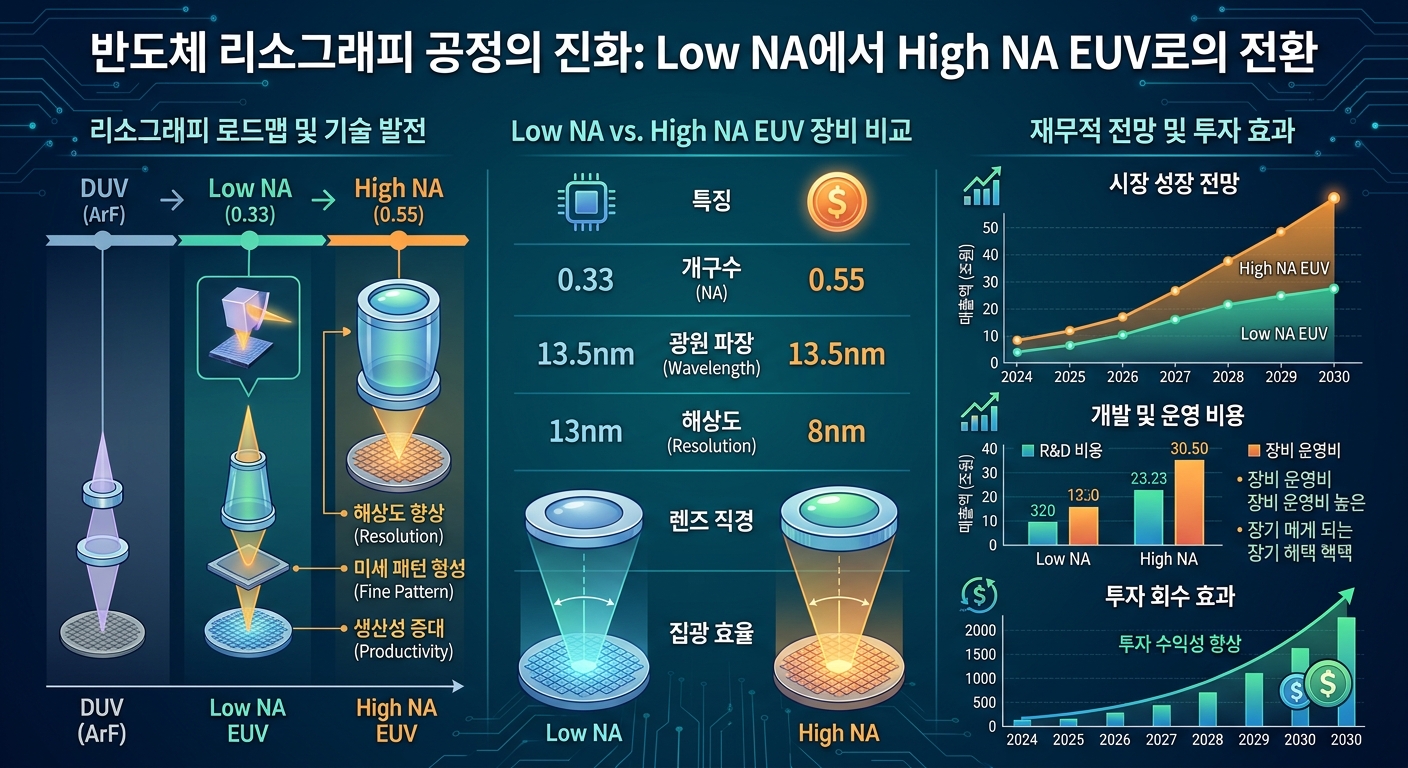
Intel is pursuing a strategy of securing process references by adopting equipment early, whereas TSMC is maximizing cost-effective production efficiency through double and quadruple patterning using existing Low NA equipment.
Samsung Electronics is also calibrating its transition timing by calculating the practical economic benefits across both foundry and next-generation DRAM nodes. Consequently, volatility in ASML's quarterly net bookings remains tightly linked to customer fab completion schedules.
Valuation
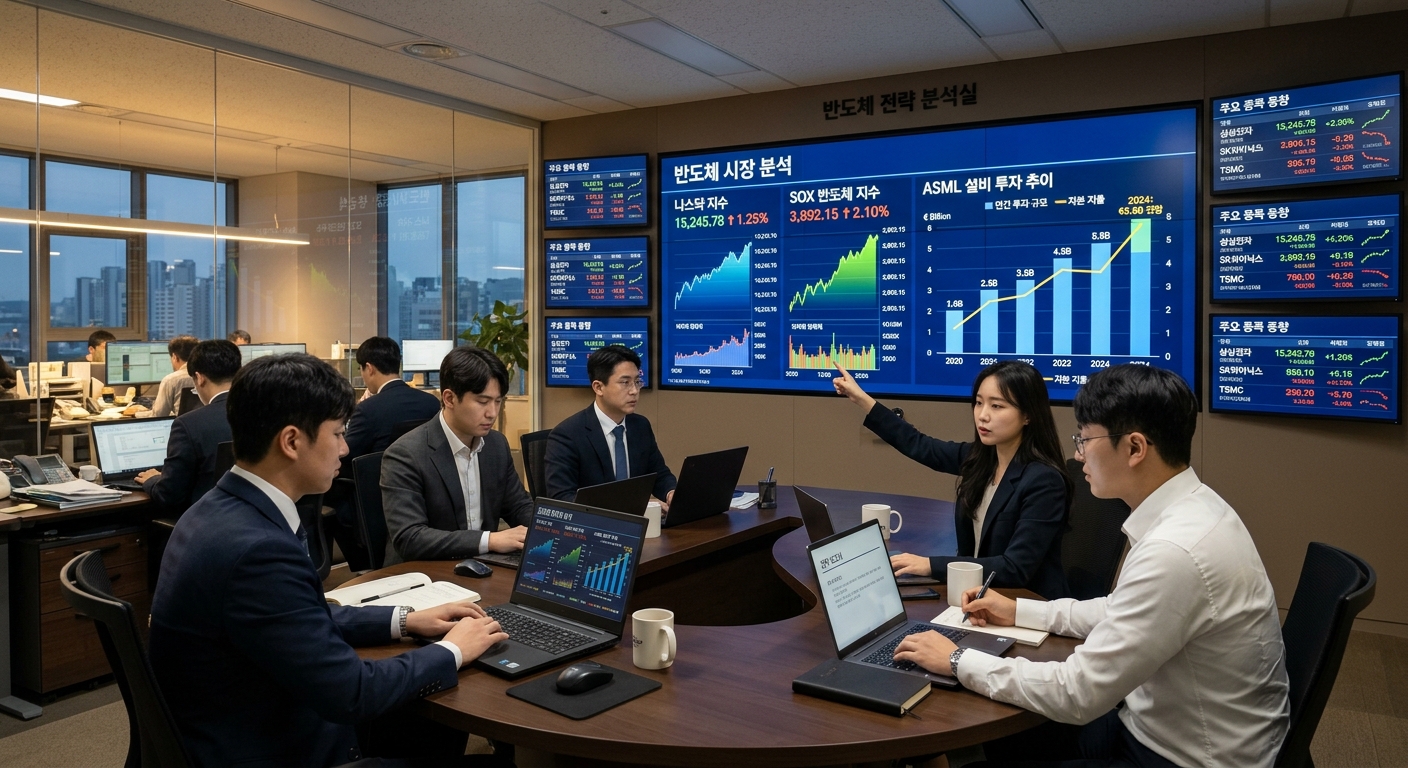
Valuations across the semiconductor equipment sector are heavily influenced by the relative trajectories of the Philadelphia Semiconductor Index (SOX) and the Nasdaq 100 Index.
High-multiple technology monopolies like ASML typically see their price-to-earnings (P/E) ratios compress rapidly due to rising discount rates whenever the 10-year US Treasury yield (US10Y) faces upward pressure.
During periods of US Dollar Index (DXY) strength, an environment emerges where foreign exchange translation effects for Europe-headquartered ASML clash with the dollar-denominated CAPEX execution capacity of global semiconductor manufacturers.
Furthermore, during stretches of expanding Volatility Index (VIX) levels, market sensitivity tends to heighten more around potential quarterly delivery push-outs than the absolute scale of the order backlog.
With forward multiples for core equipment names within the SOX index currently hovering in the mid-to-upper end of their historical bands, upward revisions in foundry customers' CAPEX are essential to drive further re-rating.
Expert & Institutional Analysis
Major Wall Street institutions are focusing on High NA EUV's ultra-premium price tag, which exceeds $350 million per unit.
Global investment banks, including Goldman Sachs, analyze that whether foundries can pass on higher per-wafer processing costs to fabless customers will serve as the pivotal factor determining the timing of bulk High NA EUV orders.
Some research houses present scenarios where explosive growth in the AI accelerator market accelerates advanced node transitions at foundries, potentially triggering lithography equipment shortages around 2027–2028.
Conversely, a cautious perspective also persists: if secondary foundry players encounter process delays or implement CAPEX cuts, ASML's near-term order momentum could plateau.
Ultimately, large institutions are closely monitoring whether hyperscalers' data center infrastructure budgets are fully trickling down into advanced semiconductor foundries.
Risk Factors
The foremost risk is a scenario where major Big Tech players see their AI service monetization lag behind their aggressive CAPEX expansion.
If the return on investment (ROI) payback period for AI infrastructure lengthens, hyperscalers could adopt a more conservative chip ordering posture, prompting foundries to defer fab expansions.
A second risk is the potential contraction of DUV and legacy lithography equipment revenue due to tightened semiconductor export controls to China by the Netherlands and the US.
If China's high revenue contribution—which has driven significant equipment sales—shrinks due to regulatory constraints, the burden on advanced EUV tool orders to defend overall top-line growth could increase.
Lastly, if the 10-year US Treasury yield rebounds due to persistent inflation, downward pressure on growth stock multiples across the board could intensify.
Investment Perspective
High NA EUV equipment possesses an irreplaceable technological moat over the medium to long term for manufacturing next-generation 1nm-class logic and advanced memory.
However, because clear discrepancies remain across customer adoption schedules and mass-production roadmaps, investors must remain mindful of near-term quarterly earnings and order volatility.
From an investor's perspective, rather than reacting excessively to simple quarterly order figures, a disciplined approach is required to systematically verify the qualitative composition of the backlog alongside fab utilization recovery trends at key customers.
With the Nasdaq Fear & Greed Index lingering in Fear territory and market volatility persisting, formulating scenario-based strategies by monitoring macro interest rate indicators and foundry CAPEX updates remains advisable.
Q&A with Daily Stock
Q1. What is the technical difference between High NA EUV and conventional Low NA EUV equipment?
By enlarging the lens numerical aperture (NA) from 0.33 to 0.55, it collects more light, enabling sub-2nm ultra-fine semiconductor patterns to be resolved with high precision in a single exposure (single patterning).
Q2. Why is TSMC delaying its High NA EUV adoption timeline compared to Intel?
Because equipment adoption costs are exceptionally high, TSMC determined that optimizing multi-patterning techniques with existing Low NA systems is currently more advantageous from a commercial standpoint to lower mass-production costs.
Q3. How long is the lag before foundry CAPEX adjustments are reflected in ASML's financial results?
Because lithography equipment requires manufacturing and installation lead times exceeding one year, changes in customer CAPEX plans typically flow through to order backlog and revenue recognition with a lag of 2 to 4 quarters.
Q4. How do the 10-year US Treasury yield (US10Y) and the US Dollar Index (DXY) impact ASML's stock price?
Rising Treasury yields increase the discount rate applied to future cash flows, compressing valuation multiples, while a strong dollar adds to the cost burden of global foundries executing dollar-denominated CAPEX.
Q5. With the Nasdaq Fear & Greed Index currently at 'Fear (27.1)', what indicator requires the most attention?
In a Fear regime, share prices can react hypersensitively to near-term order gaps or Big Tech CAPEX deferrals rather than long-term monopoly power. Therefore, investors should closely track the directional trajectory of quarterly net bookings and the stabilization of the VIX index.