Hello, this is Daily Stock, where we examine macro market trends alongside fundamental corporate value.
Key Takeaways
HD Hyundai Heavy Industries is establishing a solid quarterly operating profit trend backed by the clearance of low-margin legacy orders and an expanding share of high-value vessels.
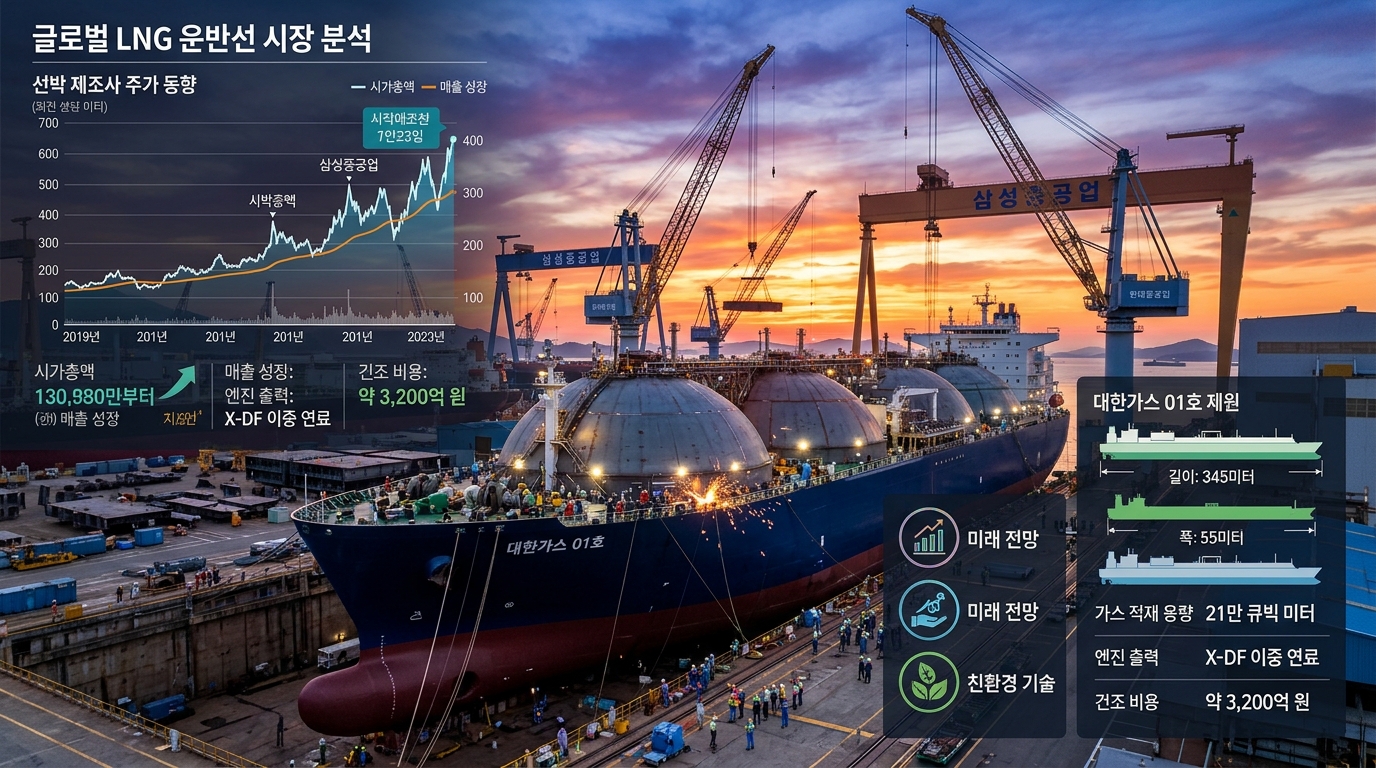
Despite summer vacations and fewer working days, the construction of high-priced liquefied natural gas (LNG) carriers has entered full swing, demonstrating profit stamina distinctly different from past cycles.
In particular, as construction begins on Qatar Phase 2 project orders (17 vessels, approximately $3.9 billion), mid-to-long-term product mix improvements driven by higher prices per ship are becoming increasingly visible.
Even amid USD/KRW exchange rate volatility and macroeconomic uncertainty, attention is focused on whether demand for HiMSEN engines and eco-friendly propulsion vessels will serve as a resilient earnings defense line.
Market Context
The domestic stock market is experiencing severe sentiment contraction due to exchange rate volatility surrounding large export stocks and concerns over a global economic slowdown.
As of the close on October 26, 2026, the KOSPI index closed at 5,469.47 and the KOSDAQ index at 727.21, with the USD/KRW exchange rate finishing at 1,322.90 won.
According to Daily Stock's proprietary Fear & Greed Index, the KOSPI Fear & Greed Index currently stands at Extreme Fear (6.9), maintaining depressed investor sentiment compared to Extreme Fear (6.6) a week ago, Neutral (52) a month ago, and Extreme Fear (13.5) three months ago.
The NASDAQ Fear & Greed Index is also in the Fear zone at 21, following readings of 22.1 a week ago, 32.5 a month ago, and 27.6 three months ago.
| Category | Key Indicator & Figure | Detailed Analysis |
|---|---|---|
| **KOSPI / KOSDAQ** | 5,469.47 pt / 727.21 pt | Expanding volatility in large exporter stocks and an index consolidation phase |
| **USD/KRW Exchange Rate** | 1,322.90 won | Downward stabilization trend compared to the previous quarter affecting foreign spot/futures flows |
| **KOSPI Fear & Greed** | Extreme Fear (6.9) | Selective demand for earnings-defensive stocks amid prolonged sentiment contraction |
| **HD Hyundai Heavy Closing Price** | Same-day price unconfirmed (latest confirmed price: 305,000 won) | Correction reflecting Q3 seasonality after forming a peak in the first half |
| **Qatar Phase 2 Order** | 17 vessels (approx. $3.9 billion / KRW ~5.3 trillion) | Approx. $229.1 million per vessel, entering dry docks sequentially |
Financial Analysis
HD Hyundai Heavy Industries' Q3 2026 performance was affected by fewer operating days due to seasonal factors (summer vacations and the Chuseok holiday) as well as a lower exchange rate.
According to securities consensus estimates, Q3 consolidated revenue is provisionally estimated at around 5.95 trillion to 6.0 trillion won, with operating profit hovering near 920 billion won (an operating profit margin of approximately 15.4–15.5%).
Although operating profit softened slightly compared to the prior quarter due to reduced working days, it showed an operating profit growth rate exceeding 60% year-over-year, reaffirming a structural profitability trend.
This is the result of a structural improvement in cost of goods sold (COGS) ratios, driven by the completion of deliveries for low-margin vessels won in 2021–2022 and an expanding proportion of high-priced merchant ships alongside the remaining Qatar Phase 1 vessels.
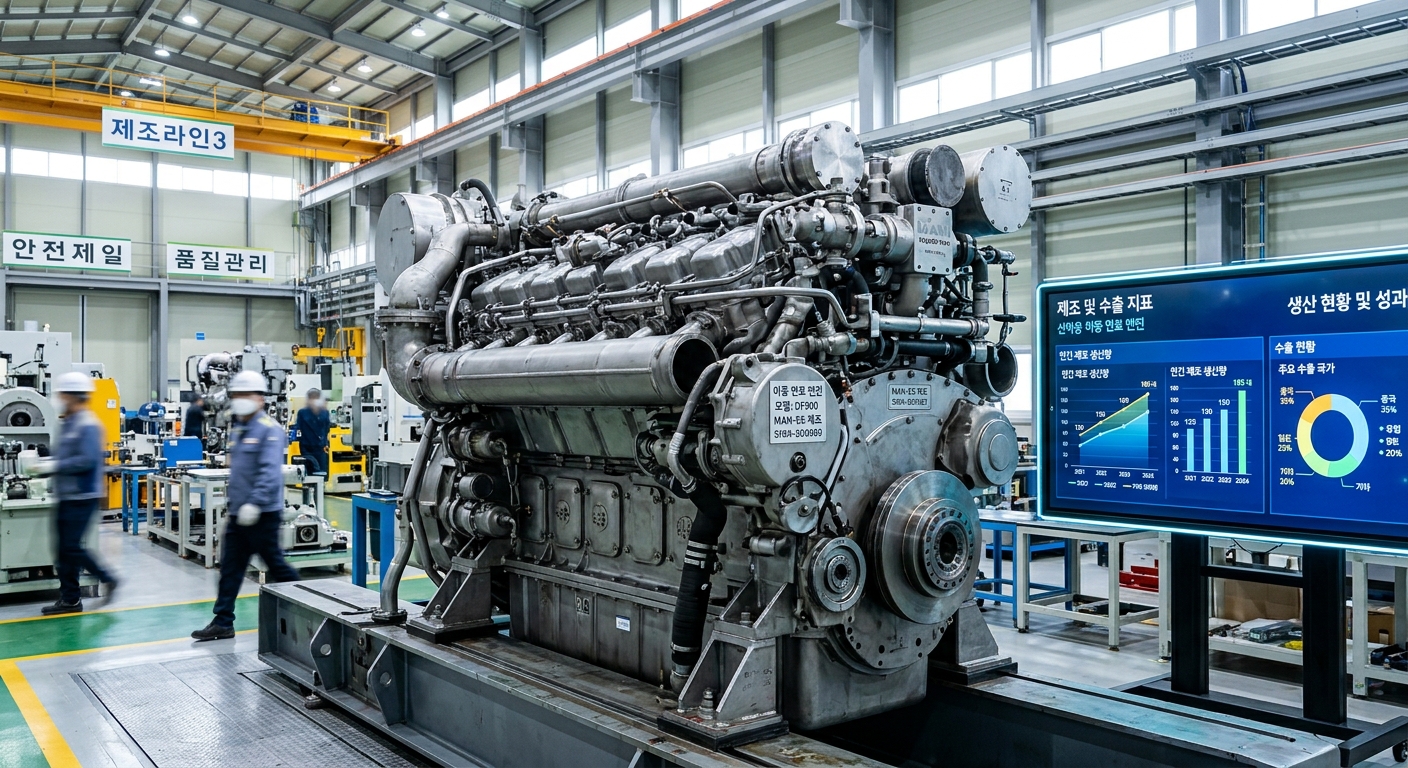
Furthermore, the HiMSEN engine business division, which has seen surging demand for marine propulsion/auxiliary power and onshore distributed power generation, continues to maintain high operating profit margins in the high double digits.
In terms of financial soundness, bolstered by ample advance payment inflows, the net debt ratio remains in negative territory, demonstrating robust cash flow.
Valuation
HD Hyundai Heavy Industries' market capitalization is currently around 32 trillion won following a price correction from its all-time high (765,000 won) recorded in May 2026.
Its 12-month forward price-to-earnings ratio (P/E) stands around 12–13x, marking a full transition from the price-to-book (P/B)-centric evaluation used during past deficit cycles to an earnings-based multiple framework.
While major Chinese shipbuilders in its global peer group face valuation discounts due to capacity expansions, HD Hyundai Heavy Industries holds an undisputed delivery track record and technological moat in eco-friendly dual-fuel and technically demanding gas carriers.
If the company's superior ROE (return on equity) improvement trend relative to the KOSPI 200 large-cap manufacturing index is maintained, projected 2027 earnings per share (EPS) growth is likely to serve as a firm valuation floor for the stock.
Expert & Institutional Analysis
Securities analysts assess that the Q3 earnings deceleration was a temporary pause caused by seasonal reductions in operating days rather than any fundamental deterioration.
Major institutions that recently published reports anticipate that as construction on the 17 Qatar Phase 2 LNG carriers ramps up, revenue recognition based on percentage of completion will steadily expand through 2027.
However, reflecting Chinese shipbuilders' participation in LNG bidding competitions and the potential slowdown in global newbuilding orders, some brokerages have adjusted their target prices to a realistic range of 500,000 to 820,000 won.
Experts are paying close attention to whether orders for diesel and gas power generation engines—used in AI data centers and renewable microgrid backups—will act as a new multiple-expansion catalyst beyond commercial vessel deliveries.
Risk Factors
The most direct macro variable is sharp volatility in the USD/KRW exchange rate and hedging ratios at the time of export payment settlements.
If the exchange rate falls below the 1,320 won level, it could negatively impact translated KRW revenues and foreign exchange valuation gains/losses.
On the raw material front, thick plate price negotiations and upward pressure on outsourced wages and labor costs remain quarterly one-off provisioning risks.
Additionally, if concerns over peak global maritime cargo volumes materialize alongside an order void for mega new gas fields after the Qatar project, the company's ability to maintain order backlog quality will be tested.
Investment Perspective
HD Hyundai Heavy Industries has firmly transitioned past the shipbuilding industry downturn into a "harvest phase" where high-priced order backlogs flow directly into bottom-line performance.
While the overall KOSPI remains in an Extreme Fear state with high index volatility, the earnings visibility of companies holding clear backlogs (over 3.5 years) stands out among large export stocks.
Rather than focusing on quarterly operating day noise, investors should monitor the construction pace of Qatar Phase 2 vessels and margin trends in the Engine & Machinery division as core indicators.
The Bank of Korea's benchmark interest rate direction and USD/KRW exchange rate trends will likely serve as key inflection points determining foreign capital inflows.
FAQ
Q1. How does profitability differ between the Qatar Phase 2 and Phase 1 LNG carrier contracts?
While Qatar Phase 1 vessels were priced at approximately $215 million per ship, Phase 2 contracts increased to roughly $229.1 million—an increase of more than $14 million per vessel. In addition, learning curve efficiencies gained from repeated construction of identical hull designs enable cost savings and improve operational margins.
Q2. What was the primary reason for the Q3 earnings slowdown compared to the previous quarter?
The primary drivers were an approximately 20% decline in working days due to summer breaks and Chuseok holidays, alongside compressed translated margins from a lower USD/KRW exchange rate. This is evaluated as seasonal rather than structural issues such as lower pricing or order cancellations.
Q3. Why is the HiMSEN engine business considered critical in shipbuilding valuation?
HiMSEN engines are broadening their applications beyond marine generators to onshore distributed power generation and emergency backup power for AI data centers. Because their operating profit margins are significantly higher than general hull construction, they act as a buffer against margin volatility across the shipbuilding business.
Q4. What macroeconomic variables are currently influencing foreign and institutional supply-demand dynamics?
The USD/KRW exchange rate level and South Korea's monthly trade surplus figures. With the KOSPI Fear & Greed Index stuck in Extreme Fear (6.9), the stabilization of foreign exchange rates will dictate foreign net buying or selling directions in large-cap spot and futures markets.
Q5. What core risks should investors monitor going forward?
Key risks include a sharp appreciation of the Korean won, thick steel plate price hikes, and one-off cost provisions resulting from annual labor wage negotiations. Investors should also continuously monitor the remaining ordering capacity of global shipowners and shipyard dock slot rotation efficiency.