Hello, this is the Nasdaq analysis team at Daily Stock.
Key Summary
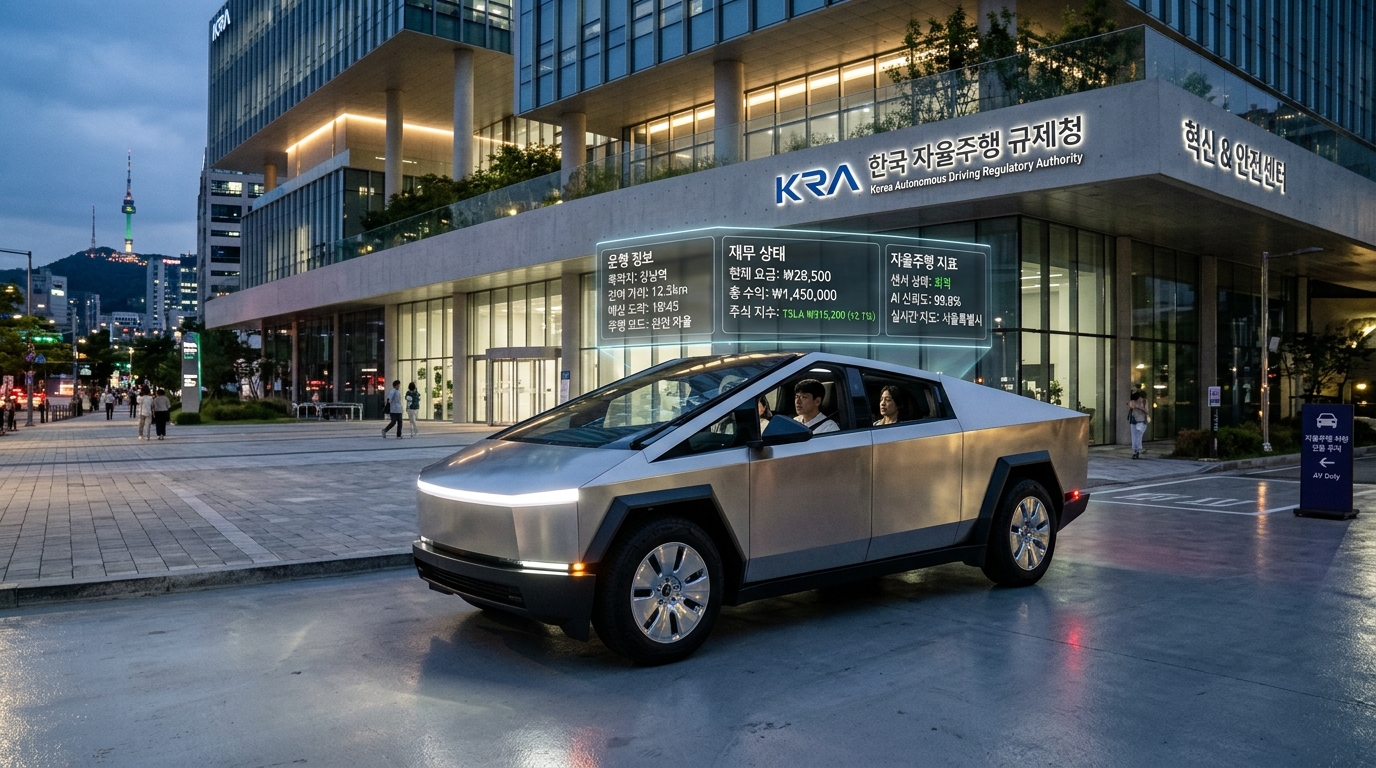
Tesla (TSLA) is formalizing its mass-production framework for the "Cybercab," a dedicated robotaxi model without a steering wheel or pedals. However, regulatory uncertainty is rising as the National Highway Traffic Safety Administration (NHTSA) ramps up its audit of Tesla's Federal Motor Vehicle Safety Standards (FMVSS) self-certification.
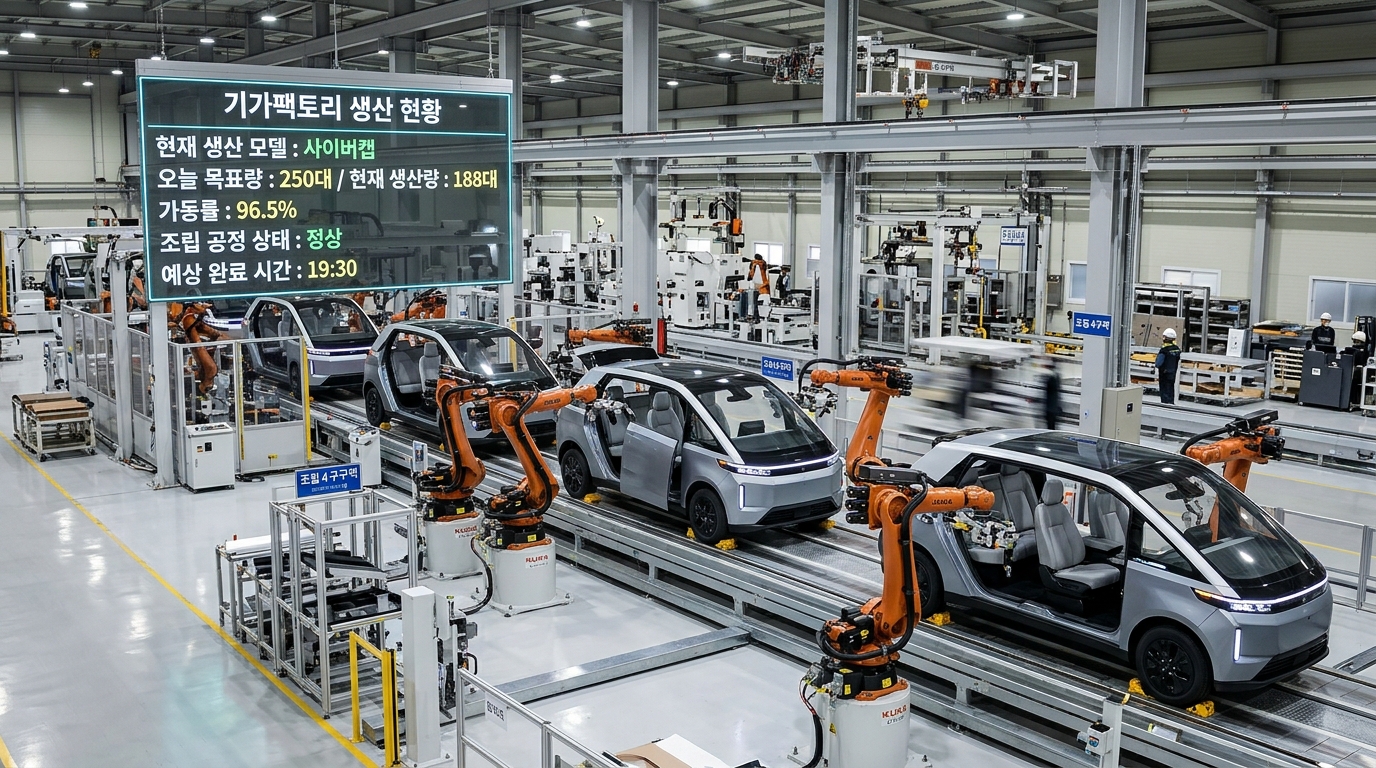
Despite establishing production processes centered around Gigafactory Texas in Austin and advancing "Unsupervised FSD," obtaining approvals from state governments such as California and Texas alongside proving federal-level safety have emerged as critical variables determining the timeline for commercialization.
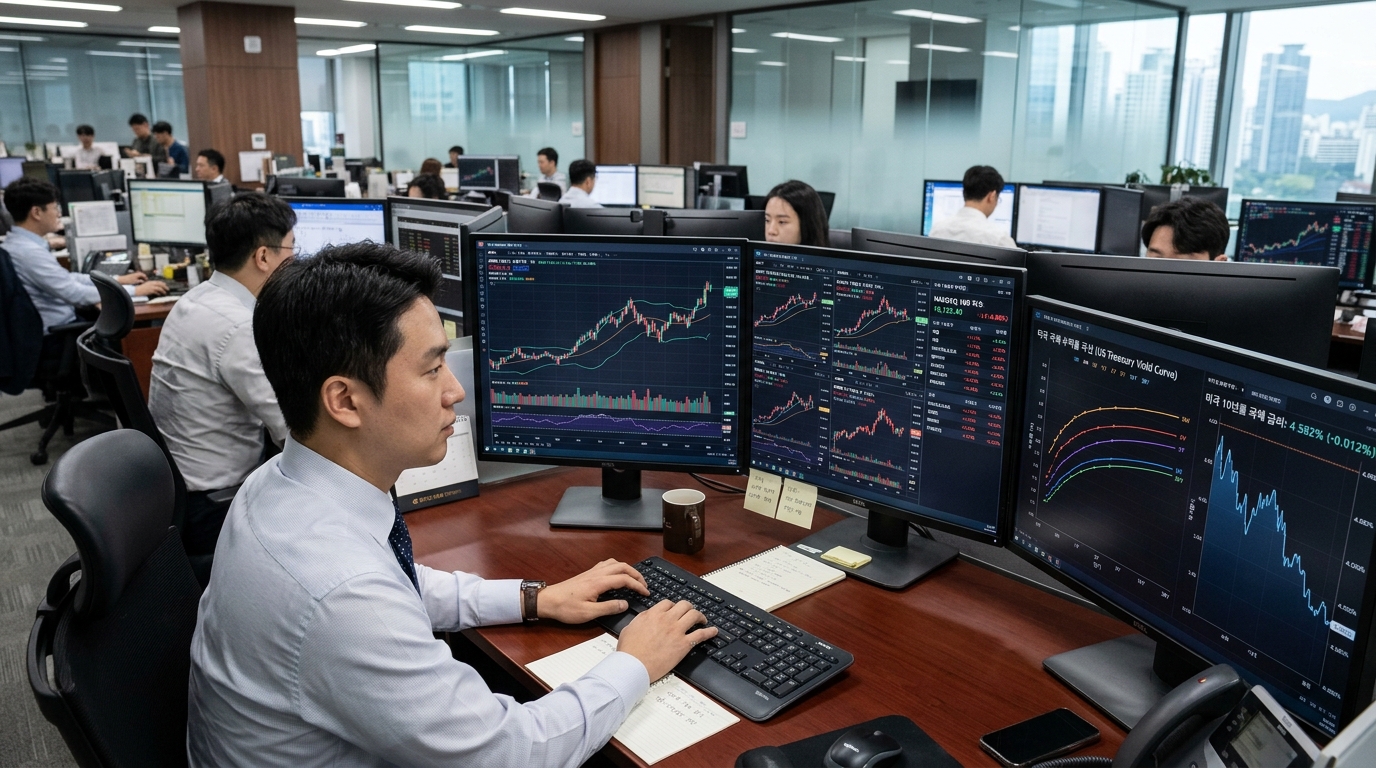
As the broader market applies stricter scrutiny to capital expenditure (CAPEX) return rates across Nasdaq tech equities, volatility in the 10-year US Treasury yield (US10Y) and the US Dollar Index (DXY) continues to pressure Tesla's high discount rate on future cash flows.
Current Situation Overview
Examining the global macroeconomic environment as of intraday (preliminary) October 26, 2026, domestic indices stand at 5,488.76 for the KOSPI and 740.79 for the KOSDAQ, with the USD/KRW exchange rate at 1,324.50 KRW. At the same hour, the Nasdaq Composite is trading at 25,955.34.
Regarding sentiment gauges, the Daily Stock proprietary Fear & Greed Index places the KOSPI in "Extreme Fear" (7.1), maintaining a depressed posture compared to Extreme Fear (6.6) one week ago, Neutral (52) one month ago, and Extreme Fear (13.5) three months ago. The Nasdaq Fear & Greed Index stands at "Fear" (21), reflecting ongoing risk-off sentiment compared to Fear (22.1) one week ago, Fear (32.5) one month ago, and Fear (27.6) three months ago.
Tesla is expediting commercialization by running initial Cybercab production lines at Gigafactory Texas. However, the regulatory battle is intensifying after NHTSA issued a Special Order regarding the vehicle's control-free design and initiated an inquiry into the validity of its self-certification. While Waymo expands its paid driverless rides to over 500,000 trips per week, Tesla faces the dual challenge of securing state-level Transportation Network Company (TNC) permits and satisfying federal compliance rules.
Financial Analysis
Tesla's capital allocation strategy has aggressively shifted beyond simple electric vehicle assembly toward massive CAPEX for Dojo supercomputers and AI compute clusters. Although the company aims to offset slowing vehicle sales margins with software licensing and robotaxi ride-hailing platform take rates, heavy upfront infrastructure expenditure is exerting short-term pressure on free cash flow.
| Key Comparison Metrics | Tesla (TSLA) | Waymo (Alphabet subsidiary) | Baidu (Apollo Go) |
|---|---|---|---|
| **Sensor Architecture** | Vision-only (Camera-centric) | Camera + LiDAR + Radar multi-sensor suite | Integrated multi-sensor platform |
| **Regulatory Approach** | FMVSS self-certification & post-audit verification | NHTSA exemption petitions & phased state-level permits | Commercial pilot permits in major Chinese municipalities |
| **Operating Cities** | Limited pilot operations in ~5 cities including Austin | Over 10 cities including Phoenix and San Francisco | Commercial operations across 27 cities including Wuhan |
| **Hardware Cost Structure** | Sub-$30,000 target (engineered for high-volume mass production) | Relatively high unit cost due to expensive LiDAR suites | 6th-generation mass-production platform deployed |
Tesla underscores that adopting a pure vision model without LiDAR can dramatically reduce unit vehicle costs. However, continuous upward revisions in computing infrastructure investments required to solve autonomous edge cases are increasing the volatility of short-term free cash flow (FCF).
Valuation
Tesla's equity valuation is priced through the lens of a mega-cap AI software platform rather than traditional automotive manufacturer multiples. Although the intraday stock quote is unverified on the day (based on the latest verified reference), its forward P/E trades in the 60x–80x range, maintaining a substantial premium relative to the Nasdaq 100 average and S&P 500 growth peers.
This elevated multiple prices in the full commercial deployment of the Cybercab across 2026–2027 and an exponential surge in driverless FSD subscriber conversions. Consequently, whenever the 10-year US Treasury yield (US10Y) rebounds or the US Dollar Index (DXY) strengthens, share price sensitivity to higher discount rates appears significantly more pronounced than for other growth equities.
Unlike big tech peers across the broader AI ecosystem—such as NVIDIA and Microsoft, where hardware and cloud monetization are already proven—Tesla still faces institutional hurdles in licensing a real-world physical service. This dynamic causes its correlation with the Philadelphia Semiconductor Index (SOX) and large-cap Nasdaq peers to decouple depending on the macro regime.
Expert and Institutional Analysis
Major Wall Street institutional investors display sharp divergence over Tesla's Cybercab strategy. Optimists, including Morgan Stanley, argue that the scalability of vision-based autonomous driving outpaces LiDAR-reliant competitors, forecasting that software service gross margins could exceed 70% once ride-hailing markets are penetrated.
Conversely, conservative global research institutions point to NHTSA's inquiries and stringent commercial ride-hailing regulations enforced by bodies like the California Public Utilities Commission (CPUC). They argue that until exemptions for steering and braking mechanisms are formally codified within FMVSS, large-scale commercial deployments risk protracted legal entanglements.
Risk Factors
The most direct risk factor is a delay in commercialization roadmaps caused by regulatory roadblocks. If NHTSA issues a mandatory recall or stop-drive order during its self-certification review due to safety compliance defects, Cybercab's early ramp plans would face immediate disruption.
From a macroeconomic standpoint, heightened volatility in the VIX and fading expectations for rapid interest rate cuts constrain growth valuations. Prolonged high borrowing costs increase capital expenses required to expand autonomous driving data centers and may dampen consumer purchasing power for high-margin software add-ons.
Mounting competitive pressure is another factor that cannot be overlooked. As Alphabet's Waymo scales fully driverless commercial operating mileage across major metropolitan areas and Baidu operates massive robotaxi fleets in China, Tesla faces the risk of missing first-mover advantages.
Investment Perspective
Approaching Tesla requires a balanced portfolio perspective that monitors both autonomous driving licensing timelines and manufacturing efficiency, looking well beyond pure vehicle delivery figures. Until the Cybercab becomes a tangible cash generator, equity volatility is likely to remain elevated in response to regulatory statements and software build updates.
With the Nasdaq Fear & Greed Index currently in the Fear zone at 21, phased, disciplined accumulation while tracking federal regulatory developments and quarterly CAPEX execution is more prudent than chasing momentum. Realization of the bull case hinges on a clean resolution of NHTSA's audit and the granting of driverless commercial ride-hailing permits in key states beyond Texas.
Investor Checkpoint Q&A
Q1. Why does the Cybercab's lack of a steering wheel and pedals pose a regulatory issue?
A1. Decades-old Federal Motor Vehicle Safety Standards (FMVSS) were established assuming manual driver controls. Vehicles built without physical controls require formal federal exemption petitions or unambiguous self-certification documentation to operate legally on public roads.
Q2. What are the implications of NHTSA's self-certification audit?
A2. It is a formal post-market validation process where the agency evaluates the technical basis on which Tesla declared compliance with federal safety codes. Insufficient justification could lead to civil penalties, mandatory modifications, or operating restrictions.
Q3. How does Tesla differ technically and commercially from Waymo?
A3. Waymo validates driverless operations within tightly pre-mapped geofenced zones using expensive multi-sensor arrays. Tesla relies on general-purpose vision AI and cameras to achieve simultaneous volume manufacturing and cost deflation on unmapped public roads.
Q4. Which macroeconomic indicators warrant the closest attention?
A4. Investors should track the correlation between the 10-year US Treasury yield (US10Y) and equity valuation discount rates, alongside financial conditions that directly impact CAPEX financing costs.
Q5. When is Giga Texas expected to scale mass production in earnest?
A5. Tesla indicated an initial gradual production ramp before broader line expansion; however, the definitive mass-production timeline remains fluid depending on regulatory clearance speeds and the operational stability of driverless FSD software.